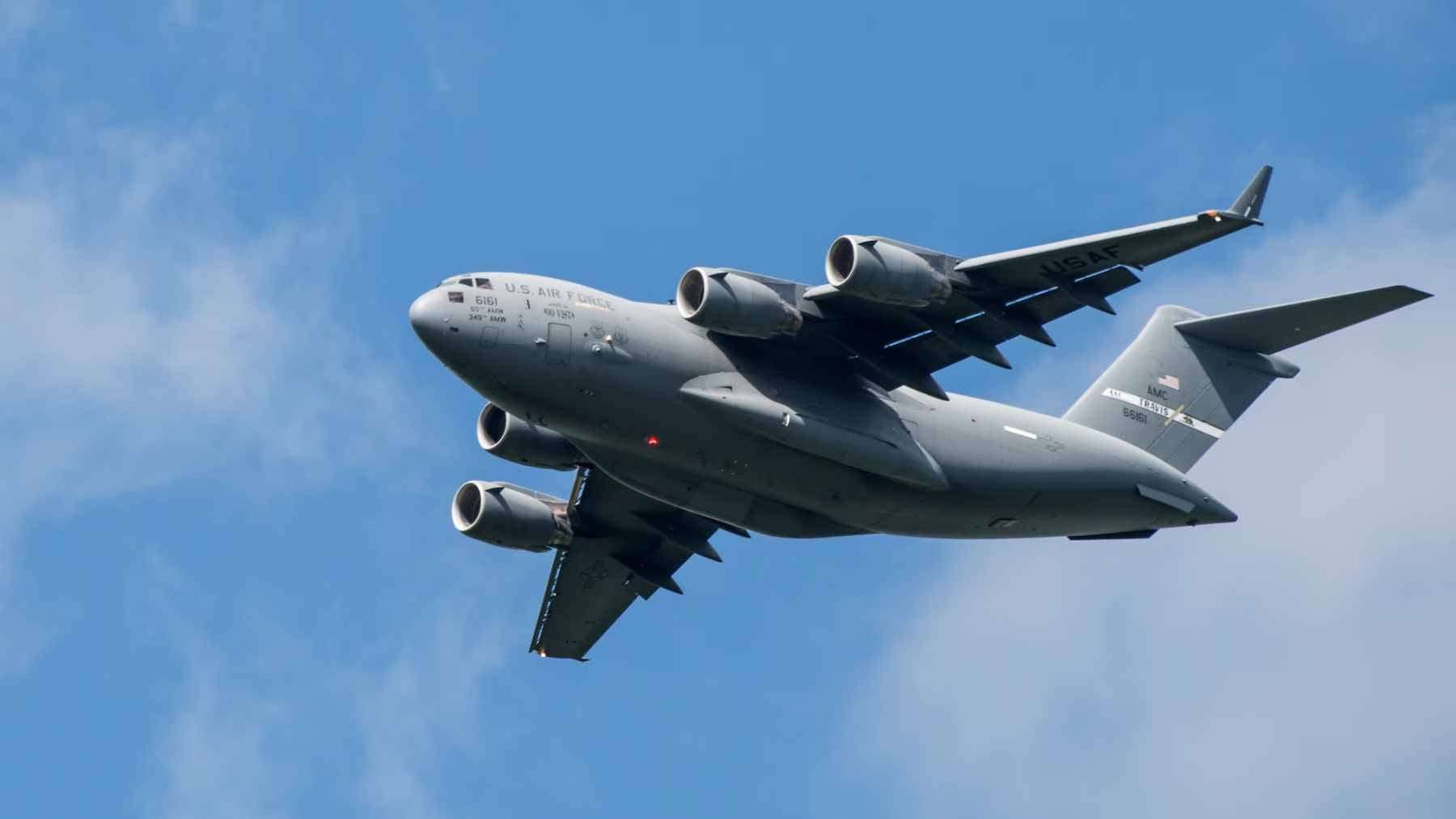
The C-17 Globemaster III has a landing trick that few military aircraft can match. The U.S. Air Force says the cargo aircraft uses a high-lift wing, slats, and externally blown flaps to take off and land on runways as short as 3,500 feet and only 90 feet wide, while carrying heavy cargo into austere airfields.
That same trick creates a problem at ground level. When its four engines blow exhaust across extended flaps, the airplane gains lift, but it also produces a distinctive landing noise that NASA and the Air Force have studied rather than ignored.
For communities near bases and shared-use airports, the technology that helps troops, vehicles, and aid arrive quickly can also turn the final minutes of flight into an environmental headache.
A landing system with a catch
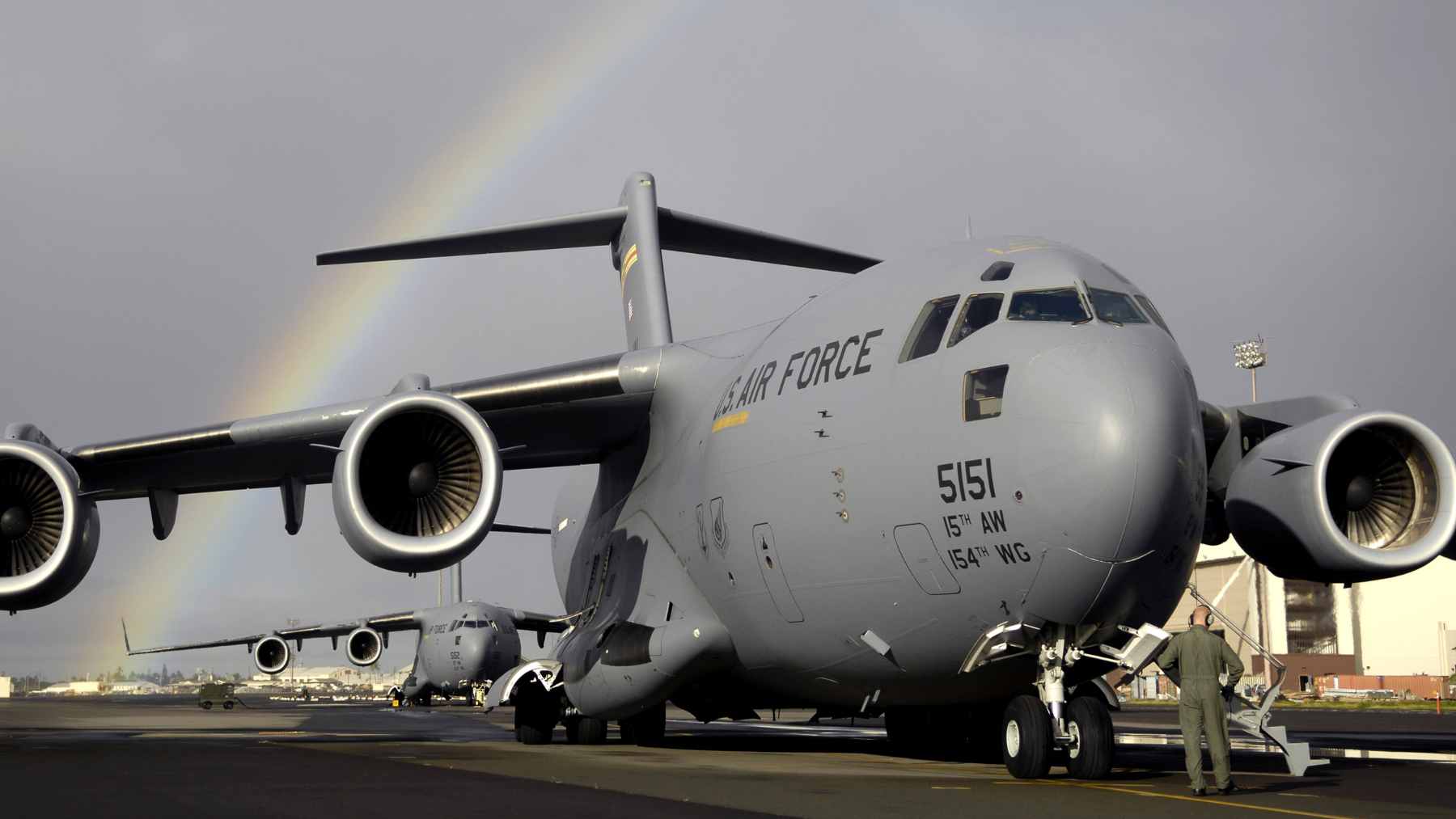
The C-17 is not a small airplane pretending to be nimble. It measures 174 feet long, has a wingspan of nearly 170 feet, and uses four Pratt & Whitney F117-PW-100 turbofan engines, each rated at 40,440 pounds of thrust. Its maximum payload is 170,900 pounds, and its maximum takeoff weight is 585,000 pounds.
In practical terms, that means it can move tanks, helicopters, troops, medical teams, and supplies into places where a normal heavy transport would need more pavement. Boeing describes the C-17 as a four-engine transport built for “small, austere airfields” and says the aircraft combines short-field performance with oversized payload handling and aerial refueling.
So how does it do that? The externally blown flap system uses engine exhaust to help the wing produce lift at low speeds. NASA’s own history explains that large slotted trailing-edge flaps can deflect turbofan exhaust flows to create “extremely high lift” during takeoff and landing.
Why the approach sounds different
On a conventional jet, landing noise usually comes from engines, landing gear, slats, and flaps cutting through the air. On the C-17, there is another layer. The engine exhaust is intentionally pushed across the flap surfaces, where it is redirected downward to help the aircraft stay controlled at slower speeds.
That is great for short runways. It is not so great for the soundscape below. The system puts a powerful flow of air against large flap surfaces while the aircraft is already low, heavy, and configured to land.
NASA Langley began exploring externally blown flap ideas in the 1950s, long before the C-17 entered service. The concept later appeared on the McDonnell Douglas YC-15 and then on the C-17, which NASA history describes as the only U.S. production powered-lift fixed-wing airplane outside the AV-8 category.
NASA put microphones under the flight path
This was not just a complaint from people near runways. On Sept. 10, 2005, an Air Force C-17 flew different landing profiles at Edwards Air Force Base as part of a NASA noise mitigation study.
NASA later reported that 13 aerospace engineering students from California Polytechnic State University helped collect data on Rogers Dry Lake in California’s Mojave Desert. Seventeen microphones were placed across roughly 15 square miles to record the C-17’s noise footprint as it attempted different landing approaches.
The test compared conventional straight-in landings with a simultaneous and non-interfering approach, which NASA described as similar to a descending spiral over the landing site.
John Zuk, NASA’s Extreme Short Takeoff and Landing Vehicle Section manager at Ames, said preliminary results indicated the approach could concentrate the noise footprint into a narrower area while remaining safe.
Noise is pollution too
Aircraft noise can sound like a technical detail until it is over your roof at dinner time. The Environmental Protection Agency says noise pollution has been linked to stress-related illness, high blood pressure, speech interference, hearing loss, sleep disruption, and lost productivity. That makes it an environmental issue, not just an aviation one.
The FAA also treats aircraft noise as a long-running community problem. Its tools include quieter aircraft, sound insulation, building buyouts near airports, operational flight measures, and land-use planning.
For the C-17, that creates a tough balance. A steeper or modified approach may help shift or shrink the noise footprint, but crews cannot simply give up the lift margin that makes the aircraft useful in the first place. That is the trade-off.
Why the C-17 still matters
Boeing says 275 C-17s operate worldwide, with the U.S. Air Force flying 223 of them at 12 bases. The aircraft is also used by the United Kingdom, Australia, Canada, India, Kuwait, Qatar, the United Arab Emirates, and the 12-nation Strategic Airlift Capability.
That global footprint matters because the noise question will not disappear with one local policy. These aircraft train, deploy, return, and support humanitarian missions. When a C-17 brings relief supplies after a disaster or moves equipment into a remote airstrip, the same landing system that annoys nearby neighborhoods may be the reason the mission works.
It is also a business and sustainment story. Boeing still provides life cycle sustainment, training, and base support for C-17 fleets, which means the airplane’s environmental footprint is tied to decisions made over many more years of operation.
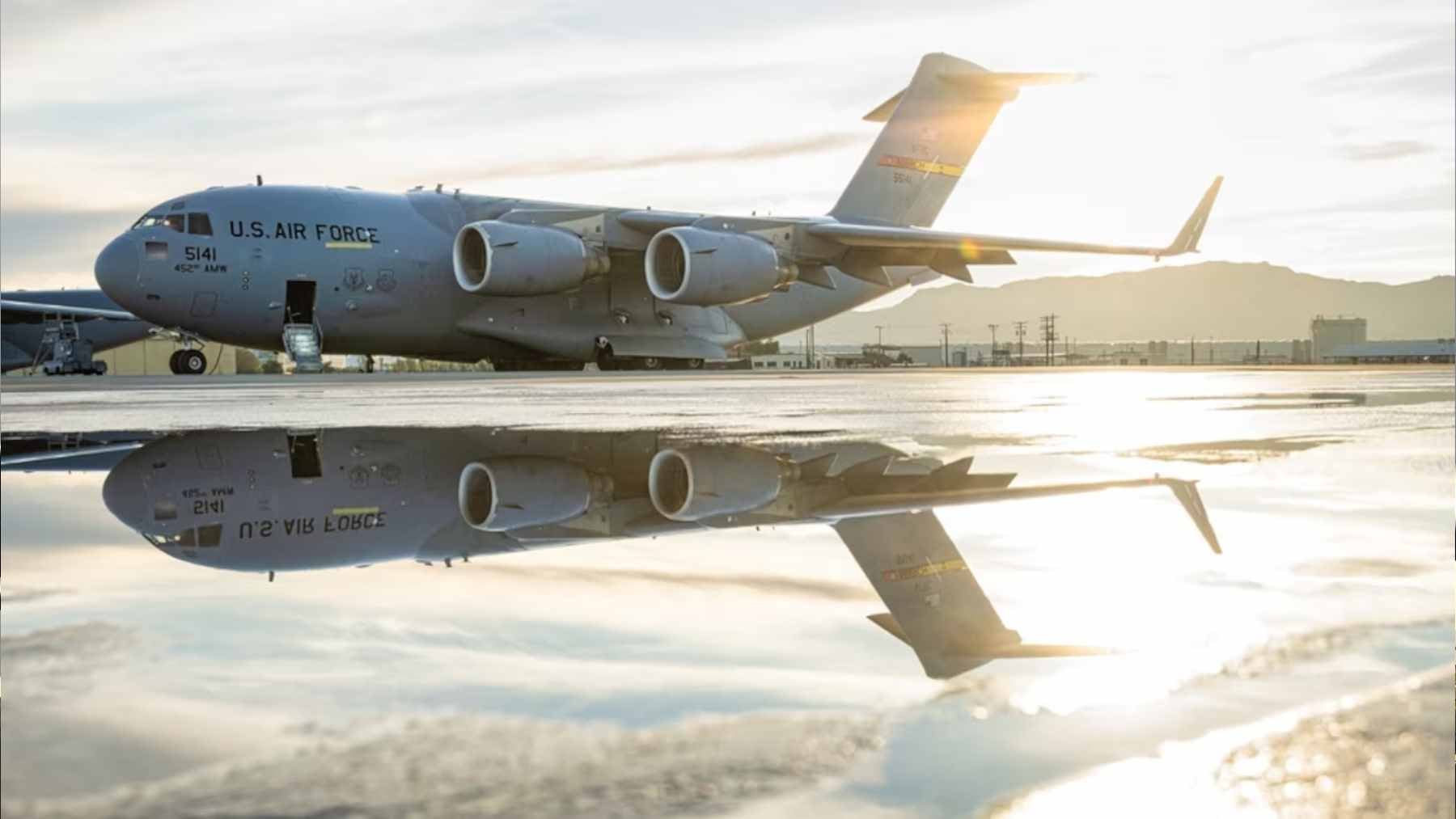
A powerful airplane with a local footprint
At the end of the day, the C-17’s noise problem is not a sign that the aircraft is poorly designed. It is the sound of a design choice that gave the military an unusual capability. More lift is not free.
In a war zone or disaster zone, externally blown flaps can help a massive aircraft reach a runway that would otherwise be too short. Back home, the same system can be heard as another low pass over a school, a backyard, or a kitchen table.
That is why the next chapter is not just about making aircraft stronger or more capable. It is about measuring the impact clearly, adjusting procedures where possible, and being honest with the communities that live under the flight path.
The press release was published on NASA.