Drive west from Taos, New Mexico, and the desert starts playing tricks on your eyes. Homes seem to sink into the mesa, tucked into earth berms and built around a simple question that feels more urgent every year. What if a neighborhood could need far less from the grid?
That idea is not new in Taos, where the Greater World Earthship Community has long been one of America’s most unusual off-grid experiments. But the newer Pangea Community proposal adds another twist, a shared natural swimming pond that is not just a place to cool off, but a small living system with its own ecological momentum.
A desert community built around less
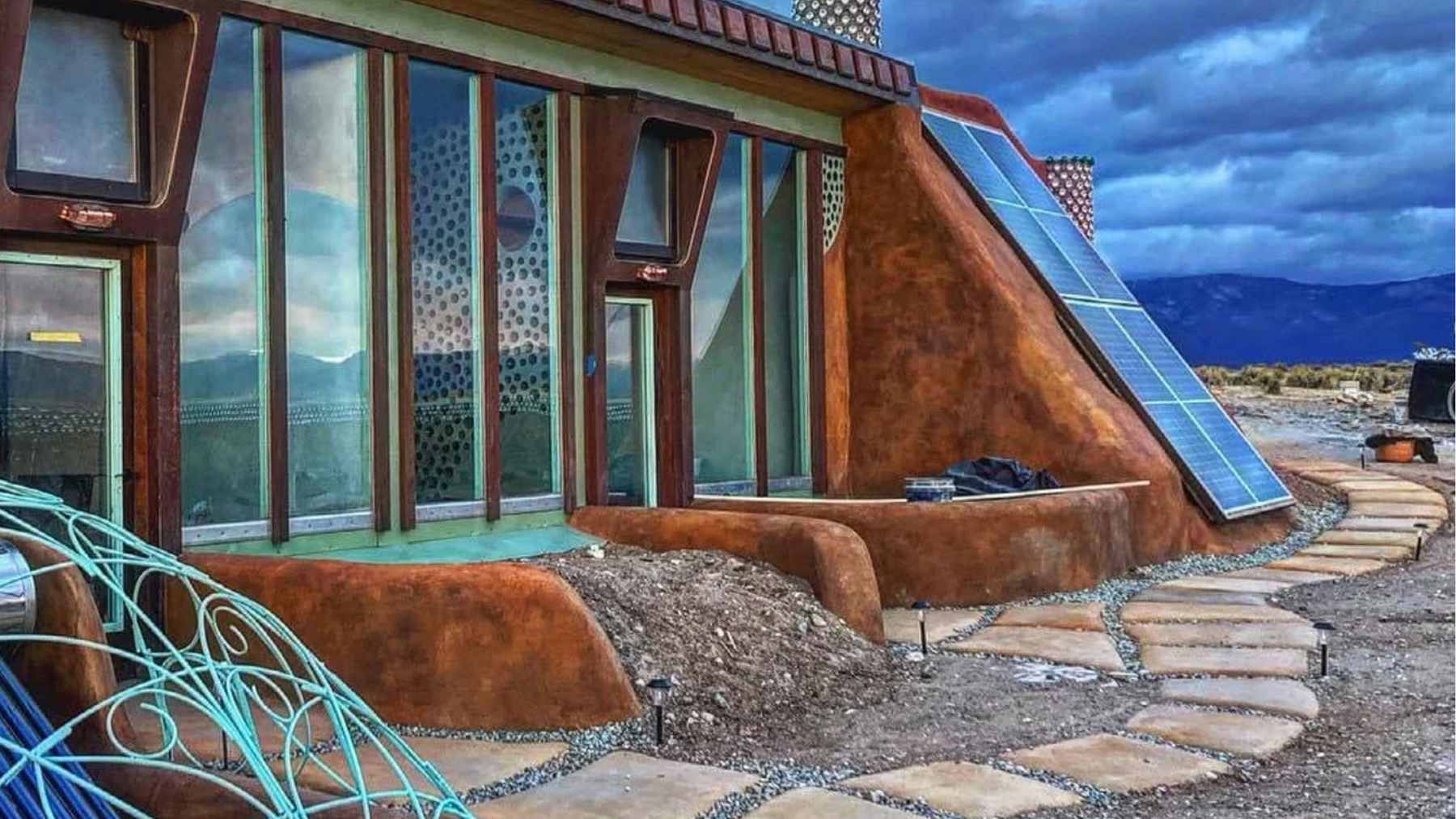
The basic Earthship idea is easy to understand, even if the buildings look like something from another planet. Earthship Biotecture describes an Earthship as a house built with natural and recycled materials, designed to produce energy, water and food for its own use.
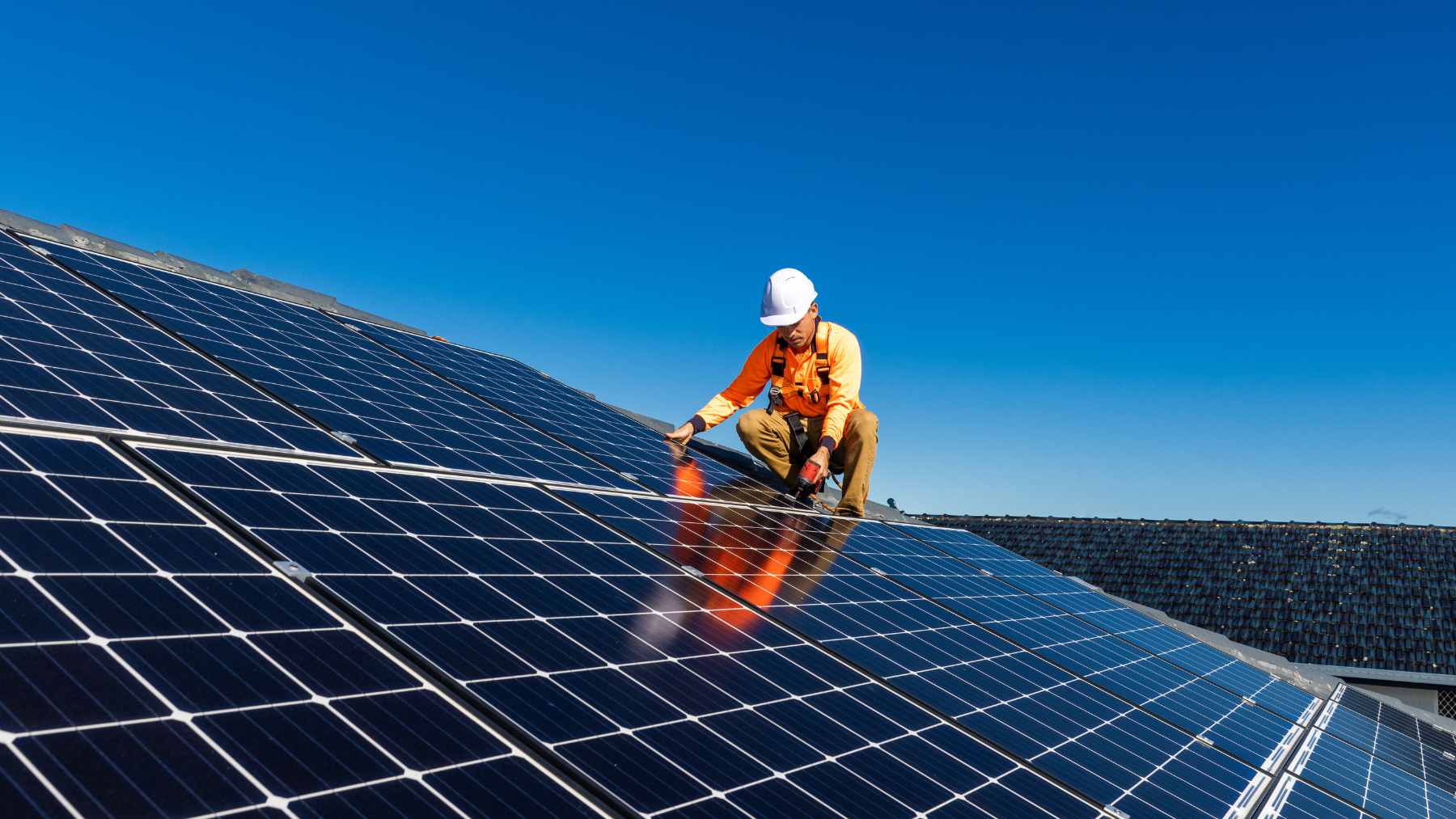
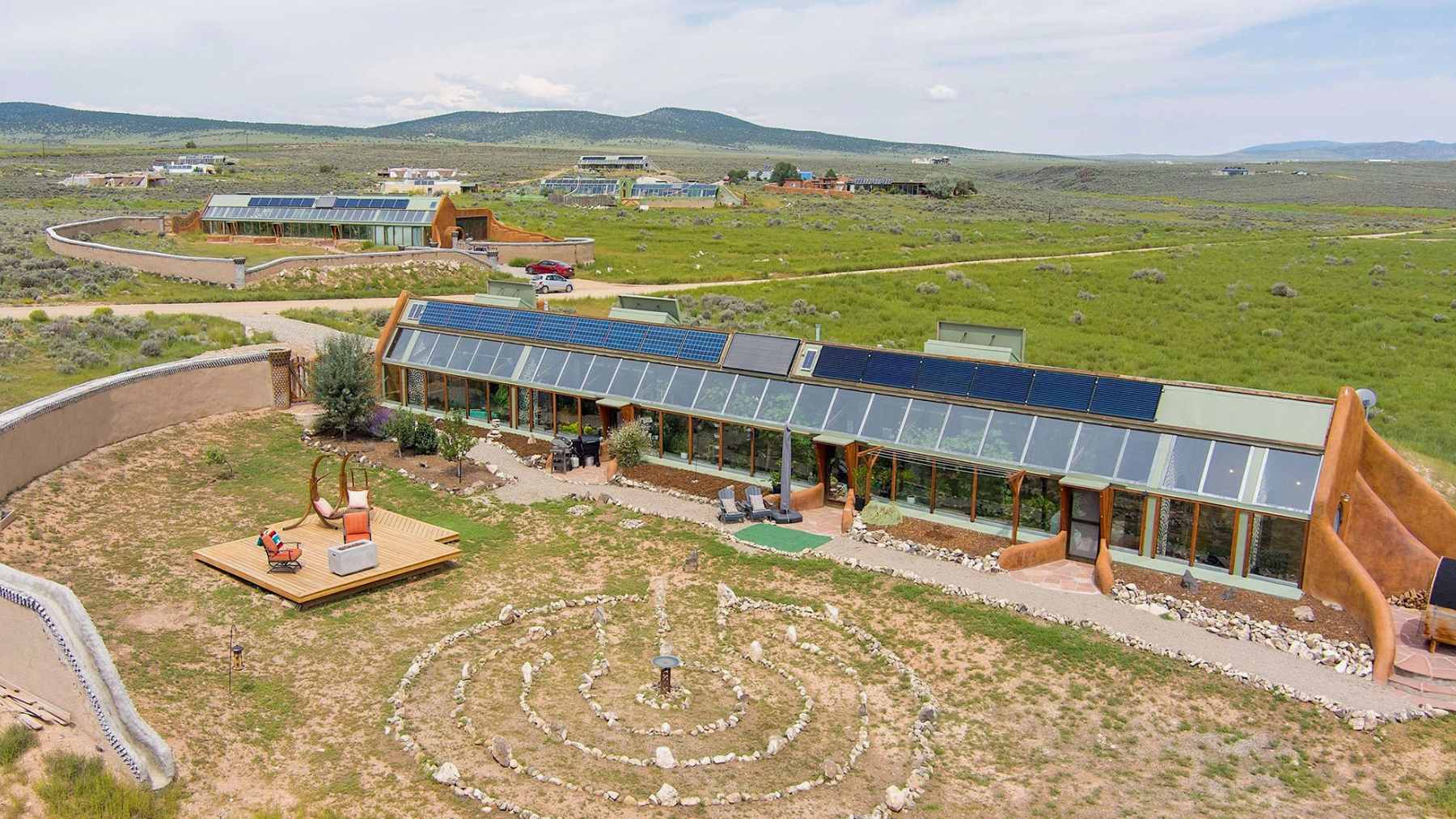
In practical terms, that means roofs that collect rain, solar and wind systems that reduce reliance on public utilities, and walls that use mass and sunlight to soften the desert’s temperature swings. Taos tourism officials describe Greater World as fully off the grid, using solar and wind power, with more than 300 acres of shared land inside a 600-plus-acre community.
Why the homes almost disappear
From the road, these houses do not announce themselves like a typical subdivision. Many are earth-bermed, with recycled tires, cans and bottles worked into the building system, which is why the landscape can look nearly empty until the sun catches a wall of glass.
That is part of the point. The walls and soil act like a thermal battery, storing warmth during the day and releasing it later when the desert cools. No magic here, just old physics wrapped in unusual construction.
Pangea adds a shared pond
Pangea Community takes that same off-grid DNA and scales it toward a broader village model. Its official materials describe a regenerative, mixed-income community in Taos County, with housing, food systems, culture, wellness and economic opportunity designed as one connected ecosystem.
The site also lists 116 total buildings, including 88 residential buildings, along with civic and commercial spaces. Among the amenities are walking and biking trails, sports areas and natural swimming areas, which makes the pool less of a backyard luxury and more of a shared piece of infrastructure.
The pool works like a pond
A natural swimming pond does not stay clear by smelling like chlorine. Instead, it borrows from wetlands, moving water through planted and gravel-filled areas where microbes, roots and substrate do the cleaning work. The Pangea overview says the natural swimming pond is “ecologically filtered through plant systems rather than chemicals.”
A report on natural swimming pools explains the same principle in plain terms. Water leaves the swimming zone, passes through filters and a regeneration zone, then returns after biological processes help clean it.
Wildlife found the water
Here is the part nobody should find too surprising, at least not after thinking about it for a minute. Put clean standing water in a dry landscape and life will notice.
Planted regeneration zones can provide habitat for insects and amphibians, according to the same natural swimming pool report. Freshwater habitat guidance also notes that water beetles can arrive on day one, with dragonflies often following within days and amphibians within the first year.
Not just a pretty amenity
For residents, the appeal is obvious. No harsh chemical smell, no red eyes after a swim, and a pond edge that feels closer to a mountain lake than a hotel pool.
But the bigger story is design. A conventional pool is usually a controlled object, something kept separate from nature. A natural pond is different, because its whole job is to cooperate with living processes instead of fighting them every morning with another round of chemicals.
The cost question
Natural systems are not maintenance-free. They need seasonal plant care, water circulation checks and careful balance between the swimming area and the regeneration zone.
Still, the economics can be attractive over time. Some industry estimates say 20-year ownership costs can be lower because chemicals are removed from the budget, water use can fall by 40 to 60 percent, and energy costs can drop by 20 to 30 percent. Those numbers can vary by design and climate, but they explain why developers keep looking at these systems.
A small climate lesson
What makes the Taos example interesting is not that one community added a pool. Plenty of places do that.
The difference is that this pool fits the same logic as the houses around it. Collect what falls from the sky, use less energy to do the same job, and let biology carry part of the load. At the end of the day, it is a reminder that climate-friendly technology does not always look like a screen, a battery or a new app.
Sometimes, it looks like reeds moving in the wind.
What comes next
Pangea’s official materials frame the project as a long-term model for responsible development in Taos County, with affordable housing, renewable energy, rainwater harvesting, greywater recycling and passive climate design built into the plan. That ambition will still have to meet the hard tests every real community faces, including permitting, costs, maintenance and local trust.
Even so, the natural pond offers a useful image for the whole project. A pool built for people became attractive to wildlife because the design left room for life to show up.
The official statement was published on Pangea Biotecture.