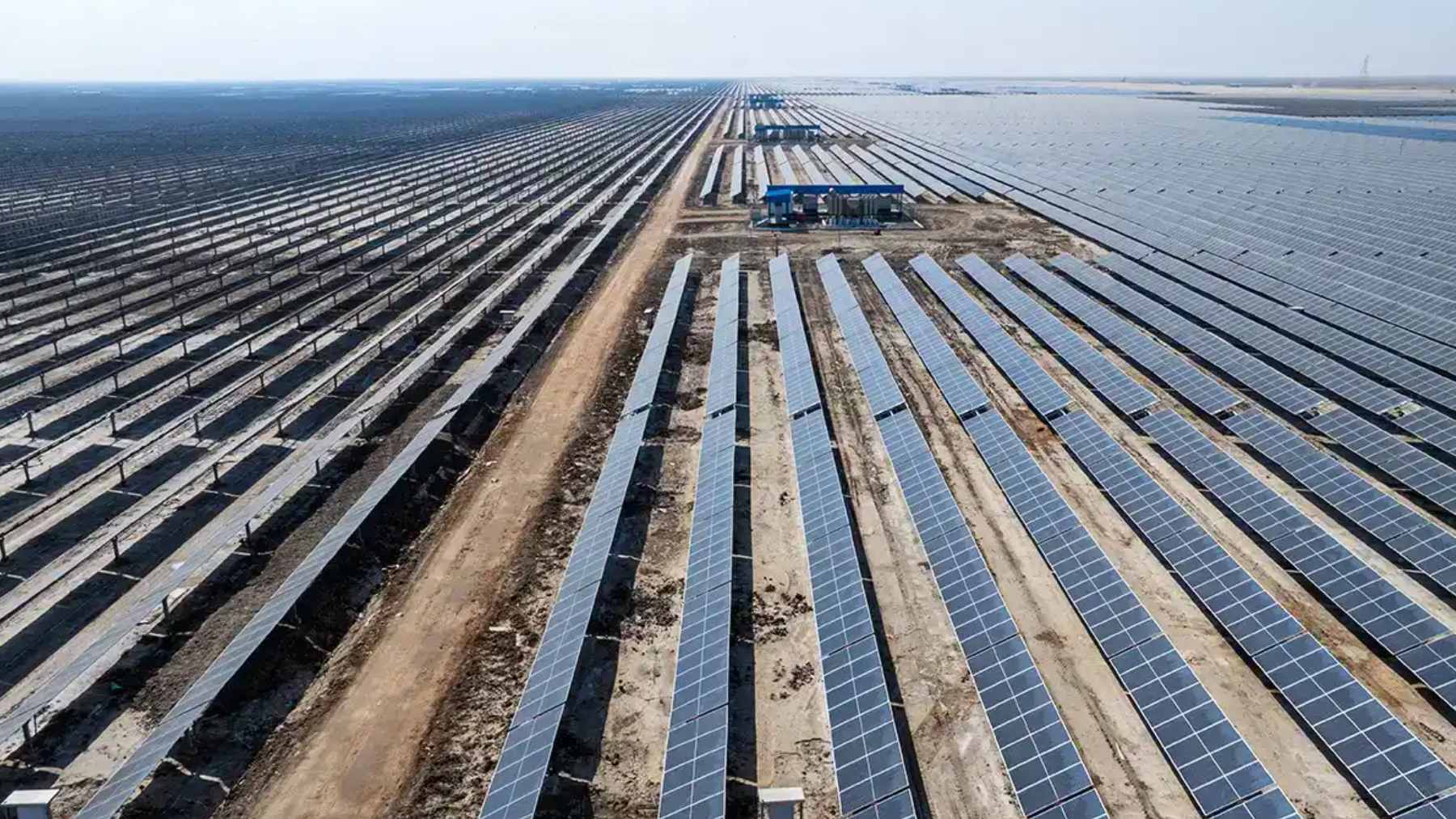
In the dry salt flats of Kutch, India is building something that sounds almost unreal. Adani Green Energy says its Khavda project in Gujarat is now the centerpiece of a renewable energy push that has helped the company cross 20 GW of operational clean power capacity, with 9.5 GW of solar already commissioned at the desert site.
The big takeaway is not just the size, it is the way this project is turning solar panels, wind turbines, battery storage, transmission lines, and water-saving robots into one giant clean-power machine. In practical terms, it is electricity that is not only green on paper, but useful when homes, factories, and cities actually need it.
A desert becomes a power plant
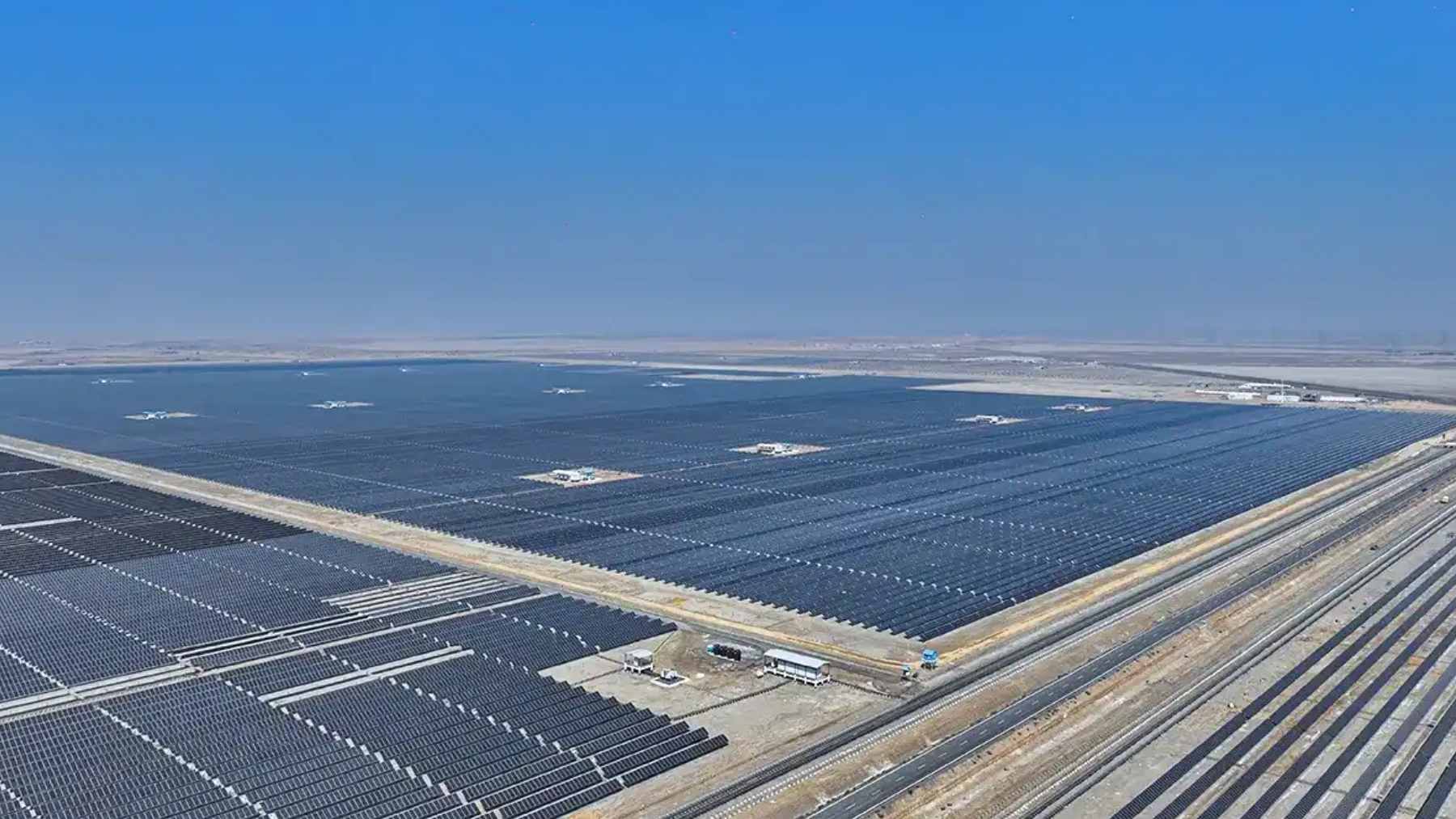
Khavda is planned as a 30 GW renewable energy plant spread across 208 square miles of barren land. Adani Green says the area is about five times the size of Paris and almost as large as Mumbai, for perspective of the scale of the project.
The buildout has moved quickly. Back in March 2024, Adani Green said it had delivered the first 1 GW of solar capacity at Khavda in less than 12 months, using about 2.4 million solar modules. By July 2026, the company said 9.5 GW of solar capacity had already been commissioned at the site.
For most people, 30 GW is a hard number to picture. Put simply, Adani Green has said the completed Khavda plant could generate about 81 billion kilowatt-hours of electricity a year, enough to power more than 16 million homes in India.
The biggest story is storage
Solar power is strongest when the sun is high, but people do not stop using electricity after sunset, which is why the battery piece matters so much. Without storage, even the biggest solar field can feel a little like a store that closes before the evening rush.
Adani Green says it has commissioned 3.55 GWh of battery energy storage systems, which it describes as the world’s largest deployment outside China. In a May 2026 statement, the company said 3.37 GWh of that storage at Khavda could store enough clean energy to power nearly one million homes for a full day.
Sagar Adani, executive director of Adani Green, put it simply when he said, “battery storage is becoming central.” That is the quiet revolution here. If big batteries keep scaling, renewable energy looks less like a weather-dependent source and more like a serious backbone for the grid.
Robots take on the dust
There is another problem in a place like Kutch: dust. Anyone who has left a car outside in a dry, windy area knows how fast a clean surface can turn dull, and the same thing happens to solar panels.
Adani Green says Khavda will use waterless robotic cleaning systems across its solar capacity to remove dust without relying on large amounts of water. That matters because Kutch is arid, and using water to clean millions of panels would create its own environmental strain.
The project also uses bifacial solar modules, which can capture sunlight on both sides, along with solar trackers and large wind turbines. Put together, it is a reminder that the clean energy race is not just about adding more panels, it is also about squeezing more power from every acre while wasting less.
India’s climate bet
India has a national target of reaching 500 GW of non-fossil fuel capacity by 2030. According to India’s Press Information Bureau, non-fossil sources made up 51.93% of the country’s installed power generation capacity as of December 31, 2025, with 266.8 GW installed.
That makes Khavda more than a company milestone. By Adani Green’s own estimate, its 20 GW operational portfolio generates more than 52 billion kilowatt-hours of clean electricity each year, nearly 3% of India’s electricity consumption. The company also estimates that this avoids more than 40.8 million tons of carbon emissions annually.
Those numbers should still be read with some care. Emissions savings depend on what kind of power gets replaced and how the grid uses the electricity. Still, the scale is hard to ignore.
Grid pressure is the real test
Producing clean power is only half the job. The electricity still needs a highway. Adani Energy Solutions said in 2024 that it had taken on a roughly 185-mile transmission project to move 7 GW of renewable energy from Khavda into India’s National Grid.
That is where the challenge gets very real. Reuters reported in November 2025 that transmission bottlenecks and project delays had become key hurdles for India’s clean energy rollout, with the national transmission network spanning about 308,000 circuit miles.
So, calling Khavda the world’s largest renewable energy park is only the opening line. The real finish line is cleaner power that reaches people when they flip a switch–simple as that.
What comes next
There is a major business story here, too. Reuters reported in 2025 that Adani Green planned to spend about $3.64 billion in capital expenditure to add 5 GW of clean energy in fiscal 2026, and Adani Green later said it added 5.051 GW during that year.
The jobs number is part of the pitch as well. Adani Green has said the full Khavda project is expected to create more than 15,200 green jobs, while also supporting India’s wider push to cut dependence on fossil fuels.
At the end of the day, Khavda is a test of whether clean energy can be built at the same scale as the old energy economy.
The official statement was published on Adani Green Energy.