India is moving one of its most sensitive river-linking ideas from political messaging into a more practical stage.
The Chenab-Beas Link Tunnel Project would divert water from the Chandra River, part of the upper Chenab basin, into the Beas system through a 5.4-mile tunnel in Himachal Pradesh, with the National Hydroelectric Power Corporation (NHPC) now inviting bids for major civil works at Koksar.
That sounds like an engineering story, but it is also about water security, energy, climate risk, and India-Pakistan tensions. Supporters say the project could help Punjab, Haryana, and Himachal Pradesh during dry summer months, while environmental voices warn that the chosen Himalayan terrain is already under pressure from glaciers, floods, traffic, and construction.
A tunnel with national stakes
The official tender covers a barrage, river diversion arrangements, power intake structures, a water diversion tunnel, an outfall structure, and associated hydro-mechanical works at Koksar in Lahaul Spiti. NHPC lists the duration at 49 months, which means the project is not a quick fix, even after a contract is awarded.
The money tells its own story. Himachal Pradesh Governor Kavinder Gupta described the broader plan as roughly $275 million, while NHPC’s specific civil works package lists an estimated cost of about $247 million, according to recent exchange rates.
Gupta said, “India’s water should first be used to meet the needs of the people and states of our own country.” That phrase explains the politics behind the concrete. This is not only a tunnel, it is water sovereignty in motion.
Why this water matters
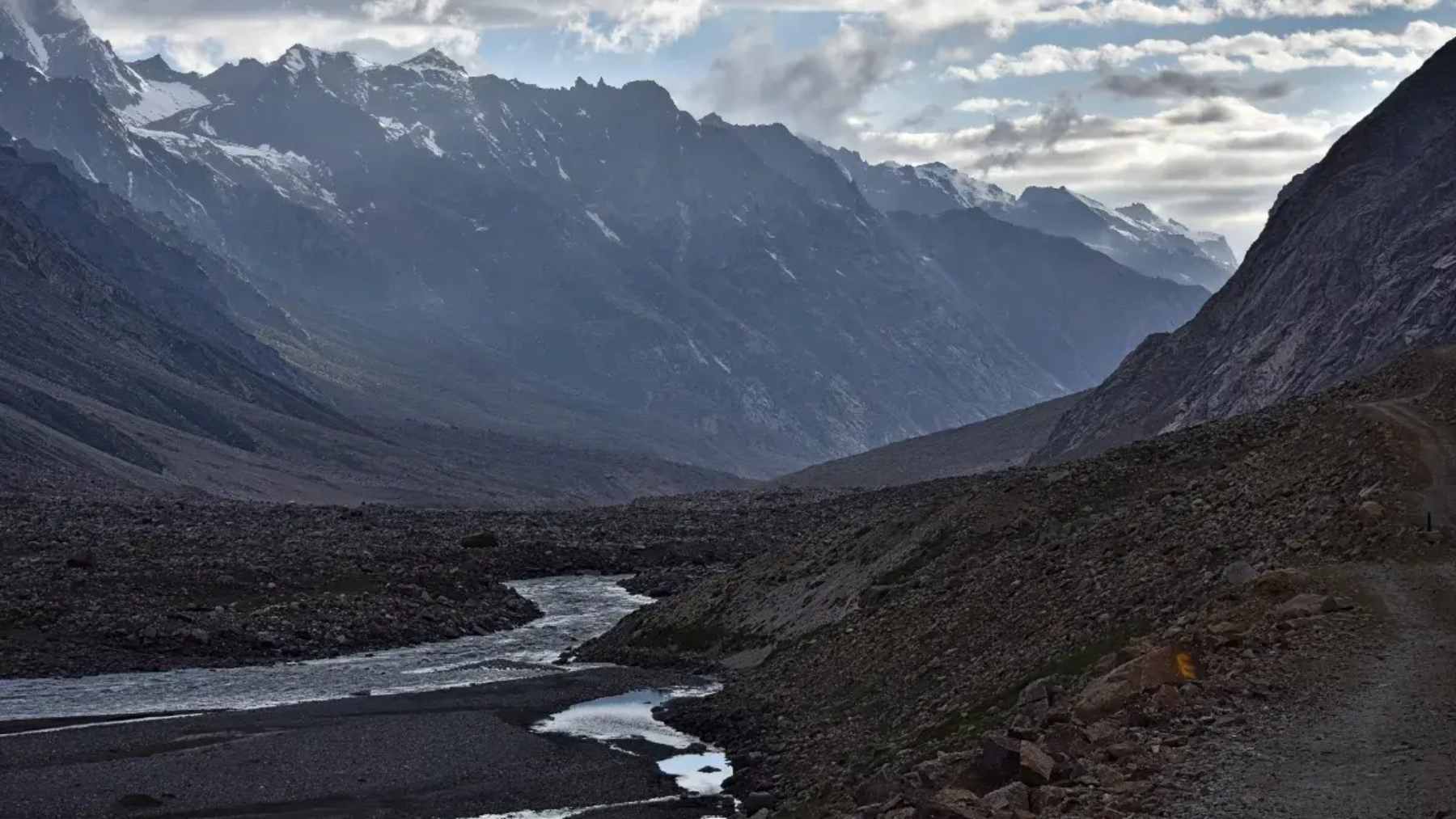
The Chandra River flows through high Himalayan terrain before joining the Chenab system. The project aims to move part of that flow toward the Beas, a river system tied to irrigation, drinking water, and hydropower across northern India.
For families and farmers, this is not abstract. Low reservoir levels can mean tighter irrigation schedules, longer pump hours, and more pressure on power grids when heat is already high.
Project summaries say the tunnel could support nearly 4,000 MW of additional hydropower in Himachal Pradesh. That figure should be read as potential rather than a guaranteed switch-on date, because mountain power projects depend on geology, river flows, clearances, construction seasons, and public acceptance.
The mountain test
Koksar sits near 10,300 ft. in a region where valleys are steep and weather windows can be unforgiving. The technical details shared around the project say geologists examined rocks around Koksar and Rohtang, including strong gneiss formations, and found them naturally resistant.
That matters because tunneling through weak, fractured rock can turn a water project into a decade-long fight with the mountain. Still, solid rock does not erase risk. Anyone who has driven mountain roads after a cloudburst knows the slope always gets a vote.
NHPC’s tender also demands contractors with experience in dams, barrages, major tunnels, and specialized tunnel-boring operations. The government is looking for builders used to difficult water infrastructure, not just ordinary roadwork.
Climate risks nearby
The environmental question may end up defining the project. Down To Earth, citing a National Remote Sensing Centre risk assessment, reported that Ghepan Lake above Sissu expanded from about 90 acres in 1989 to about 250 acres in 2022, and that Sissu is considered highly vulnerable to a glacial lake outburst flood.
In a worst-case scenario cited in that report, floodwaters could reach Sissu in 21 minutes, and a major event could affect 34 settlements, roughly 504 acres of cultivable land, 57 bridges, and about 66 miles of road. Those are not small numbers on a remote map. They are roads, fields, and the places where people wait for tourists at cafes and homestays.
The South Asia Network on Dams, Rivers and People has argued that the Koksar barrage area sits in a vulnerable zone exposed to glacial lake outburst floods, flash floods, avalanches, and landslides. The group is critical of the project, so its warnings should be read as advocacy, but the hazard list is exactly what regulators will have to test in detail.
The Pakistan angle
The Chenab carries a diplomatic load. The World Bank says the 1960 Indus Waters Treaty allocated the western rivers, including the Chenab, to Pakistan, while the eastern rivers, including the Beas, were allocated to India, with certain uses allowed across the divide.
In April 2025, India’s Ministry of External Affairs said the treaty would be held in abeyance with immediate effect. That statement changed the background noise around every new project touching the western rivers, even when engineers talk in the language of surplus water, tunnels, and power capacity.
Could one tunnel settle a water dispute? Of course not. But in South Asia, water infrastructure can act like defense policy by other means, because rivers carry food security, electricity, and political leverage downstream, and Pakistan has continued to warn India against what it calls the weaponization of water.
What to watch next
The next key dates are near and critical. NHPC’s tender schedule lists bid submission starting July 14, closing July 24, and opening July 28, 2026.
After that, the questions get harder. Will environmental assessments account for glacial lake risk and sediment loads? Will local communities be consulted in a way that feels real, not ceremonial? And can India build a climate-resilient tunnel without adding new pressure to an already fragile valley?
At the end of the day, the Chenab-Beas tunnel is a test of modern water planning. If it works, it could strengthen northern India’s water and energy resilience. If it ignores the mountain’s warning signs, the project could become another reminder that in the Himalayas, concrete alone is never enough.
The official tender notice was published on NHPC India.