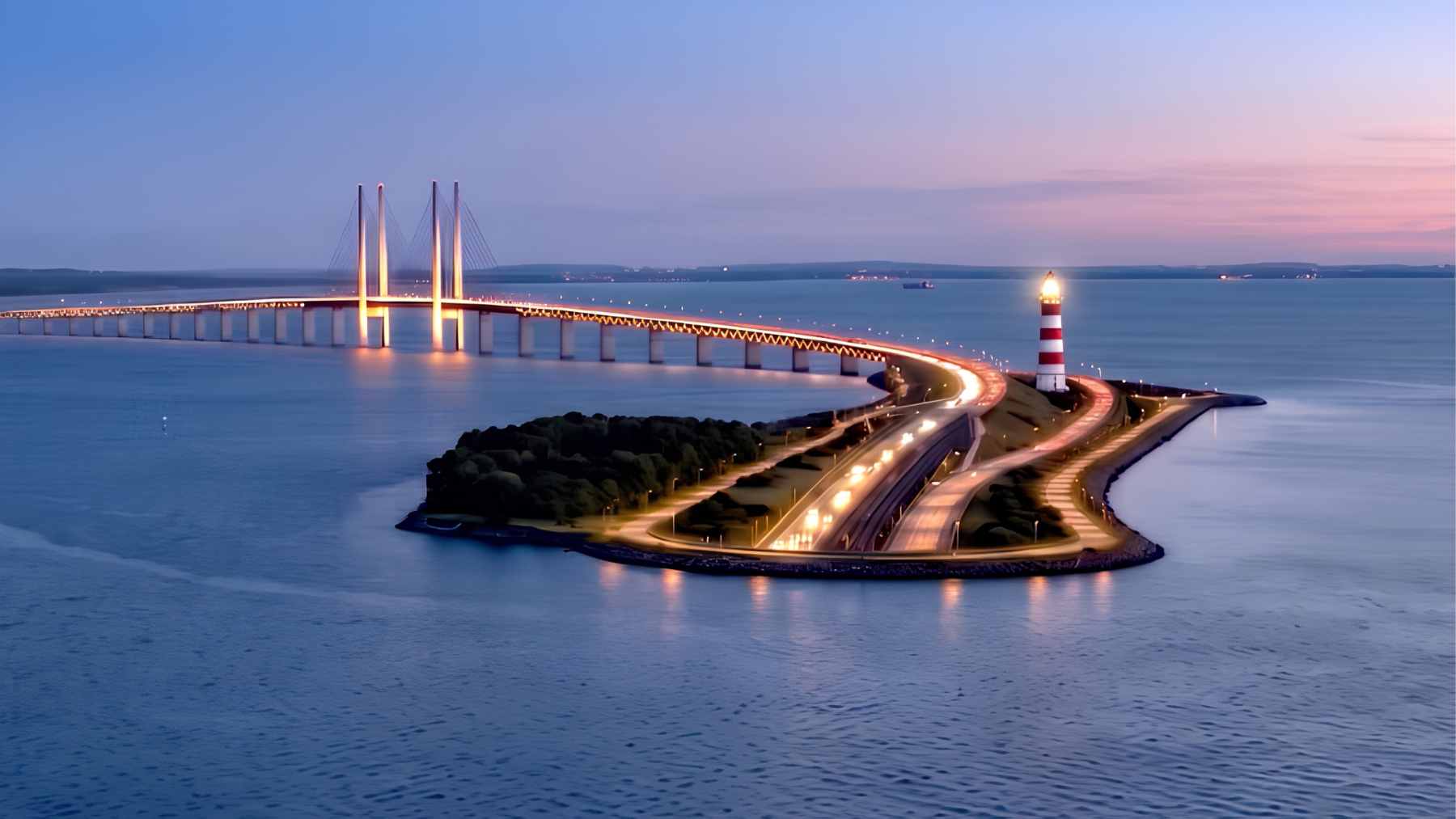
A new push to connect Connecticut and Long Island by bridge and tunnel is being sold as a bold answer to one of the region’s most familiar headaches. The idea, revived by real estate developer Stephen Shapiro, would link Bridgeport to Long Island near the Sunken Meadow State Parkway, with toll lanes and a rail component, at an estimated cost of about $50 billion.
The big question is not just whether such a crossing could be built. It is whether it would actually reduce traffic, or simply move congestion around while adding new pressure to Long Island Sound, one of the Northeast’s most closely watched coastal ecosystems.
A huge shortcut on paper
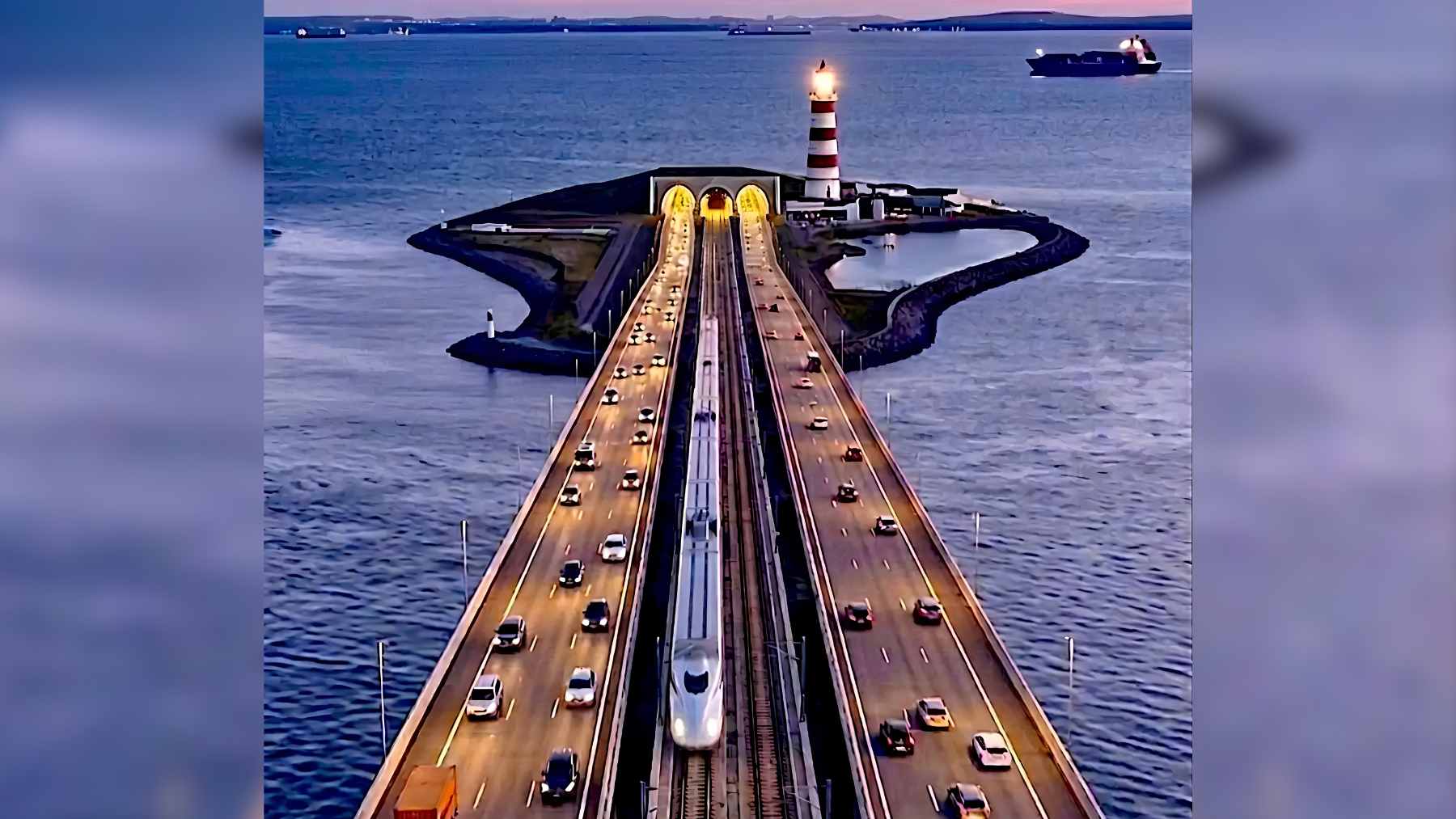
Supporters say the proposed bridge-and-tunnel system could offer a faster alternative to the roughly 75-minute ferry ride between Bridgeport and Port Jefferson. Shapiro has described a crossing with four lanes in each direction and rail, backed by a mix of private, federal, Connecticut, and New York funding.
Who would not want a faster trip? For commuters, truckers, and businesses that move goods between Connecticut and Long Island, the appeal is easy to understand. A new route could look like a pressure valve for I-95, especially in Fairfield County, where traffic is not just annoying but part of daily life.
Still, transportation experts are warning that the math may not be that simple. A bridge can create a new path, but it cannot erase the demand that already fills highways on both sides of the Sound.
The traffic trap
The main concern is “induced demand,” a plain phrase for a frustrating reality. When roads get more capacity, driving often becomes easier at first, but that easier drive can encourage more people and businesses to use the route until congestion returns.
Eric Jackson, executive director of the Connecticut Transportation Institute at the University of Connecticut, said in the supplied reporting that he doubts the project would significantly reduce Fairfield County congestion over the long term. As he put it, this is the “If you build it, they will come” problem.
There is a nearby example. The Throgs Neck Bridge opened in 1961 between the Bronx and Queens to ease congestion on the Bronx-Whitestone Bridge, but the MTA now says traffic on each bridge exceeds what the Bronx-Whitestone carried when it stood alone.
A Sound under recovery
The environmental backdrop matters. Long Island Sound is not an empty space between two shorelines. It is an estuary that supports fish, shellfish, migratory birds, coastal towns, recreation, and local economies.
The Sound has also been through decades of cleanup. By 2025, wastewater treatment upgrades had cut more than 47 million lbs. of nitrogen pollution per year from peak levels in the early 1990s, according to the Long Island Sound Partnership. Nearly 2,400 acres of habitat and almost 450 miles of river migratory corridors were restored from 1998 to 2024.
That progress is real, but not guaranteed forever. CT DEEP says hypoxia, or low-dissolved oxygen, is mainly driven by nitrogen from sources such as sewage treatment plants, stormwater runoff, and atmospheric deposition. When oxygen drops, fish and other organisms can be stressed, displaced, or killed.
Why emissions claims need caution
Bridge supporters argue that a shorter route could cut travel times and lower emissions. That sounds logical at first–fewer miles can mean less fuel burned.
However, if a new crossing brings more total driving over time, the climate benefit becomes less certain. That is where traffic and ecology meet. A project that looks cleaner on one trip could become dirtier across a whole region if it leads to more vehicle miles, more runoff, and more development pressure.
Long Island Sound has recently seen encouraging water quality signs. In 2025, the Sound had an all-time low of 18 square miles of hypoxia, while the 2021 to 2025 average was 83 square miles, about a 60% reduction from the old baseline of 208 square miles. That is good news, but it also shows how much careful management has been needed to get here.
CTDOT is looking at I-95
Connecticut transportation officials are already studying the highway corridors that would be affected by any major crossing. CTDOT’s I-95 Fairfield and Bridgeport mobility study covers one of the state’s most heavily traveled roadways, carrying between 120,000 to 130,000 vehicles per day.
That study is not just about cars. CTDOT says the corridor also includes truck traffic, Metro-North and Amtrak rail, buses, bicyclists, and pedestrians, meaning the solution may have to be more than another lane or another bridge.
The Greenwich and Stamford I-95 studies point in the same direction. CTDOT is using Planning and Environment Linkages studies to weigh safety, mobility, environmental issues, community needs, and future National Environmental Policy Act review.
Rail may be the quieter answer
Matthew Turner, a Brown University professor who studies transportation economics and land use, argued in the supplied reporting that rail deserves more attention. His point is straightforward: if some freight and commuters move off highways and onto trains, that can free road capacity without carving a new highway path across the Sound.
That does not mean rail is a magic wand. As Turner noted, even freed-up highway space can fill again. Still, better rail service and freight options may avoid some of the ecological risks that come with building a massive new crossing through the water.
At the end of the day, the bridge proposal is a test of priorities. Is the region trying to shorten one trip, reshape freight movement, protect the Sound, reduce emissions, or solve I-95 congestion? Those are related goals, but they are not the same goal.
What to watch next
A feasibility study could answer some basic questions about engineering, cost, funding, traffic modeling, and environmental review. It would not be a green light to build, it would be the start of a much harder conversation.
For now, the clearest warning from experts is simple. A new bridge might improve regional connectivity and provide backup during emergencies, but that is different from proving it would permanently reduce traffic on I-95.
The trouble is, the clock is moving faster than the politics. Long Island Sound is recovering, highways are aging, and commuters are still losing time in traffic. Any serious plan has to deal with all three at once.
The official press release on the Fairfield and Bridgeport I-95 Mobility Study was published on the Connecticut Department of Transportation website.