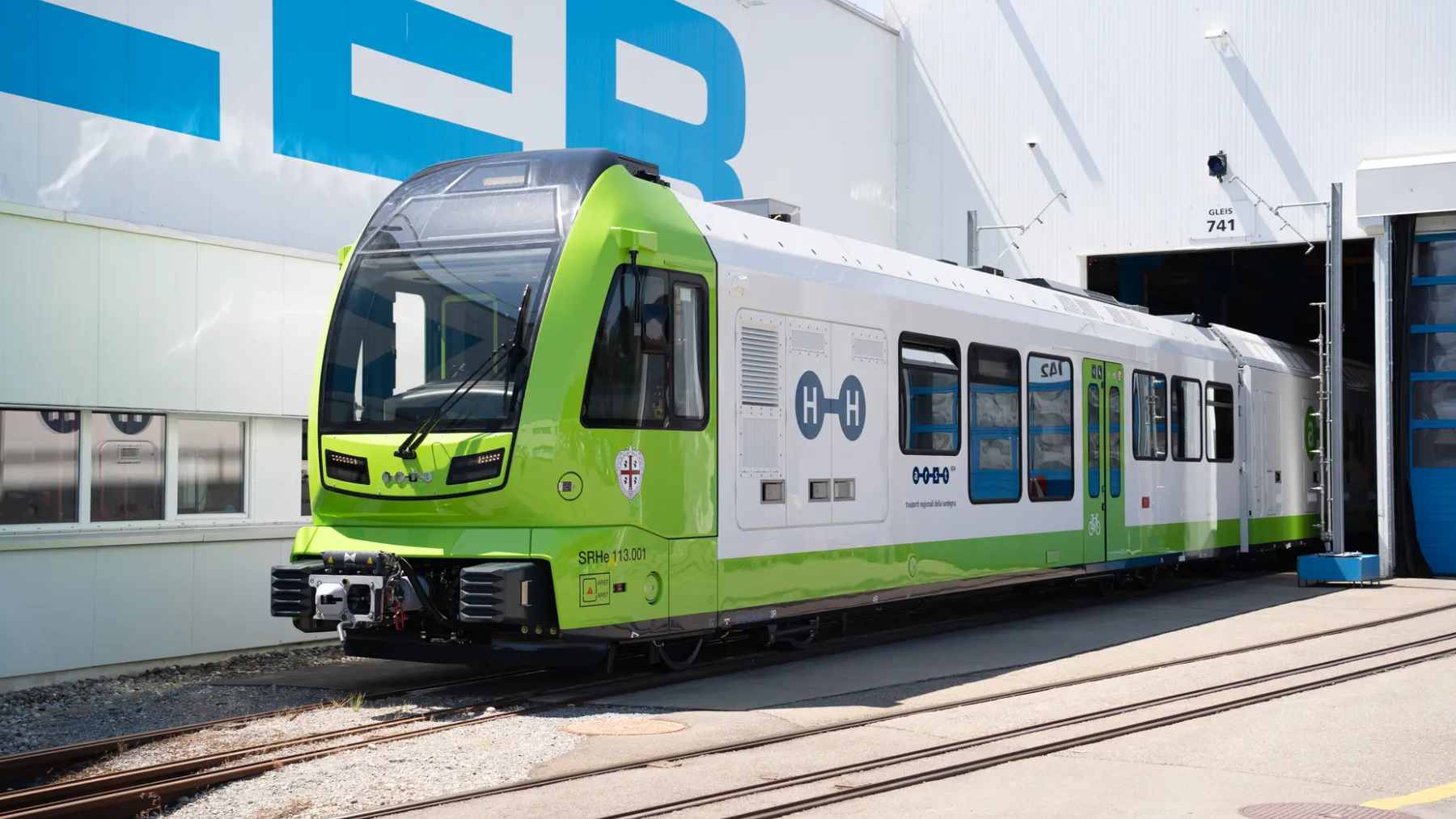
A Swiss train maker and a Sardinian transport operator have unveiled something rail engineers have not built before: a hydrogen-powered train designed specifically for narrow-gauge lines. Stadler and ARST say the train will enter passenger service in 2028 on routes in Sardinia, replacing diesel service on lines where conventional electrification is difficult.
The big promise is simple enough for any commuter to understand. Instead of diesel exhaust, the train’s fuel-cell system is designed to release water vapor, while 10 ordered trains are expected to avoid more than 2,300 tons of carbon dioxide every year compared with diesel trains, by Stadler’s estimate.
A world first
Stadler and ARST presented the train at Stadler’s commissioning center in Erlen, Switzerland. The companies describe it as the world’s first hydrogen-powered train built for narrow-gauge railways, a niche that matters because many older regional lines cannot easily handle heavier modern trains.
The first Sardinian routes named for passenger service connect Alghero Airport with Mamuntanas, Sassari with Alghero, and Sassari with Sorso. For travelers, that means this is not just a laboratory project sitting on a test track somewhere, it is being prepared for real public service.
Why hydrogen matters here
Electric trains are usually the clean standard for rail, but installing overhead wires and supporting heavier equipment can be a tough fit on older, narrow, winding lines. Sardinia’s rail geography, with strict weight limits and sharp curves, makes that challenge very real.
That is where hydrogen comes in. In practical terms, the train carries fuel cells and hydrogen tanks in a central car, known as the ‘Power Pack’, which converts hydrogen into electricity and keeps the traction batteries charged while the train operates.
The cleaner number
Stadler says the 10 hydrogen trains ordered for Sardinia will save more than 4.6 million lbs. of carbon dioxide per year. The company compares that to about 450 car trips around the globe, a figure meant to make the climate benefit easier to picture.
Still, hydrogen is only as clean as the energy used to produce it. That is why this project stands out, at least on paper, because the companies say the hydrogen will be produced with energy obtained entirely from solar power.
Solar fuel on the island
The Sardinian plan is not just to buy hydrogen from somewhere else and load it into trains. ARST says the project is part of a shift toward producing clean energy for its own transport network, with active work tied to sites in Mandas, Alghero, and Macomer.
That makes the train more than a new vehicle. It is closer to a transport-and-energy system, where sunlight produces hydrogen, hydrogen feeds the fuel cells, and the train moves without the local smoke and vibration of old diesel units.
Built for difficult tracks
Narrow-gauge railways often come with a tradeoff. They can snake through valleys, hills, and smaller communities, but they also limit how much weight a train can place on the track.
Stadler says the new vehicle uses a special profile and lightweight materials to meet those requirements. That may sound like a small engineering detail, but it is the difference between a clean train that can run on the line and a clean train that only works in a brochure.
A quieter ride
For passengers, the environmental story may be felt first as comfort. Stadler says the trains will have air-conditioned interiors, large panoramic windows, and low-floor access to make boarding easier for people with reduced mobility.
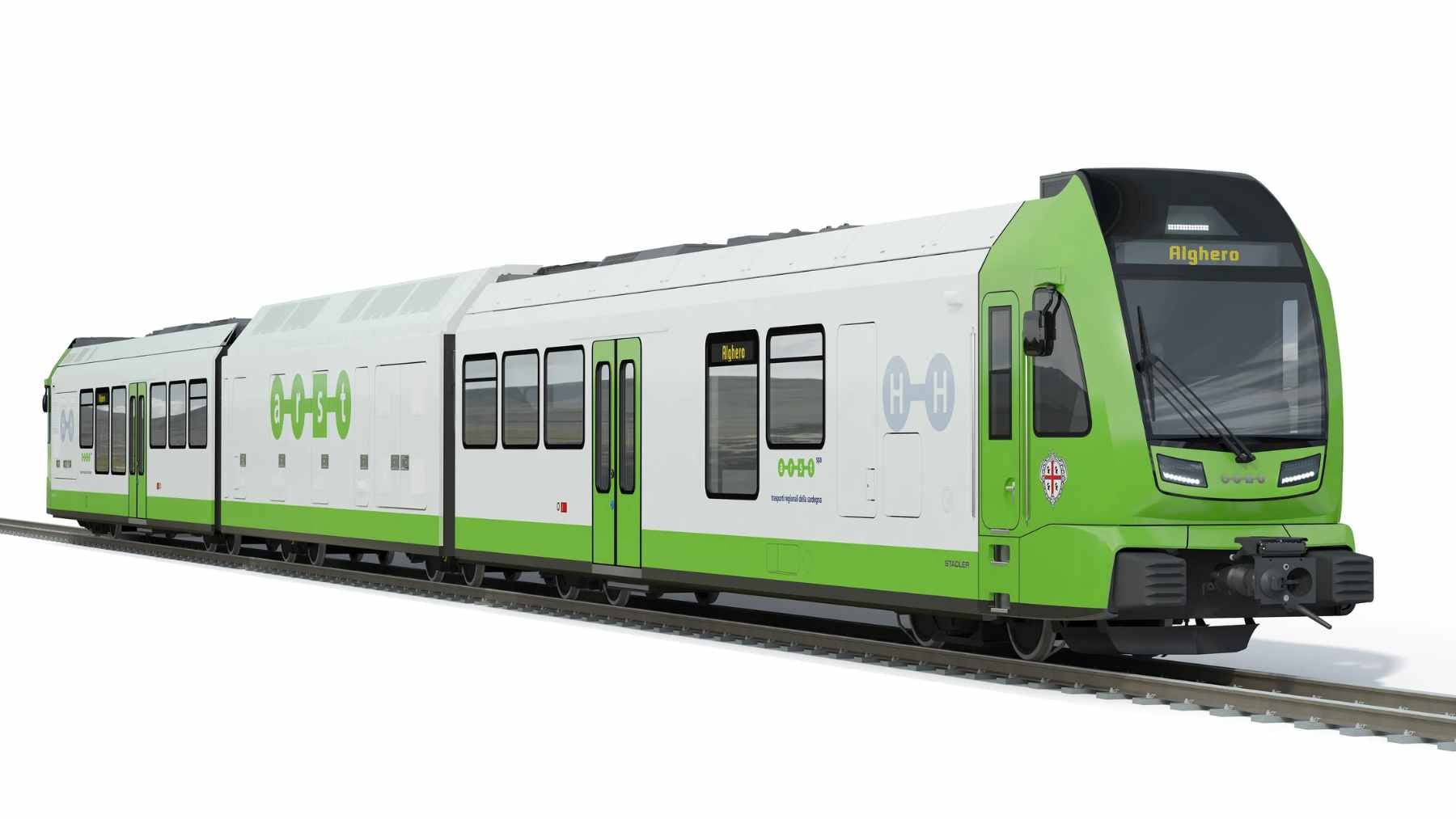
There is also the daily-life benefit. Compared with diesel trains, the hydrogen vehicles are expected to be quieter and produce less vibration, which matters when a commute runs past homes, farms, stations, and quiet stretches of countryside.
Not just Sardinia
Sardinia is the headline, but it is not the only Italian region involved. Stadler says nine hydrogen trains are being built for Ferrovie della Calabria, while two more units are planned for Ferrovia Circumetnea in Sicily.
The broader goal is to decarbonize narrow-gauge rail transport in Italy. Before passengers board, though, the Sardinian trains still must go through testing and meet guidelines set by Italy’s rail and infrastructure safety agency ANSFISA.
What happens next
The schedule points to passenger service from 2028, so the next test is not just whether the technology works, but whether the whole system works reliably. Solar production, hydrogen supply, safety approval, maintenance, and everyday operations all have to line up.
Maurizio Oberti, Stadler’s sales and marketing director for the Italian market, called the train a “world first in the global rail sector.” If Sardinia proves the model can work, other hard-to-electrify regional lines may be watching closely.
The official press release was published on Stadler Rail’s website.