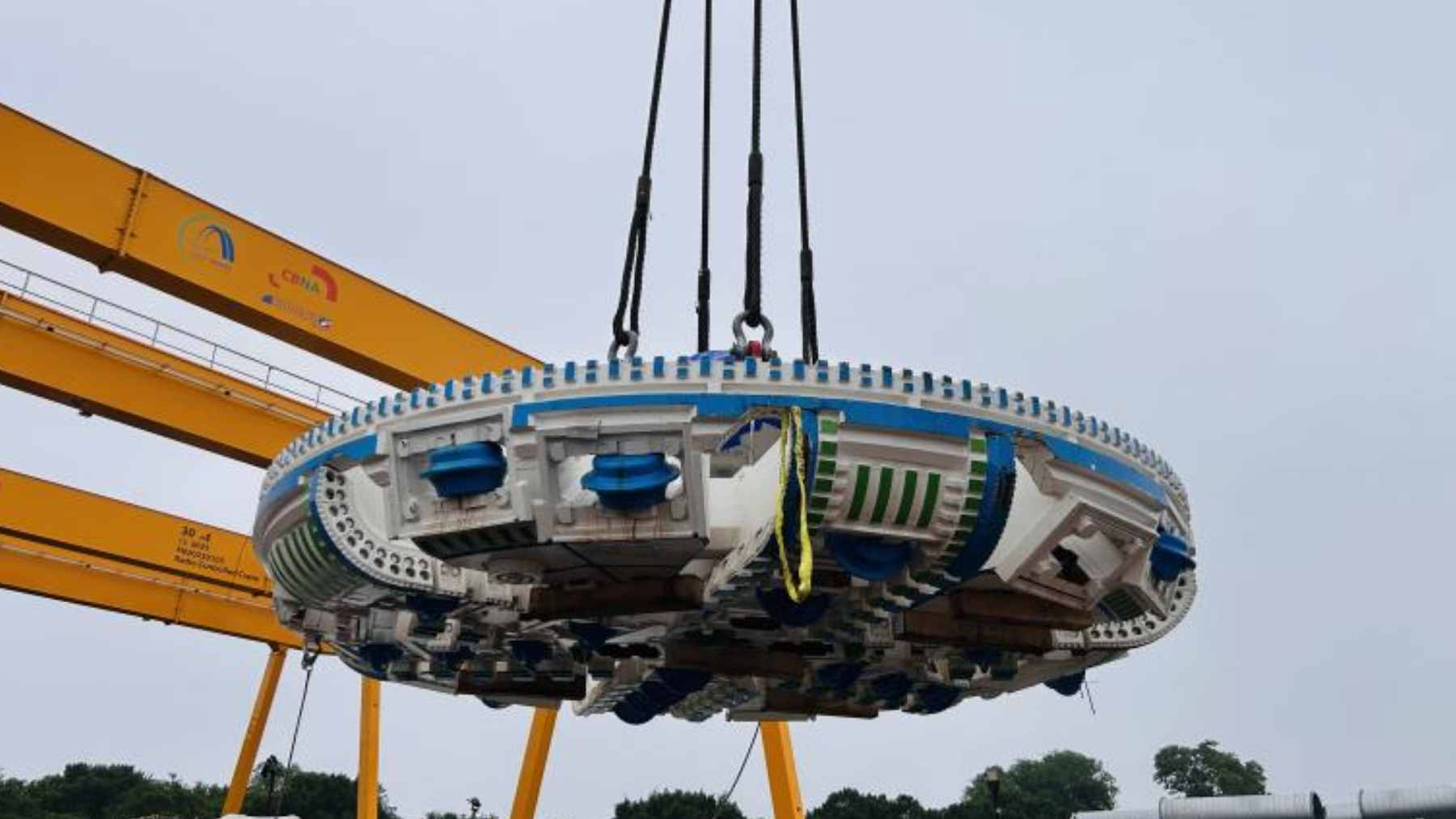
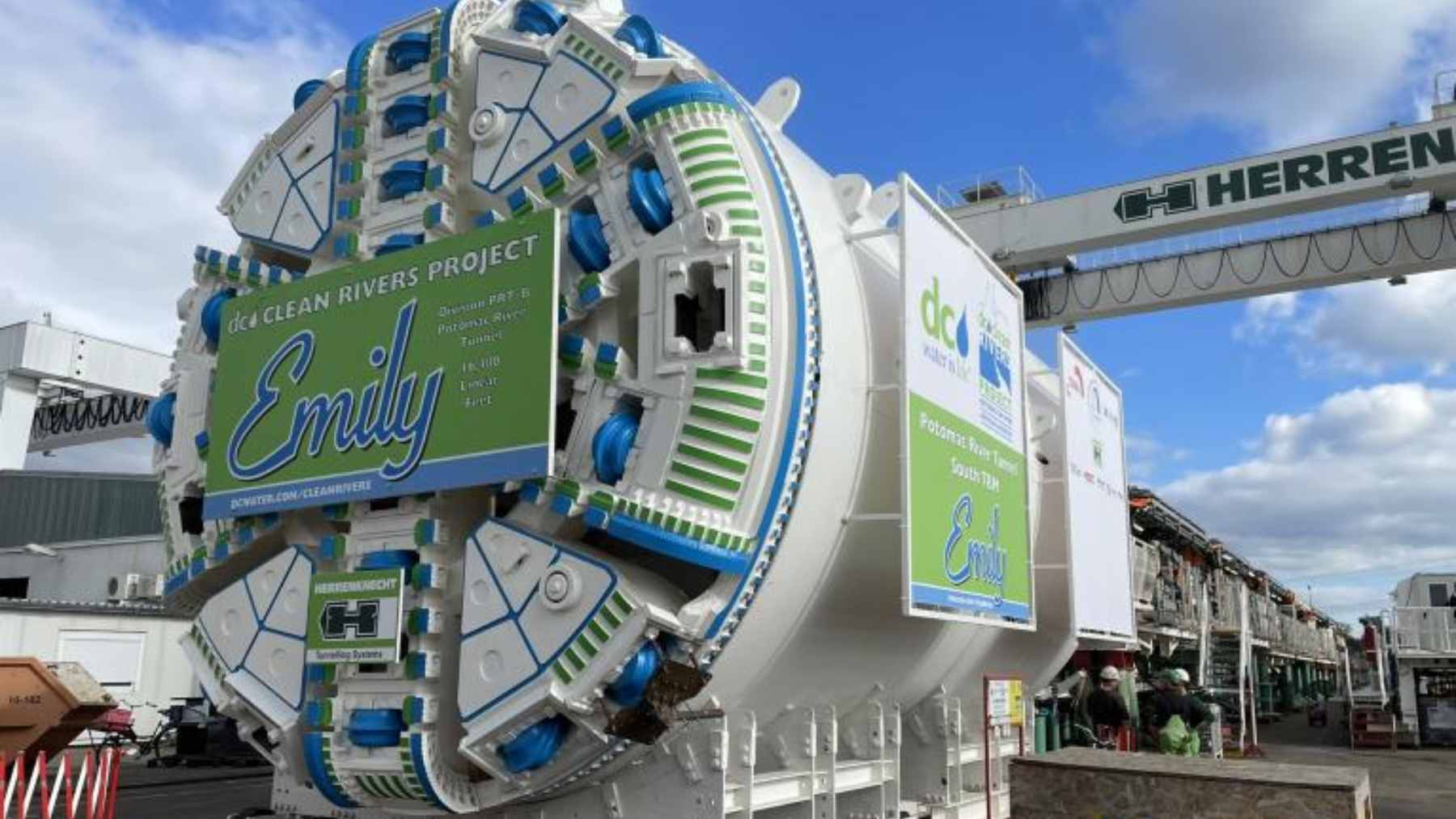
Emily has arrived in Washington, D.C., but this is not just another construction update. DC Water’s second tunnel boring machine reached the West Potomac Park construction site on May 27, 2026, after being built and factory tested in Germany, shipped across the Atlantic, and moved from the Port of Baltimore for reassembly in the District.
Once assembled and launched, Emily will dig the southern section of the Potomac River Tunnel, a major underground project meant to cut sewage overflows into one of the capital’s most important waterways. In practical terms, it is a 21-ft.-wide machine doing the kind of dirty work most people never see, but almost everyone benefits from when heavy rain hits the city.
Emily’s long trip to Washington
The machine’s journey sounds almost like something from a military logistics operation. Built in Germany, taken apart, loaded for an ocean crossing, and then hauled from Baltimore to Washington, Emily arrived with one mission underground.
West Potomac Park will now become her launch point and operating hub. From there, she is expected to dig south toward Joint Base Anacostia-Bolling, while her sister machine, Mary, is already excavating north toward Georgetown.
DC Water Chief Executive Officer and General Manager David L. Gadis said Emily will help “protect the Potomac River, reduce pollution and serve the District for generations to come.” That is a big promise, and the numbers show why the agency is treating this as a turning point.
Why this tunnel matters
The problem starts with an old urban reality. In parts of Washington, stormwater and wastewater can share the same sewer system, which means heavy rain can push the system beyond capacity.
The U.S. Environmental Protection Agency explains that combined sewer systems collect rainwater runoff, domestic sewage, and industrial wastewater in one pipe. When runoff exceeds capacity, untreated stormwater and wastewater can flow into nearby bodies of water.
That is where the Potomac River Tunnel comes in. DC Water says the project will capture those overflow flows and redirect them to the Blue Plains Advanced Wastewater Treatment Plant instead of letting them spill into the river.
A 5.5-mile fix below the city
The full Potomac River Tunnel will run about 5.5 miles beneath Washington. DC Water lists the tunnel as 18 ft. in diameter, about 100 ft. deep, and part of a construction effort expected to last around 6 1⁄2 years with a listed cost of $819 million.
That may sound like a lot of concrete, steel, and paperwork. But at the end of the day, what it is trying to do is simple enough to understand after one bad storm: keep dirty overflow water out of the Potomac.
By DC Water’s own estimates, the project is expected to reduce combined sewer overflow events into the Potomac from about 74 per year to just four in a typical year. It is also expected to cut overflow volume by 93%.
Built for different ground
Emily is not just a giant drill. DC Water says she is designed to break through soil and rock, remove excavated material, and install concrete tunnel segments behind her as she moves forward.
That matters because the southern stretch is not the same as the northern one. Mary was built for harder rock toward Georgetown, while Emily is meant for softer and mixed ground, including soils beneath the river.
This matters to anyone walking along the water or commuting across the city. Tunneling safely under mixed ground is what lets a project like this move forward without turning surface life upside down more than necessary.
Clean rivers and heavy engineering
The Potomac River Tunnel is part of DC Water’s broader Clean Rivers Program, a long-term effort to reduce pollution in the District’s waterways. The project is not glamorous in the way a new bridge or skyline tower might be, but it is the kind of hidden infrastructure cities rely on every single day.
There is also a wider environmental point here. As storms become harder for old systems to manage, cities are being forced to upgrade the pipes, tunnels, treatment plants, and control systems that sit below street level.
Emily’s arrival does not clean the Potomac overnight. Still, it gives the project its second underground workhorse, and that makes the river cleanup plan feel less like a blueprint and more like a machine already moving.
What happens next
Now that Emily is in Washington, crews can begin preparing her for excavation. That means reassembly, testing, and the careful work of getting a specialized tunnel-boring machine ready to operate deep below the city.
Once she starts digging, Emily and Mary will work in opposite directions from the West Potomac Park area to complete the tunnel system. One machine heads north, the other south, and together they help build the underground route meant to move polluted overflow toward treatment instead of into the Potomac.
It is easy to miss a project like this because so much of it happens out of sight. But when the next heavy rain comes, the difference between an old overflow system and a modern tunnel can be measured in millions of gallons, and in a cleaner river.
The press release was published on DC Water.