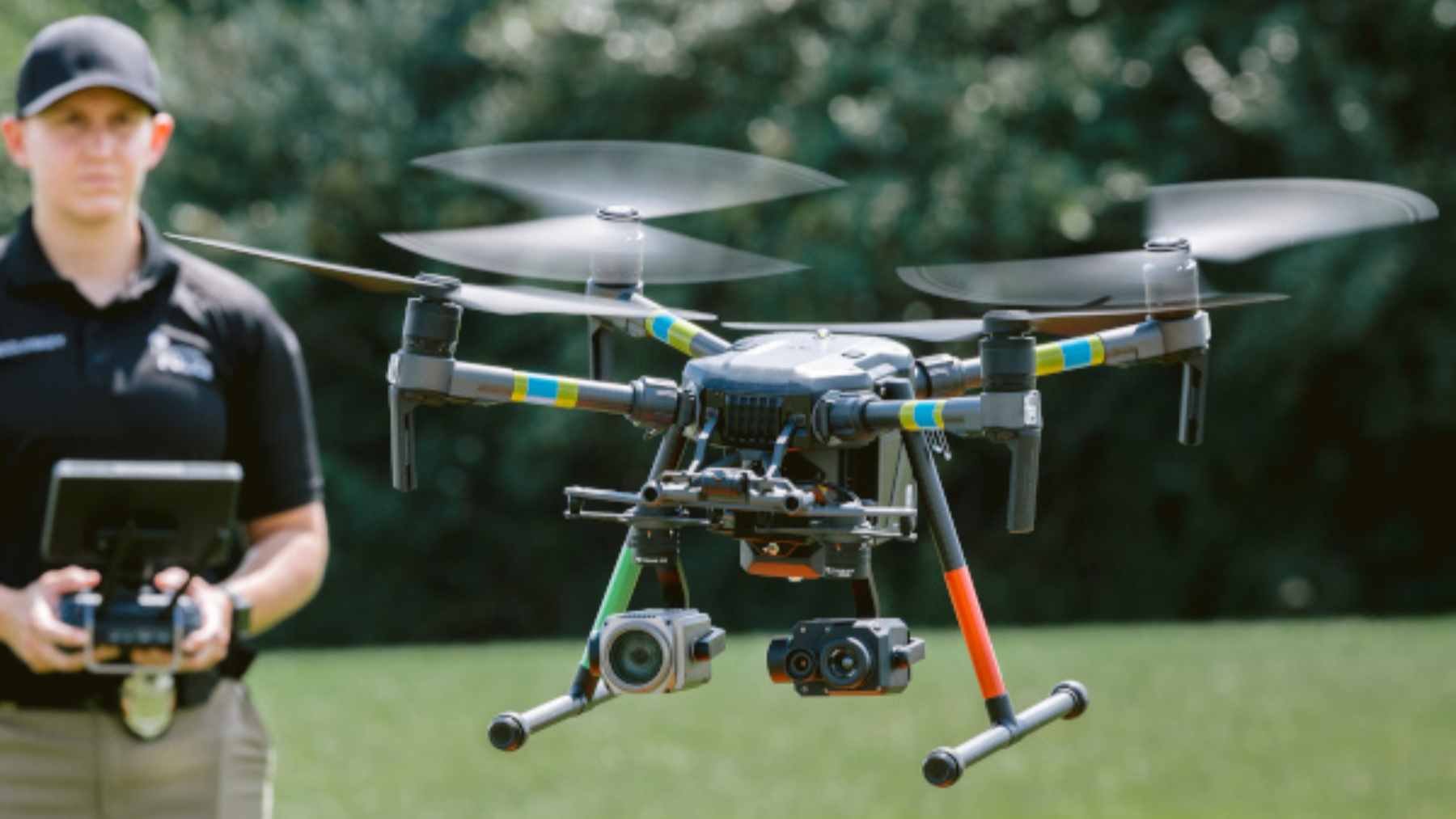
Stockton, California has approved a major expansion of its police technology network, adding Flock Safety’s Drone as First Responder platform to a system that already includes automated license plate readers across the city.
The March 31 vote authorized a $3.15 million agreement with Flock Group Inc. and extended the contract through April 14, 2031, pushing the total potential value above $5.4 million over five years.
City leaders describe the drones as a public safety upgrade. Residents who spoke against the plan see something else too: a deeper question about surveillance, immigration enforcement, and the real cost of putting more smart hardware into public life.
That cost is not only financial or political. It is also environmental, because every drone dock, camera, radar system, lithium battery, and cloud-connected device eventually has a material footprint.
What Stockton approved
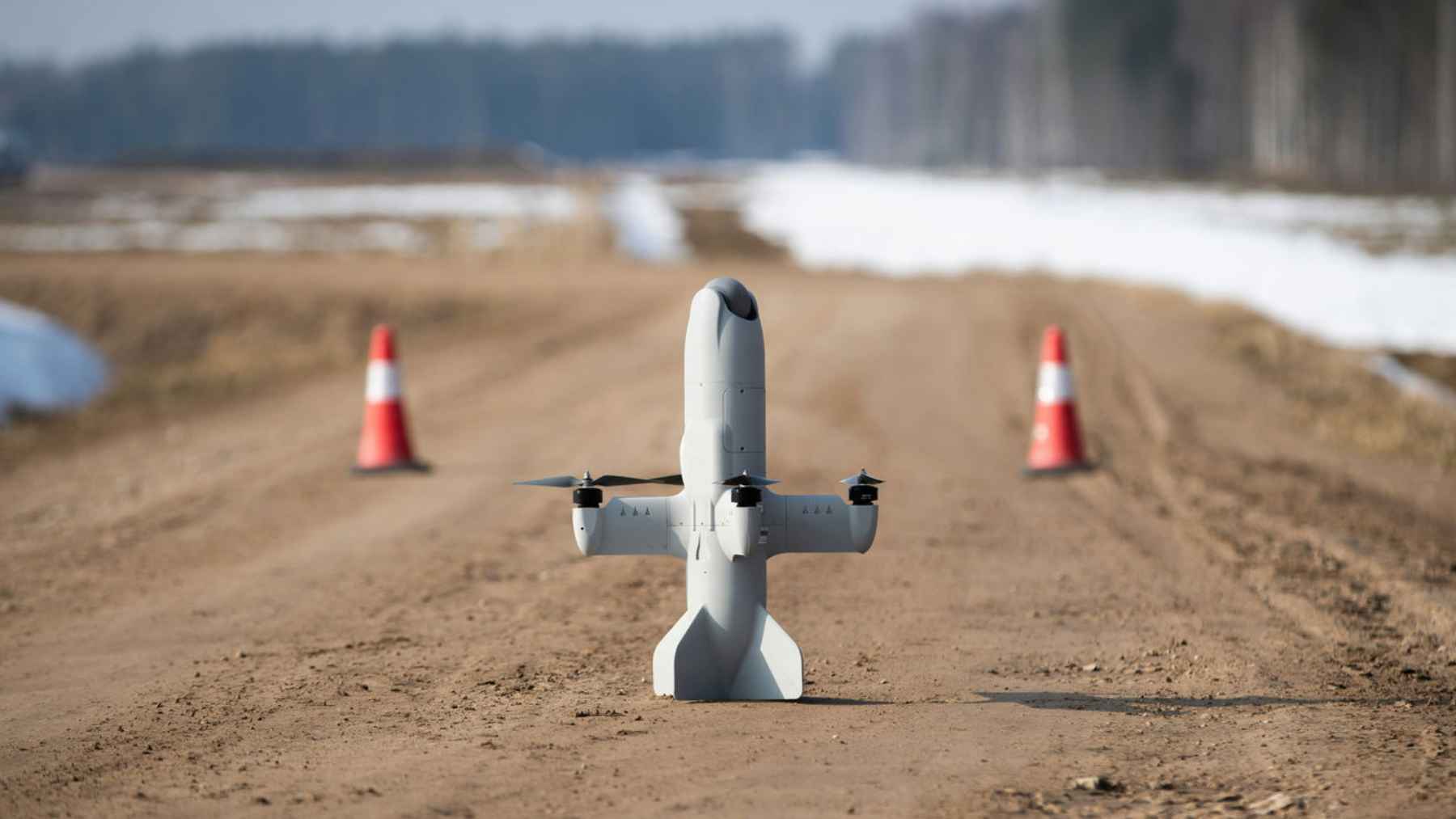
The plan adds six Flock drones that can be sent out after 911 calls and stream live video before officers arrive. Police officials said the drones could reach scenes in roughly 30 seconds to four minutes and help officers understand what they are walking into before a patrol car pulls up.
Police Lt. David Padula said the system would provide “quick deployments” and “real time updates.” Mayor Christina Fugazi has called drones as first responders “the future,” saying the technology lets public safety professionals assess scenes without putting lives at risk.
More than a drone deal
In practical terms, Stockton is not buying a few flying cameras. It is expanding a larger public safety platform that already includes about 120 Flock license plate reader cameras, according to city officials cited by Stocktonia.
Contract documents also describe radar-based detect-and-avoid technology, Federal Aviation Administration regulatory support, training, 911 call integration, and FreeForm, an AI-enabled search tool that can search license plate reader images and video streams in plain language.
That may sound efficient, but it also means the city is tying more daily policing decisions to one vendor’s hardware, software, and data systems.
Why residents pushed back
The public concern was not just about drones buzzing overhead. Residents raised questions about who can access the data, how long it is stored, and whether it could be used for immigration enforcement or broader surveillance. Anyone who has ever watched a camera appear on a streetlight overnight understands the unease.
Flock says it does not work with U.S. Immigration and Customs Enforcement, that ICE does not have direct access to its cameras, systems, or data, and that federal sharing is turned off by default.
The company also says customers own and control their data, and that Flock does not sell customer data.
Trust is the hard part
Stockton officials have tried to reassure the public. KCRA reported that Fugazi pointed to California’s SB 54 protections, while Councilmember Mario Enriquez said he asked both Flock and police directly about ICE access and received “no” answers.
Trust is fragile with surveillance technology. CBS Sacramento noted that Modesto police dealt with an issue involving an automatic license plate reader system that had been improperly connected to several federal agencies before those links were disconnected.
That is why critics keep asking a simple question: what happens when policy says one thing and settings do another?
The environmental question
The environmental piece is easy to miss because drones look clean in the sky–no exhaust pipe, no idling engine, no smoke. But a smart-city network still depends on manufactured electronics, batteries, solar panels, poles, replacement parts, servers, and disposal plans.
California’s CEQA database shows that a prior Stockton Flock camera installation, involving two automated license plate readers, used 13-ft. poles with cameras and solar panels and was treated as a small-structure exemption with minimal ground disturbance.
That may be reasonable for two cameras, but the harder question is what happens when small installations become a citywide technology layer.
Batteries and e-waste matter
Lithium-ion batteries are common in drones and portable electronics, but they are not ordinary trash. The U.S. Environmental Protection Agency warns that devices containing these batteries should not go into household garbage or regular recycling bins, and should instead be taken to separate recycling or household hazardous waste collection points.
That matters because the world is already drowning in electronic waste. The Global E-waste Monitor 2024 reported that 68 million tons of e-waste were generated in 2022 and projected that the figure could rise to 90 million by 2030.
What Stockton should track next
If Stockton wants residents to accept this system, it needs more than promises at a meeting. It needs public reporting that ordinary people can understand, including how often drones fly, how often they prevent unnecessary patrol responses, who searches the data, which agencies can access it, and how long records are kept.
The same should go for the environmental side. The city could publish battery replacement practices, e-waste recycling requirements, equipment lifespan estimates, energy use, and end-of-contract disposal rules. At the end of the day, “smart” public safety should also mean accountable public infrastructure.
The official agenda item was published on Stockton Granicus.