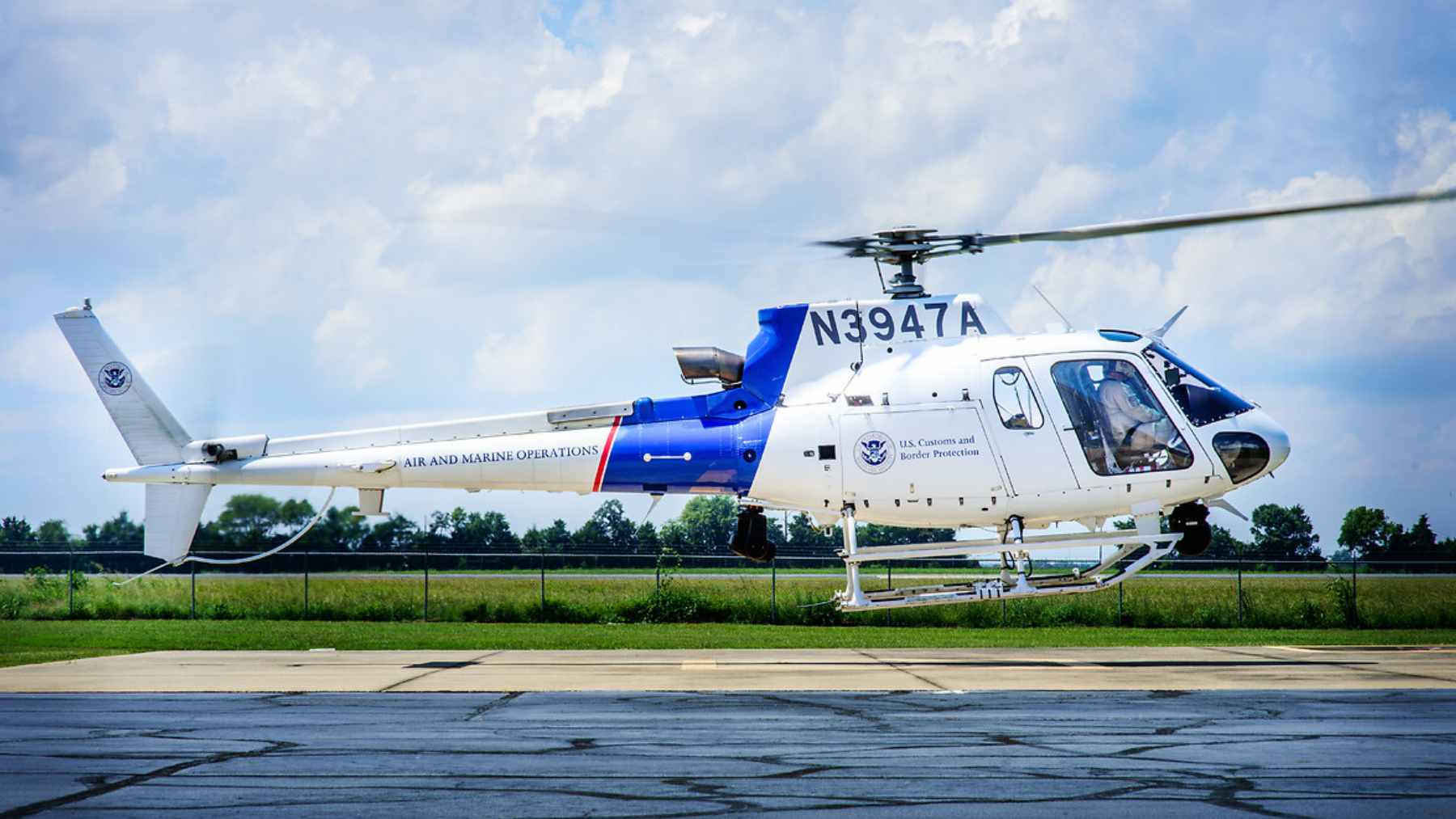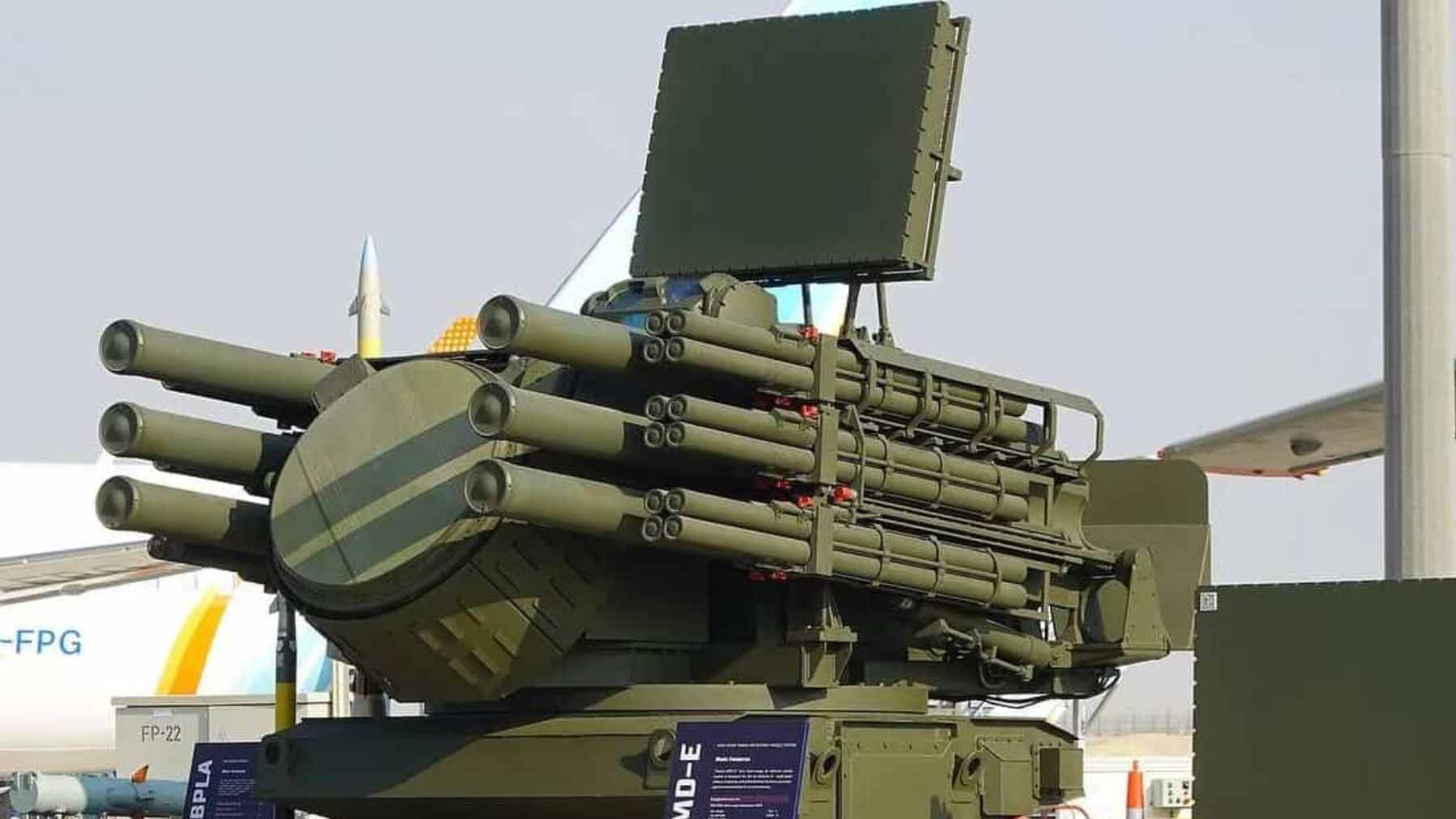
A new video circulating on social media shows a Russian Mi-26 heavy transport helicopter lowering a Pantsir-SMD-E short-range air defense system onto a Moscow rooftop.
The exact building and date have not been independently confirmed, but the footage fits a broader pattern that has unfolded around the capital since drones first brought the war directly to Moscow in May 2023.
The image is striking because it moves the drone war into the city’s built environment. Office towers, apartment blocks, airports, ring roads and industrial sites are increasingly being treated as part of the defensive map. For Moscow, the message is blunt: cheap flying machines have forced one of the world’s most heavily guarded capitals to look upward, building by building.
Why the rooftop matters
Radar hates clutter. In a dense city, glass towers and concrete blocks can shorten sightlines, hide low-flying drones and leave air defense crews with less time to react. Lifting a system onto a roof gives it a cleaner view of the horizon, a little like standing on a chair in a crowded room to see what is coming.
That helps explain why Russia used the Mi-26, a giant helicopter with a maximum payload of about 44,000 lbs., to carry the system by external sling. It is not a casual move. It is what you do when a heavy weapon needs to reach a place where roads, ramps and normal military trucks are not enough.
Rostec has also described the Pantsir-SMD-E as a modular system that can be placed on rooftops or specially prepared sites. In practical terms, Russia is not just protecting Moscow from the outskirts. It is turning parts of the city itself into elevated firing positions.
A system built for drone swarms
The Pantsir-SMD-E is the latest missile-only branch of the Pantsir family. Older Pantsir-S1 systems combined missiles with automatic cannons, but this version drops the guns and focuses on guided interceptors. That choice says a lot about the problem Russia is trying to solve.
The system can carry up to 48 miniature short-range missiles or 12 standard missiles, depending on the loadout.
Rosoboronexport lists the TKB-1055 missile’s engagement range at about 1,640 ft. to 4.3 miles, while the larger 57E6-E reaches from roughly 0.75 miles to 12.4 miles. With radar or higher command support, the system is listed as able to engage targets moving at up to about 3,280 feet per second.
Why does that matter? Because drones can arrive in numbers. A launcher with 12 ready missiles may look powerful until an opponent tries to drain it with wave after wave of cheap targets. Rostec says the new miniature missiles raise the load to “up to 48 munitions,” making it harder for an attacker to “clear” the system before a bigger strike arrives.
Moscow’s shield is getting denser
This is not the first time air defense hardware has appeared above Moscow. Pantsir systems were seen on rooftops in 2023, including near high-profile government areas, after drone attacks exposed gaps in the capital’s defenses. Since then, the buildup has kept spreading.
Open-source reporting based on satellite imagery has described more than 40 additional Pantsir-S1 systems around Moscow in 2025 alone, with some positioned near Zelenograd, Podolsk, Domodedovo and Zhukovsky. Other reports put the wider increase since 2023 at more than 100 air defense systems around the capital.
That pattern looks, to a large extent, like an updated version of an old idea. During the Cold War, Moscow was protected by layered air defense rings. Today’s version is being shaped by small drones instead of bomber formations, but the geography is familiar. The trouble is, the threat is smaller, cheaper and harder to spot.
The cost is more than military hardware
Every rooftop battery changes the balance of the war in small but meaningful ways. A Pantsir placed on a Moscow building is not sitting closer to the front line in Ukraine. A missile held back for the capital is not available somewhere else.
That does not mean Russia is suddenly exposed. It does mean Ukraine’s drone campaign has forced Moscow to spend attention, equipment and interceptors on homeland defense at a scale that would have seemed unlikely early in the war.
The capital is now competing with military bases, oil sites, factories and front-line formations for the same defensive resources.
There is also the urban question: what does it mean when civilian roofs become military platforms? For people walking to work, waiting for a train or looking out of an apartment window, air defense stops being an abstract map symbol. It becomes part of the neighborhood skyline.
Drones are changing the environment of war
The battlefield is no longer limited to trenches, air bases and supply roads. It now includes antennas, rooftops, industrial parks and commuter corridors. That is the real environmental shift here, not in the climate sense, but in the way modern war reshapes the spaces where people live and work.
Ukraine’s long-range drone campaign has repeatedly reached inside Russia, including Moscow and industrial regions. Russia, for its part, says its air defenses have intercepted large numbers of drones and other aerial threats. Both claims point to the same larger reality.
The drone has become cheap enough to send in bulk, and important enough to force expensive defenses into awkward places.
For the defense industry, that is a business signal as much as a battlefield one. Demand is growing for short-range radars, mini-interceptors, electronic warfare tools and systems that can protect airports, factories and power infrastructure.
The next big defense market may be less about one super-weapon and more about thousands of small answers to thousands of small flying threats.
What happens next
Expect more elevated sites, more mixed missile loads and more pressure on air defense crews to sort real threats from decoys. That is the uncomfortable math of drone warfare–the attacker needs one path through, but the defender has to watch every path at once.
Moscow’s rooftop Pantsir deployment is not proof that Russia’s defenses are failing, and it is not proof they are airtight, either. It is a sign that the drone war has become persistent enough to change architecture, logistics and military planning inside the capital.
At the end of the day, the helicopter lift says what official language often softens. The sky over Moscow is now contested in ways that can be seen from the street.
The official statement on the Pantsir-SMD-E’s rooftop deployment option was published on Rostec.