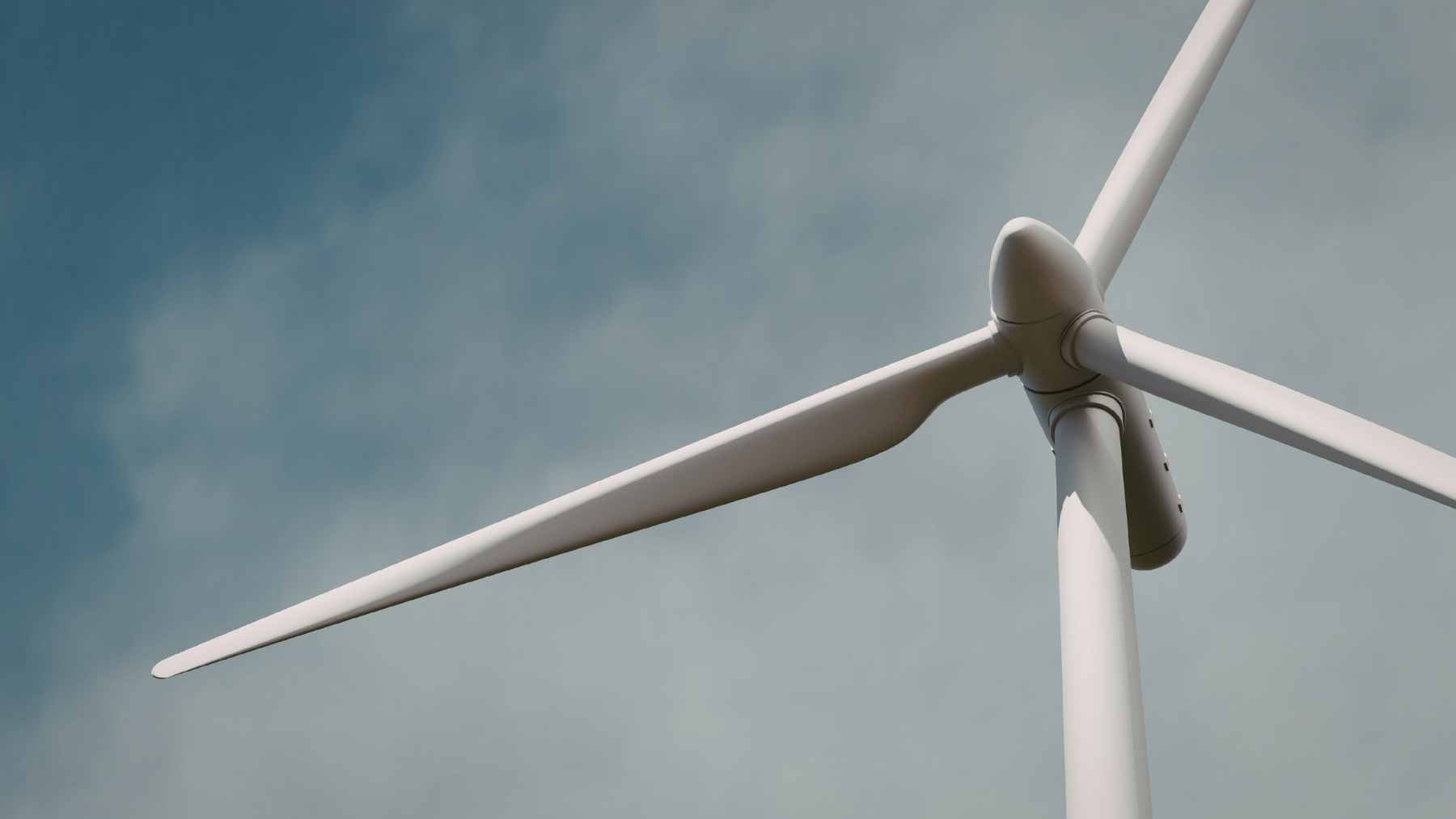
Across rural America, giant wind turbines are rising above corn, soybeans, cotton, and pasture. The surprising part is not just their size. New U.S. land-based turbines installed in 2023 averaged a hub height of 339 ft., which is taller than the Statue of Liberty, but the farming below them largely keeps going.
Could a field feed people and power homes at the same time? By the USDA’s own numbers, the answer is yes, at least in many wind-heavy rural areas. More than 90% of rural wind turbines studied were placed on agricultural land, and in the Midwest, 94% were installed on cropland, while less than 1% of agricultural land around wind turbines left farming after installation.
What are two-story farms?
The idea is simple enough: down below, farmers keep planting, grazing, spraying, and harvesting. Up above, turbine blades catch the wind and turn it into electricity.
A wind turbine does not cover a field the way a shopping center or a warehouse would. Most of the physical footprint comes from the tower base, access roads, and maintenance space. USDA researchers noted that more than 95% of land in a wind farm does not contain wind-related structures such as turbine pads or roads.
That is why the machines are spread far apart. They need room to avoid stealing wind from one another, and farmers need room for tractors, planters, and combines. In practical terms, one acre can produce grain from the soil and power from the sky.
The land stayed in production
The biggest fear is easy to understand. If turbines arrive, does farmland disappear? For the most part, the USDA data says no.
The Economic Research Service studied land cover before and after renewable energy projects and found that agricultural land near wind turbines usually stayed in agriculture. The directly affected rural land from solar and wind projects totaled about 424,000 acres in 2020, less than 0.05% of the nearly 897 million acres used for U.S. farmland.
That does not mean every local concern vanishes. It means the national picture is more nuanced than the usual argument. Wind power can take space, but it usually does not take the whole field.
Iowa shows the scale
No state shows this better than Iowa. In 2024, 63% of Iowa’s electricity net generation came from wind, the largest wind power share of any state, according to the U.S. Energy Information Administration.
That matters when people think about the electric bill during a hot, sticky summer evening. It also matters for rural families watching crop prices, fuel costs, and weather all at once. USDA data found that from 2011 to 2020, about 3.5% of U.S. farm operations received commercial energy payments, with average annual payments of $30,482 in 2020 dollars.
For farmers, that income can act like a second crop. It does not replace corn, soybeans, or cattle, but it can make a rough season easier to survive. Not a miracle, but still useful.
The Texas giant
Then there is Roscoe, Texas, one of the most famous examples of wind power built across rural land. The Roscoe Wind Complex reached full capacity in 2009 with 627 turbines and 781.5 megawatts spread across about 100,000 acres.
Not every farm becomes Roscoe, of course. A project that large brings cranes, truck traffic, new service roads, and transmission needs. Anyone who has lived near construction knows the sound, the dust, and the slow-moving equipment on local roads.
But Roscoe also shows why landowners sign these deals. A farmer can keep using much of the land while leasing small portions of it for energy infrastructure. At the end of the day, that is the business case behind the “two-story farm.”
The hard questions
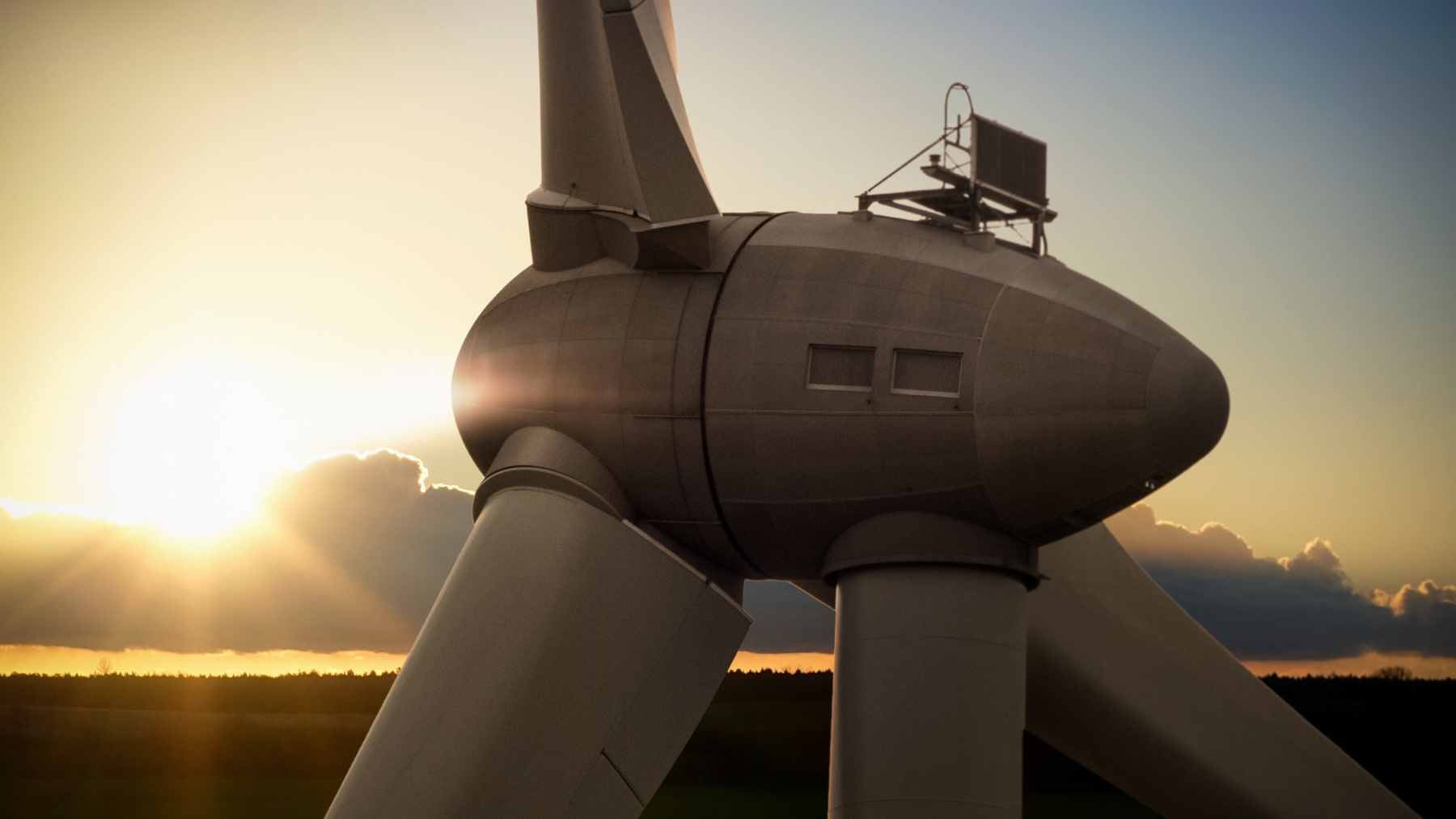
The trouble is, a wind turbine is not invisible. USDA researchers note that wind development can bring noise disturbance, altered views, and wildlife concerns. For a neighbor who does not receive lease payments, the project may feel less like clean energy and more like an industrial skyline.
There is also the grid. Berkeley Lab reported that, at the end of 2024, about 10,300 U.S. projects were actively seeking grid interconnection, including 271 gigawatts of wind capacity. In other words, building turbines is only part of the job. Connecting them is another story.
Defense and aviation concerns can enter the picture, too. The Department of Energy says wind turbines can interfere with radar systems if they sit in the line of sight, affecting air traffic control, weather forecasting, homeland security, and national defense missions. But it also says thoughtful site selection and mitigation have resolved conflicts in most cases.
Why it matters now
The debate has become more political. In August 2025, USDA announced that wind and solar projects would no longer be eligible for its Rural Development Business and Industry Guaranteed Loan Program, and that wind and solar systems under the REAP Guaranteed Loan Program would need to be “right-sized” for farms and ranches.
That policy shift makes the data even more important. If farmland protection is the goal, wind and solar should not be treated as identical land-use problems. The USDA’s own research suggests wind turbines, unlike many larger ground-mounted solar projects, often coexist with agriculture rather than replacing it.
For countries and states with strong agriculture and steady wind, the lesson is not to copy the U.S. model blindly. Contracts need clear rules on decommissioning, road repairs, neighbor impacts, and who pays when equipment reaches the end of its life. Clean energy works best when the community can see the benefit, not just the blades.
The official report was published on USDA Economic Research Service.