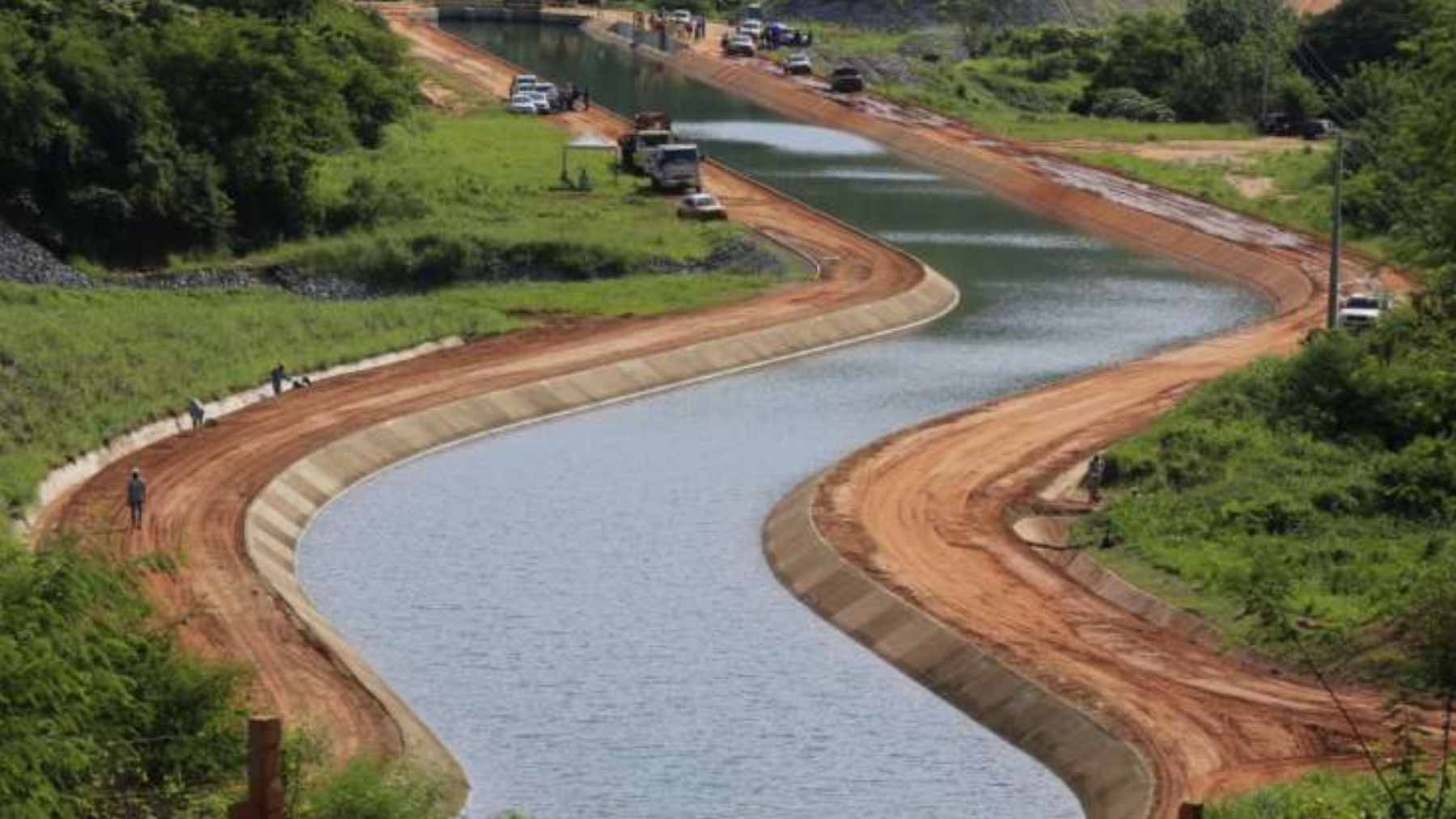
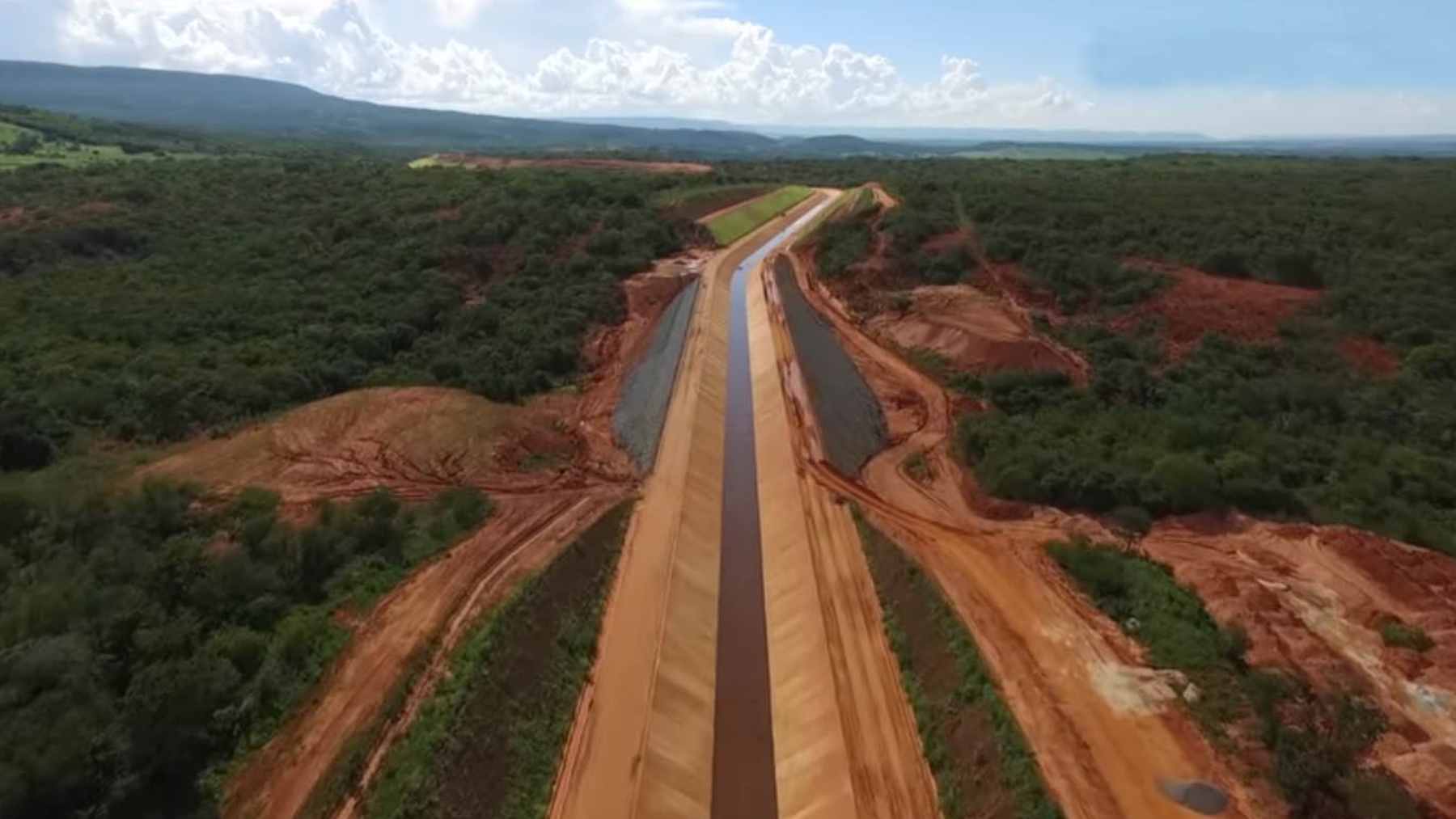
Brazil is close to completing one of the most ambitious water projects in Latin America, a 145.3-km (90-mile) system that is often described as an artificial river. In the state of Ceará, the Cinturão das Águas do Ceará (CAC) is being built to move water from the São Francisco River integration network into areas where drought is not just a weather event, but part of daily life.
The latest official update says the project has reached 92% completion, with another 9.5 miles recently cleared to receive São Francisco water. That matters because the work is not just about concrete, canals, and tunnels.
It is about drinking water, farms, jobs, industry, and the uneasy question facing many dry regions today: what happens when the rain is no longer enough?
A river made by engineering
The Ceará Water Belt is not a natural river, and it is not simply a giant pipe. It is a long chain of open-air canals, siphons, and tunnels designed to carry water across the landscape from the Jati Dam, on the North Axis of the São Francisco River Integration Project, toward the headwaters of the Cariús River in Nova Olinda.
This enables water to move through some of Ceará’s most vulnerable territory instead of staying far away from the communities that need it. The first stretch is listed by Ceará’s water authority as 90 miles long and designed for a maximum flow of 30 cubic meters per second.
That number sounds technical, but the idea is simple. In a dry season, every extra route for water can mean fewer empty reservoirs, less pressure on wells, and less panic when the sky stays clear for too long.
Why Ceará needs it
Ceará sits in Brazil’s semi-arid Northeast, where rainfall can be highly irregular and droughts have shaped the economy for generations. The World Bank has described much of the state as part of the semi-arid “sertão,” where mean rainfall is below 32 inches per year and the second half of the year is generally dry.
For families, that is not an abstract climate statistic. It can mean watching a water tank run low, seeing crops struggle, or deciding whether livestock can make it through another hot spell.
The project’s supporters say the CAC is a way to make the region less fragile. Ceará’s government has described it as the largest state water transfer project in Brazil and one of the most strategic efforts for water security in the Northeast.
More than household water
The official plan puts human consumption first, but the project is also tied to agriculture, livestock, tourism, industry, and regional growth. According to Ceará’s government, the direct influence area covers 24 municipalities and about 561,000 people.
There is a bigger reach, too. Through links with other water infrastructure, including the Eixão das Águas, the system could help reinforce supply for the Greater Fortaleza region, reaching more than 5 million inhabitants.
That is where the business angle becomes clear. Water security can shape where factories invest, where farms expand, and where families decide to stay instead of leaving during harsh drought cycles.
The energy question
One detail deserves attention. Ceará’s water agency describes the first stretch as fully gravity-fed, which means the water is designed to move without relying on constant pumping along that section.
That matters more than it may seem. Every pump adds to electricity requirements, and every outage can become a weak spot in a system people depend on.
Gravity does not make the project free or riskless, but it can reduce some operating pressure once the system is complete. In a warming world, that kind of design choice can make infrastructure more practical over the long run.
The environmental tradeoff
Still, no artificial river is a magic fix. Moving water can relieve scarcity, but it also creates a new responsibility to manage demand, protect ecosystems, and avoid treating the São Francisco supply as endless.
Experts often warn that drought adaptation works best when infrastructure is paired with monitoring, conservation, and smarter use. Otherwise, a new supply can simply invite new consumption, especially in agriculture and urban growth.
That is the balance Ceará will have to manage. The CAC may be a lifeline, but a lifeline still needs rules.
Almost at the finish line
In December 2025, Ceará’s government said the CAC had reached 91% completion and was expected to finish in June 2026. The newer March 2026 update raised the figure to 92% and said completion remains planned for 2026.
The latest milestone is the release of another 9.5 miles between the CE-060 siphon and the São Francisco Salamanca siphon. That may sound like a small step inside a giant project, but for a 90-mile system, every cleared segment brings water closer to the communities waiting for it.
At the end of the day, Brazil is not creating a river for spectacle. It is building one because in Ceará, water is infrastructure, climate defense, and economic survival all at once.
The official statement was published on Secretaria dos Recursos Hídricos do Ceará.