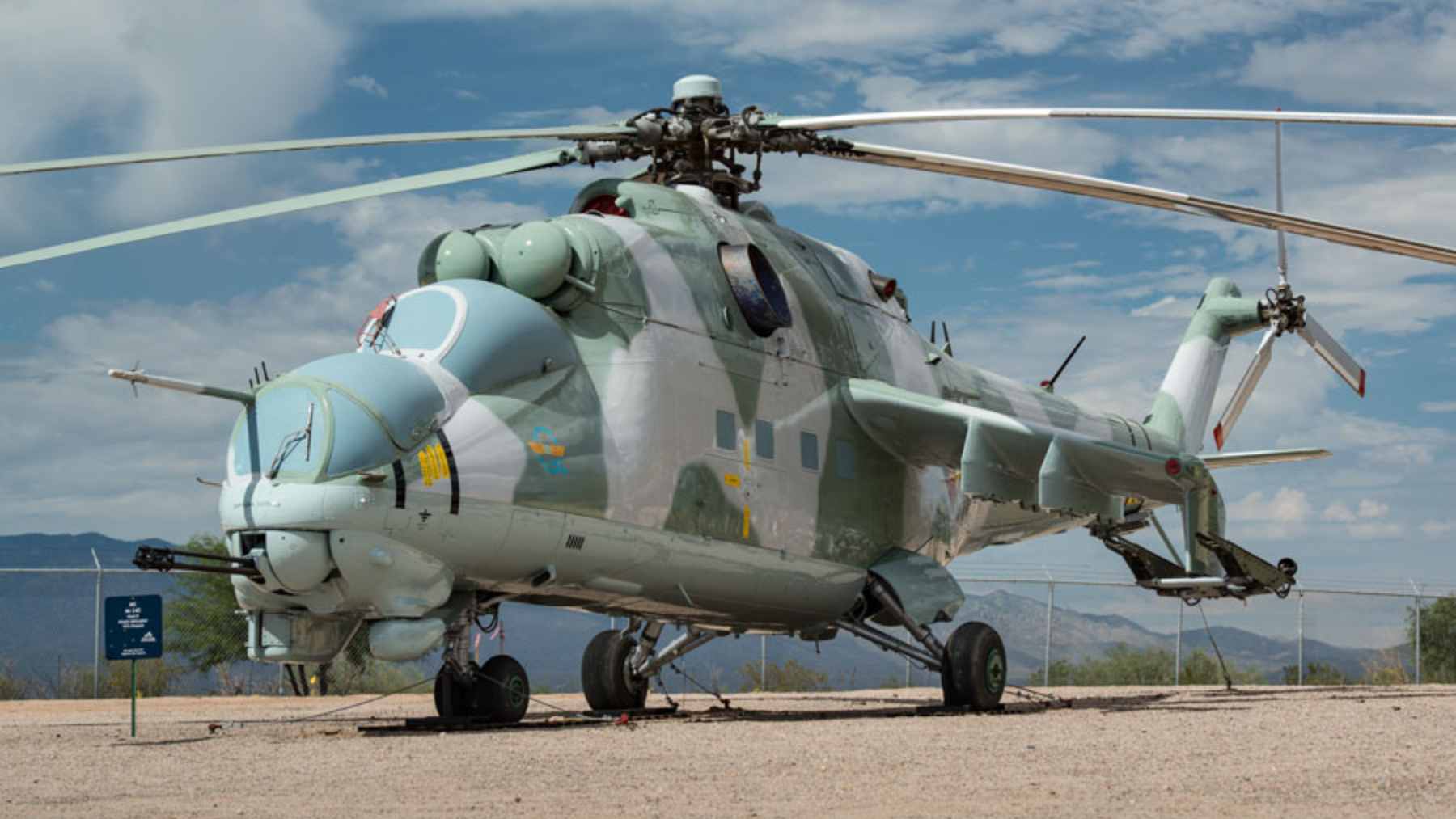
A Russian Mi-24 Hind painted like a U.S. Coast Guard helicopter sounds like something pulled from a fake viral image. It was real, but not in the way many people might first imagine.
The aircraft was not secretly operated by the Coast Guard. It was a Soviet-designed attack helicopter dressed up for the 1991 Russian action film “Charged with Death” (original title “Zarjazhennye smertyu”), where it played the role of an American search-and-rescue helicopter in a North Pacific hijacking story.
A war machine in rescue colors
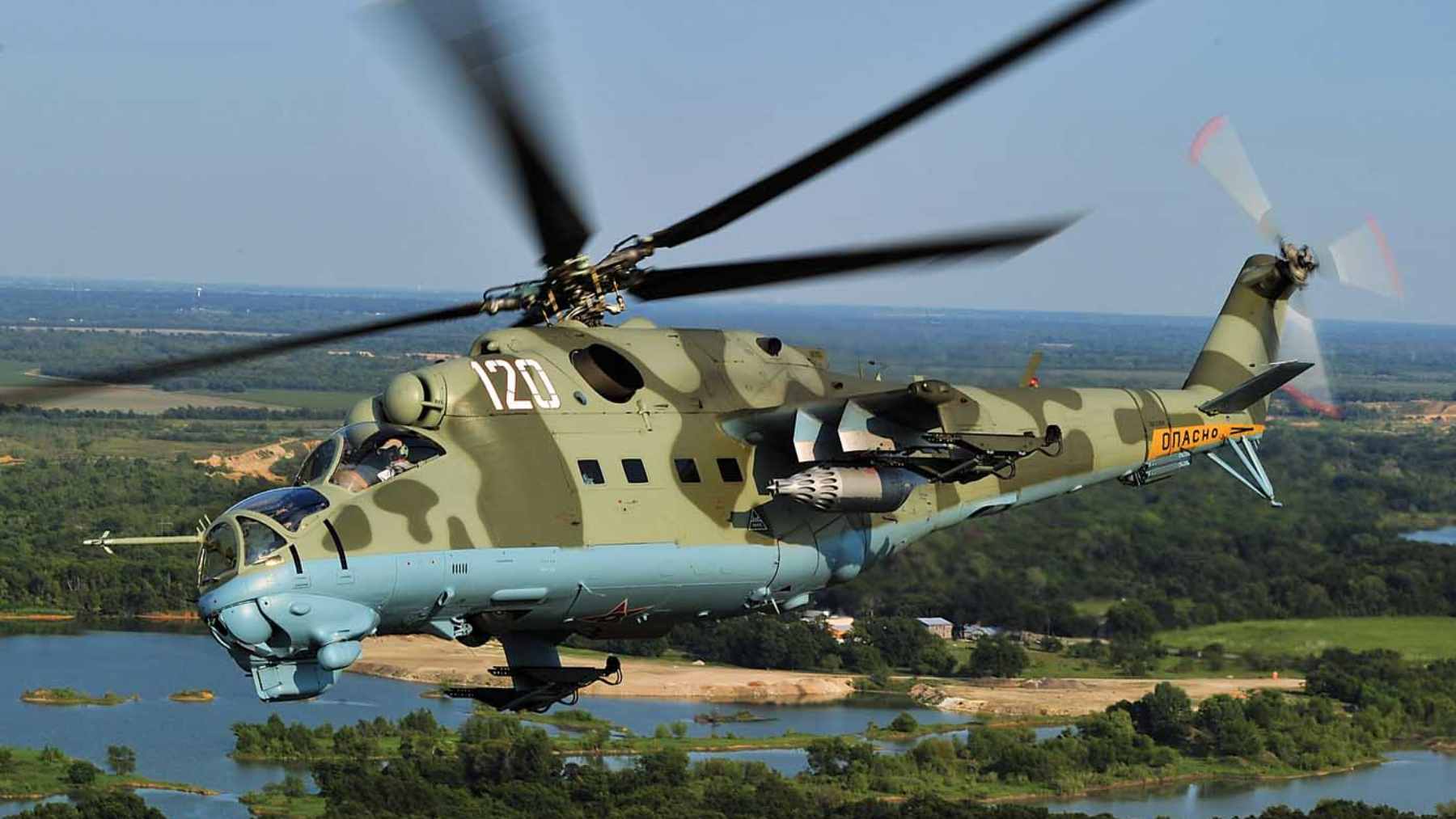
The Mil Mi-24 Hind was built for a very different job than the bright rescue livery suggests. It is a twin-engine combat helicopter designed for close support, attacking armored targets, and moving people or cargo, with room for up to eight troops in some versions.
That mix made it unusual. Unlike a pure attack helicopter such as the American AH-64 Apache, the Hind blended gunship firepower with a small troop compartment, which is why Soviet pilots famously called it a “flying tank.” Big, armored, and heavily armed, it was not exactly the kind of aircraft most people picture hovering above a fishing boat during a rescue.
The movie behind the mystery
In “Charged with Death,” a group of escaped criminals hijacks the Russian fishing vessel “Udachlivy” in the waters of the North Pacific. A Soviet Border Guard patrol ship named “Yuri Andropov” and a U.S. Coast Guard helicopter then take part in a joint operation to free the vessel.
The twist is that the helicopter shown as American was actually a Mi-24V, known by NATO as the Hind-E. According to the aviation account that resurfaced the story, the aircraft was likely standing in for the then-new Sikorsky MH-60 Jayhawk, the Coast Guard helicopter that had begun entering service around that time.
Why it looks so odd
At first glance, the paint job almost works. The familiar Coast Guard-style colors signal safety, urgency, and maritime rescue, the kind of aircraft you would want to hear overhead if you were stranded offshore in rough weather.
Then the shape gives it away. The Hind’s heavy nose, stub wings, and combat profile make the scene feel less like a rescue mission and more like a Cold War fever dream. That is exactly why the image still attracts attention years later.
The real Jayhawk’s job
The real MH-60T Jayhawk is an all-weather, medium-range Coast Guard helicopter specialized for search and rescue. The Coast Guard says the aircraft is typically operated by a crew of four, and its MH-60T profile lists a range of about 600 nautical miles.
In practical terms, missing boaters, storm calls, medical evacuations, law enforcement support, and environmental protection work along the coast. The Coast Guard has also been moving toward a larger all-MH-60T rotary-wing fleet, partly to replace the aging MH-65 Dolphin and keep long-range helicopter coverage in place for years to come.
A prop choice, not a secret program
So, was there ever a U.S. Coast Guard Mi-24 Hind? The available evidence points to no. This was a movie substitution, not a hidden aircraft deal, not a captured helicopter program, and not some forgotten Coast Guard experiment.
Film crews often work with what they can get. In this case, the result was visually unforgettable, even if aviation fans spotted the mismatch right away. Sometimes a paint scheme can change what an aircraft seems to be, at least for a few seconds on screen.
Why the image still sticks
There is something strangely memorable about seeing a battlefield helicopter dressed in rescue colors. It turns a machine associated with armored warfare into something pretending to serve a civilian emergency role.
That contrast is the whole story. The Mi-24 was built to intimidate on land, while the Coast Guard brand is tied to people in trouble at sea, flashing lights, hoist cables, and the tense moments when help finally arrives. Put those two worlds together, and of course, people still look twice.
The official MH-60T program profile was published on U.S. Coast Guard.