Most people see an empty beer bottle as the end of the story. In Charlotte, North Carolina, it may be the beginning of a sidewalk, a stadium renovation, or the next local construction project.
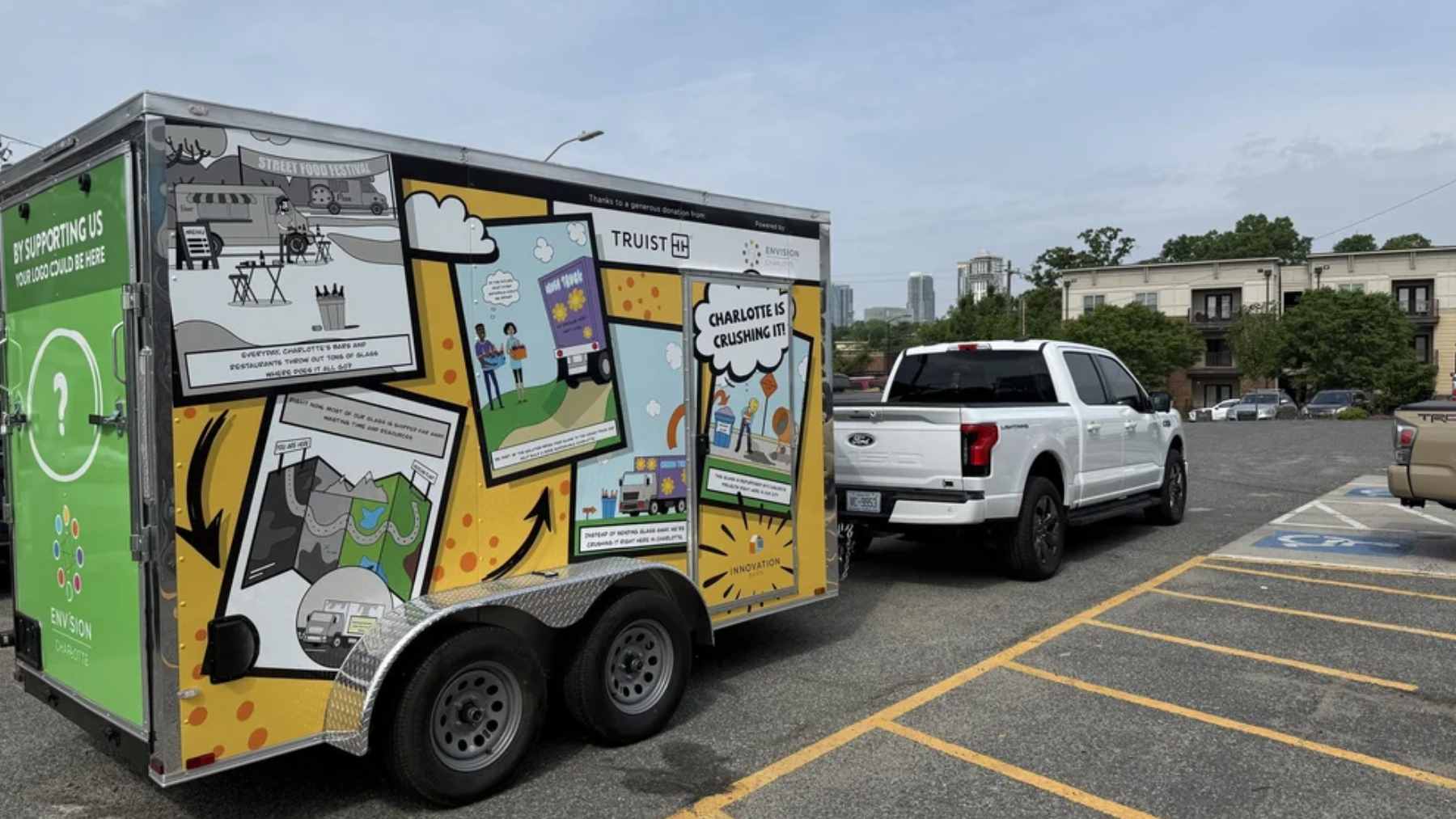
The city’s new recycling experiment is simple enough to understand in one sentence: Envision Charlotte’s Crush Truck turns used glass into sand-like material that can be reused in construction, including concrete, instead of sending bottles on a costly trip out of town.
The official Innovation Barn page describes the project as a “mobile glass recycling solution” built for bars, restaurants, festivals, and local reuse.
Why glass gets stranded
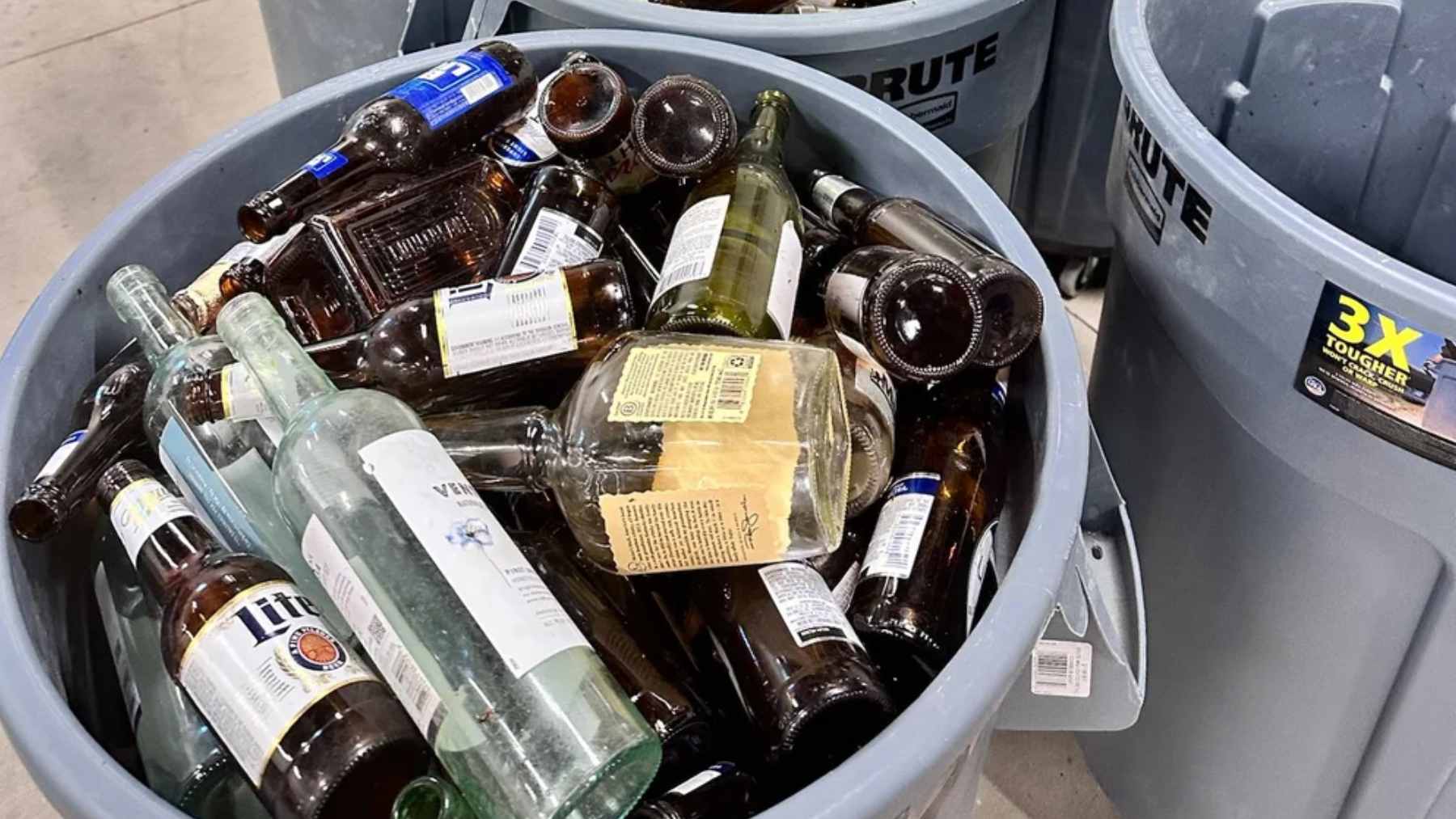
Glass sounds like the perfect recyclable, but cities know the reality is messier. It is heavy, bulky, fragile, and expensive to move, which makes the economics of curbside recycling surprisingly difficult.
That is the problem Charlotte is trying to solve. According to a PBS segment on the project, the city has been shipping glass to Atlanta, and the cost of moving it can exceed the value of the material itself. One speaker summed it up bluntly, “It costs more to ship there than it’s worth.”
For anyone who has dragged a clinking bin of bottles to the curb, that may make sense. The bottle is recyclable, yes, but only if the system around it makes sense.
The truck that makes sand
The Crush Truck changes the geography of recycling. Instead of moving empty bottles hundreds of miles before they become useful again, the machine goes closer to where the glass piles up, including bars, restaurants, festivals, and venues.
Inside the compact trailer, 15 spinning hammers break bottles into different sizes of crushed glass. PBS reported that the machine can process four to five tons of glass per day and is set up to run on two three-kilowatt-hour batteries charged by solar panel, allowing off-grid operation.
The result looks less dramatic than it sounds. The crushed material can be sifted, and at finer sizes it resembles beach sand. It also is not sharp in the way people might imagine, because repeated crushing leaves particles small enough to handle safely.
Concrete closes the loop
The clever part is not just crushing bottles. It is finding a local customer for the material.
Concrete Supply Co. has been testing mixes that use ground glass from Charlotte as a partial replacement for natural sand. In one proof-of-concept recipe shown by PBS, the company replaced part of the sand component with 40% ground glass while also using fly ash to replace some Portland cement.
That matters because concrete is everywhere. Sidewalks, arenas, roads, offices, schools, and parking decks all depend on it, even when nobody thinks about it. At the end of the day, a recycling program works better when the recycled material has a real buyer waiting nearby.
The sand problem
There is a bigger environmental reason this small Charlotte project is getting attention. The world uses staggering amounts of sand, especially for construction, and not all sand can be easily replaced.
The United Nations Environment Programme has warned that sand is the most used solid material on Earth, with about 50 billion tons consumed every year. That demand can damage rivers, coastlines, and ecosystems when extraction is poorly managed.
So when a city turns bottles into a sand substitute, it is not just cleaning up waste. It is also easing pressure, to a limited but practical extent, on a natural resource most people never notice until a beach erodes or a riverbed changes.
The concrete challenge
Still, glass in concrete is not a magic fix. The recipe has to be tested carefully, because construction materials cannot rely on good intentions.
PBS noted that raw crushed glass can carry labels, sugars, and a range of particle sizes. Engineers also have to watch for the alkali-silica reaction, a chemical process that can create an expanding gel inside hardened concrete and threaten durability if it is not controlled.
The good news is that the same tests point to possible solutions. Smaller glass particles can reduce the risk, and fly ash can help control the reaction while lowering the amount of cement needed in the mix.
That last part is important because cement production is a major source of emissions, with research placing the sector at roughly 5% to 8% of global anthropogenic CO2 emissions.
Why cities are watching
The most interesting part of Charlotte’s idea may be its size. This is not a giant recycling plant asking for glass from across several states. It is a smaller, mobile system designed to keep materials close to home.
That makes the model easier to imagine in other cities. Stadiums, concert halls, breweries, restaurants, and festivals all generate heavy bursts of glass waste. Instead of watching those bottles become a transportation problem, a city could turn them into a construction input.
Will this replace traditional recycling everywhere? Probably not, but it offers something cities badly need, which is a practical middle path between landfilling glass and hauling it so far that the math stops working.
A bottle’s second life
The closed-loop example is what makes the project easy to picture. Glass collected from places such as the Spectrum Center can be crushed, stored, tested, and returned as part of concrete used in local construction work.
That turns recycling from an invisible process into something people can understand: a bottle bought at a game could one day become part of the building around that same crowd. Strange, but useful.
For Charlotte, the Crush Truck is a reminder that climate and waste solutions do not always have to arrive as huge machines or distant promises. Sometimes they look like a trailer, a pile of empty bottles, and a smarter way to keep value from leaving town.
The official project description was published on Innovation Barn.