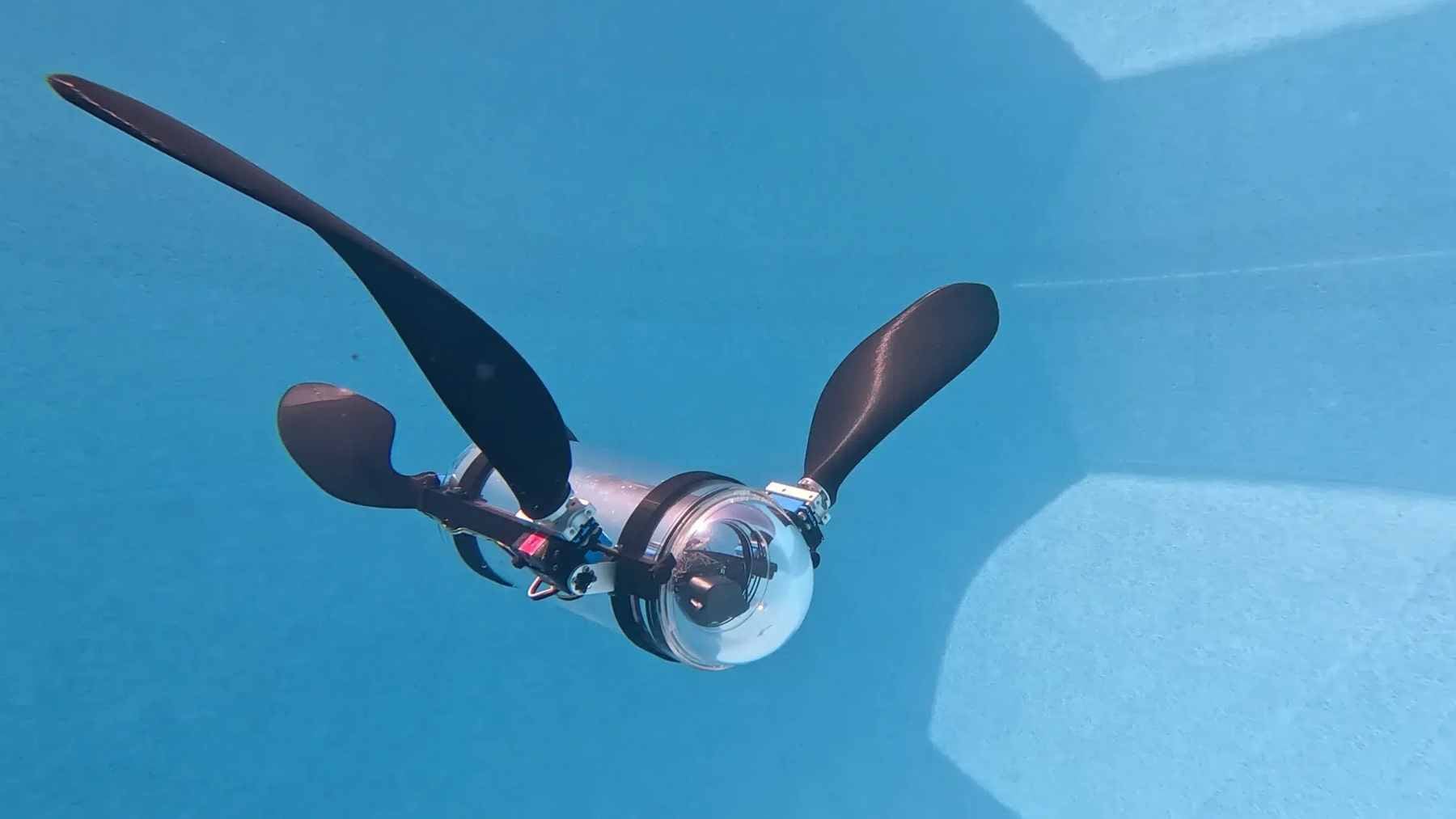
A turtle glides through the water without a propeller whine. With that in mind, a Canadian teenager has built a bionic robotic turtle that uses AI to spot coral bleaching, invasive species, and microplastics. His prototype, nicknamed BURT, points to a future where ocean monitoring gets quieter and cheaper.
Ocean science is drowning in data gaps, even as coastal economies and security planners depend on healthy seas. The big question is whether bio-inspired robots can scale fast enough to keep up with the threats they are designed to find. So who fills the gap?
From camping trip to first prize
Evan Budz says the idea clicked during a camping trip, after watching a snapping turtle move with what he described as a graceful and non-disruptive style.
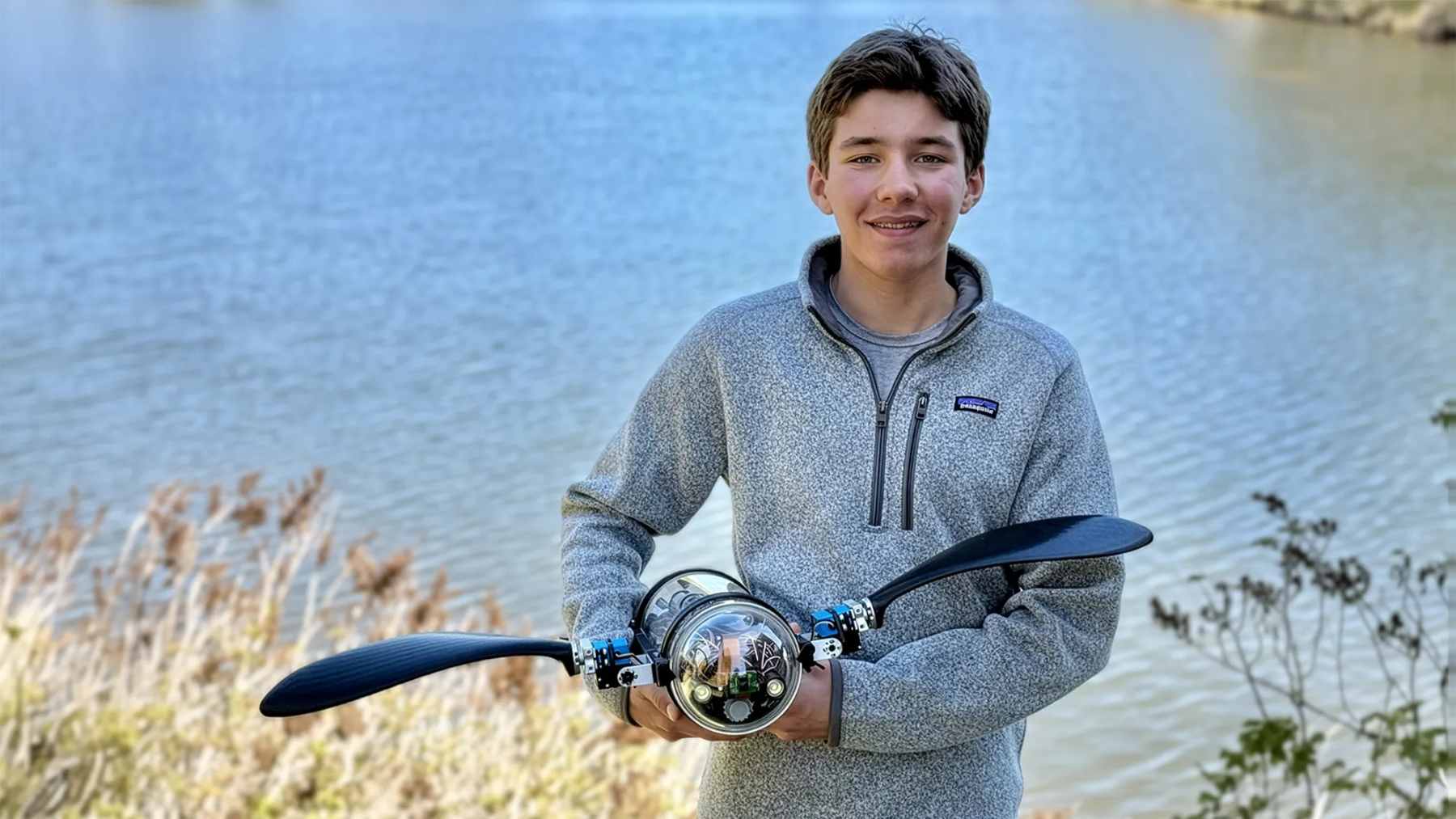
He is 15 and from Burlington, Ontario, and he has been searching for practical ways to “leave it a bit better than I found it,” as he told Popular Science. BURT is his attempt to turn that personal rule into a tool for researchers and conservation teams.
In the European Union Contest for Young Scientists in Riga, Latvia, Budz won a First Prize for a project titled “Development of an Autonomous Bionic Sea Turtle Robot for Ecological Monitoring using AI.” The official winners list identifies him as a Canadian participant, underscoring that the contest pulls in talent from beyond the EU as well.
Why oceans need gentler sensors
Coral reefs are often called the rainforests of the sea, and NOAA notes that about 25% of the ocean’s fish depend on healthy reefs. When those reefs bleach in prolonged heat, the losses ripple into fisheries, tourism, and storm protection for coastal communities, and NOAA says reefs can absorb up to 97% of wave energy.
NOAA also estimates the total annual economic value of coral reef services in the United States at more than $3.4 billion.
Pollution and biological hitchhikers add another layer of risk. UNEP has estimated that about 12 million tons of plastic enter the world’s oceans each year, feeding the microplastics problem that sensors like BURT are meant to flag.
A global assessment summarized by the European Commission puts the annual economic cost of invasive alien species at more than $400 billion, making early detection more than just a wildlife issue.
The tech under the shell
BURT is built to swim like a turtle, not a torpedo. Budz designed four flippers, with larger front flippers for propulsion and smaller rear flippers for stability and steering, and he housed the electronics in an acrylic tube body. A Raspberry Pi runs the AI and logs data, and the robot can swim for up to eight hours per charge, with a solar panel to stretch runtime.
Budz argues that many underwater drones create noise through propellers or high-pressure water jets, which can stress habitats. By copying turtle kinematics, he hopes BURT can collect data without turning the survey itself into a disturbance. “I don’t want to harm the various places that I’m hoping to protect,” he said.
Most testing has happened in his grandparents’ backyard pool. Budz says he built a simulated coral reef using 3D models and trained the system on what bleaching and invasive species look like, then reported 96% accuracy in detecting replicated coral bleaching.
He has also experimented with holographic imaging and a custom neural network to classify tiny particles as microplastics.
Business and defense overlap
For businesses, the appeal is not just the cute factor, because reef health ties to tourism, fisheries, and coastal protection. The reef may be offshore, but its decline can show up in hotel bookings and seafood prices. If robots like BURT can be produced and maintained cheaply, fleets could make long-term monitoring more realistic for ports and aquaculture sites.
Military and defense planners have a stake, too, because bases, shipyards, and training ranges sit on coastlines that are already under pressure. Uncrewed underwater systems are common in defense, but quieter bio-inspired movement could also reduce acoustic clutter in sensitive waters and support environmental monitoring around installations.
Scientists have warned that human-made ocean noise can disrupt how marine animals communicate and navigate, so less noisy tech has a conservation angle as well.
The real ocean is the tough test
The next challenge is taking a pool-tested prototype into real water where currents, sediment, and marine growth can turn good engineering into a headache. Budz has said his next step is to test BURT in different environments and push it deeper, and he has added front lights and an ultrasonic transducer to help with murky conditions and obstacles.
That is where the promise meets saltwater, and where partnerships with marine scientists and local agencies can make or break the idea.
Even if BURT never becomes a mass-produced product, it highlights a direction the market keeps moving toward: smaller sensors, cheaper computing, and AI that can spot changes before a human diver would.
The ocean is huge, and the sooner we can detect bleaching, invasive species, or plastic hotspots, the more options communities have to respond.
The official statement was published on European Commission Research and Innovation.