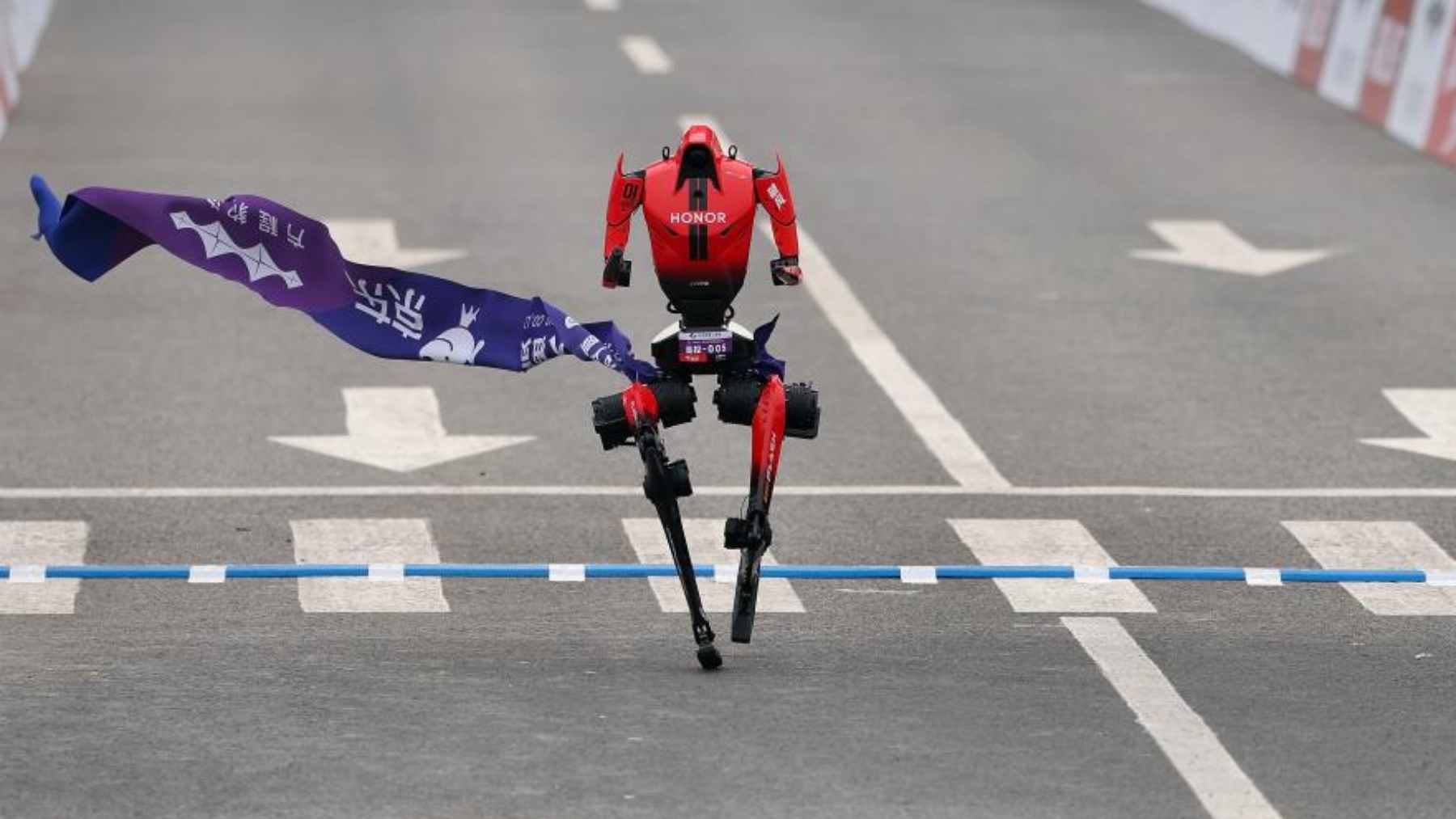
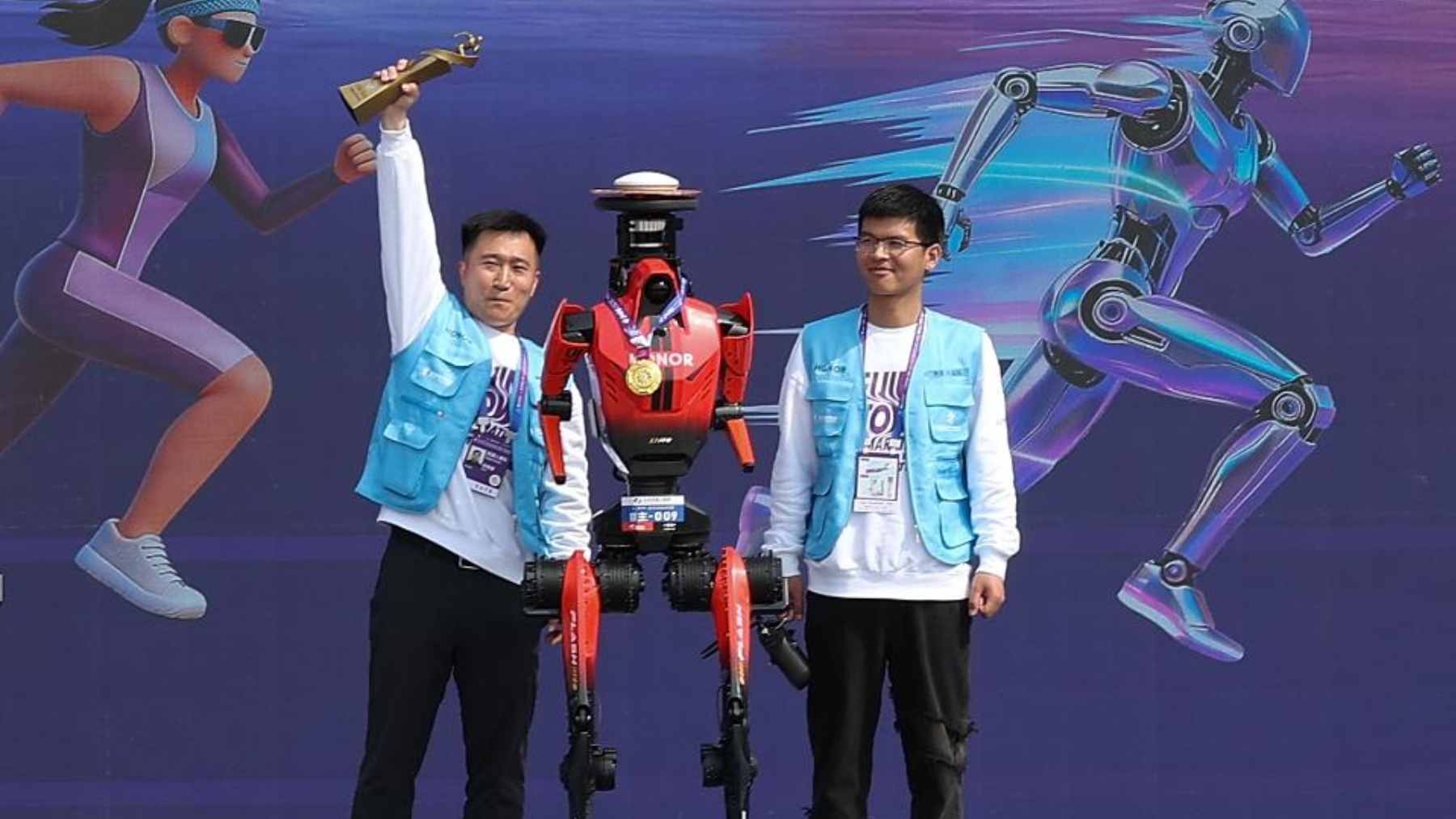
On April 19, a humanoid robot built by consumer tech brand Honor ran 21 kilometers (13.1 miles) in Beijing in 50 minutes and 26 seconds, faster than the men’s human half marathon world record. A remote-controlled version reportedly clocked 48 minutes and 19 seconds, but the trophy went to the autonomous runner under the event’s rules.
So what does a robot sprint have to do with ecology and the environment? More than you might think, because the same batteries, motors, and cooling systems that win a race are the building blocks for robots that could end up in warehouses, power plants, and disaster zones, for better or worse.
A race that doubled as a field test
This was the second Beijing E-Town Humanoid Robot Half Marathon, and it was big. Reports put the field at more than 12,000 human runners and over 300 humanoid robots, with robots and people kept on separate lanes for safety.
The leap from 2025 was just as striking. Last year’s fastest robot finished in 2 hours 40 minutes 42 seconds, while far fewer machines made it to the end. This year, dozens finished, and Honor robots took the top autonomous spots even after one clipped a barrier near the finish and needed help standing up.
Why cooling tech suddenly looks like climate tech
Honor’s team said the robot’s long legs and in-house liquid cooling were key, and that detail is not just engineering trivia. When motors and electronics overheat, performance drops fast, a problem that gets worse during summer heat waves.
Officials and engineers described the cooling system as a way to keep the robot running steadily at high speed in outdoor conditions, not only in a lab. If that capability moves into industrial roles, it could mean robots that can handle long shifts inspecting solar arrays, moving goods, or working in hot facilities without wasting energy on constant slowdowns.
The business rollout is accelerating
Counterpoint Research estimates about 16,000 humanoid robots were installed worldwide in 2025, with China accounting for more than 80% of installations. The same report put Tesla at roughly 5%, a reminder that this is turning into a global supply chain contest, not just a science project.
Reuters also reported that Chinese firms AgiBot and Unitree each shipped more than 5,000 humanoid robots last year, and that Unitree plans to scale production capacity to 75,000 units a year. Scale changes everything, because a few showcase robots are one thing, but tens of thousands start to look like an environmental sector in their own right.
Defense and disaster response are part of the subtext
Humanoid robots are “dual use” almost by default, even when the marketing is sporty. Militaries and emergency agencies want machines that can climb stairs, open doors, carry loads, and keep going when a place is too dangerous for people.
The marathon also showed the gap between a controlled test and a messy scene after a flood or wildfire. The fastest time was recorded by a remote-controlled robot, and plenty of machines still stumbled, drifted, or needed human intervention. In real operations, that last part is where the risk lives.
The hidden footprint nobody sees on race day
A running robot packs in batteries, sensors, and metals, and the world is already straining to source key materials. The International Energy Agency said demand for critical minerals kept climbing in 2023, with lithium demand rising 30%, driven largely by clean energy technologies.
Then there is the end-of-life problem. The Global E-waste Monitor 2024 says the world generated 68 million tons of electronic waste in 2022 and only 22.3% was formally collected and recycled. It also notes that just 1% of rare earth element demand is met by e-waste recycling, which is a tough statistic to ignore if humanoids scale like smartphones.
What readers should watch next
The next milestone is not another record time, it is where these machines go to work. Beijing’s official recap said Honor plans to apply the marathon-tested advances, including energy management and liquid cooling to retail scenarios first, which sounds mundane, but is exactly how new tech becomes normal.
The environmental scorecard will come down to basics like repairability, take-back programs, and what kind of electricity charges these fleets when everyone plugs in at night.
The official statement was published on Beijing Economic-Technological Development Area Management Committee.