In a January 2026, writer Isabella Chase describes a scene many shoppers recognize. A stranger steps back in a checkout line, nods to a stressed parent with a crying toddler, and says, “Please, go ahead”.
Chase argues that the gesture can reflect situational awareness, a kind of social “radar” that helps people respond before a small problem turns into a bigger one.
That idea lands in a time when everyone seems rushed, and patience feels in short supply. Still, the science does not say that letting someone go first automatically makes you more aware or more moral.
What it does suggest is that attention, time pressure, and even mood can shape how we behave in public, including in that tense line at the pharmacy.
Situational awareness, in plain English
Situational awareness means noticing what is happening around you, understanding what it means, and guessing what might happen next. In a widely cited 1995 paper, researcher Mica Endsley described it as a key step in good decision-making, especially when a situation is changing fast.
In real life, it can be as simple as reading a room. You see the line building, you hear the sighs getting sharper, and you notice the person fumbling for a card. Letting someone go ahead is one quick way to lower the temperature.
Reading emotional undercurrents
One trait Chase points to is picking up on emotions before they spill over. Psychologist John D. Mayer of the University of New Hampshire, along with David R. Caruso and Peter Salovey of Yale University, describe emotional intelligence as abilities like perceiving emotions accurately, understanding them, and managing them in yourself and others.
In a checkout line, it looks less like therapy talk and more like recognizing stress early and choosing a calm response.
This kind of skill has been studied in relationships, too. A 2022 meta-analysis led by Brittany B. Jardine combined data from 78 samples and found a moderate link between emotional intelligence and romantic relationship satisfaction.
That does not mean emotional intelligence guarantees harmony, but it does support the idea that reading feelings well can help people steer around conflict.
Peripheral awareness without losing focus
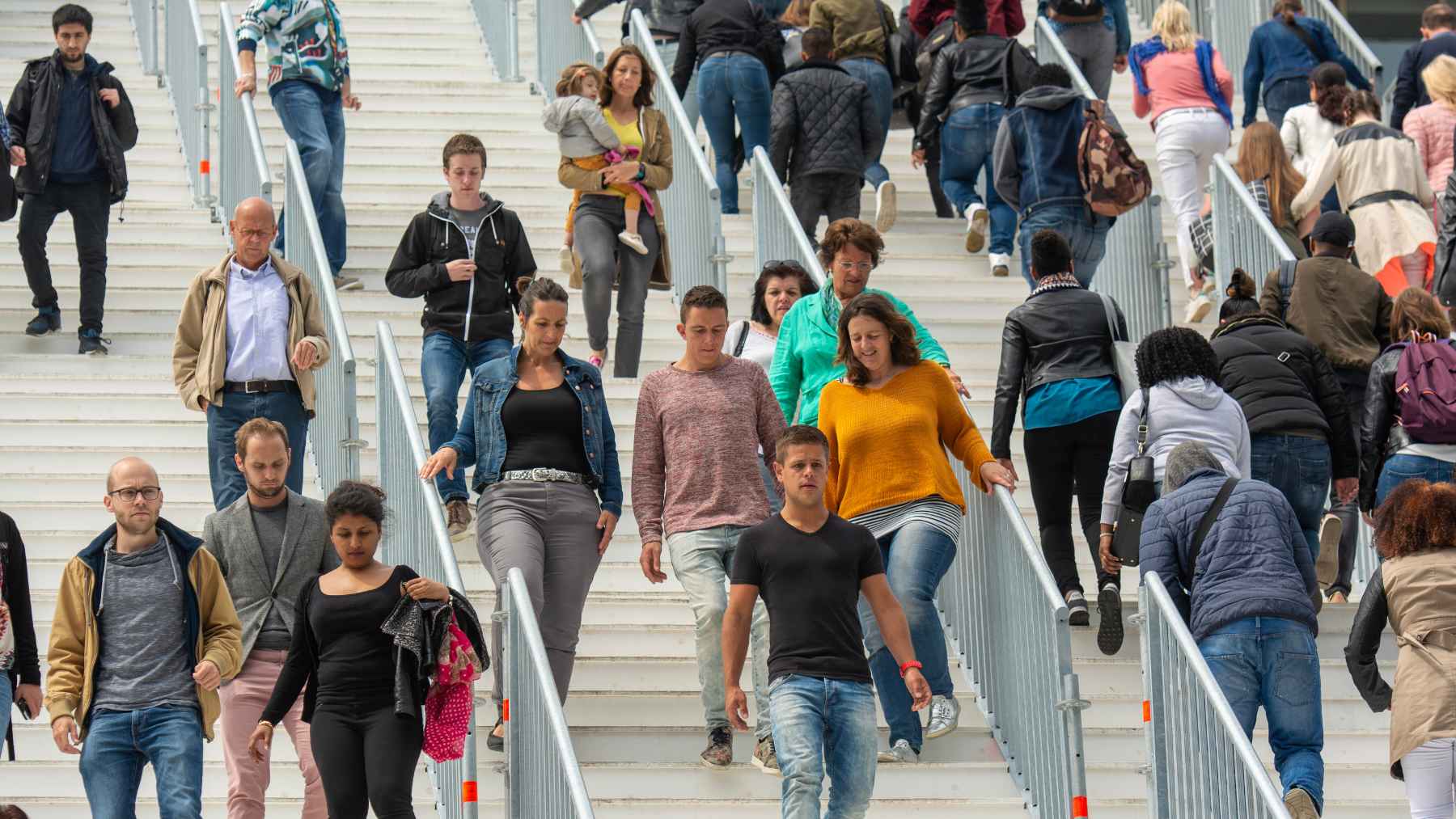
Another trait is avoiding tunnel vision. You can focus on your own groceries and still keep an eye on the bigger scene, including who looks overwhelmed or who might need an extra minute.
Psychologists call the opposite “inattentional blindness,” and a well-known 1999 experiment by Daniel Simons and Christopher Chabris showed how easily people can miss an unexpected event when their attention is locked onto a task.
If you have ever walked past a friend waving because you were staring at your phone, you have felt it. The people who seem most aware in public spaces may simply have practiced widening their focus, the same way drivers learn to use peripheral vision. It can also be harder on days when you are tired, stressed, or overloaded.
A different relationship with time
A third trait is treating time as something shared, not just owned. In the famous 1973 “Good Samaritan” experiment, researchers John Darley and Daniel Batson at Princeton University found that people who thought they were late were far less likely to stop and help someone in need. In the highest-hurry group, about one in ten helped, compared with nearly two thirds of those who were not rushed.
That result makes everyday line behavior easier to understand. When you feel squeezed by the clock, your brain narrows down to the next step, and the rest of the world fades into background noise. On the other hand, when you have a little slack, it becomes easier to offer it.
Spotting the domino effect
Chase also argues that situationally aware people see the chain reaction in front of them. One anxious person can change the mood of a whole room, and a small fix can stop that spread. Researchers sometimes call this “emotional contagion,” meaning feelings can transfer through a group.
The idea has even been tested online at massive scale. A 2014 Cornell University report described research that adjusted what 689,003 Facebook users saw and found changes in the emotional language they used afterward, both in positive and negative directions.
The work involved Jeff Hancock, Jamie Guillory, and Adam D. I. Kramer, and it also raised questions about how social media experiments should be handled.
Kindness before you’re asked
Another trait is proactive kindness, which means helping before someone has to ask. In a line, it is stepping aside when you can already see the struggle coming, rather than waiting for an apology. It shows up in other places, too, like letting a car merge smoothly instead of turning a traffic jam into a personal contest.
Researchers have also looked at what giving does to the giver. A Harvard University report on work by Elizabeth Dunn, Lara Aknin, and Michael Norton described studies where people who spent money on others reported more happiness than those who spent it on themselves.
The amounts were small, but the pattern was consistent enough to make scientists take the “small gestures matter” idea seriously.
Following the ripples
The final trait is paying attention to what happens after the gesture. If one person calms down, they may treat the next person better, and that small shift can keep moving. In work posted to arXiv, James H. Fowler and Nicholas A. Christakis reported evidence from laboratory games suggesting that cooperative behavior can influence people beyond the original interaction, spreading several steps through a network.
None of this means you should always give up your spot, especially if you are the one rushing. But it does offer a practical takeaway for daily life, and it starts with lifting your eyes and reading the room.