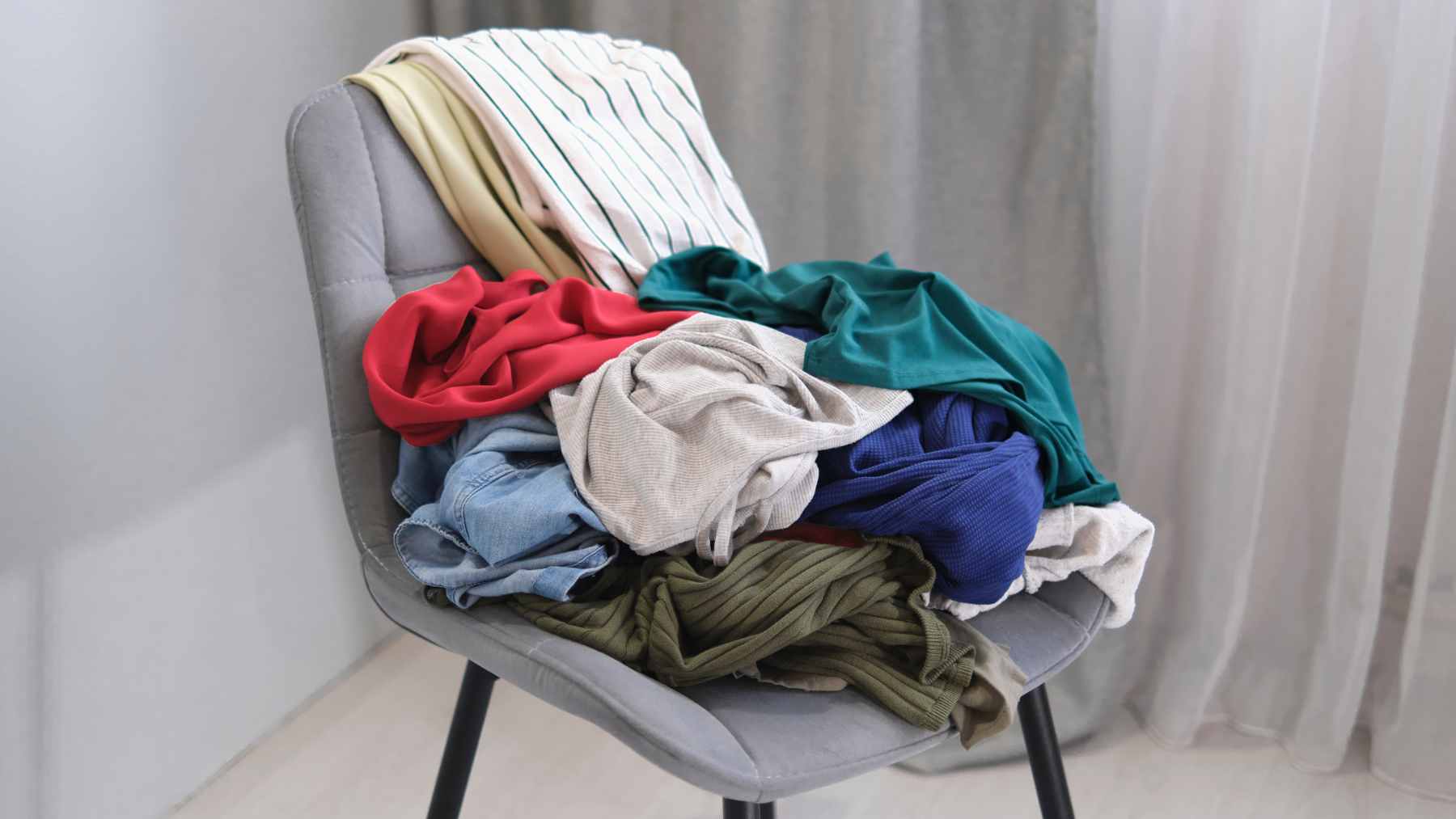
Everyone knows the scene. A chair in the bedroom slowly becomes a landing pad for jeans worn once, a sweater that is not really dirty, and a shirt that might still be useful tomorrow.
It looks like clutter, but it may also be a quiet record of unfinished choices. Psychology does not say the pile diagnoses a person, but it does suggest that this ordinary habit can reflect mental fatigue, delayed decisions, and a fuzzy system for handling everyday objects.
The chair is a decision zone
The clothes chair usually sits between two clear destinations. Clean clothing goes back in a drawer or closet, and dirty clothing goes into the laundry. But the “worn once” category does not fit neatly in either place.
That gray area matters. A person has to decide whether the item is clean enough to reuse, dirty enough to wash, or worth putting away before the next wear.
So the chair becomes a holding area for choices that never quite close. In practical terms, the brain has kept the option open instead of finishing the task.
Too many choices can stall action
Barry Schwartz, a psychologist associated with Swarthmore College, argued in “The Paradox of Choice” that everyday decisions can become harder when options multiply.
His work is usually discussed in the context of shopping, health care, or major life choices, but the same idea can shrink down to the size of a sweatshirt.
Was it worn too long? Will it be needed tomorrow? Should it go on a hanger, in the hamper, or on the chair for now?
The choice is small, but the pattern is familiar. When the mind is crowded, even tiny decisions can start to feel like one more tab left open in the brain.
Fatigue changes tiny routines
After a long day, people often look for the easiest next move. That is where decision fatigue comes in, a term used to describe the drained feeling that can follow many choices over time.
The American Medical Association has described decision fatigue as a state of mental overload that can make it harder to keep making decisions as the day goes on. It can show up as procrastination, avoidance, impulsive choices, or indecision.
That makes the chair more understandable. Dropping a pair of pants on it is fast, quiet, and low effort. The trouble is, tomorrow’s tired brain may inherit the same little problem.
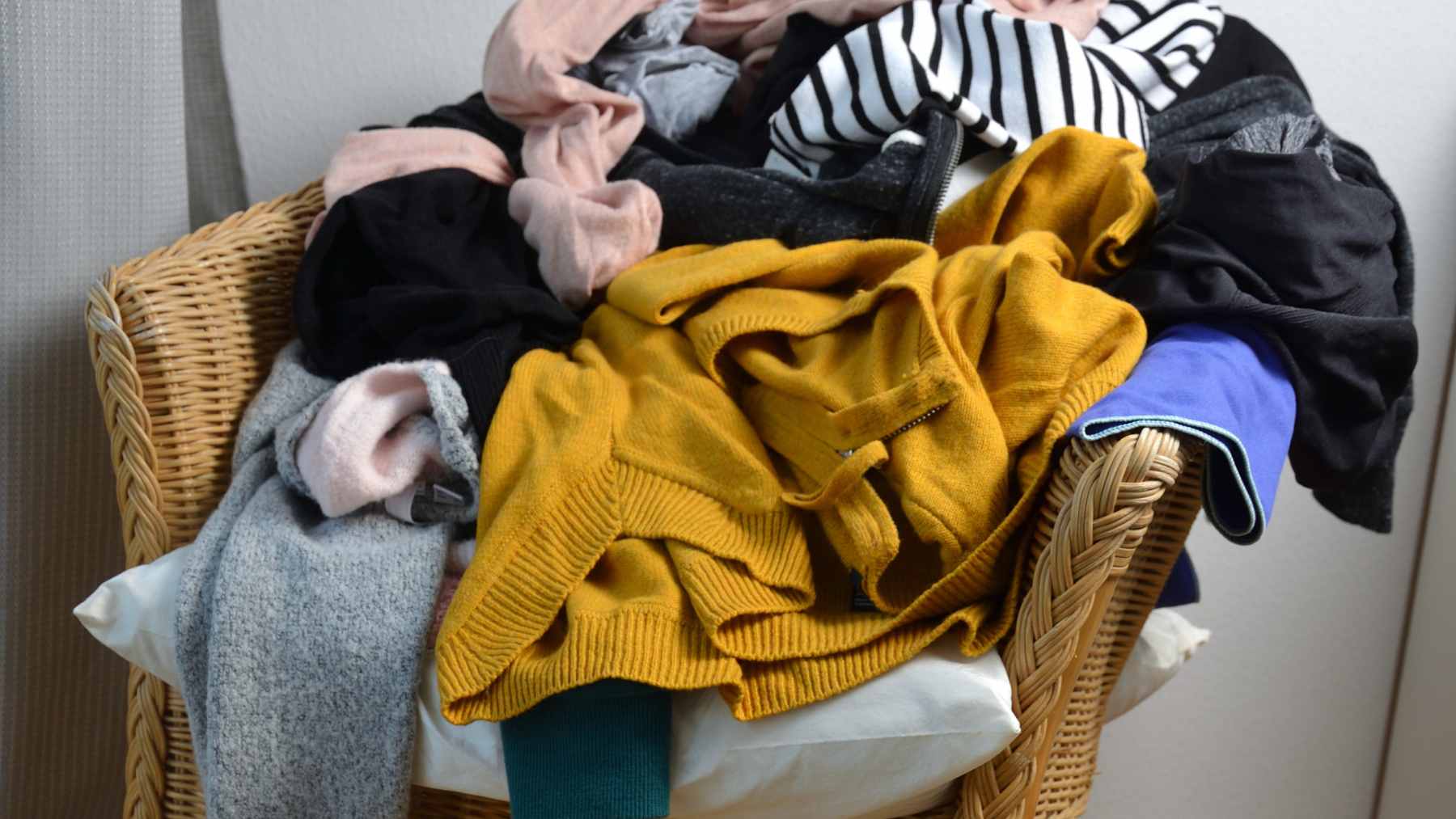
Clutter talks back
Clutter is not just visual noise. In a UCLA-linked study by Darby Saxbe and Rena Repetti, researchers analyzed home tours from 60 dual-income spouses and found that women who described their homes as more stressful or unfinished had flatter daily cortisol patterns and more depressed mood over the day.
Cortisol is often called a stress hormone, though the relationship is not as simple as one messy chair causing stress. For the most part, the research suggests that the way a home feels can become part of the body’s stress landscape.
Neuroscience adds another layer. Princeton University researchers Stephanie McMains and Sabine Kastner reported that multiple items in the visual field compete for brain representation, which helps explain why messy surroundings can feel mentally busy even when nothing urgent is happening.
Procrastination can start small
Piers Steel, then at the University of Calgary, reviewed procrastination research and found that strong predictors included task aversiveness, delay, self-efficacy, impulsiveness, and organization. That may sound academic, but the clothing chair is a perfect everyday example.
Nobody gets a warning light when one hoodie lands on the seat. There is no fine, no deadline, and no obvious consequence, so the task slides into later.
And then the chair stops being a chair. It becomes a soft little archive of “not now,” built one item at a time.
It is not always a problem
There is an important caveat. A pile of clothes does not automatically mean anxiety, poor discipline, or a deeper emotional issue. For some people, that chair is a temporary system that works well enough.
It can also carry a small emotional charge. A jacket may stay out because it belongs to the mood of a recent night out, or a hoodie may feel too recently worn to disappear into a drawer.
The key question is simple. Does the pile help life move smoothly, or does it quietly nag at the person every time they pass the room?
A better system closes the loop
The most useful fix is not shame. It is a clearer system that removes the gray area before it grows.
One option is to create a defined “wear again” spot, such as one hook, one small basket, or one shelf. Clean items go away, dirty items go to the hamper, and in-between items get a limited place that is not the chair.
A five-minute reset can also help, especially at the same time each day. At the end of the day, what it is trying to do is simple, turn a vague decision into a small routine before the pile takes over.
The main referenced research on home clutter and stress has been published in Personality and Social Psychology Bulletin.