Belly fat after 60 can feel different. It often sits deeper, changes more slowly, and can be harder to move than it was in younger years. That is not just a matter of discipline.
Aging, hormone shifts, and the gradual loss of muscle can all change where the body stores fat. Research has linked visceral fat, the deeper fat around the organs, with a higher risk of type 2 diabetes and heart disease.
That is why standing core exercises are getting more attention. They are simple, home-friendly, and easier for many older adults than floor crunches.
Liz Hilliard, creator and owner of Hilliard Studio Method, designed a four-move standing sequence that focuses less on the “six-pack” look and more on the deep support muscles that help hold the midsection steady.
Why the belly changes
“After 60, the midsection shifts in nearly everyone. It is not about effort, but biological changes,” Hilliard says. In women, the drop in estrogen can move more fat storage toward the abdomen, while research on menopause has also found a shift from fat under the skin toward deeper abdominal fat.
Men face their own version of the same problem. Testosterone tends to decline with age, and lower levels have been linked with more visceral fat and less muscle.
One review also found that visceral fat rises sharply between the 30s and 70s, more than doubling in men and increasing more than fourfold in women.
Why standing work helps
Here is the catch. No exercise can magically melt fat from one exact spot. In one study, six weeks of abdominal exercise improved endurance but did not reduce abdominal fat by itself.
Still, core work matters. The deep core includes muscles that help support the spine, posture, balance, and daily movement. Harvard Health notes that core muscles help with standing, bending, lifting, and getting out of a chair, the kind of everyday strength that matters more with age.
The four-move circuit
Start tall, with your ears stacked over your shoulders, knees, and ankles. Keep your chin level with the floor. Place your hands on your stomach, breathe in through your nose, then exhale through your mouth as you draw your belly button toward your spine.
The first move is a high-knee march. Stand with feet shoulder-width apart, knees soft, and spine long. Lift one knee toward your chest, lower it, then switch sides for 30 seconds. To make it harder, move your arms overhead or hold light weights.
Twists, chops, and punches
Next come marching oblique twists. Stand tall with your hands behind your head and elbows wide. Bring your right knee up toward your left side as your left elbow reaches toward the outside of that knee, then keep alternating for 30 seconds.
For standing woodchops, clasp your hands and sweep them diagonally from above one shoulder down toward the opposite hip. Tighten your abs as you move, then reverse the motion. Do 10 repetitions on each side.
Make the core work
The last move is standing oblique punches. Bend your knees slightly, keep your fists at chest level, and tighten your core. Punch across your body with the right fist while rotating your torso and pivoting your right foot, then switch sides for 30 seconds.
Hilliard recommends repeating the full circuit three times. “Adding these exercises, even just one, at different intervals throughout will combat stagnation and keep the body moving and the core engaged,” she says. Simple? Yes. But simple is often what sticks.
Where this fits
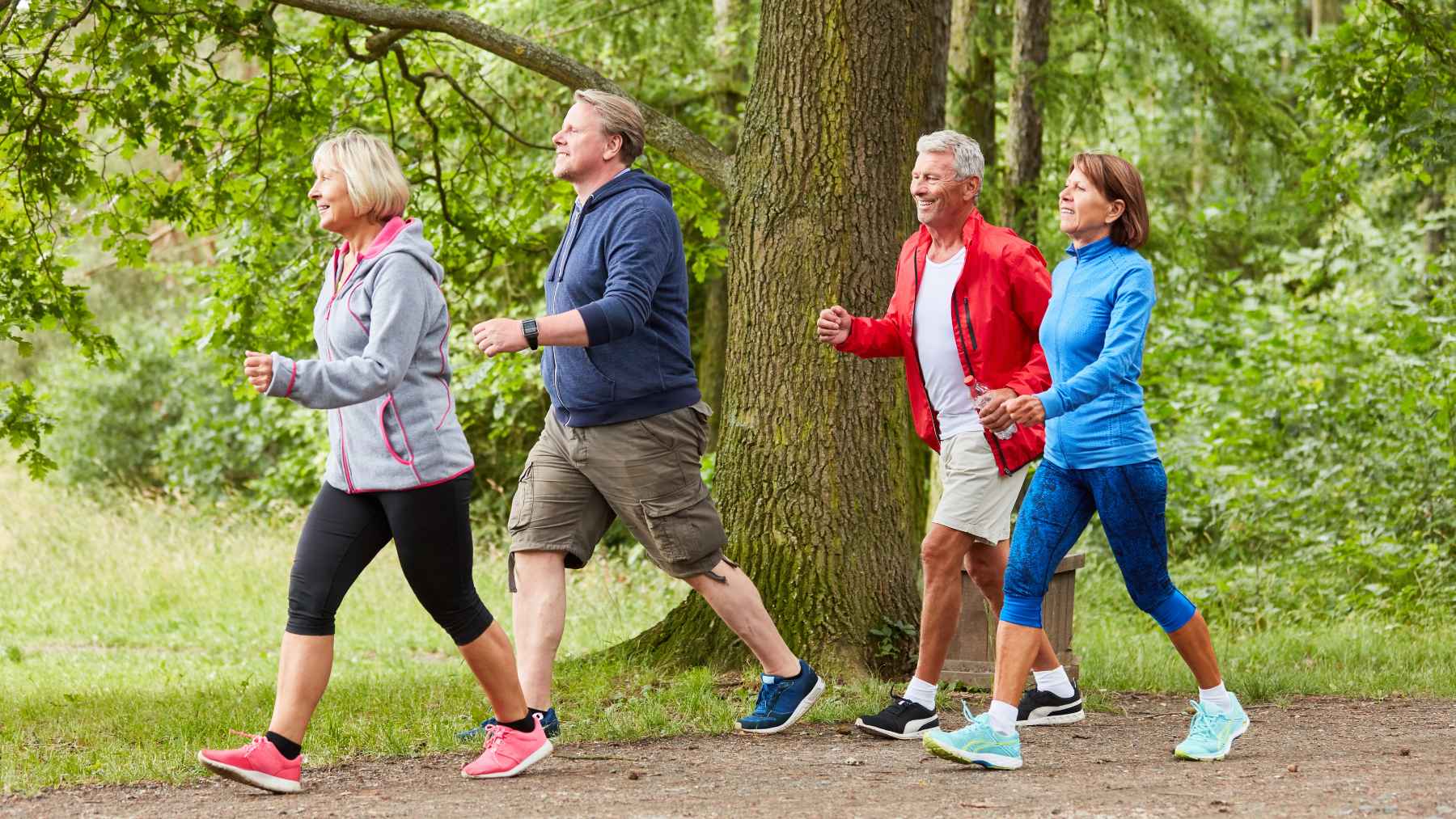
These moves should not replace a complete fitness routine. The Centers for Disease Control and Prevention says adults 65 and older need aerobic activity, muscle-strengthening work, and balance training each week, including at least 150 minutes of moderate activity and two days of strengthening exercises.
For people who dislike crowded classes, traffic, noise, or the pressure of keeping up with everyone else, a short standing circuit can be a practical way in. At the end of the day, the best workout is still the one you actually do.
A smarter goal
The real target is not just a smaller waist. It is a stronger body that carries you through daily life with better balance, steadier posture, and more muscle to support metabolism. The National Institute on Aging says decades of research show strength training can benefit older adults in several ways.
Anyone with pain, dizziness, balance problems, or a medical condition should check with a health professional before changing an exercise routine. For most healthy adults, though, a few minutes of standing core work can be a low-barrier place to start.
The official physical activity guidance referenced in this article has been published by the Centers for Disease Control and Prevention.