A single injection could one day do more than quiet aching joints. In animal studies, experimental treatments developed by a Colorado research team restored arthritic joints to a healthy state within four to eight weeks and repaired cartilage and bone injuries by calling in the body’s own healing cells.
That does not mean a cure is available now. The therapies are still preclinical, which means they have not yet been tested as approved treatments in people, but the work points to a different future for osteoarthritis care.
What osteoarthritis does
Osteoarthritis is the most common form of arthritis, and it happens when cartilage wears down over time. Cartilage is the smooth, protective tissue that helps bones glide instead of grinding against each other, especially in joints like the hands, knees, hips, and spine, according to Mayo Clinic.
When that cushion thins, everyday movement can become painful. Walking across a parking lot, opening a jar, climbing stairs, or getting out of a chair can start to feel like a negotiation with your own body.
Why this shot matters
The disease is not rare. A major Global Burden of Disease analysis estimated that 595 million people worldwide had osteoarthritis in 2020, and case numbers are expected to rise sharply by 2050 as populations age.
For the most part, today’s options focus on pain relief, physical therapy, lifestyle changes, injections, or joint replacement when damage becomes severe. Mayo Clinic notes that osteoarthritis cannot currently be reversed with standard care, even though treatment can reduce pain and improve movement.
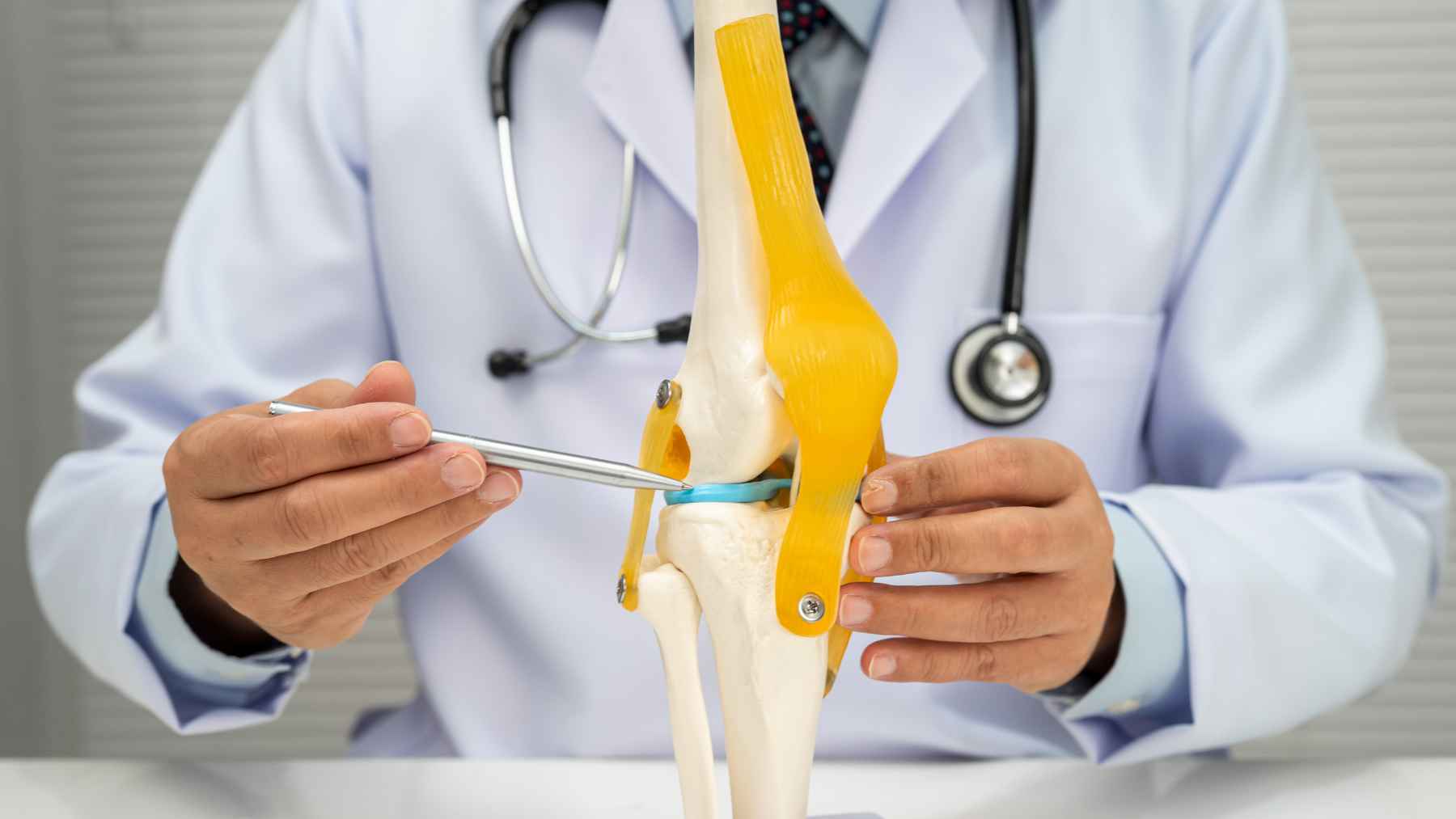
A physician uses a knee joint model to explain osteoarthritis, as researchers investigate an experimental injection that restored damaged cartilage and joints in preclinical studies.
The single-shot idea
The project is led by Stephanie Bryant at the University of Colorado Boulder with Karin Payne and Michael Zuscik at the University of Colorado Anschutz and Laurie Goodrich at Colorado State University.
Bryant described the progress as unusually fast, saying, “In two years, we were able to go from a moonshot idea to developing these therapies to demonstrating that they reverse osteoarthritis in animals.”
Their goal is not just to ease pain for a while, they are trying to help damaged joints repair themselves before surgery becomes the only realistic option.
How it works
The first approach uses a drug that is already approved by the U.S. Food and Drug Administration, but delivers it in a new way. The team built a particle system that can be injected into the joint and release the medicine in short bursts over several months.
Think of it as a slow, targeted delivery service for a sore joint. Instead of flooding the whole body, the treatment is designed to keep acting where the damage is happening.
A second repair tool
The second therapy is aimed at people with more serious defects in cartilage or bone. It uses engineered proteins and biomaterials that can be placed through arthroscopy, a minimally invasive procedure using small tools and a camera.
Once inside the joint, the material solidifies in place and recruits progenitor cells, which are repair-ready cells already found in the body. In practical terms, the goal is to patch the damaged area instead of simply covering up the pain.
What the tests found
In animal studies, treated joints returned to a healthy state within four to eight weeks. When researchers patched holes in cartilage or bone, they reported full regeneration and repair of the defect.
The team also tested the therapies on human cells collected from patients undergoing joint replacement. Those lab tests showed a regenerative effect, which is encouraging, but it is not the same as proving the treatment works safely in living patients.
The road ahead
The work is part of the Novel Innovations for Tissue Regeneration in Osteoarthritis program, also known as NITRO, from the Advanced Research Projects Agency for Health. The program says its supported technologies remain in the preclinical phase and human clinical trials have not yet begun.
The Colorado team has moved into the next phase of a project worth up to $33.5 million, with safety and toxicology studies needed before human testing. Renovare Therapeutics Inc. has also been formed to help move the technology toward possible commercialization.
What patients should know
This is promising science, not a treatment people can ask for at the clinic today. Anyone with joint pain, stiffness, swelling, or reduced movement should talk with a qualified healthcare professional, because the right plan depends on the joint, the stage of disease, and the person’s overall health.
Still, the idea is easy to understand. If a future injection could keep a knee, hip, hand, or shoulder healthier for years, it could change daily life for millions of people who now live around pain.
The official press release has been published by CU Boulder Today.