For decades, “take a daily walk” has been the easy prescription for older adults. Spanish strength coach Álvaro Puche says that advice leaves out the kind of work that protects muscle, power, and independence, and he proposes a four-move routine that takes about three to four minutes, three times a week.
His central point is useful, but the sharpest version of his claim goes too far. Walking still supports cardiovascular health and is linked to a lower risk of early death, while current U.S. guidance says adults 65 and older need a mix of aerobic activity, muscle strengthening, and balance work.
Why the trainer challenges the daily walk
According to his publisher, the trainer has a degree in exercise science and a master’s in integrative physiology. He has also written two Spanish-language books on strength training for older adults, both released by Amat Editorial. “Walking does not lead to any improvement linked to physical condition or the healthy longevity we want for older people,” he said.
In everyday life, muscles usually need resistance, such as body weight, an elastic band, or a dumbbell, that makes a movement more demanding than normal daily activity. That challenge is often called overload, and it helps the body build or preserve strength.
This matters because sarcopenia, the age-related loss of muscle mass and strength, can make ordinary tasks harder.
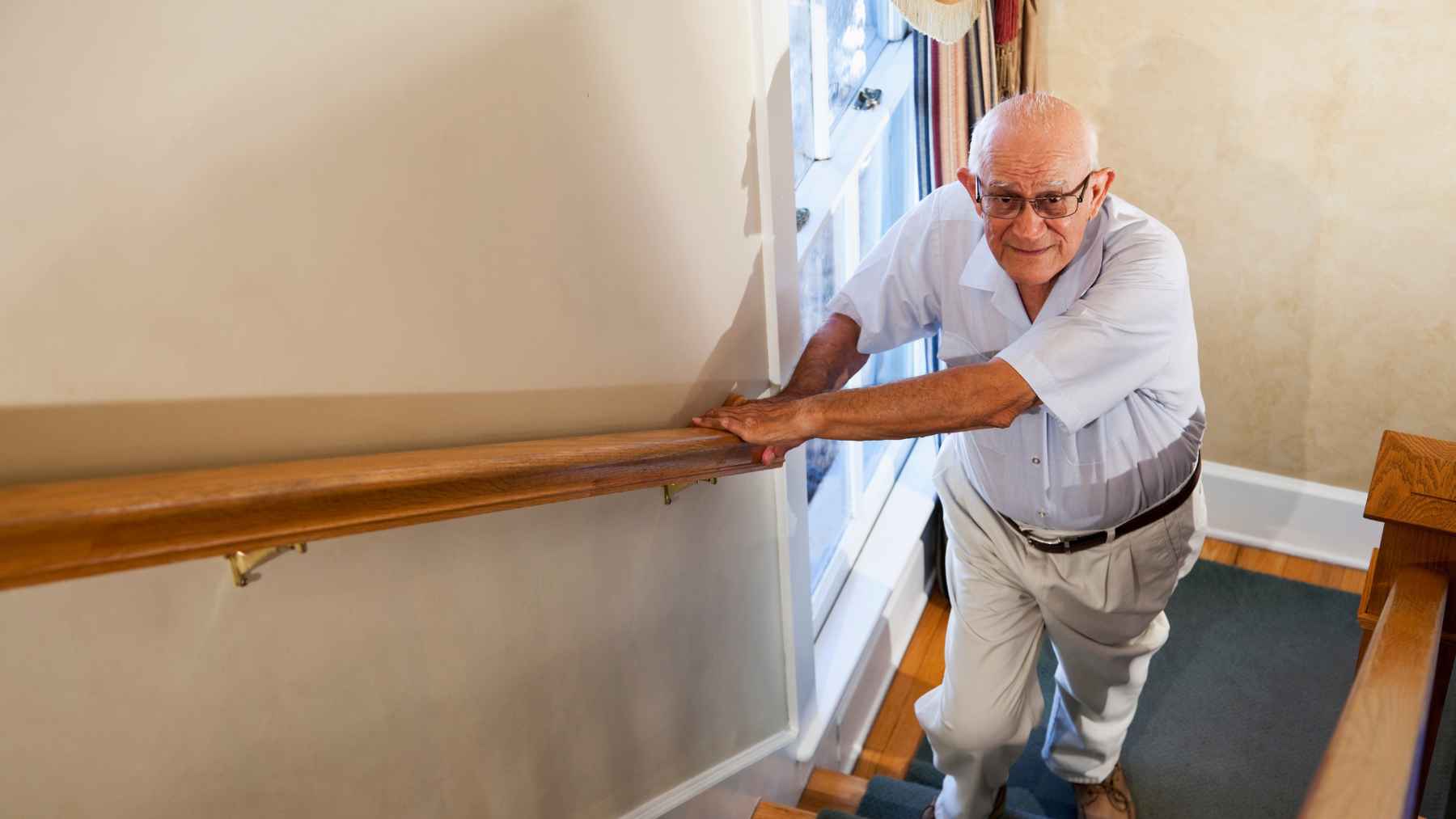
Getting out of a low chair, carrying groceries, climbing stairs, or catching yourself after a stumble all depend on strength and power, which is the ability to produce force quickly. Less than 15% of U.S. adults 65 and older meet both the aerobic and muscle-strengthening targets.

Strength training can help older adults preserve muscle, physical function, balance and independence as they age.
The four exercises he recommends
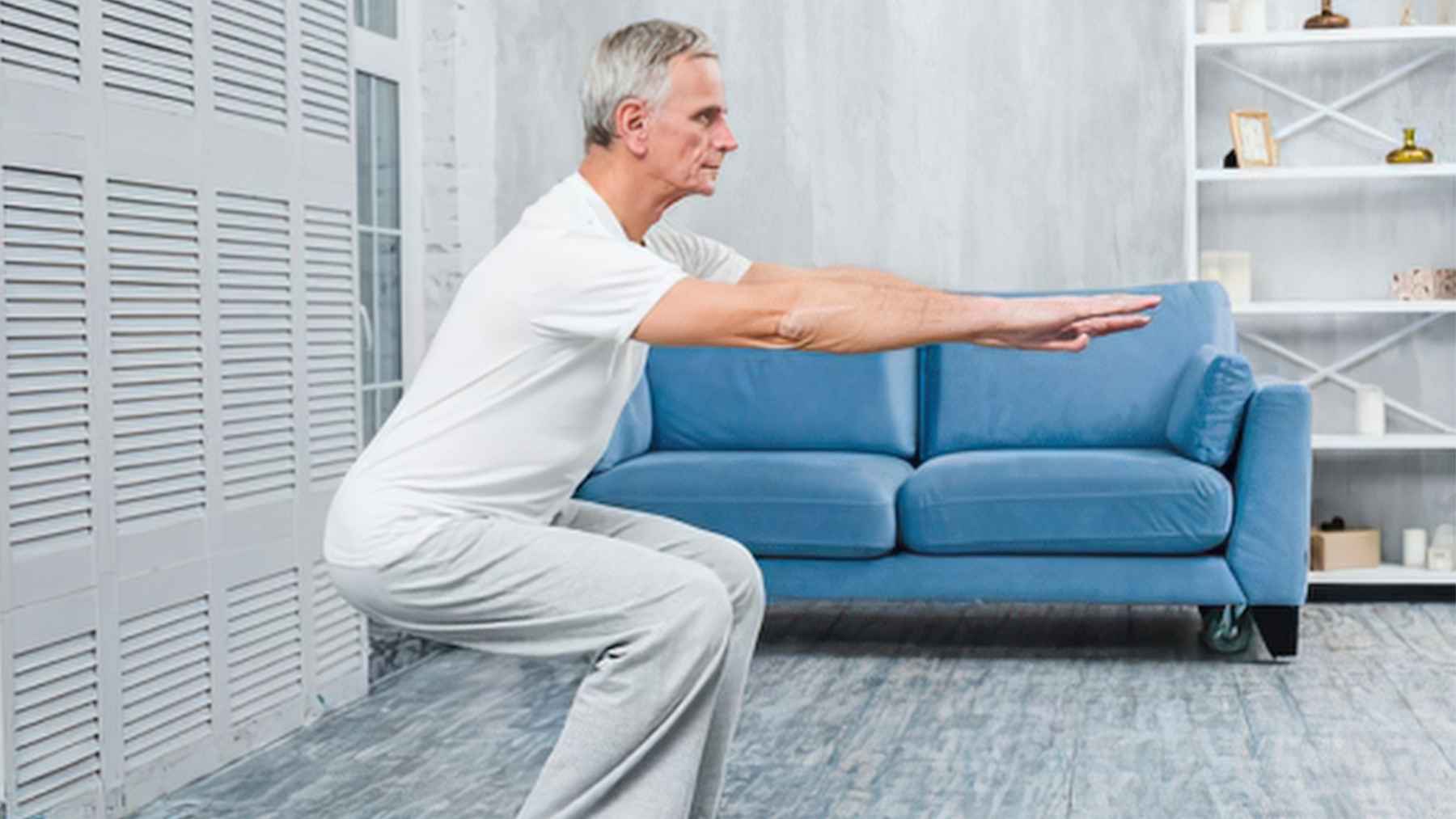
The routine starts with 10 chair squats and 12 calf raises. For the squat, the trainer recommends lightly touching the chair and standing up with fast intent, while the calf raises can be performed seated or standing depending on ability.
Next come 10 one-arm rows with a resistance band on each side and six countertop push-ups. The row trains the upper back and arms, while the elevated push-up works the chest, shoulders, and arms without requiring a person to get down on the floor.
It is simple. Still, this is presented as a coach’s practical recommendation, not as proof that three to four minutes can replace walking or a complete weekly exercise plan. Current resistance training guidance emphasizes regular effort, individualization, and gradual progression rather than one universal routine.
Walking still matters after 60
Calling walking useless is not supported by the broader evidence. A 2022 meta-analysis that combined 15 international participant groups found that, among adults 60 and older, the association between more daily steps and lower mortality risk continued up to roughly 6,000 to 8,000 steps a day.
Walking also covers a different part of fitness. A brisk pace can count as moderate aerobic activity when it raises the heart rate and breathing, while still allowing a person to talk but not sing comfortably.
That afternoon loop around the neighborhood can support heart health, break up long periods of sitting, and make movement easier to fit into real life. The trouble starts when a gentle stroll is treated as a complete longevity program. It is one tool, not the whole toolbox.
Strength fills the missing gap
The latest resistance training guidance makes a down-to-earth point. A 2026 review from the American College of Sports Medicine brought together 137 systematic reviews involving more than 30,000 participants and concluded that consistency matters more than complicated programming.
The guidance recommends training all major muscle groups at least twice a week. It also says bands, body-weight movements, and home routines can improve strength, muscle size, power, and physical function, so a gym membership is not required.
The fast chair squat targets power as well as strength. That quick force matters when someone needs to rise from a seat, step onto a curb, or recover from a trip, but speed should never come before control. Four minutes can open the door, though continued gains usually require adding resistance, repetitions, sets, or a larger range of motion over time.
The practical plan after 60
For the most part, the evidence does not support choosing between walking and strength work. U.S. recommendations call for at least 150 minutes of moderate aerobic activity each week, muscle-strengthening work on at least two days, and activities that improve balance.
Someone starting from almost no activity does not need to hit every target on day one. Even five minutes has real health value, and the safer approach is to begin at a manageable level, use stable supports, and build gradually.
People with recent surgery, repeated falls, severe joint pain, or heart and lung conditions may need a clinician or physical therapist to adapt the movements. The lesson is not to abandon the sidewalk. Keep the walk, then add the squats, rows, pushes, and balance work that walking alone cannot provide.
The exercise recommendations have been published in the Physical Activity Guidelines for Americans by the U.S. Department of Health and Human Services.