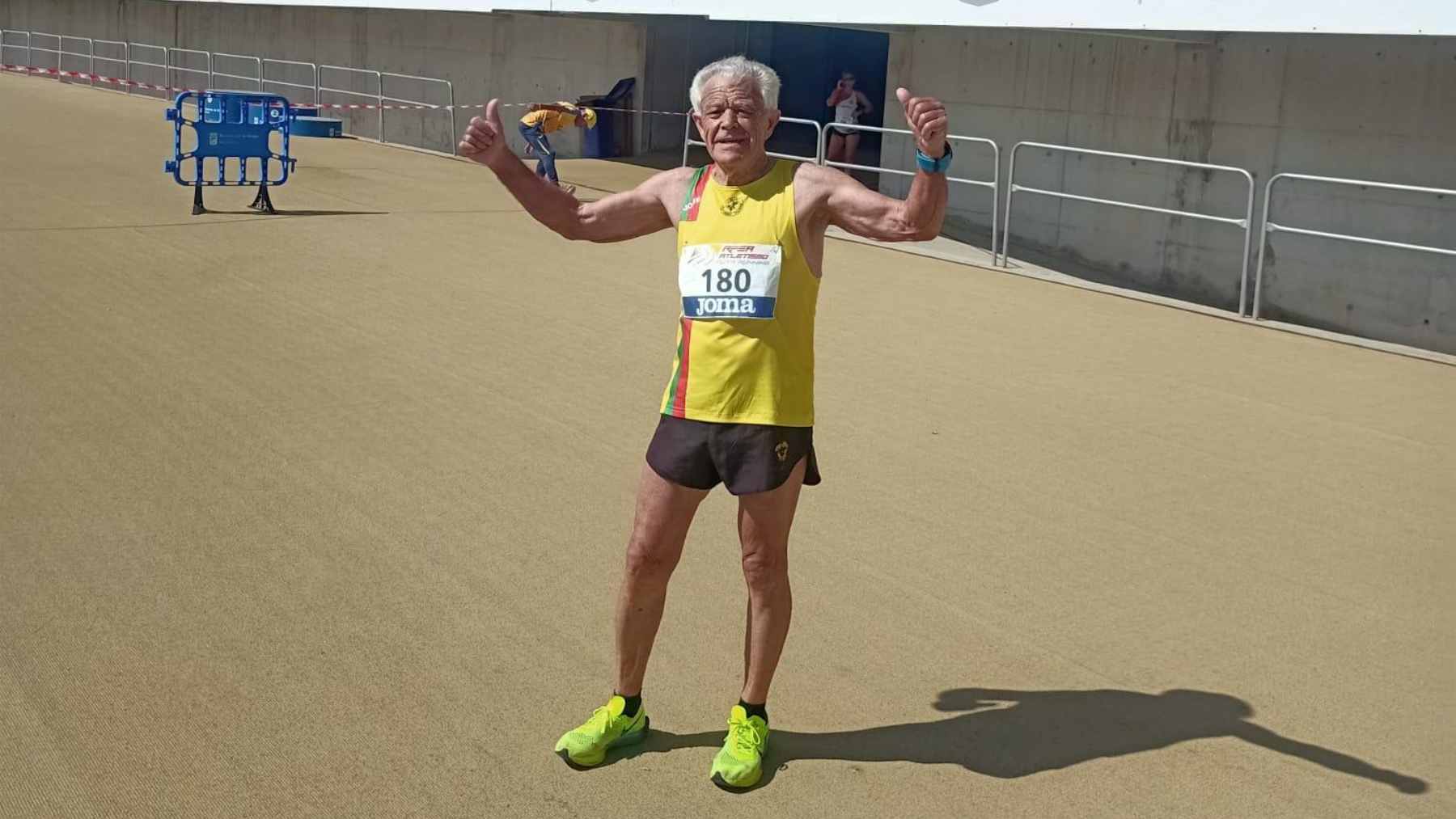
At 66, Juan López could not keep running for a full minute. Now 82, the retired Spanish mechanic known as “Superlópez” runs marathons and has set a world age-group record over 31.1 miles for men ages 80 through 84.
In May 2025, he covered that distance in 4 hours, 47 minutes, and 35 seconds, beating the previous mark by about 49 minutes. How does someone go from one difficult minute to that? The answer begins with patience, although scientists say López also has an unusually powerful aerobic system.
A one-minute beginning
López spent decades repairing cars and did little structured exercise beyond walking and long routes such as the Camino de Santiago. After retirement, his daughter Eva, a high-performance sports expert, encouraged him to try running. Her advice was simple, “Start very slowly and forget about pace.”
The first outings were humbling. “I couldn’t last even one minute running when I started, and now I run marathons,” he said on the ‘Tengo un Plan’ podcast. He also stressed that “the cardiovascular system improves sooner, but muscles, tendons, and joints need more time.”
His point was practical. Feeling less breathless does not mean every part of the body is ready for more impact, speed, or distance. López respected that lag instead of racing the clock, and patience became his first training tool.
Records that came later
He began competing at 70, moving from short track events into road races, marathons, and ultramarathons as long as 62.1 miles. In 2024, he won the men’s 80-to-84 title at the World Masters marathon championship in Bucharest. His time was 3 hours, 39 minutes, and 10 seconds.
Then came Málaga on May 3, 2025, where López won Spain’s masters title and completed 31.1 miles at an average pace of roughly 9 minutes and 15 seconds per mile. Spain’s athletics federation said his finish cut nearly an hour from the previous age-group record.
This was not a lucky retirement jog. Training records showed that he usually ran about 40 miles a week, rising to roughly 75 miles during focused preparation, with six or seven sessions each week. His annual total topped 2,175 miles.
What the lab found
Andrea Pilotto, Enrique Higueras-Liébana, and Simone Porcelli led a team involving the University of Pavia, the University of Castilla-La Mancha, and the University of Alcalá.
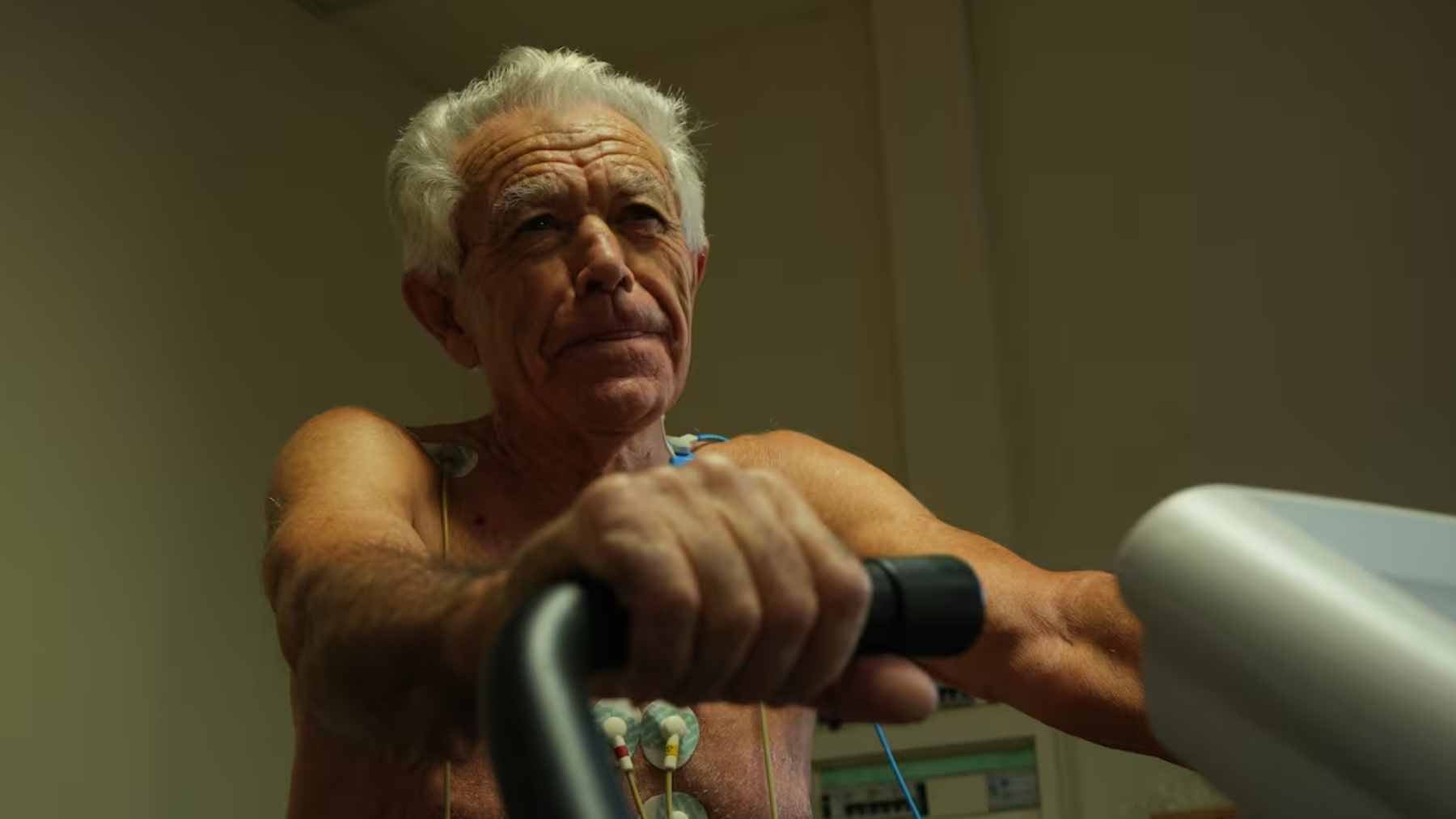
Two weeks after the record, they tested López on a treadmill and exercise bike, scanned his body composition, and measured how his muscles handled oxygen.
Maximum oxygen uptake, often called VO2 max, is the greatest amount of oxygen the body can use during hard exercise. Think of it as one measure of the body’s aerobic engine.
López scored 52.8 on the standard laboratory scale, the highest value the authors found in anyone older than 80 and around the 70th percentile for healthy men in their 20s and 30s.
At 5’2” and about 130 lbs., López had 76.8% lean tissue, meaning tissue other than fat and bone. His peak heart output looked closer to what aging would normally produce, but his muscles were unusually good at drawing in and using oxygen.
His running economy was closer to that of recreational runners than younger elites, so the record did not come from flawless mechanics alone.
Discipline beats a mood
López puts the emphasis on routine. “It’s not motivation, it’s what you do every day, even when you don’t feel like it,” he said. For most people, that choice arrives on an ordinary morning when the couch looks better than the sidewalk.
He also says running makes him happier, a benefit that matters after the clock stops. Still, scientists cannot say training alone created his remarkable physiology. The study captured one athlete at one point in time, had no earlier laboratory data, and could not rule out favorable genetics.
That caution does not erase the wider pattern. A related study of endurance-trained older athletes found better aerobic fitness, body composition, and muscle blood supply than in inactive people of a similar age.
Their aerobic capacity was comparable to much younger, untrained adults, though that does not promise records for everyone.
What older beginners can use
Copying López’s mileage would be unrealistic and potentially unsafe for most beginners. Current U.S. guidance for adults 65 and older recommends at least 150 minutes of moderate aerobic activity each week, plus muscle-strengthening work on two days and exercises that improve balance.
Running can count, but so can brisk walking, cycling, swimming, or dancing.
For someone who has been inactive, the official advice is to start slowly and build over time. A practical path may begin with walking, then short, easy jogging intervals, followed by gradual increases in time before speed.
People with chronic conditions, or those planning vigorous exercise after a long inactive period, should discuss the change with a health professional.
López is an outlier, but his first difficult minute is easy to understand. The larger lesson is that a late start still counts when the habit is patient enough to last.
The full case study was published in Frontiers in Physiology.