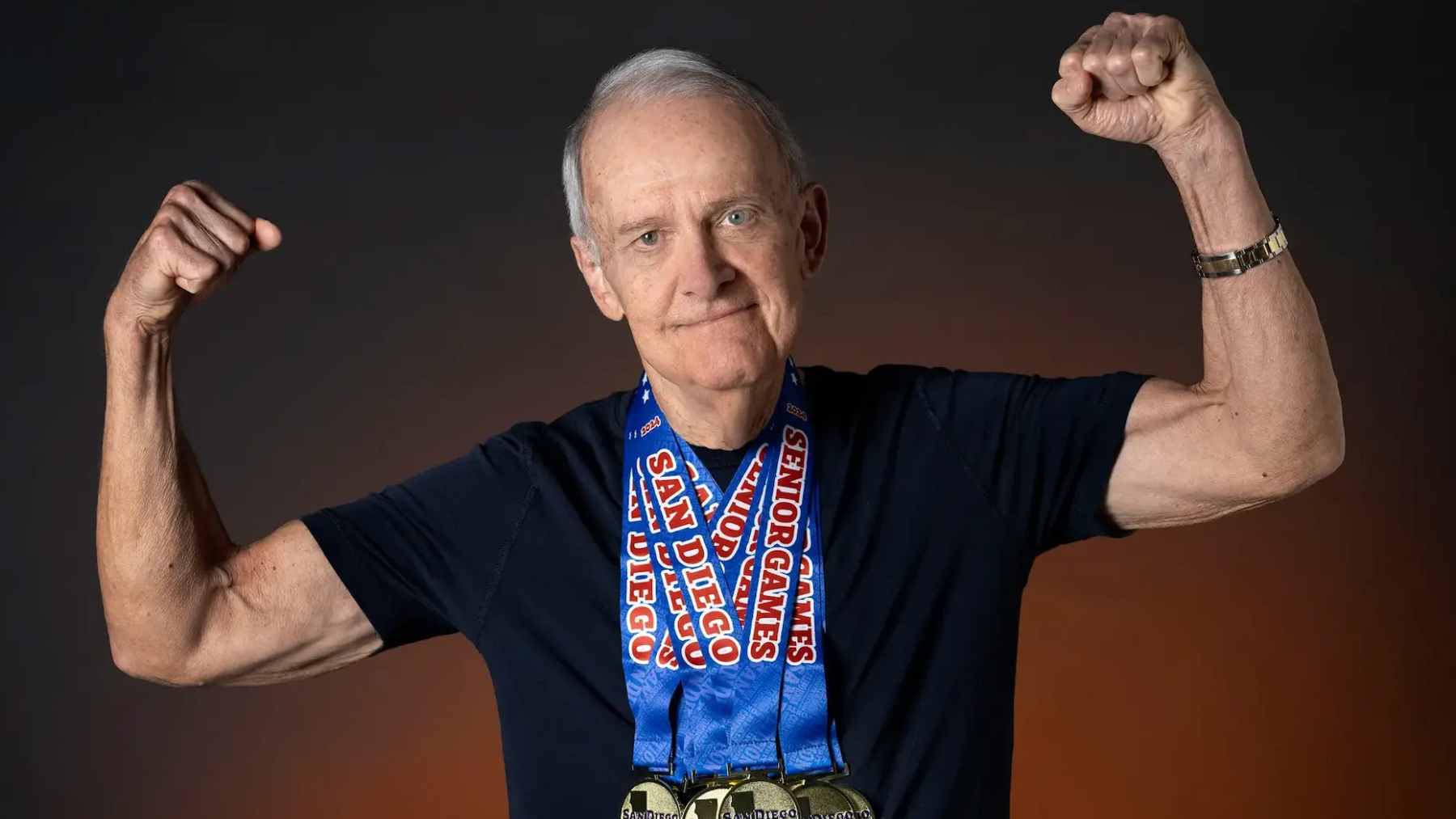
Jim Owen was 70 when he looked at his health and realized something had to change. The retired Wall Street manager had spent decades in a demanding career, followed by heavy travel, and his body was paying the price.
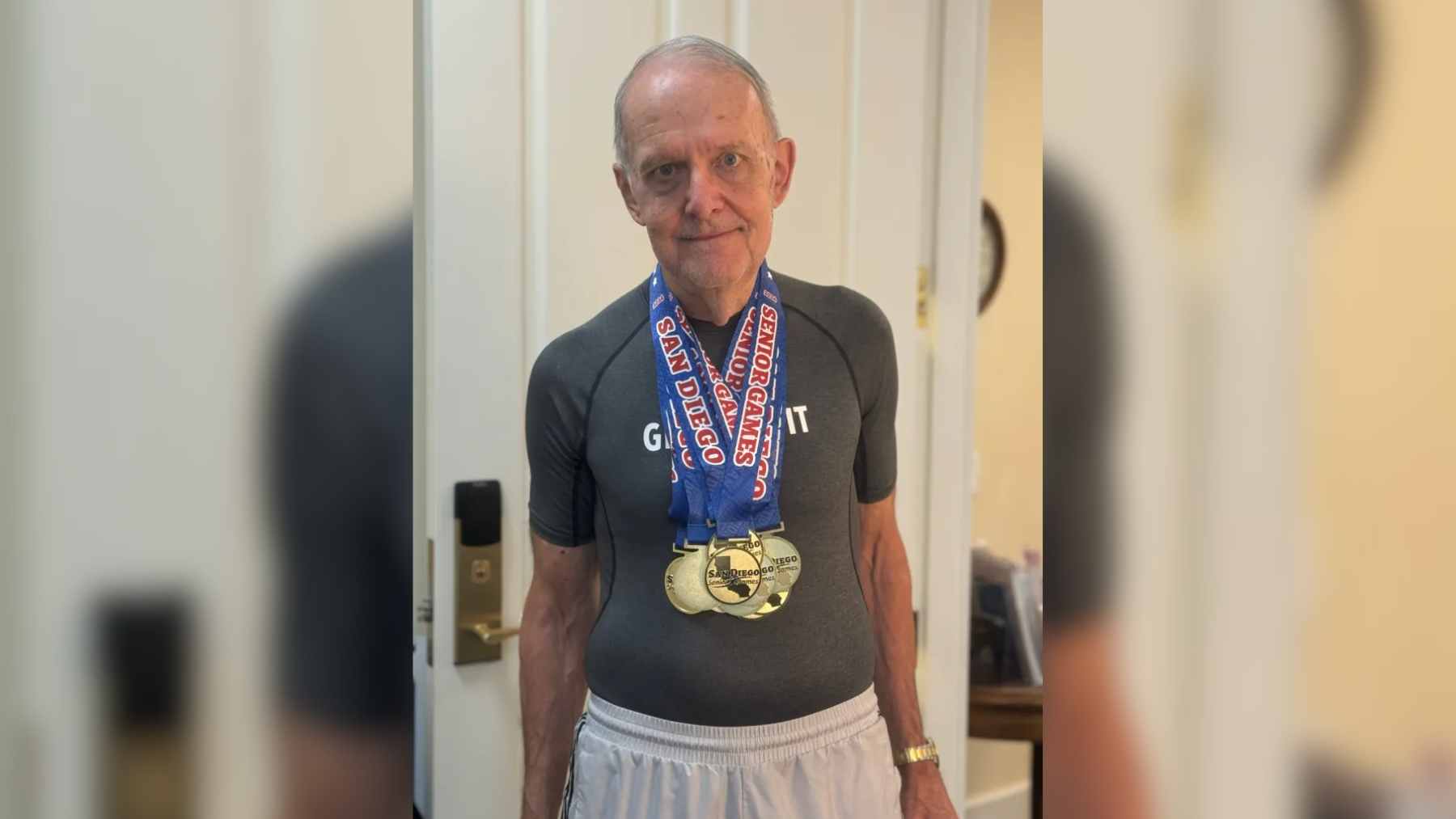
Now 85, Owen has become a competitive senior athlete, a 10-time gold medal winner at the San Diego Senior Games, and the filmmaker behind the PBS documentary “Virtuous Circle” on successful aging. His story is not about chasing youth.
It is about what can happen when small daily movement becomes a serious habit.
A late start, not an ending
Owen does not describe himself as a lifelong fitness star. In fact, he has said he was in terrible shape at 70, with severe lower-back pain, low energy, and about 35 extra pounds on his body.
That detail matters. Many people hear “fitness after 70” and picture someone who was already athletic, already disciplined, already halfway there. Owen’s angle is different because he started from the couch, not the podium.
The first move was simple
Before he joined a gym, Owen wrote down what he wanted to fix. He wanted less back pain, more energy, and significant weight loss.
That may sound basic, but it gave him a target. “Exercise more” is vague. “Walk every day for 30 days” is something you can actually do, even when motivation is low.
So he started with walking. On his first day, Owen said he was out of breath after just four blocks, but he kept going a little farther each day.
Walking opened the door
After 30 days, he was still only walking about one mile, but people around him noticed the change. They told him he seemed to have more energy, and that feedback helped him keep going.
In practical terms, that is the first lesson in Owen’s story. The workout did not need to look impressive. It just had to happen again tomorrow.
For many older adults, walking is also one of the most realistic entry points. No special gear. No intimidating weight room. Just shoes, a safe route, and the decision to move.
Strength became the foundation
After about three months, Owen realized walking was not enough to rebuild his body. It helped his lungs and stamina, but it did not solve everything, especially his back problems.
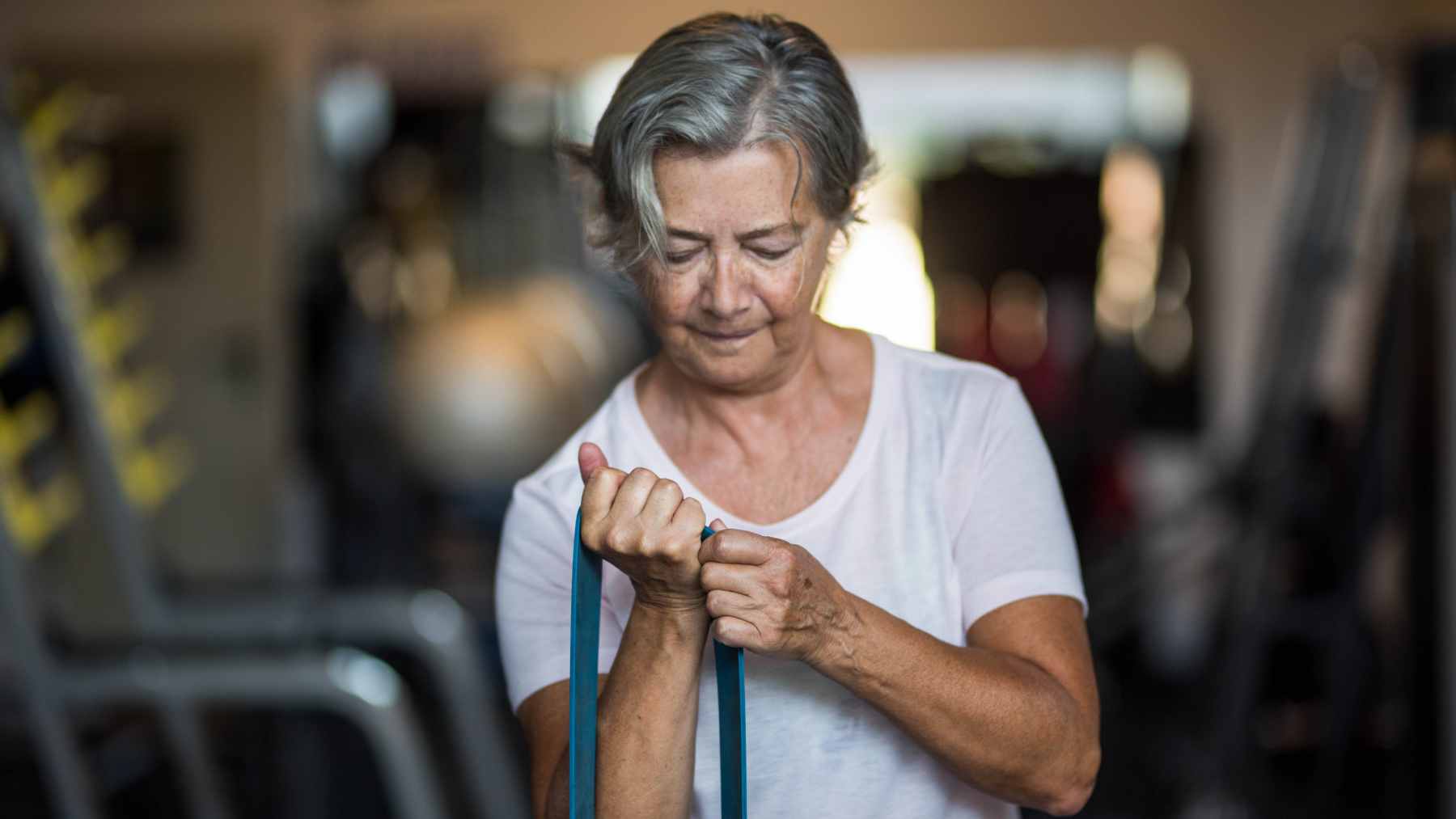
That is when he added strength training. At first, he could not do one real push-up. It took him weeks to manage a single clean repetition, then a few more, and eventually sets of 50 by the time he was about 75.
This is where the story becomes useful for everyday readers. Strength is not just about muscles in a mirror. It helps with getting out of chairs, carrying groceries, climbing stairs, and staying steady when the sidewalk is uneven.
What health guidance says
Owen’s routine now includes six days of weekly training, split between strength work, cardio, and stretching. That is more than many people need, and he is clear that not everyone has to train like a competitor.
Still, his approach lines up with mainstream public health advice. The CDC says adults 65 and older need aerobic activity, muscle-strengthening work, and balance activities each week, with at least 150 minutes of moderate activity as a key benchmark.
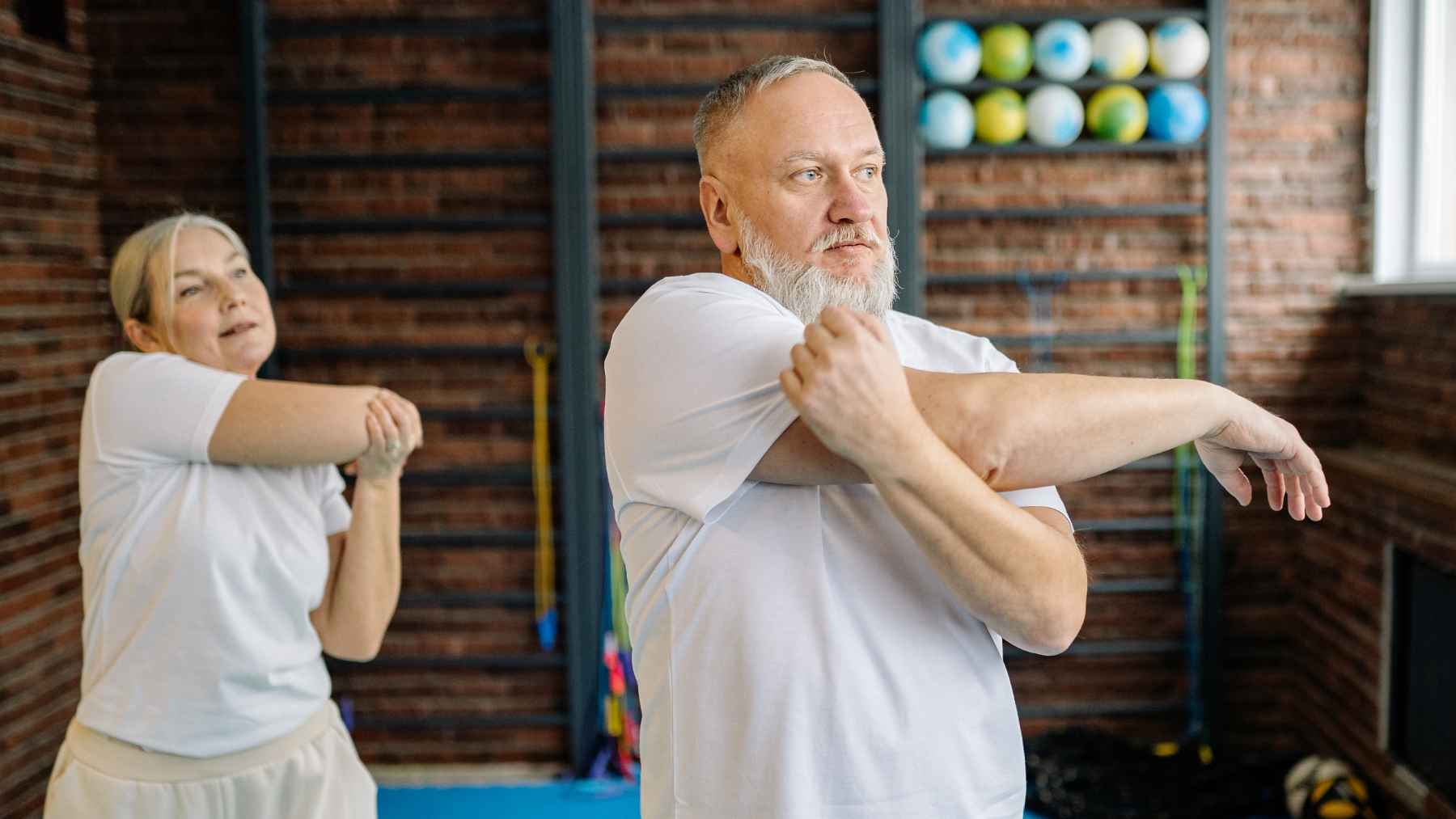
The National Institute on Aging also points to endurance, strength, and balance as major pillars of physical health in later life. Put simply, older bodies need more than one kind of movement.
Setbacks did not stop him
Owen’s progress was not smooth. He has dealt with injuries, including a broken wrist and a broken hip, which would be enough to make many people quit for good.
But his message is not that aging disappears when you exercise. The point is more practical. Bad days, plateaus, and interruptions are part of the deal, so the plan has to be flexible enough to survive them.
On low-energy days, Owen lowers the intensity. He may use less weight or do fewer repetitions, but he still shows up in some form. That small adjustment may be the difference between a routine and a short-lived burst of enthusiasm.
Movement does not need a gym
Owen later wrote “Just Move!” to push one central idea. You do not need a trainer, a gym membership, or a dramatic life makeover to begin.
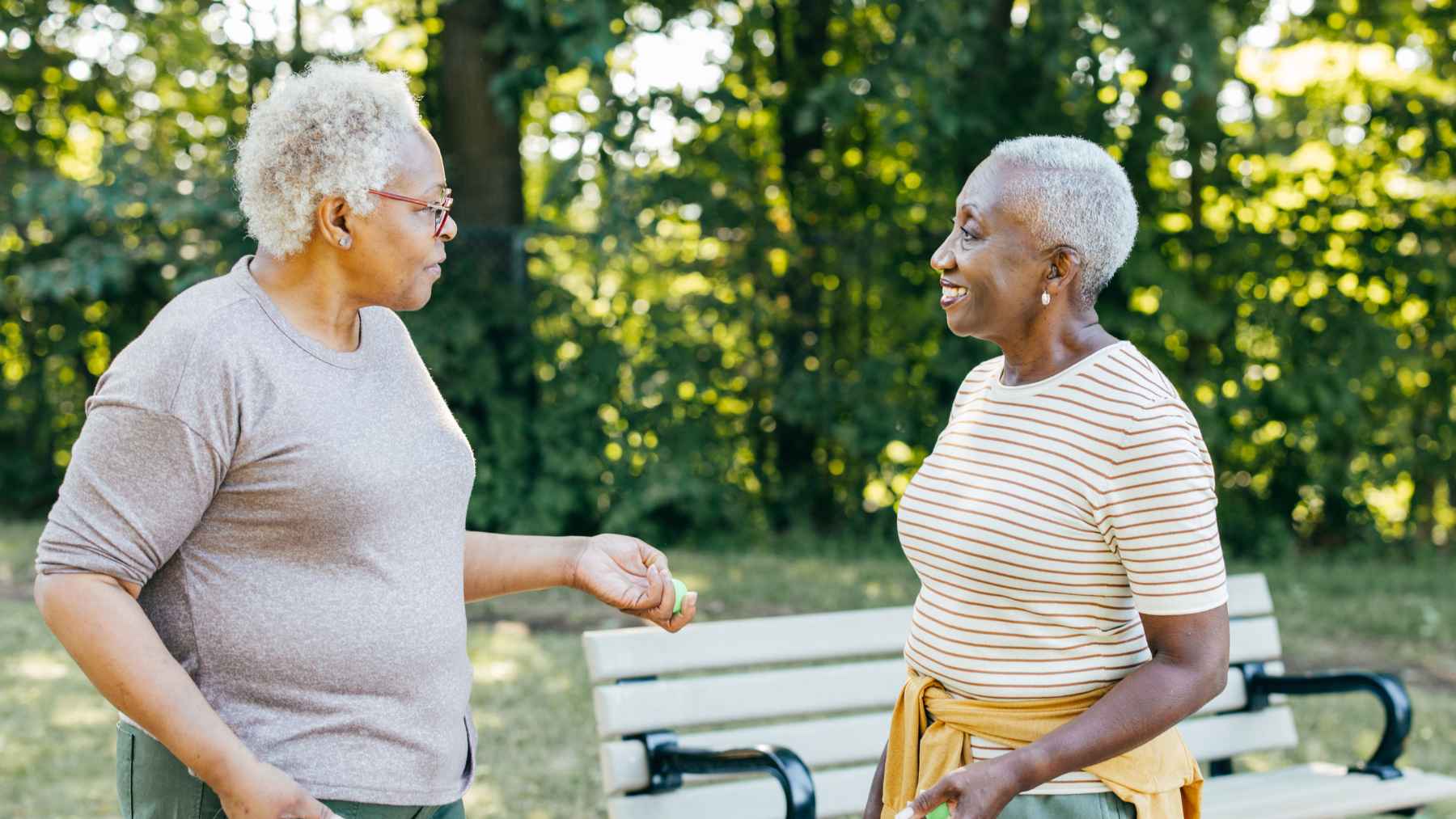
That message is especially important for older adults who feel embarrassed, tired, or unsure where to start. Parking farther away, taking the stairs, walking after lunch, or stretching in the morning may not feel like much.
Over time, though, those choices can become the first links in a stronger chain.
At the end of the day, what Owen is really arguing for is momentum. Start small, keep records, work on weak spots, and do not wait for the perfect moment.
The lesson of aging well
Owen is not promising that everyone who starts exercising at 70 will win medals. That would be too tidy, and real life is rarely that neat.
What his story does show is that physical decline is not always a one-way street. To a large extent, daily choices still matter, even later in life, and even when the first walk feels harder than expected.
His closing message is simple enough to stick. “The sooner you start, the easier it is,” he said, “but it’s never too late.”
The main interview has been published in Fit&Well, and the official documentary work has been published by PBS.