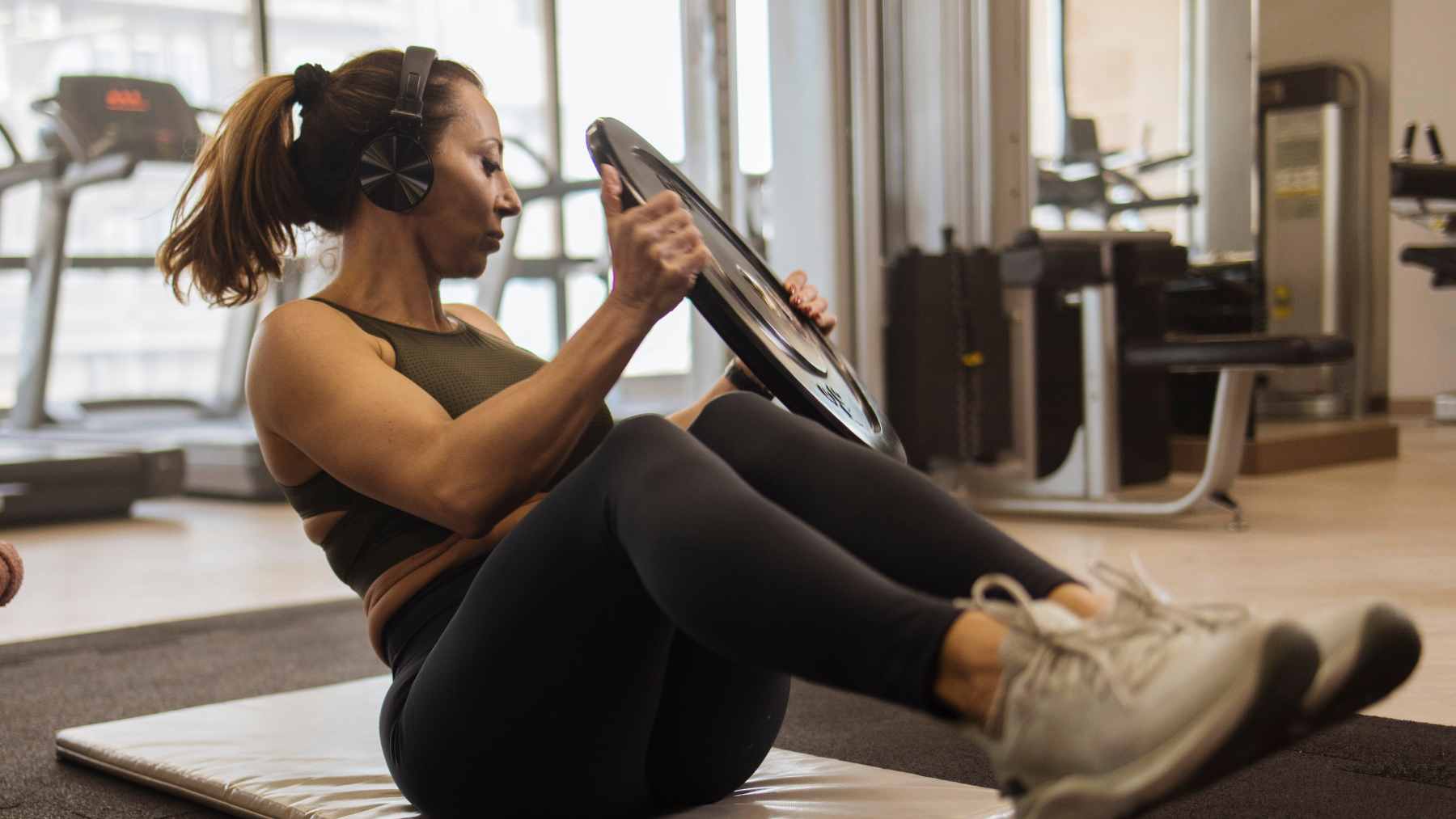
For anyone getting back into exercise after 50, the hardest part is often not knowing which machine to use. It is staying with the effort when the legs start to burn, breathing gets louder, and the timer seems to slow down.
A new study suggests a familiar tool may help with that moment.
The study, led by Andrew Danso at the University of Jyväskylä and carried out with the Finnish Institute of High Performance Sport and Springfield College, found that favorite workout music helped active adults cycle longer, but it did not appear to make them physically stronger during that session.
Music changed the clock
In the experiment, 29 recreationally active adults completed two high-intensity cycling tests. One was done in silence, while the other let each person choose upbeat songs between 120 and 140 beats per minute.
The difference was clear. With music, riders lasted an average of 35.6 minutes before exhaustion, compared with 29.8 minutes without music. That is nearly six extra minutes of hard work, or close to a 20 percent improvement.
Exercise tolerance is the key idea here. It means your ability to keep moving at a demanding pace even after discomfort shows up. Anyone who has watched the last minute of an interval crawl by knows the feeling.
Not a strength shortcut
The tempting headline would be that music makes workouts easier. The more careful version is better. It helps people tolerate the same hard effort for longer.
Danso put it plainly. “Self-selected music doesn’t change your fitness level or make your heart work dramatically harder in the moment,” he said. In other words, the playlist did not turn the riders into different athletes.
The body data backed that up. At the point of exhaustion, heart rate and lactate levels were similar with and without music. Lactate is a chemical that builds up during hard exercise and is often linked with that heavy, burning feeling in tired muscles.
The brain stays in it
So why would songs help if the body is still working just as hard? Music may act like an attention guide. It gives the brain something to follow besides discomfort, rhythm, mood, memories, and motion all at once.
That does not mean pain disappears. It means the brain may stop treating every signal from the legs as the only thing in the room. A good playlist can feel like a hand on the back during those sticky final minutes.
A related systematic review in JMIR Human Factors found that personalized interactive music systems may improve physical activity levels and positive feelings, though the authors warned that study quality was still limited.
That matters because exercise habits are built one repeatable session at a time.
Pick songs you actually like
The study did not ask people to use a lab-made playlist. Participants picked their own tracks, as long as the tempo stayed in a fast, workout-friendly range. That detail is important.
In practical terms, the best workout song may not be the one a coach, app, or influencer recommends. It may be the one that makes you want to move when you are already tired. Personal meaning counts.
For someone returning to fitness after midlife, that is useful news. The goal is not to suffer heroically through every session. The goal is to make the work consistent enough that you come back tomorrow.

Useful after midlife
Starting or restarting exercise after 50 is still bigger than headphones. Adults are advised by the CDC to get at least 150 minutes of moderate activity each week, along with two days of muscle-strengthening work. For adults 65 and older, balance activities are also recommended.
That is where music may help, to a large extent. If a playlist makes a difficult ride, brisk walk, or gym session more bearable, it can remove one small barrier. Sometimes that is the difference between stopping early and finishing the plan.
But there is a limit. Music cannot replace strength training, rest, sleep, or medical guidance for people with heart, joint, or metabolic conditions. It is a tool, not a treatment.
The limits are real
The study was small, and the volunteers were already physically active adults. It also tested one kind of hard cycling in controlled conditions, not months of training in real life. So the findings should be read as promising, not final.
There is also a wider caution. A 2026 systematic review in Frontiers in Psychology found that evidence on music’s effects during acute exercise is mixed and context-dependent, especially as intensity rises. In plain English, music helps some people in some settings, but it is not magic.
Still, the main message is practical. Choose music you like, keep the tempo lively, and use it to stay with the effort a little longer.
The main study has been published in Psychology of Sport and Exercise.