
The U.S. Food and Drug Administration has approved vepdegestrant, sold as Veppanu, for adults with advanced or metastatic breast cancer whose tumors are estrogen receptor positive, HER2 negative, and carry an ESR1 mutation.
The decision, issued on May 1, 2026, gives doctors a new oral option after the disease has grown despite at least one earlier endocrine therapy.
Why does that matter? In this type of breast cancer, some tumors learn to keep using estrogen signals even after standard hormone-blocking treatments. Veppanu is designed to remove the estrogen receptor itself, not just block it, which is why the approval is getting attention far beyond one drug label.
A new answer to resistance
Estrogen receptor positive breast cancer often depends on estrogen signals to grow. Endocrine therapy tries to cut off that signal, but over time the cancer can change, and one common change is a mutation in the ESR1 gene.
That mutation can act like a stuck switch. Even when treatment tries to quiet the signal, the tumor may keep growing, which leaves patients and doctors facing fewer choices.
The treatment was developed by Arvinas and Pfizer for exactly this setting. Randy Teel, president and chief executive officer of Arvinas, called the approval “a transformative moment for Arvinas,” because it is the company’s first approved medicine and the first approved PROTAC therapy in the United States.
How the drug works
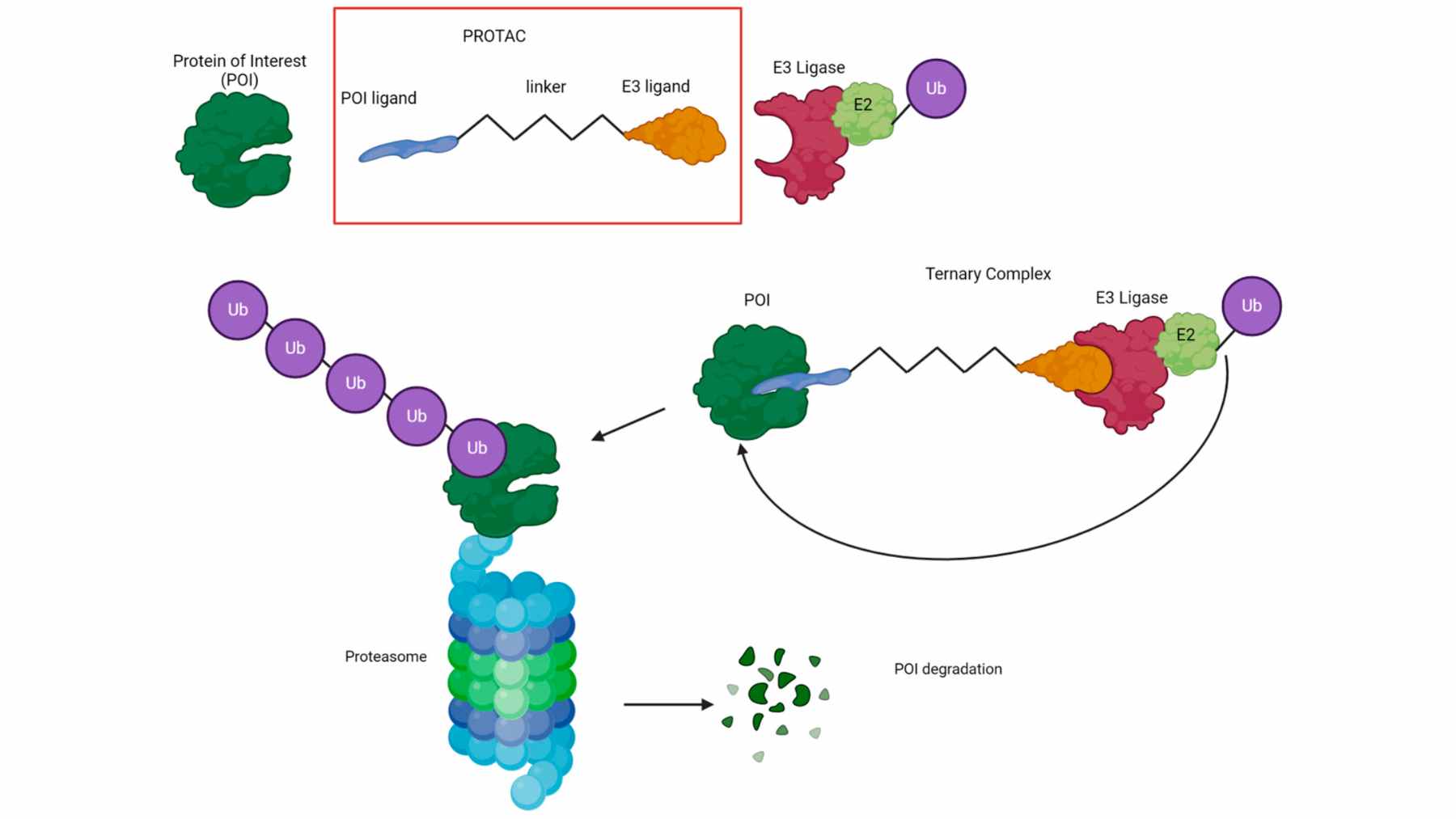
PROTAC stands for proteolysis targeting chimera, but the idea is easier than the name. These medicines guide the body’s own cleanup system toward a disease-driving protein, marking it for disposal.
In practical terms, Veppanu aims to degrade the estrogen receptor. Think of it less like putting a lock on a door and more like removing the door handle altogether.
The platform traces its roots to research connected with Yale University and professor Craig Crews. The bigger point is simple enough. A cancer drug can now be approved not just to block a harmful protein, but to help the cell get rid of it.
What the trial found
The approval was based on VERITAC-2, a randomized international trial involving 624 adults with estrogen receptor positive, HER2 negative advanced or metastatic breast cancer. Of those patients, 270 had tumors with ESR1 mutations.
Among patients with the mutation, Veppanu reduced the risk of disease progression or death by 43 percent compared with fulvestrant, an older endocrine therapy given by intramuscular injection. Median progression-free survival was five months with Veppanu and 2.1 months with fulvestrant.
The tumor response rate also favored the new pill. It was 19 percent with Veppanu, compared with four percent with fulvestrant, although overall survival data were still immature when progression-free survival was analyzed.
Why an oral option matters
For many patients, the difference between a daily pill and recurring injections is not a small detail. Cancer treatment already brings appointments, scans, fatigue, and the everyday planning that comes with living around a serious diagnosis.
That does not make Veppanu easier for everyone, and it does not mean it is the right treatment for every patient. But for the approved group, an oral medicine gives oncologists another tool once standard endocrine therapy has stopped working.
The agency also approved Guardant360 CDx as a companion diagnostic test. In plain language, that means doctors can use an authorized test to check whether a patient’s cancer has the ESR1 mutation needed for this treatment.
Safety warnings remain important
The recommended dose is 200 milligrams once daily with food, continued until the cancer progresses or side effects become unacceptable. Patients should not start, stop, or change this medicine without speaking with their oncology team.
The prescribing information warns about QTc interval prolongation, a change in the heart’s electrical timing that can raise the risk of serious rhythm problems.
It also warns that Veppanu may harm an unborn baby, so pregnancy testing and contraception guidance matter for patients who can become pregnant and for some partners.
The most common side effects and lab changes included lower white blood cell counts, liver enzyme increases, muscle and bone pain, fatigue, lower hemoglobin, nausea, lower potassium, appetite loss, low platelets, constipation, and changes seen on an electrocardiogram.
A step forward, not the final word
Veppanu’s approval gives patients with ESR1-mutated, estrogen receptor positive, HER2 negative advanced breast cancer a new targeted option after earlier endocrine therapy. That is meaningful because this mutation is one of the reasons treatment resistance becomes so hard to manage.
At the same time, the data should be read carefully. The clearest benefit was seen in the ESR1 mutation group, and longer follow-up will be needed to better understand survival outcomes and how the drug fits alongside other breast cancer treatments.
Still, for a field where resistance often narrows the path forward, the approval changes the conversation. The question is no longer only how to block the signal, but whether the cancer-driving receptor can be removed from the cell’s machinery.
The main study, led by Mario Campone, has been published in The New England Journal of Medicine.