A plank looks simple until the shaking starts. The real answer is not “as long as possible,” but how long you can keep a clean position while your core, glutes, and shoulders stay active.
For most people, the useful range is shorter than many gym myths suggest. Beginners can start with 15 to 30 seconds, intermediate exercisers can work toward 30 to 45 seconds, and advanced athletes often get the best return between 45 and 60 seconds.
The right number of seconds
A good plank is not a contest with the clock. It is a test of control, because the exercise only works properly while the body stays aligned from head to heels and the breath remains steady.
Other expert guidance came to similar conclusions. One widely cited fitness article says most people can benefit from holds of 10 to 30 seconds, especially when they repeat several shorter sets instead of forcing one long, sloppy hold.
Why longer is not always better
Holding a plank for several minutes can look impressive on social media. But impressive is not the same as useful, and it may not be the best way to spend training time.
Once fatigue takes over, the lower back may sag, the hips may rise, and the shoulders may creep toward the ears. A professional fitness review notes that static planks beyond 30 seconds are often not the most effective use of a workout, especially when movement-based progressions are available.
What a plank trains
The plank is an isometric exercise, which means the muscles activate while the body holds still. In simple terms, nothing big moves, but a lot of muscles are working under the surface.
During a plank, the abdominal muscles help brace the trunk, the glutes help stabilize the pelvis, and the shoulders help keep the upper body planted. That is why the plank is less of a six-pack trick and more of a full-body stability drill.
Proper plank form
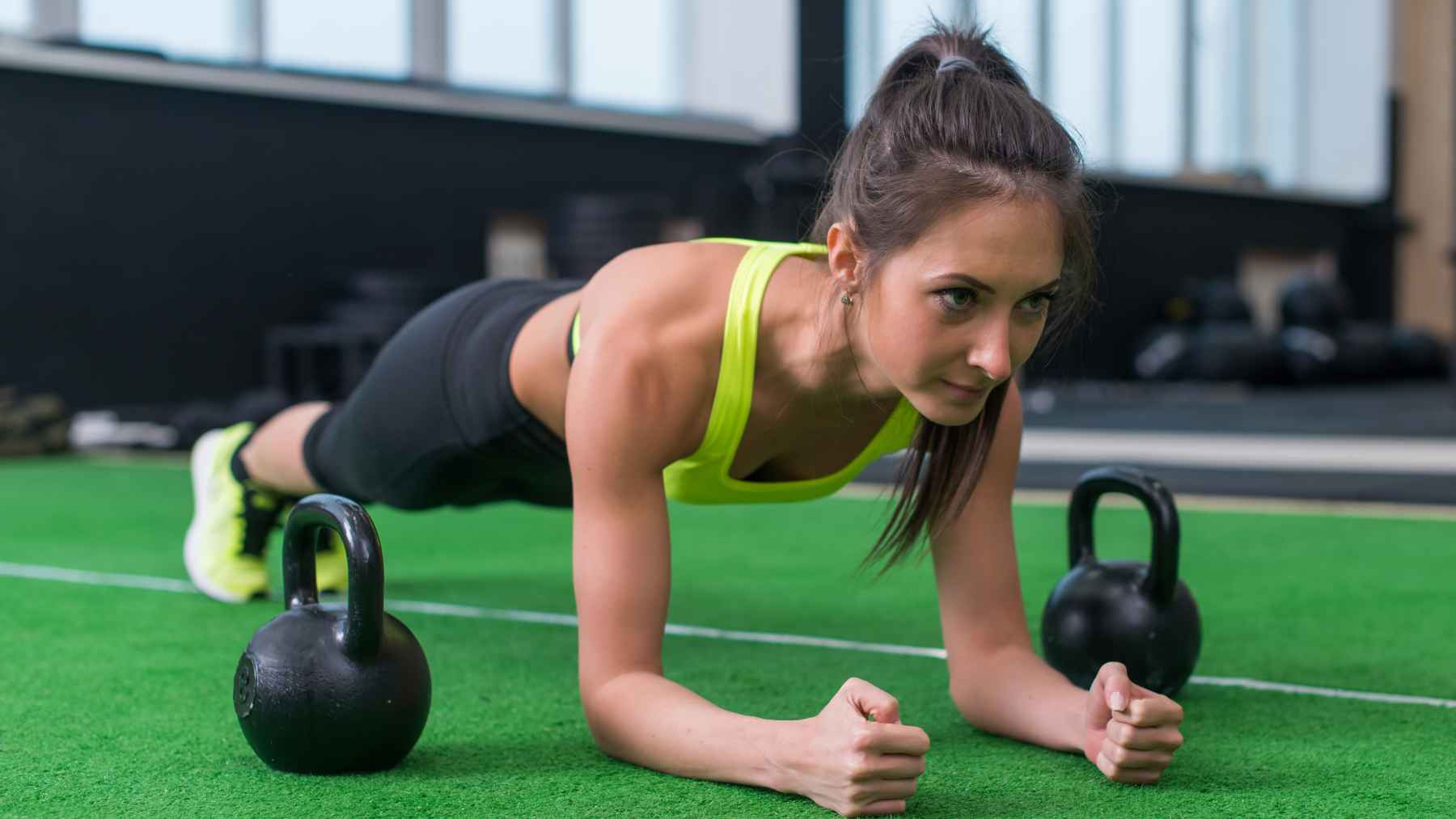
Start on your forearms, with your elbows under your shoulders and your gaze down. Keep your neck in line with your back, tighten your abdomen, and avoid letting your lower back collapse.
A clean plank should feel challenging but controlled. Guidance on core training also emphasizes lining up the head and neck with the back, placing the shoulders above the elbows, tightening the abdominal muscles, and holding the position for steady breaths.
When to stop the set
So, when should you quit the plank? Stop when you can no longer keep the same shape, even if the timer says you had more seconds left.
This is where many people get into trouble. If you hold your breath, tense your neck, let your hips drift upward, or feel the strain move into your lower back, the set has already lost its purpose.
How to make it harder
Once 60 seconds feels comfortable, adding more time is not the only option. In fact, it may be smarter to change the plank instead of turning it into a waiting game.
You can try a side plank, a reverse plank, a plank with alternating leg lifts, or a front plank with small foot movements. These variations challenge the body to resist twisting, swaying, and over-arching, which is closer to how the core works in everyday life.
Better sets for real progress
In practical terms, a beginner might do three short holds of 15 seconds with some rest between each one. A more seasoned ‘planker’ might use two or three holds of 30 to 45 seconds and keep every rep clean.
One core-training guide suggests aiming for 30 to 60 total seconds by using as many repetitions as needed, such as four holds of 15 seconds. That approach makes room for progress without sacrificing good form.
Common mistakes to avoid
The biggest mistakes are not dramatic. They are the little dips in form that show up when a person is tired, distracted, or too focused on beating yesterday’s time.
Do not hold your breath, push your chin forward, shrug your shoulders, or relax your glutes. People with high blood pressure or heart concerns should also be careful with breath-holding during exercise, because regular breathing helps avoid unnecessary pressure spikes.
The real goal
At the end of the day, a plank is not about suffering through the longest possible hold. It is about owning the seconds you choose.
That may be 20 seconds today and 35 seconds a few weeks from now. The better question is not “How long can I suffer?” It is “How many seconds can I hold with good form ?”
The official exercise guidance referenced for this article has been published by Harvard Health.