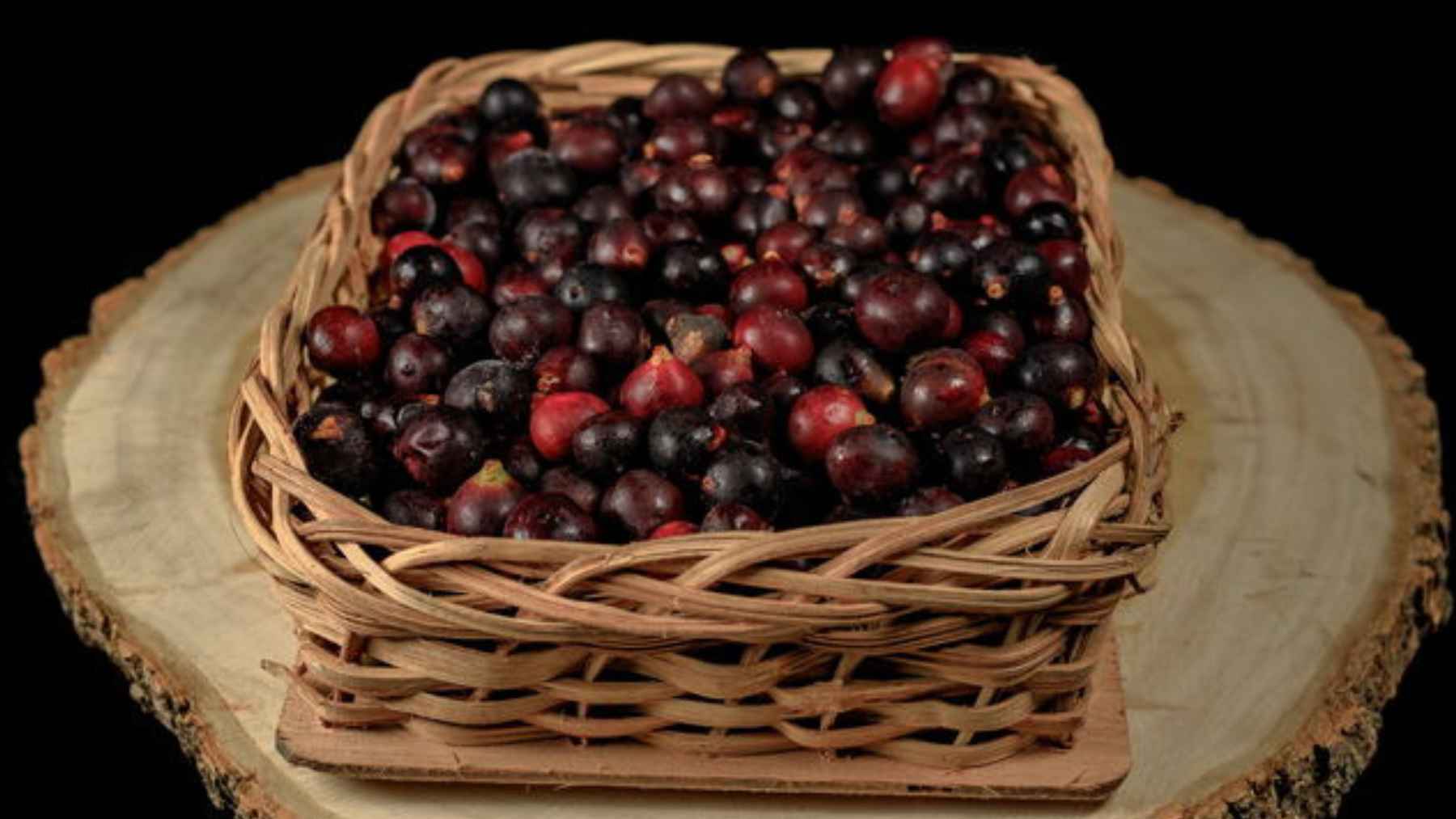
Small, dark, and easy to overlook, corozo is one of those fruits that can tell you where you are before a map does. Along Colombia’s Caribbean coast, it turns up in markets, roadside stands, patios, juices, sweets, sauces, and cold drinks made for the sticky coastal heat.
But corozo is not just a local flavor. The fruit comes from a tough spiny palm that feeds wildlife, protects bird nests, supports rural uses, and may offer a more sustainable way to strengthen local economies without tearing more land away from fragile ecosystems.
A fruit with a hidden job
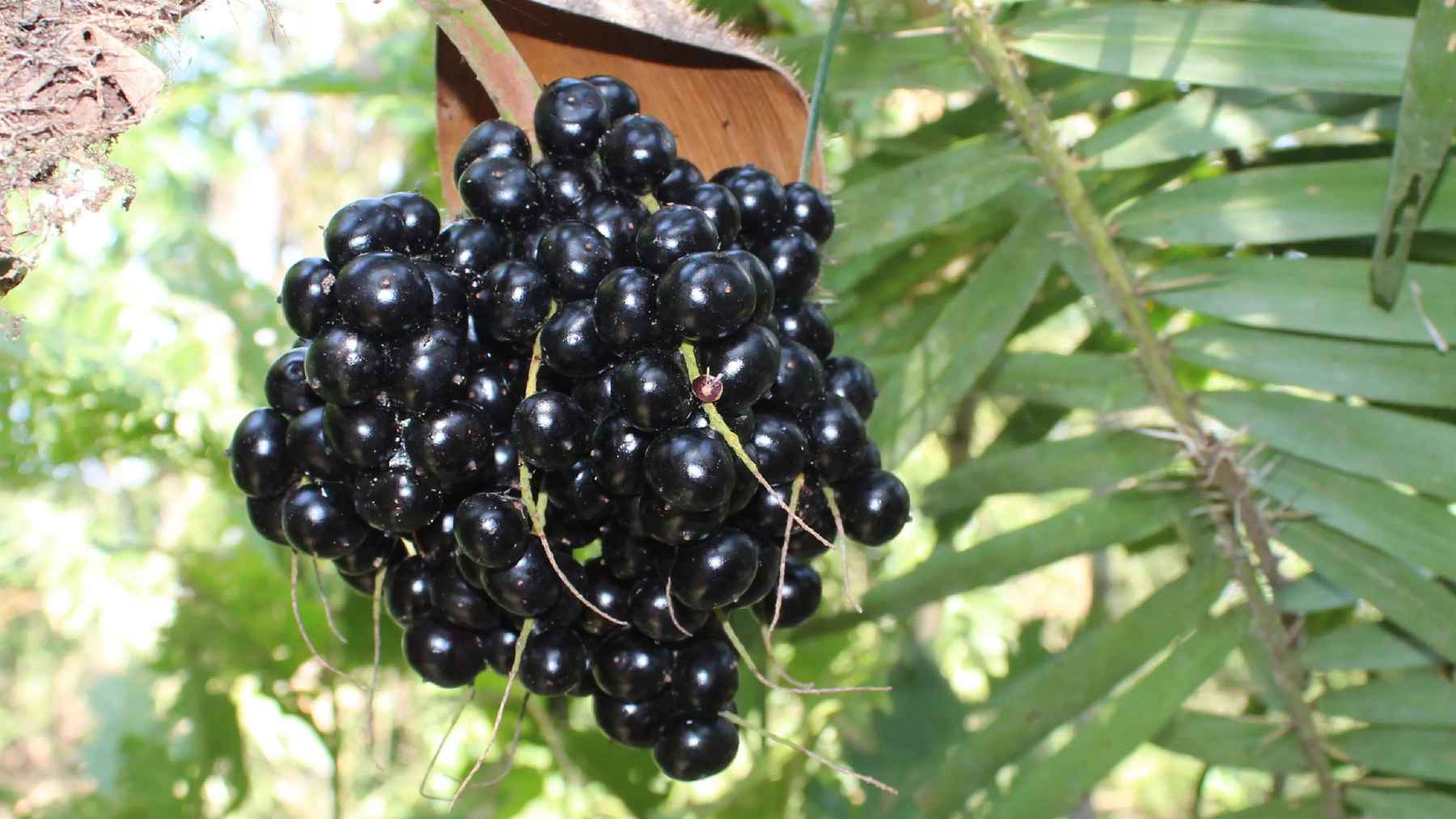
Corozo is the fruit of Bactris guineensis, a native palm known in different places as lata, píritu, güis, coyol, or uvita. Colombian Plants made accessible lists the species as native to Colombia and reports its wider native range from Central America to Venezuela.
The plant is not glamorous at first glance. It grows in dense, thorny groups and can reach about 16 to 26 ft. tall, with a thin upright stem covered in short spines. Its best-known part is the berry, a round fruit only about 0.6-inch across that turns deep purple or almost black when ripe.
Why the palm matters
In the wild, corozo is food for animals and a natural shelter for birds. Those sharp spines may be annoying to people, but for nesting birds they can work like a living fence.
It is also tied to the tropical dry forest, a seasonal forest that must survive long stretches with little rain. Instituto Humboldt has warned that Colombia’s tropical dry forest has lost close to 90% of its territory, mainly under pressure from agriculture, urban growth, and deforestation.
That is why this small fruit carries more weight than its size suggests. If native plants that already tolerate heat, poor soils, and changing land use are lost, restoring those places becomes harder and more expensive.
What people make with corozo
So, what is corozo good for? For many families on the Caribbean coast, the answer starts in the kitchen.
The fruit can be eaten fresh, though the seed should not be swallowed. It is also used in juices, chichas, jams, jellies, ice cream, sauces, and fermented drinks, giving many recipes a strong color and a sweet, slightly tart taste.
A 2024 study from the University of Costa Rica notes that the same species appears in markets from Nicaragua to northern Colombia and Venezuela, usually as juice, drinks, candied fruit, jams, or fermented beverages.
It also found dietary fiber, potassium, polyphenols, anthocyanins, and antioxidant capacity, which means corozo contains plant compounds of interest to food scientists, not that it should be treated like any cure.
The science is still catching up
Researchers are also paying closer attention to how this palm reproduces. That may sound like a narrow question, but fruit production depends on pollination, and pollination depends on tiny insects that can disappear when habitats are simplified.
What happens if the palm is planted, but the insects are gone? That is the practical concern behind the science. The more farmers and buyers understand the palm’s life cycle, the easier it becomes to grow corozo without breaking the natural system that makes the fruit possible.
This is where the story gets bigger than juice and jam. Sustainable production would need insect-friendly practices, intact habitat patches, and careful harvesting rather than a rush to turn every useful plant into another industrial crop.
A local economy in one small fruit
Corozo is already part of a real market. During harvest season, trade can reach about 61,700 lbs. per day in Barranquilla and Magangué, two major Caribbean trading points.
Field work in Cesar also found fruit production between roughly 16 and 27 lbs. per palm in studied sites. That is not a miracle crop, but it is meaningful for communities looking for income that can fit with conservation rather than replace it.
At the end of the day, the promise is simple. If harvesters, landowners, researchers, and buyers treat corozo as a valuable native resource, the palm can support food, small businesses, and habitat at the same time.
The conservation warning
There is a catch. Universidad de La Salle reported that the fruit is rich in oils, proteins, vitamins, and antioxidants, and that the trunk is used in rural housing, yet some people still cut or burn the palms because they do not recognize their economic and ecological value.
The institute has also worked on sustainable management for non-timber forest products, including corozo, through inventories, fruit production records, community interviews, and business models connecting organizations to formal markets.
In practical terms, the fruit is moving from backyard tradition toward planned use.
The main study on corozo pollination by Edwin Brieva-Oviedo, Artur Campos D. Maia, and Luis Alberto Núñez-Avellaneda has been published in Flora.