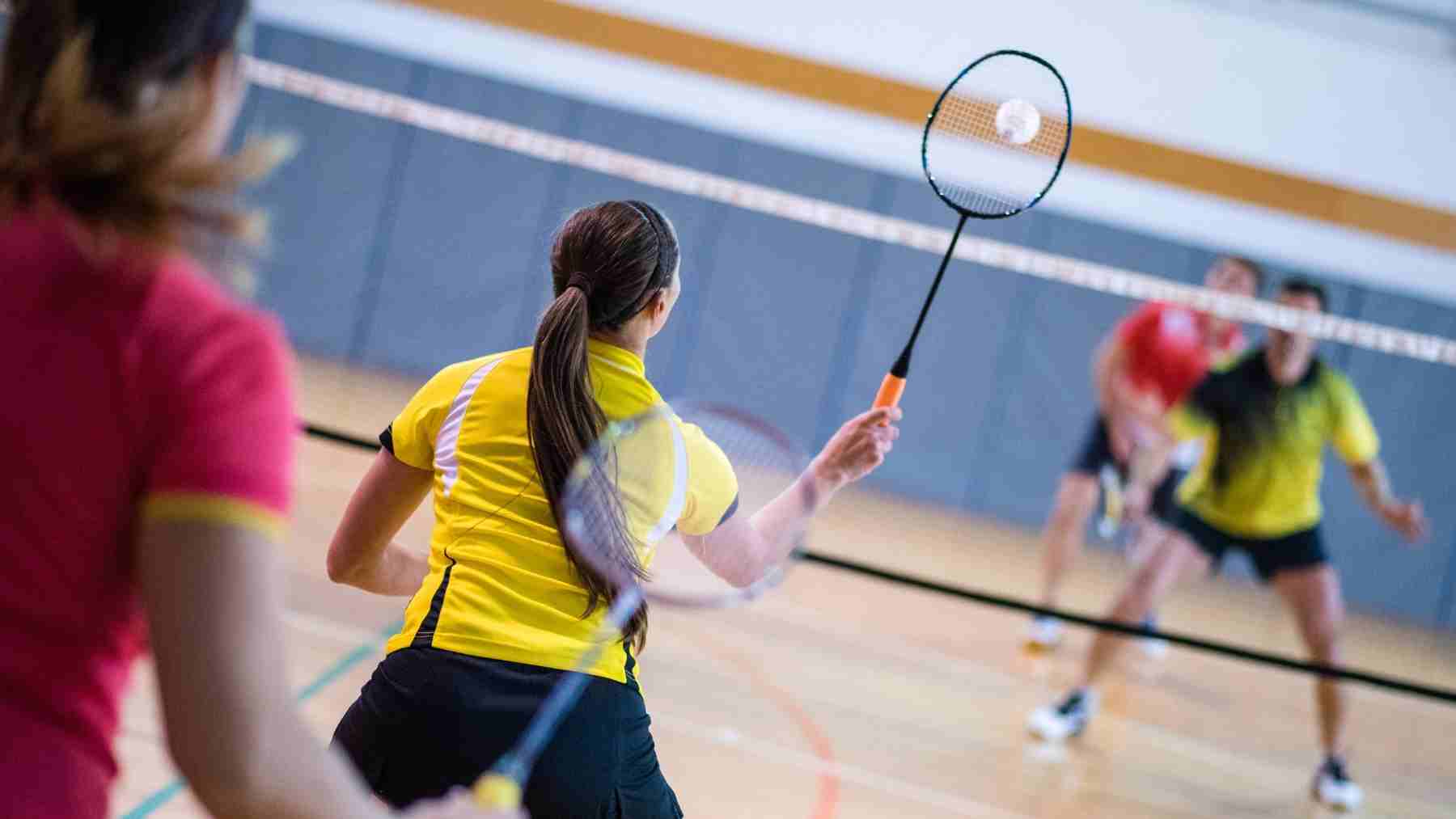
If you have ever tried to hit a hard tennis serve or a badminton smash, you know the “power” does not only come from your arm. Your body has to rotate, stay steady, and send force from the ground up.
A new analysis suggests that core training can help with that. Researchers Xinwei Yu from Zhengzhou Yellow River Nursing Vocational College, Hang Yin from Universiti Putra Malaysia, and Jia Zhang from Chongqing University combined results from 18 randomized trials and found gains in balance, agility, stability, and several shot skills after core-focused programs.
The main takeaway
Across racket sports, athletes who added core strength training tended to move better on court. The clearest improvements showed up in balance and body control during quick direction changes.
Several studies also reported better shot outcomes after core training. Players often hit faster, and they improved accuracy in the drills used by each experiment.
This is not a promise that planks will win matches. But it is a strong signal that a steadier midsection can make other training more effective. That matters.
What the core is in racket sports
The “core” is more than front abs. It includes muscles around the abdomen, hips, pelvis, and lower back that help you stay upright and rotate smoothly.
Racket sports rely on a body “kinetic chain,” which is a fancy way to say force travels through connected body parts. Legs push, the trunk rotates, and the arm and racket finish the job.
Ever tried to swing while leaning or reaching? Even with good timing, your shot can fall apart when your trunk wobbles. Small leaks in control can turn into missed returns.
How the researchers pulled the evidence together
The team used a systematic review and meta-analysis, which is a method that combines many small studies into one bigger picture. It helps answer a simple question, does core training help racket athletes perform better.
Their searches ran up to April 2025 and followed PRISMA 2020, a reporting guide meant to keep reviews clear and complete. The project was also registered ahead of time in the PROSPERO database under CRD420251031236, which can make selective reporting less likely.
The search started with 514 records and ended with 18 randomized controlled trials, meaning athletes were randomly assigned to different training plans. Most studies were done in China and Turkey, and most athletes were teenagers or young adults, with smaller samples from India, Taiwan, and the United States.
The biggest movement gains
Balance showed one of the largest jumps in the combined results, with an effect size a little over 1 on a common research scale. In plain language, that points to a big difference between the core-training groups and comparison groups.
Agility improved too, with an effect size a little above 1, and the studies that could be pooled lined up closely. Agility is the quick start, stop, and cut that shows up in almost every rally.
Stability, meaning how well the trunk stays controlled during movement, produced the biggest estimate, close to 2 on that same scale. The catch is that results varied a lot from study to study, which suggests training details and athlete level probably matter.
What changed in shots and contact
When researchers combined studies that measured ball or shuttle speed, the overall effect landed in the moderate range, a little over 0.5. That is not a miracle jump, but it can still mean a tougher serve or smash to handle.
Accuracy improved in every study that measured it, even though the tests were too different to merge into one clean number. Spin control was only tested in two studies, but both reported gains.
How this compares with earlier research
This new review is narrow on purpose, since racket sports are built around rotation and quick changes of direction. A 2023 meta-analysis in Biology of Sport found core training improved balance across many sports, but results for sport-specific skills were mixed.
Another 2023 meta-analysis in Behavioral Sciences reported that core training had little effect on straight-line speed and power across sports, while agility showed a clearer benefit. That lines up with the strong agility result in racket athletes.
For tennis, a 2025 review in Frontiers in Physiology found that resistance and mixed training plans were linked to faster serves, while core-only training did not show a clear boost in that broader dataset. Put together, core work looks most useful as a support act that helps athletes use strength and technique more efficiently.
What coaches and athletes can do with this
The core programs in these trials were not extreme. Many used two to three sessions per week for at least four weeks, and several sessions were about 30 minutes or less.
Exercises varied, but most plans mixed static holds like planks with dynamic moves that involve rotation. That blend makes sense for racket sports, since players need both a steady base and fast twisting power.
In real life, time and fatigue are the enemies. If an athlete is already lifting hard or playing a heavy match schedule, extra core work may need to be scaled so it does not wreck technique. The best programs build gradually.
The fine print
The authors rated the overall study quality as moderate, and many trials could not fully “blind” athletes or testers. In exercise research, that can be hard, but it also means expectations might influence results.
Small sample sizes were common, and most participants were young competitive athletes. Weekend players may still benefit, but the evidence is thinner there, and better trials are still needed.
The main study has been published in Scientific Reports.