Pickleball has a way of pulling people off the couch and onto the court, sometimes just for fun, sometimes for a whole new social routine. A large U.S. survey now suggests that how often you play, and how long you stay out there, may be tied to mental well-being.
Researchers found a clear “more is linked to more” pattern. Players who reported three or more sessions a week, or sessions longer than two hours, scored higher on a standard well-being questionnaire than players who played less.
A “dose-response” effect in everyday terms
The study centered on a simple idea called “dose-response.” In plain language, it means doing more of something is linked to a bigger effect, the way more practice can lead to better skills.
Here, the “dose” was pickleball time and the “response” was how good people said they felt over the past two weeks. The pattern is useful, but it does not prove that pickleball caused the change.
Who took part
The analysis was led by Oluwatoyosi B. A. Owoeye with co-authors Joseph Grese, Madeline Stenersen, Ted Yemm, Chris Sebelski, and Katie Sniffen at Saint Louis University. Their work came from the Translational Injury Prevention Lab in the Department of Physical Therapy and Athletic Training, alongside the Department of Psychology.
The team surveyed 1,667 adult pickleball players across the United States using an online questionnaire. The average participant was about 63 years old, women made up about 55 percent of the sample, and ages ranged from 18 to 89.
How mental well-being was measured
To measure mental well-being, the researchers used the WHO-5 questionnaire, created by the World Health Organization. It asks five short questions about recent feelings, including “I have felt cheerful and in good spirits.”
People rate how often each statement felt true over the past two weeks. Scores are turned into a simple 0 to 100 scale, where higher numbers mean better well-being. It is a screening tool, not a medical diagnosis.
What “more pickleball” looked like
The researchers compared players who usually played up to twice a week with those who played three or more times weekly. They also compared sessions lasting two hours or less with sessions lasting longer than two hours.
Frequent players averaged about 77.5 on the 0 to 100 well-being scale, compared with about 73.5 for those playing less often. That is a gap of about four points.
Longer sessions showed a similar difference. Players reporting longer play averaged about 77.7, versus about 74.9 for shorter sessions.
Injuries changed the story
One result stood out as a reality check. Players who reported a recent injury tended to report noticeably lower well-being, even among the more active group.
Among frequent players, those with an injury history averaged around 76, while those without averaged around 80. A similar split appeared for longer sessions.
That does not mean “pickleball is bad for mental health.” It suggests that pain, reduced mobility, and time away from the court can blunt the lift that comes from moving and spending time with others.
Why older adults stood out
Age mattered in an interesting way. Well-being scores generally ran higher in older groups, and the “more play, higher score” pattern looked strongest in people roughly in their mid 60s.
Why might that be? For many older adults, pickleball can be both exercise and a built-in social calendar, which may help with loneliness and day-to-day stress.
The oldest group showed a small dip compared with the peak. That could reflect health issues that come with age, or simply that fewer people at that age can keep up longer sessions.
Why pickleball is easy to adopt
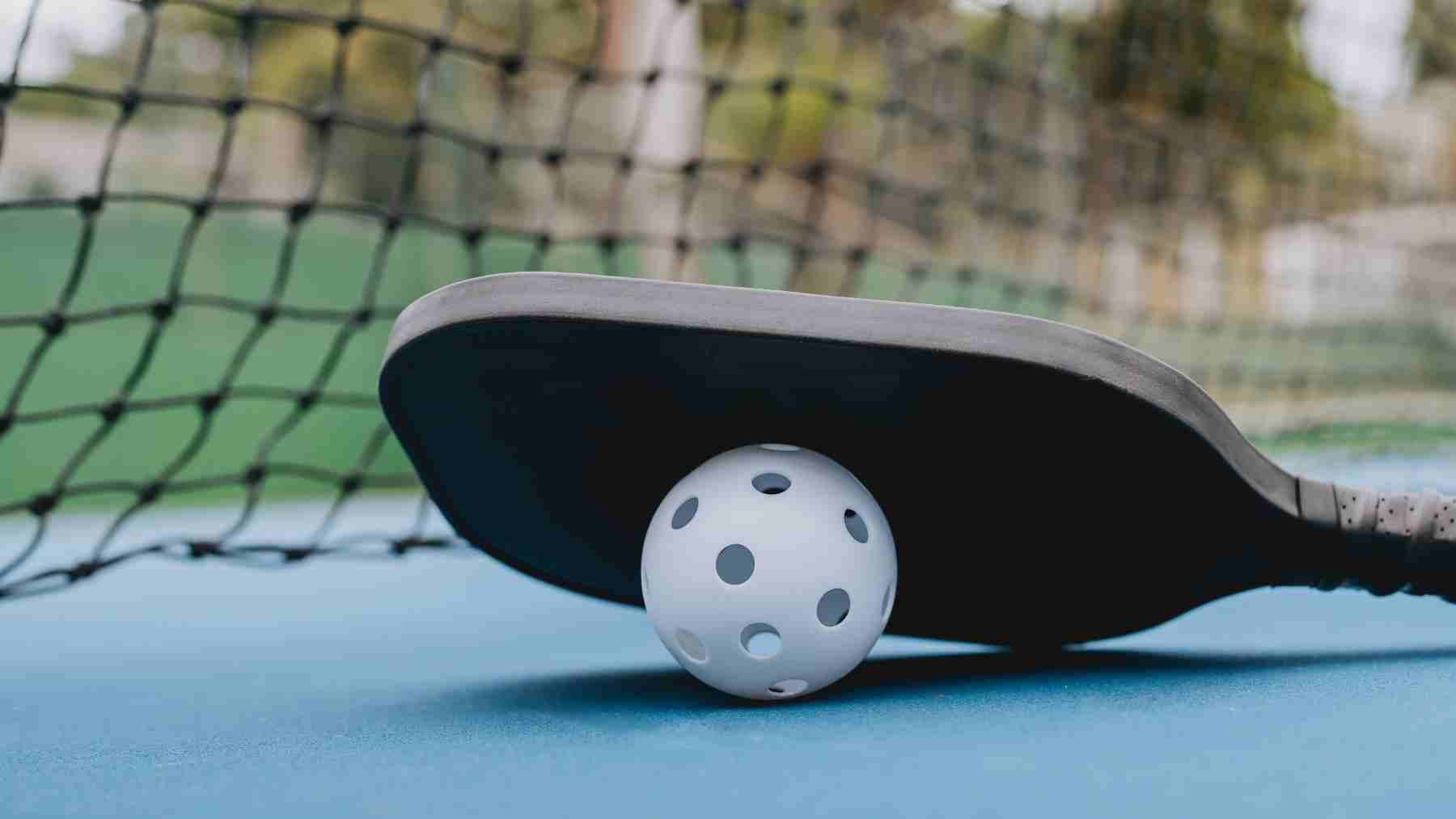
Pickleball blends elements of tennis, badminton, and table tennis, but the court is smaller and the ball moves slower. Players use solid paddles and a light plastic ball, which makes rallies feel more manageable for beginners. A standard court is about 20 feet by 44 feet, which can feel less intimidating than a full tennis court.
That low barrier is part of why the sport has grown quickly. The Sports and Fitness Industry Association’s 2024 State of Pickleball Report described rapid growth across age groups, alongside rising demand for courts.
It also fits common exercise advice. The Physical Activity Guidelines for Americans recommend 150 to 300 minutes of moderate activity each week for most adults, and pickleball often lands in that moderate range.
How this fits with earlier research
Earlier research has hinted that pickleball supports health through movement and social contact. A 2023 pilot study reported that regular participation helped many older adults reach activity targets and enjoy the social side of sport, described in this research.
A systematic review in 2023 also pulled together evidence linking pickleball and mental health, gathered in this review. Outside pickleball, a 2024 tennis cohort analysis found clearer mental health differences for people who played at least weekly, reported in this study.
What this study cannot prove
This was a cross-sectional survey, meaning the researchers took a snapshot of players at one point in time. That makes it impossible to say whether playing more pickleball improves well-being, or whether people who already feel better are more likely to play more.
The sample skewed older than some national estimates, and all answers were self-reported. People can misremember how often they played, or answer in a way that sounds healthier than real life.
Even with those limits, the results point to a practical message. If you already enjoy pickleball, consistency may be part of why it feels like a mood booster, as long as you can stay healthy enough to keep playing.
The main study has been published in Frontiers in Psychology.