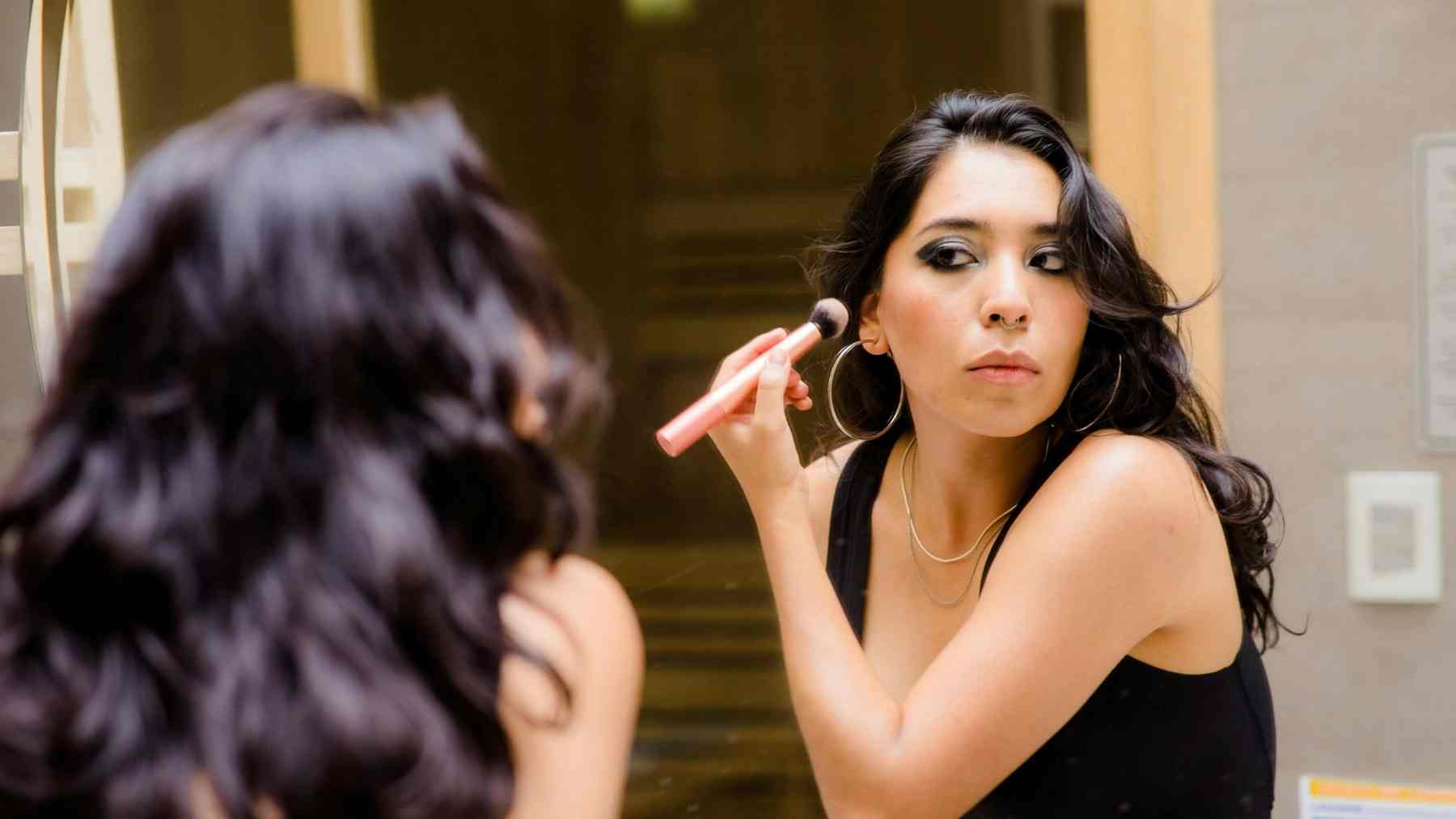
What does it really mean when a woman chooses to go out without makeup? Psychology does not point to one neat answer, and the broad lesson from the research is that a bare face is not a personality test.
It can reflect comfort with one’s appearance, a wish for authenticity, a simpler routine, or a decision to step away from long-standing beauty rules, and those motives can overlap in the same person.
The harder part is what happens next. Studies on first impressions show that other people often read faces with and without cosmetics very differently, and those snap judgments can spill into ideas about confidence, competence, warmth, and even career status.
So the story is not just about why some women skip makeup, but about the pressure they face when they do.
No single meaning
Tara Well, a psychologist at Barnard College of Columbia University, has argued that the “no-makeup look” can reflect greater ease with one’s real appearance and a desire to be seen without camouflage.
That does not mean every woman who skips mascara is making a social statement or rejecting the beauty industry outright. But it does suggest that, for some, going barefaced can be tied to self-acceptance and a push for authenticity rather than neglect or lack of effort.
There is a practical side, too. Research summarized in PLOS ONE shows that daily appearance routines can take time, money, and attention, so skipping makeup may simply make a rushed morning before class, work, or a long commute a little easier.
Sometimes the decision is less about symbolism and more about not adding one more task to an already packed day.
Why faces get judged
That is where social perception comes in.
In a 2006 Journal of Applied Social Psychology study led by Rebecca Nash, women wearing cosmetics were linked to higher earning potential and more prestigious jobs than the same women without makeup.
Even in a narrow photo experiment, that was enough to show how fast appearance can shape ideas about status and success.
A later study led by Nancy Etcoff at Massachusetts General Hospital and Harvard Medical School found a similar pattern at first glance.
When faces were shown for less than a second, makeup lifted ratings for attractiveness, likability, trustworthiness, and competence, but heavier looks lost some of that edge when viewers had longer to judge them, especially on trustworthiness.
In other words, more makeup did not always mean a better impression once people had time to think.
This is close to what psychologists call the halo effect, a bias in which one visible trait spills into judgments about unrelated qualities.
A polished face can be read as proof of discipline, health, or professionalism even when none of those things have actually been measured.
That is one reason makeup research matters beyond beauty, because it shows how fast appearance can get mixed up with worth.
Pressure behind the mirror
The research also suggests that makeup use can sit close to social pressure. A small 2008 study led by Julia Robertson at Buckinghamshire Chilterns University College found that higher cosmetic use tracked with anxiety, self-consciousness, and conformity, while social confidence and self-esteem moved in the other direction.
Because the sample was small and the study only looked at correlations, it cannot prove that makeup causes those feelings, but it does show how appearance management can be tangled up with insecurity.
A much larger 2022 study led by Anthonieta Looman Mafra at the University of São Paulo added more nuance after surveying 1,483 women.
It found that women who placed more importance on always looking polished tended to use makeup more often and spend more time and money on it, while women who felt better about their appearance tended to spend less money.
That helps shift the conversation away from easy stereotypes and toward the social weight attached to looking “put together”.
That weight is easy to spot in everyday life. Makeup can become part of how women prepare for school, work, dating, photos, or any setting where first impressions land fast and can feel hard to shake.
That does not mean cosmetics are only about pressure, but it helps explain why some women see going without them as relief while others feel exposed.
What psychology really says
So what does not wearing makeup actually say about a person? For the most part, not one fixed thing, because the same bare face can signal confidence, convenience, authenticity, quiet resistance to beauty expectations, or simply a lack of interest in spending time on cosmetics that day.
Some women may skip makeup because they like their face as it is, while others do it because they are tired, late, or done with the whole performance.
What the evidence shows more clearly is that women are still judged through appearance filters that can shape how capable, healthy, or trustworthy they seem before they even speak.
A bare face, then, may reveal less about personality than about the culture looking back at it. That is a simple point, but an important one, because appearance is still being used as a shortcut for qualities that have nothing to do with makeup at all.
The main studies discussed here were published in the Journal of Applied Social Psychology, Individual Differences Research, and PLOS ONE.