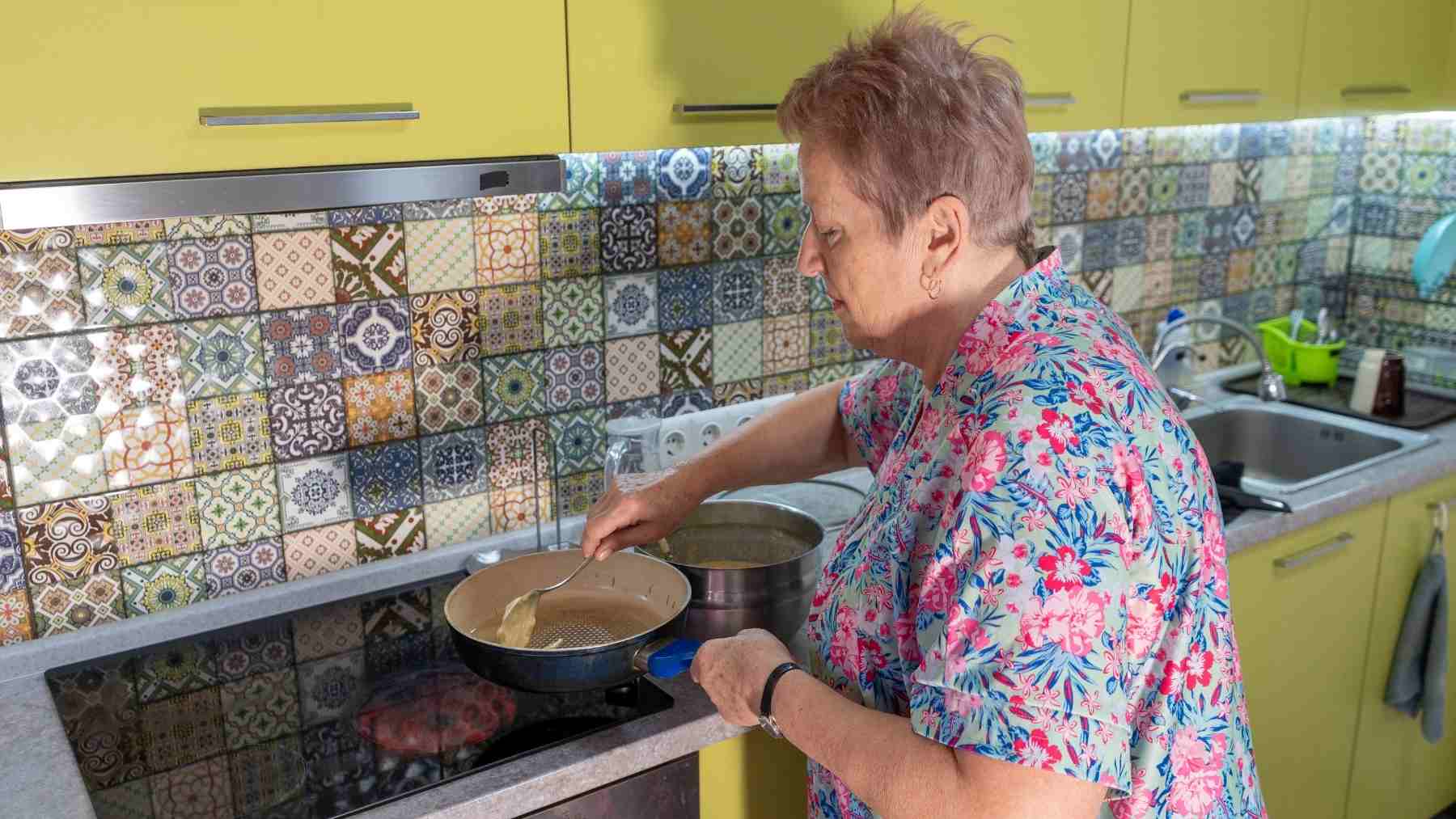
Why do some people finish a weeknight dinner with a clean counter and an almost empty sink, while others end up staring at a pile of pans? Psychology suggests that “clean as you go” cooks are not just tidier. The habit often lines up with stronger planning, steadier attention, lower stress, and a bigger tendency to think ahead.
Rather than coming from one single paper, that picture is built from several lines of research. Taken together, they point to eight broad tendencies that show up again and again, including executive function, lower stress, conscientiousness, impulse control, spatial planning, emotional regulation, mindfulness, and long-term thinking. That is the real story here.
Planning in real time
At the Center on the Developing Child at Harvard University, executive function is described as the brain’s “air traffic control system,” the set of skills that helps us plan, focus, switch gears, and juggle tasks. Researchers have even designed cooking-based tests to measure executive function, which says a lot about how mentally demanding meal prep really is.
A person who wipes the counter while onions soften is constantly updating a mental map. Where will the clean bowl go, where is the hot pan headed, and what has to happen before the timer rings? That mix of working memory, sequencing, and spatial planning is easy to miss, but it is doing real work in the background.
Less clutter, less pressure
Sabine Kastner’s work linked to Princeton University has found that visual clutter competes for the brain’s attention and can wear down cognitive resources over time. In plain English, a crowded counter can feel like background noise that never shuts up. And while the old idea that unfinished tasks always stay more memorable has not held up in every study, newer evidence still suggests people often feel a strong pull to return to what they left undone.
Darby Saxbe and Rena Repetti found something similar at UCLA when they studied 60 spouses in dual-income households. Over three weekdays, women who described their homes with more words tied to clutter, stress, and unfinished jobs showed flatter daily cortisol patterns, which are associated with chronic stress, along with more depressed mood. A later experimental study on household chaos reached a related conclusion, linking cluttered, noisy spaces to more stress and negative emotion.
Conscientious and controlled
Another trait that fits this habit is conscientiousness, the personality tendency linked to being organized, dependable, and more likely to follow through. Jennifer Lodi-Smith’s research at the University of Texas at Dallas found that conscientious adults tended to report better health, partly because they were more likely to exercise, eat well, and keep up with routine care. The kitchen, it turns out, may reflect that same pattern in miniature.
This habit also looks a lot like self-control. Psychology researchers define self-controlled behavior as choosing what serves long-term goals over the easy temptation right in front of you. In practical terms, that can be as simple as washing the knife now instead of telling yourself you will “get to it later” after the plates, the leftovers, and the dessert bowls have piled up.
Present and steady
The National Institutes of Health describes mindfulness as paying attention to the present moment without judgment, and says it can be built into everyday acts like walking or eating. Cooking fits neatly into that picture. Chopping, stirring, rinsing, and resetting the counter can become a small form of present-moment awareness rather than just another chore at the end of a long day.
Reviews of mindfulness research have also tied that present-moment focus to better emotion regulation. That helps explain why some cooks stay calmer when the sauce spits, the pasta boils fast, and the phone buzzes from the other room. They are not necessarily born calmer, but they may be practicing calm in real time.
Playing the long game
Then there is future thinking. Hal Hershfield’s research highlighted by UCLA Anderson has shown that people who feel more connected to their future selves tend to make healthier and more financially protective choices. In one experiment, people asked to write to a much older future self reported exercising about 1.4 times more than those who wrote to a near-future self, and a later nationally representative study linked stronger future-self continuity to better financial well-being and a greater likelihood of having more than $1,000 in savings.
That same logic shows up over the stove. Thirty seconds spent rinsing a spatula now can spare you a much uglier cleanup later, plus the sinking feeling of walking back into a kitchen that looks like it lost a fight. Small choice, bigger payoff.
Not a personality test
Still, this is not a verdict on anyone’s character. UCLA researchers have noted that home life can stop feeling restorative when housework, repairs, and family demands pile up, and that is before you add a tiny kitchen, hungry kids, or the rush of a late worknight dinner. Sometimes people leave the mess because they are overloaded, not because they lack discipline.
The good news is that these skills are not fixed. Harvard’s executive function research and NIH guidance on mindfulness both suggest that attention, planning, and self-regulation can be practiced in daily life. So the clean-as-you-go habit may say something about a person, but it can also become something a person builds, one pan at a time.
The main studies and official materials behind this article were published in Personality and Social Psychology Bulletin, Psychology and Health, the Journal of Experimental Psychology: Applied, and by the National Institutes of Health and the Center on the Developing Child at Harvard University.