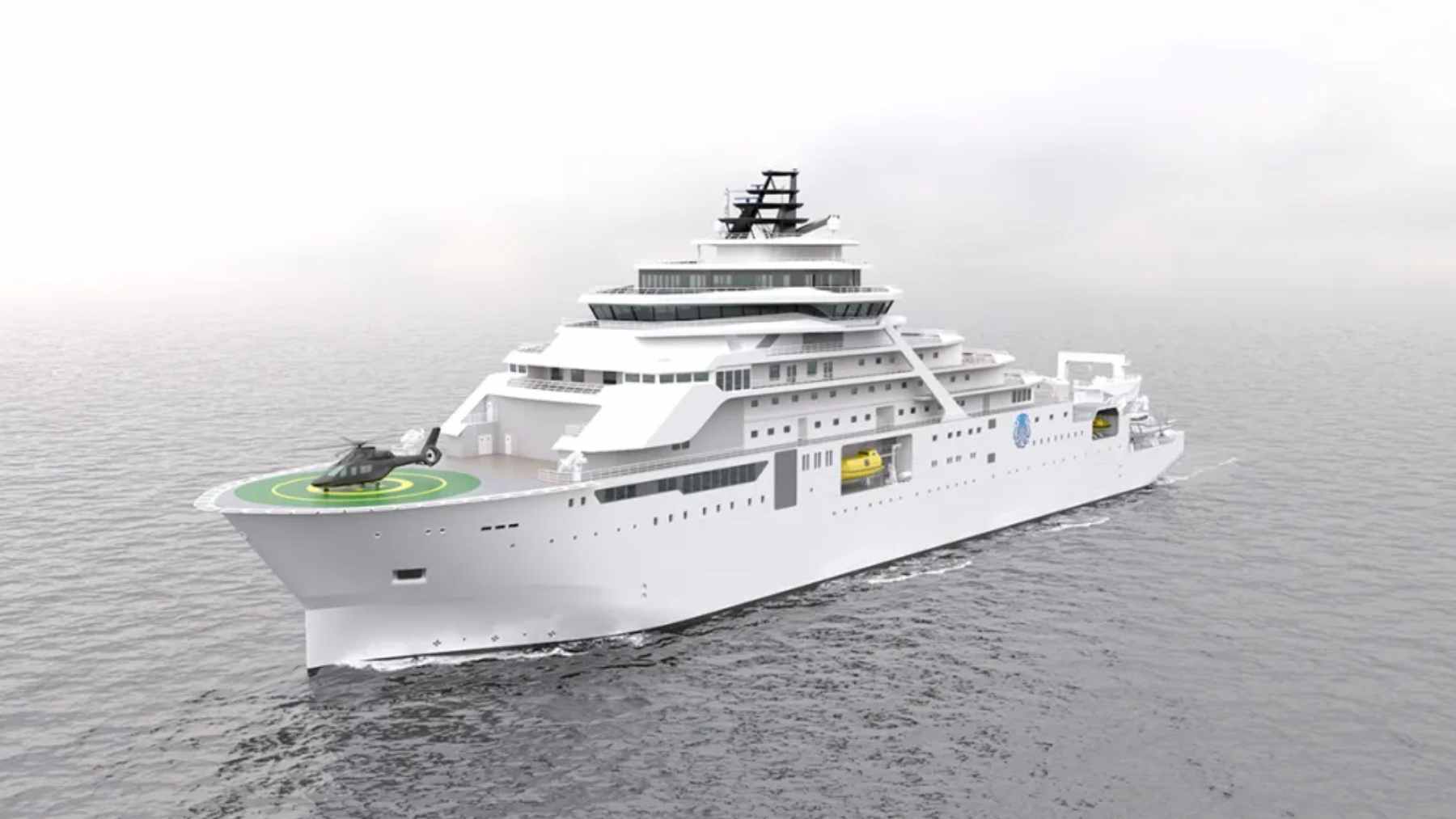
While other billionaires chase rockets, Gabe Newell is looking in the opposite direction. The Valve co-founder behind Steam is backing Inkfish, a marine research organization that has signed a nearly $814 million contract with Norwegian shipbuilder VARD for RV11000, a 531-ft. deep-sea research vessel designed to work where very few civilian platforms can go.
This is not just a very expensive boat, it is a bet that the next great map of Earth will not come from orbit, but from the dark, cold seafloor. As of April 2026, NOAA says only 28.7% of the global seafloor had been mapped with modern high-resolution technology, which leaves most of the ocean floor still waiting to be seen clearly.
A ship for Earth’s hidden frontier
The RV11000 will be based on VARD’s 9 42 design, with a length of 531 ft. and a beam of 92 ft. Delivery is scheduled for the first quarter of 2030, and VARD says the order is the largest single-vessel contract in its history, as well as the largest order of its kind for any Norwegian shipyard.
What makes the ship unusual is not only its size. It is being designed for seafloor mapping, coring and sampling, submarine handling, and remotely operated vehicle missions at depths of up to 36,100 feet. That means working in the same realm as the deepest ocean trenches, where pressure is brutal, light is absent, and small technical mistakes can end a mission.
Why this matters
The deep ocean is not an empty blue backdrop. It is a living, moving system that affects climate science, biodiversity research, undersea geology, and even the way humans understand natural hazards. Want to protect something? First, you need to know where it is.
That is where mapping becomes more than a technical exercise. A clearer picture of the seabed can help scientists identify habitats, study sediment layers, track geological features, and decide where future research needs to go. VARD says the RV11000 is intended to help reveal previously unknown regions and contribute data to open scientific repositories.
Built for silence
One of the ship’s most striking features may be something passengers cannot see. VARD says RV11000 will carry the largest battery installation ever fitted on a ship, allowing up to 12 hours of silent scientific operations. That matters because deep-sea research depends on quiet instruments, stable positioning, and clean data.
The ship will also carry a stern-mounted A-frame system for launching and recovering submarines, a hangar for two submarines, and a dedicated ROV hangar. Its equipment list includes a 39,370-ft. umbilical winch, a 131-ft. sediment corer, a 49,213-ft. fiber-rope lifting system, and an offshore crane designed for work down to 8,202 ft. It sounds like a floating toolbox, but one built for the bottom of the planet.
A floating research campus
The RV11000 is also being designed for the people who will spend weeks or months aboard it. The vessel will accommodate up to 130 crew members and scientists, mostly in single cabins, with laboratories, offices, workshops, and data-processing spaces built into the ship.
That comfort is not just a luxury detail. Long expeditions are tiring, and scientists do better work when they can sleep properly, breathe clean air, and process samples without fighting the ship around them. VARD says the interiors will include 100% fresh-air ventilation, advanced air purification, and carefully designed public and crew areas.
Data, security, and the deep sea
This project also has a business and defense angle that should not be ignored. Fincantieri, VARD’s parent company, describes the underwater domain as strategically important, including scientific research and the monitoring and protection of critical undersea infrastructure.
The ocean floor is no longer just a scientific frontier. It is also where data cables, energy systems, sensors, and security interests meet.
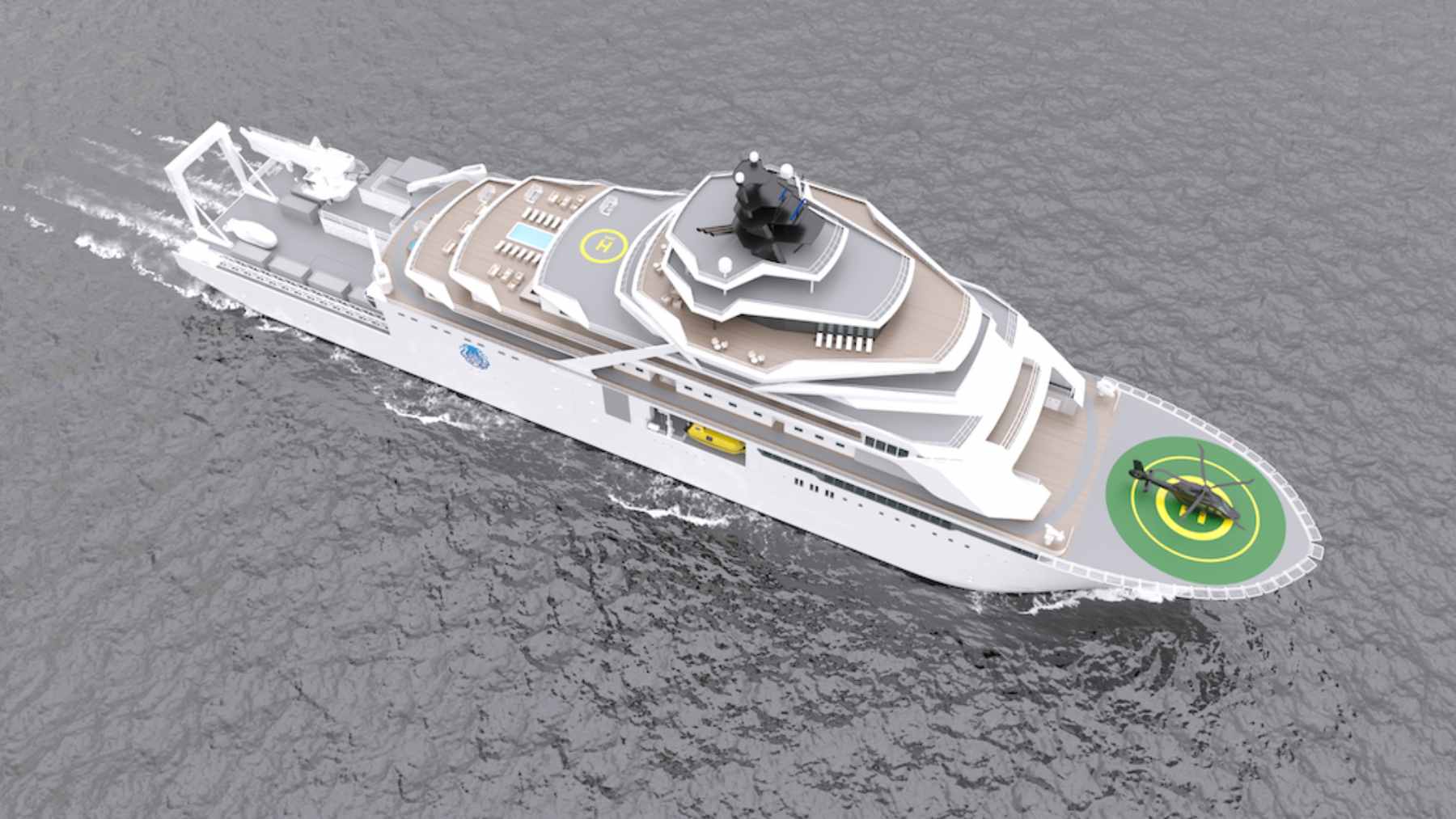
That is why the ship will be built to meet the latest IACS cybersecurity requirements and carry DNV’s Cyber Security notation. In plain language, modern research vessels are no longer simple ships with labs attached. They are connected digital platforms controlling submersibles, autonomous vehicles, communications systems, power systems, and huge streams of scientific data.
Newell’s bigger ocean play
The RV11000 is not arriving alone. It builds on Inkfish’s earlier RV6000 project, contracted with VARD in 2025, and will join a growing fleet that includes RV Hydra and RV Dagon. The broader goal is to support marine research worldwide and share data through open-source scientific repositories.
That makes Newell’s ocean bet different from the usual billionaire superyacht story. Yes, the ship is enormous, and yes, the price tag is staggering. But the purpose is scientific capacity, not just spectacle, and that distinction matters when most of the seafloor is still poorly understood.
What happens next
The hull will be built at Vard Shipyards Romania in Tulcea, while outfitting, commissioning, and delivery will take place at one of VARD’s yards in Norway. If the schedule holds, the RV11000 will enter service in early 2030, just as global efforts to map the ocean floor approach a crucial deadline.
At the end of the day, this ship is a reminder that Earth still has blank spaces on its own map. They are not on distant planets–they are under the waves, waiting for a vessel strong enough, quiet enough, and ambitious enough to reach them.
The official statement was published on VARD.