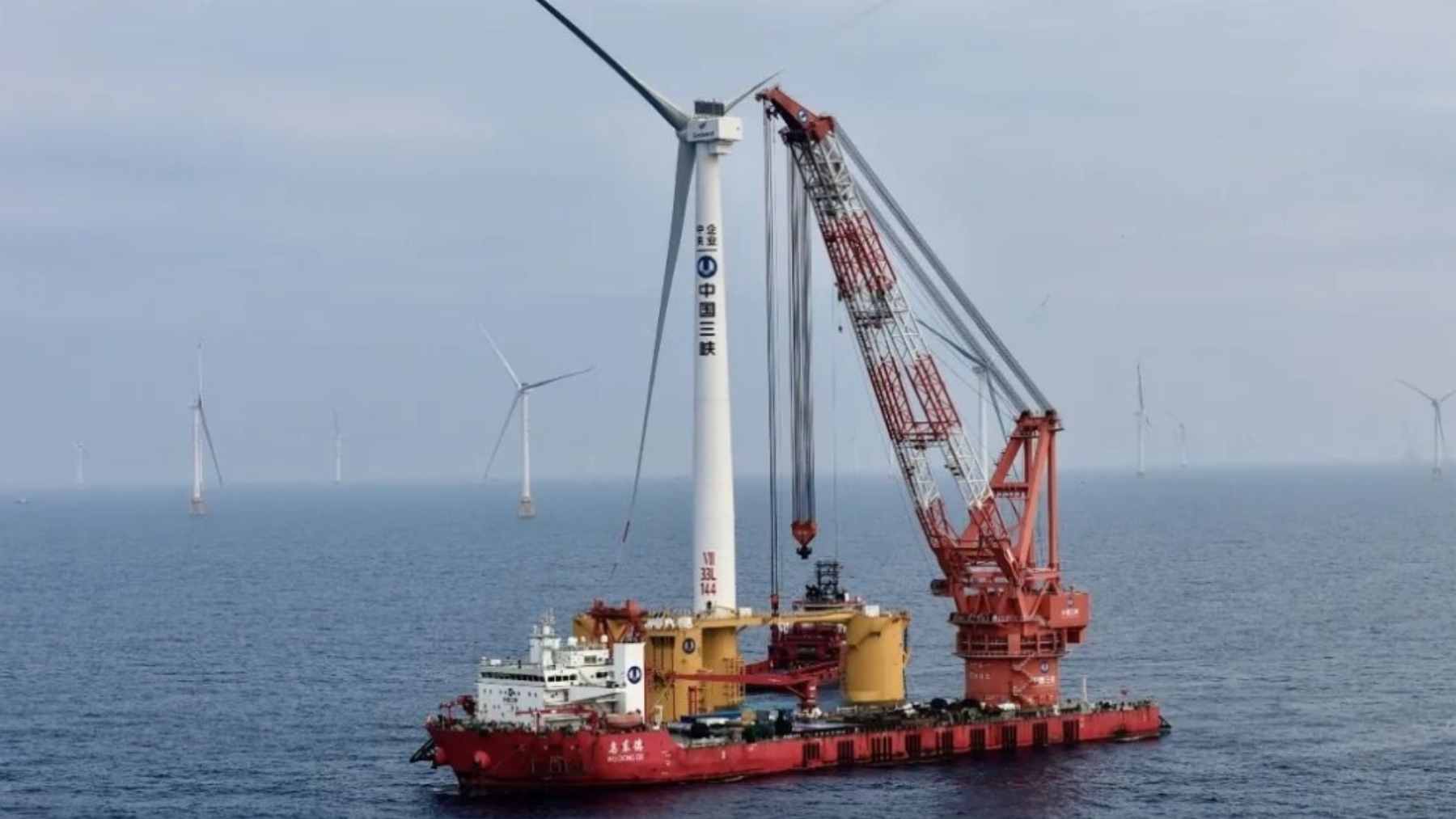
China has pushed floating wind power farther into the deep sea with the installation of a massive 16-megawatt offshore turbine off Yangjiang, in Guangdong province.
The unit, known as the “Three Gorges Pilot,” was installed on May 2 in waters more than 43 miles from shore and over 50 meters deep, a zone where conventional seabed-mounted turbines become harder and more expensive to build.
This is not just a bigger windmill. It is a test of whether floating platforms can help unlock stronger offshore winds without planting every turbine into the seabed. For families thinking about the electric bill and persistent summer heat, the promise is easy to understand: more clean power from places that were once too difficult to reach.
A turbine built for deeper water
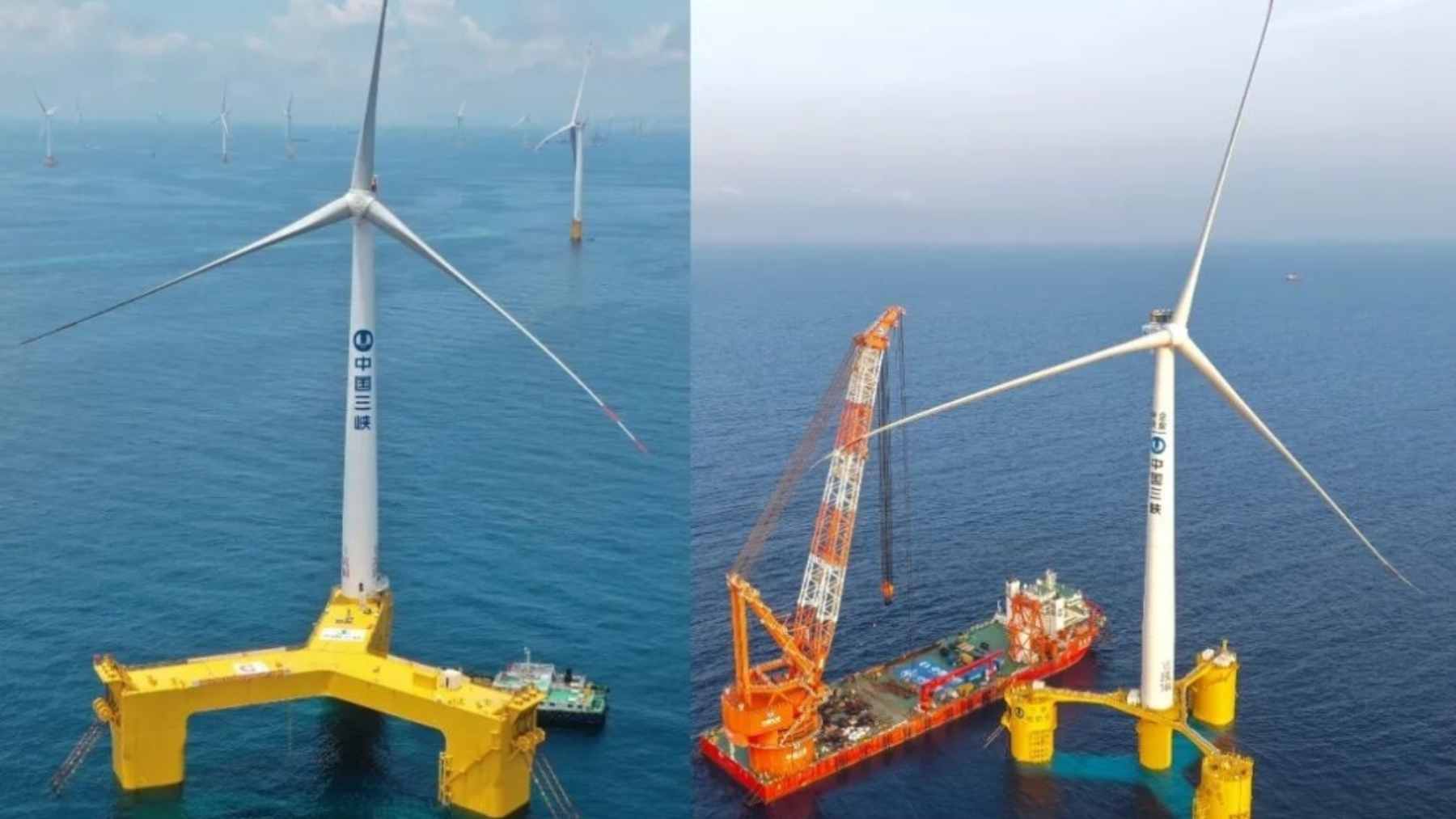
The Three Gorges Pilot combines three major pieces, a 16-megawatt turbine, a semisubmersible floating platform and a new mooring system. Its rotor is 252 meters across, and the blade tip reaches more than 270 meters above the sea, giving it a swept area that China Three Gorges compares to about seven standard football fields.
Floating turbines do not stand on a fixed foundation. They ride on platforms held in place by anchors and cables, which is why they matter for countries or coastlines where the best wind is beyond shallow water.
The U.S. Department of Energy says about two-thirds of America’s offshore wind energy potential sits above waters too deep for today’s fixed-bottom turbine foundations.
In practical terms, the technology could move wind farms farther from crowded coastlines, busy ports, fishing routes and views from the beach. But it also means engineers have to build machines that can keep producing power while the ocean keeps moving underneath them.
Power for thousands of homes
At full operating efficiency, China Three Gorges says the turbine is expected to generate about 44.65 million kilowatt-hours of electricity per year. Using the U.S. Energy Information Administration’s estimate that an average U.S. household consumes about 10,500 kilowatt-hours annually, that works out to power for roughly 4,200 U.S. homes.
That number should be read carefully. China Three Gorges’ own comparison says the annual output could meet the yearly electricity needs of 24,000 three-person households in China, where home electricity use can be far lower than in the United States. Both claims can be true because they use different household averages.
Still, even one machine producing tens of millions of kilowatt-hours a year is a reminder of why offshore wind has become such a serious business. A single floating unit will not change a grid by itself, but a fleet of them might.
Built to face typhoons
The project is also a survival test. China Three Gorges says the site can face waves above 20 meters and wind speeds reaching 73 meters per second (163 mph). That is not a gentle sea breeze. It is the kind of weather that turns offshore engineering into a high-stakes problem.
To keep the platform stable, the system uses suction anchors, anchor chains and high-performance polyester mooring cables. It also includes an active ballast system, a smart monitoring system and a 66-kilovolt dynamic submarine cable designed to flex with the floating structure while carrying high-voltage electricity.
“We have developed and applied new mooring systems, active ballast systems, smart monitoring systems and 66 kilovolt dynamic submarine cables for the first time domestically,” said Pan Hongguan, an offshore wind engineer at China Three Gorges’ Guangdong branch. According to the company, those systems help the platform operate safely in harsh sea conditions.
Why this matters for clean energy
Offshore wind is attractive because sea winds can be strong and steady. The catch, of course, is that the ocean is an expensive place to build anything. Saltwater corrodes equipment, storms punish structures, and maintenance crews cannot simply drive up in a truck.
Floating wind tries to solve one big part of that puzzle. Instead of relying on a fixed foundation in the seabed, developers can build much of the machine on land, tow it to sea and anchor it in place.
That can reduce some offshore construction risks, although costs, ports, cables and long-term maintenance remain major hurdles.
For China, the project also has a business edge. Every successful test gives manufacturers, cable suppliers, shipyards and energy companies more real-world data. That matters because floating wind is still younger than traditional offshore wind, and the winners will likely be the companies that learn fastest.
Not a silver bullet
Clean power is never just about one shiny machine. A floating turbine still needs subsea cables, grid connections, careful marine planning and environmental monitoring. Developers also have to think about seabirds, fisheries, navigation and the disturbance that can come with industrial activity at sea.
But the basic idea is powerful: put turbines where the wind is stronger, avoid some of the limits of shallow-water foundations, and produce electricity without burning fossil fuels. At the end of the day, that is what this giant platform is trying to achieve.
If the Three Gorges Pilot performs as expected, it would become more than a record-setting machine. It would become a signpost for the next phase of offshore wind, where the best energy sites are not always the easiest ones to reach.
The official statement was published on China Three Gorges Corporation.