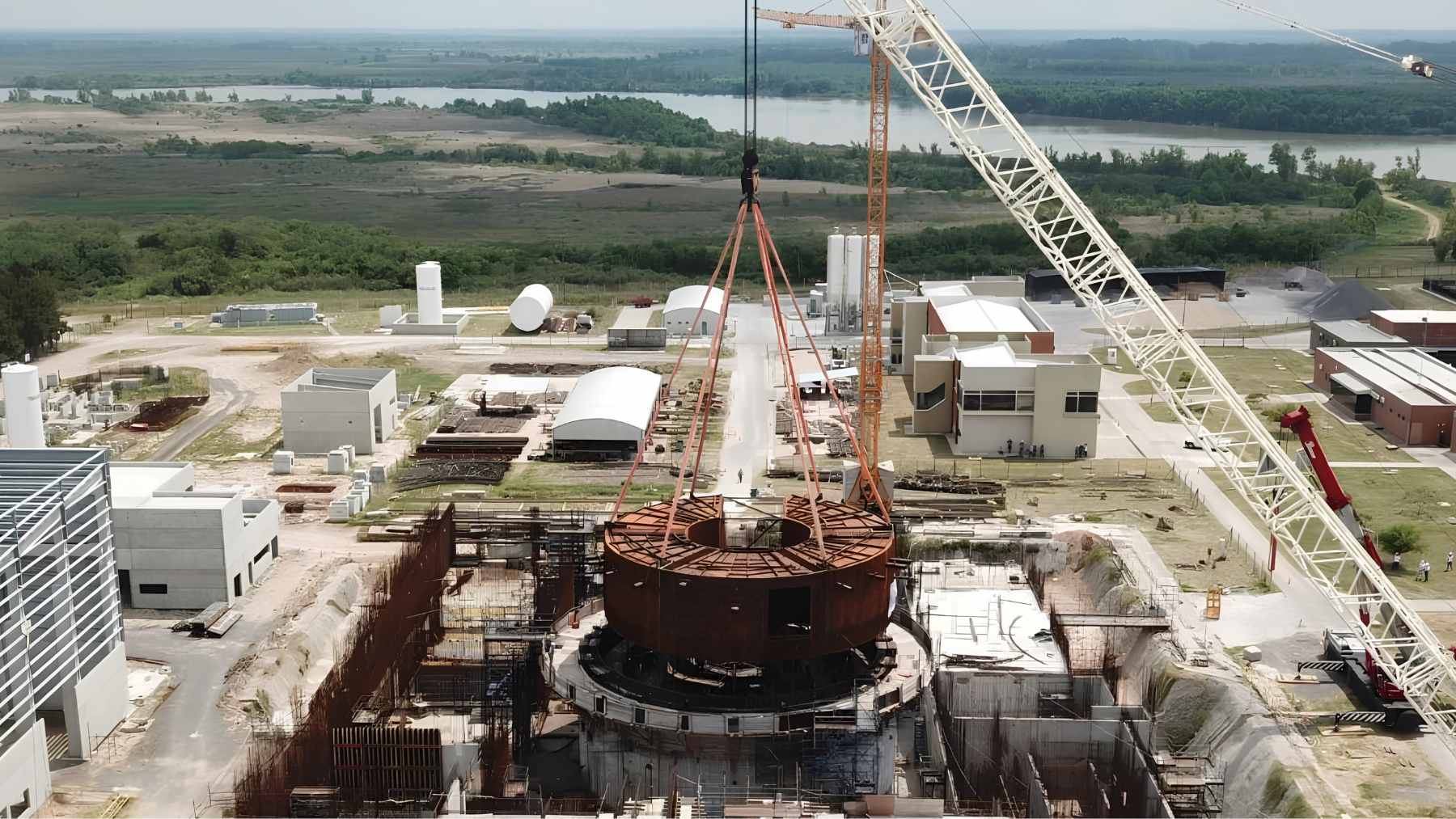
A construction crane east of Toronto has lowered a nearly 2.1 million-lb. foundation module about 115 ft. underground, marking the most visible step yet in Canada’s plan to build the first commercial, grid-scale small modular reactor in the G7.
The 300-megawatt BWRX-300 at Darlington is expected to power about 300,000 homes once it enters service, currently targeted for the end of 2030.
SMRs have spent years being promoted as a low-carbon, faster and more repeatable way to build nuclear capacity. A giant slab in a deep shaft does not settle the question investors, taxpayers and utilities care about most, however. Can Canada build the first unit safely and make the next three cheaper?
A giant step below ground
On April 22, Ontario Power Generation (OPG) lifted the Basemat, a 121-ft.-wide steel and concrete structure, into the reactor building shaft. It was assembled as one modular piece before installation, a construction method OPG says has never before been used for a reactor foundation in Canada.
The shaft is one of three excavated at the site. Two support deep-water intake infrastructure for the planned four-reactor fleet, while the third holds the first reactor building. OPG has also completed two warehouses and moved ahead with other site facilities.
What this reactor is designed to do
The BWRX-300 is a 300-megawatt boiling-water reactor developed by GE Vernova Hitachi. It uses water cooling and natural circulation, which means temperature-driven density differences and gravity help move coolant instead of relying only on large powered pumps.
GE Vernova Hitachi says the passive safety systems can keep the reactor in a safe state for seven days without electrical power or operator action after a station blackout. That does not mean the entire power plant works without pumps or active equipment, it means key safety functions are designed to depend less on powered machinery during certain emergencies.
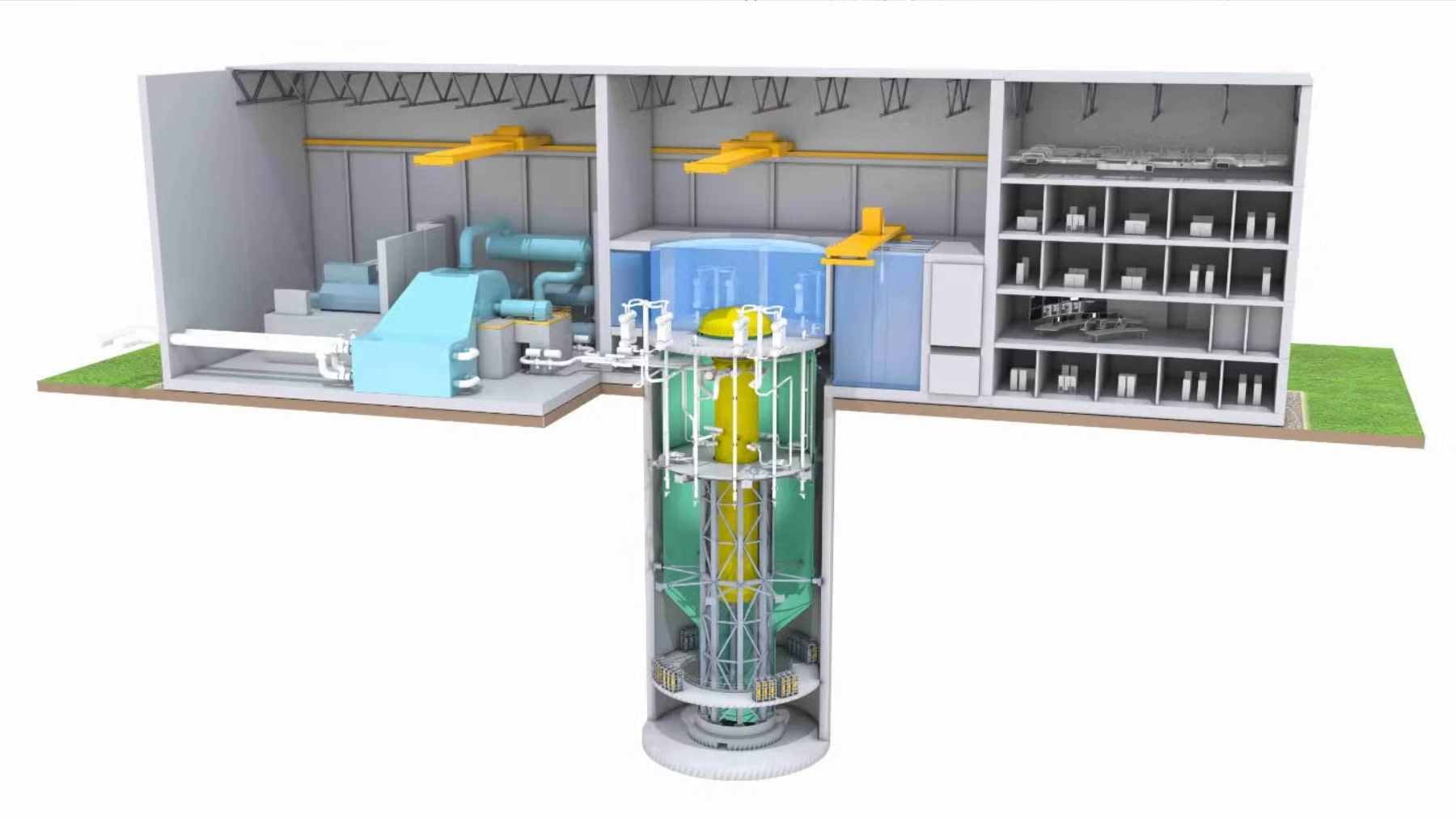
Why does that matter? Fewer large systems can reduce complexity and potentially shorten construction, but the word “potentially” is doing real work here. The design remains subject to Canada’s licensing and hold-point process, and the promised cost savings will only become clear after the hardware is built and operated.
Construction approval is not permission to operate
The Canadian Nuclear Safety Commission authorized OPG in April 2025 to construct one BWRX-300, not all four units. The license includes three regulatory hold points, and the regulator cleared the first one in March 2026 after verifying requirements for the reactor building foundation.
OPG then applied for a 20-year operating license in March 2026. That application still requires a Commission decision after a public hearing, so the reactor cannot simply start producing electricity when construction ends. As of now, Canada’s first G7 SMR is under construction, but its operating approval remains unfinished.
The $14.8 billion question
Using recent exchange rates, Ontario’s approved budget for the planned four-unit program is about USD $14.8 billion. The Canada Growth Fund and Building Ontario Fund have committed roughly $2.1 billion combined for minority stakes, while OPG remains the majority owner and operator.
The public backers say the fleet could create up to 18,000 Canadian jobs annually during construction and add around $27.2 billion to Canada’s economy over 65 years. Those are projections, not completed gains. The more immediate test is whether Unit 1 reaches service close to schedule without losing control of the reserves built into the budget.
That is the central promise of modular nuclear power. The idea is to build a standardized design several times, shift more work into controlled fabrication settings and learn from each unit. Yet Unit 1 has no completed BWRX-300 predecessor to lean on, which is why Darlington will be watched as much for its invoices as for its electricity.
The environmental case
If all four reactors receive regulatory approval, they would provide 1,200 megawatts and enough low-carbon electricity for about 1.2 million homes. Steady nuclear generation could also help utilities balance variable sources such as wind and solar when weather conditions change.
Still, “low carbon” is not the same as impact-free. The regulator’s environmental review says the smaller BWRX-300 footprint allows some woodland habitat to be retained, including endangered bat habitat and amphibian breeding areas that had been expected to be removed under the earlier plant envelope.
That is a benefit, but the project still requires concrete, steel, water infrastructure, waste management and long-term monitoring.
At the end of the day, the environmental argument depends partly on what the reactors displace. Replacing fossil-fueled generation would bring a clearer emissions benefit than adding capacity during an already low-carbon period. That calculation will vary by region, which is one reason European governments are watching the Canadian model rather than copying it blindly.
Why Europe is paying attention
The BWRX-300 is advancing through development or regulatory work in several European markets and the United States. Darlington offers something those plans do not yet have at the same stage: a commercial reference project moving through construction.
Success could give buyers firmer answers on labor needs, component manufacturing, licensing time and actual cost per megawatt. Failure to control costs would weaken the main sales pitch behind SMRs, namely that repeated, standardized construction can avoid the overruns associated with some large nuclear plants.
That is why the 2.1 million-pound Basemat is more than a dramatic engineering photo. It is the starting block for a much bigger experiment in clean power, industrial policy and public finance.
“Reaching these milestones speaks to the momentum we’re building,” OPG executive Boris Vulanovic said, but the decisive milestone will be reliable electricity delivered at a defensible price.
The official project update was published on Ontario Power Generation.