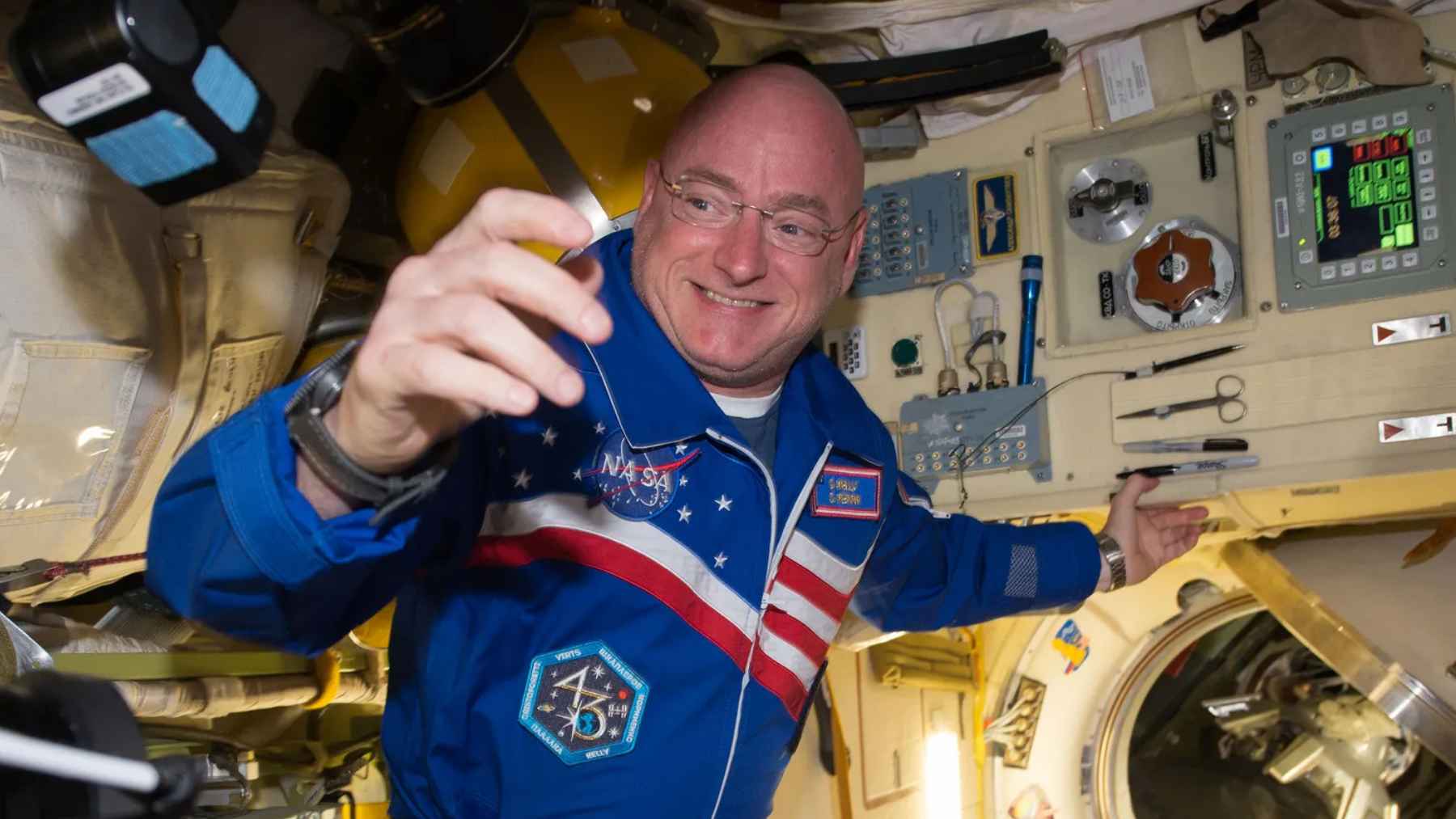
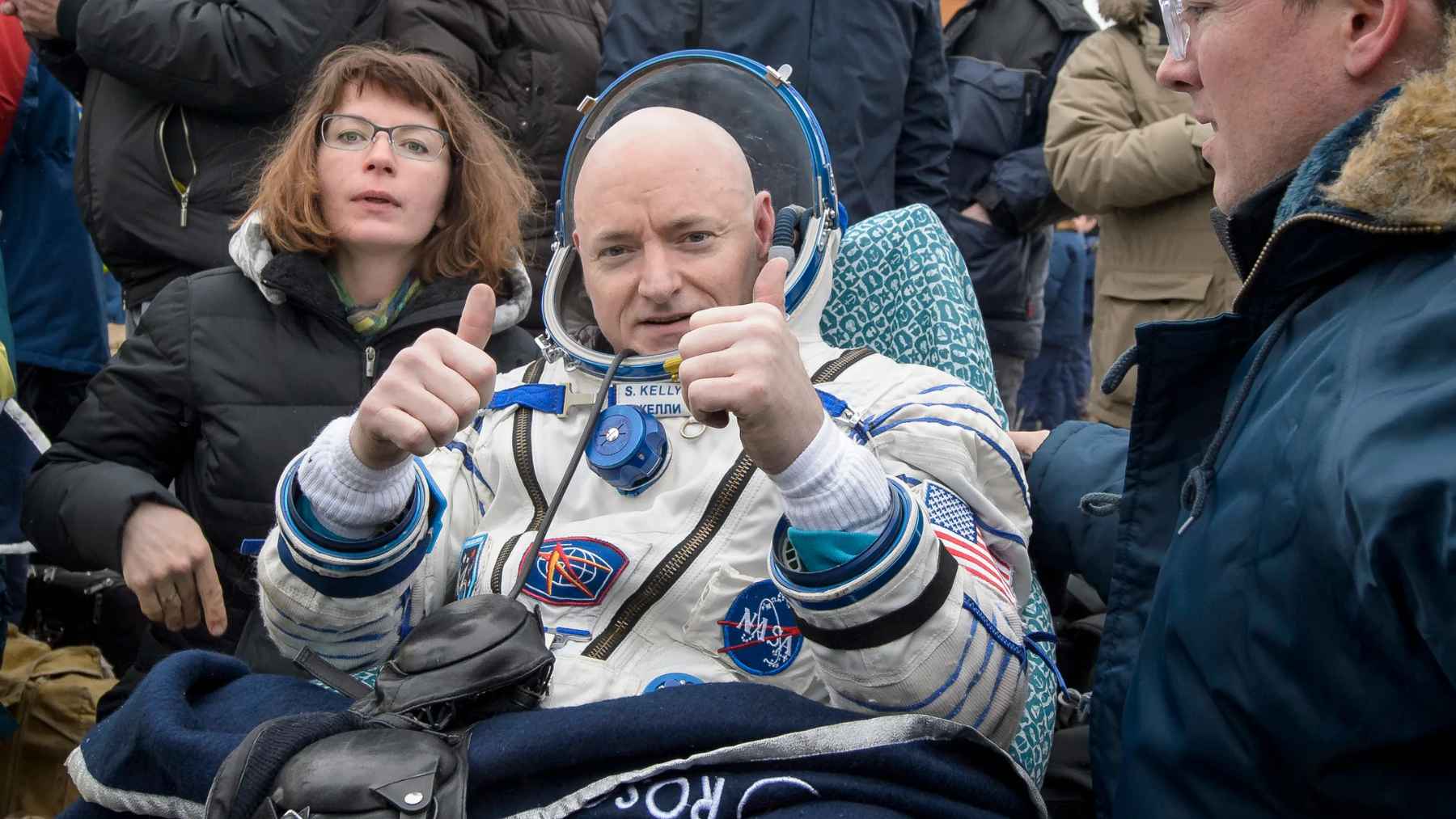
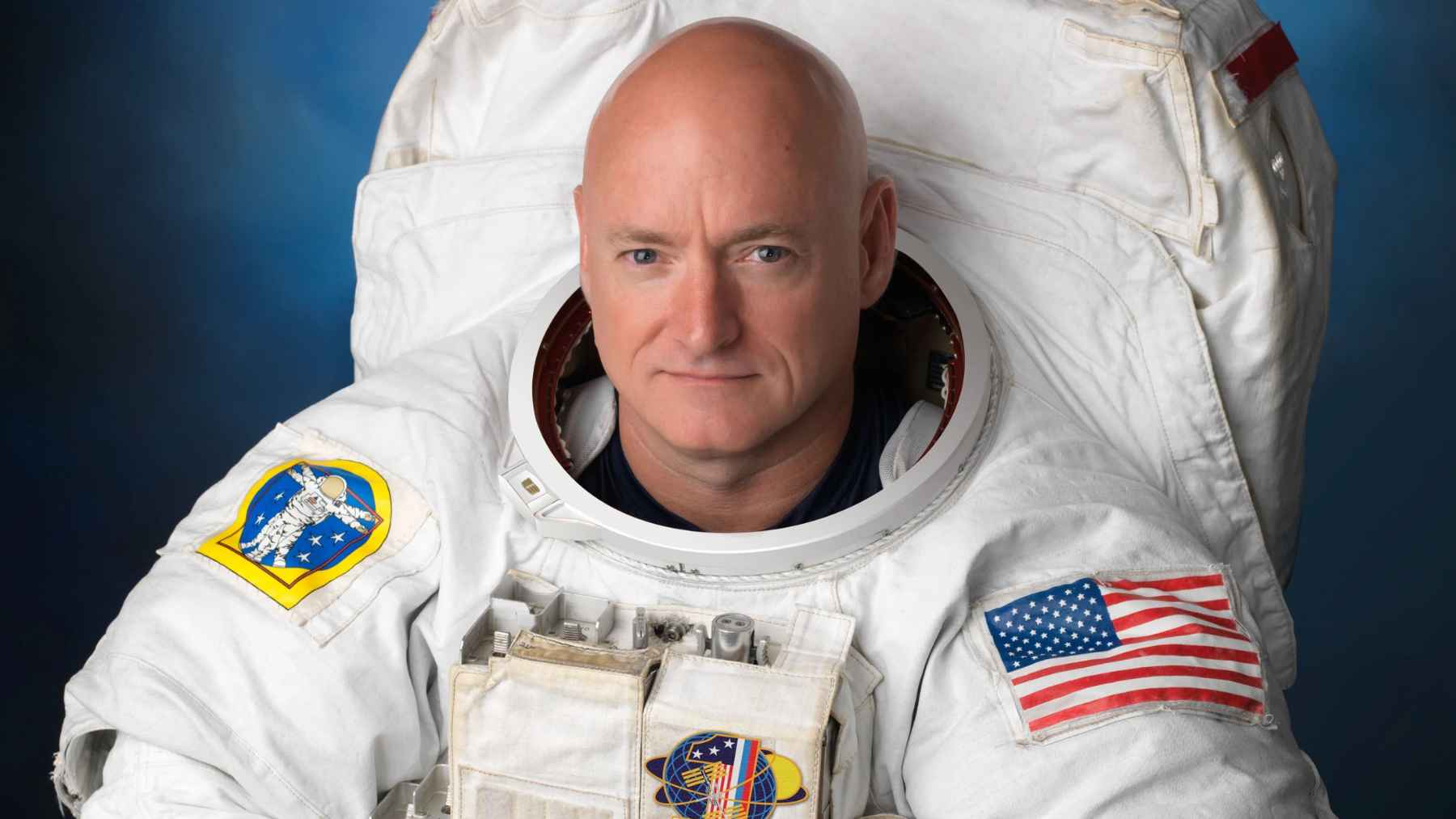
When NASA astronaut Scott Kelly climbed out of a Soyuz capsule in Kazakhstan in March 2016, he had spent 340 consecutive days away from Earth. The air smelled unusually rich, but the reunion with gravity soon brought nausea, swollen legs, burning skin, sore feet, and a body that no longer treated an ordinary bed or chair as ordinary.
His experience points to a bigger lesson about long-duration spaceflight. Taken together, Kelly’s account and a 2026 astronaut study suggest that Earth’s gravity, weather, textures, and smells are not simply background scenery since they continually shape how the human nervous system works.
Earth comes back all at once
On the International Space Station, astronauts spend months inside a sealed and temperature-controlled environment without rain, damp soil, sea air, or shifting weather. What disappears is the layered sensory noise of a living planet, from grass and moving air to the cold touch of a raindrop.
Kelly later summed up that contrast in a simple line. “I’ve learned that grass smells great, and wind feels amazing and rain is a miracle,” he wrote, turning three everyday experiences into a reminder that climate is also something the body feels.
The brain still expects gravity
In orbit, the inner ear stops receiving the constant gravitational signal it has used since birth. The brain responds by leaning more heavily on vision and touch, which is useful in microgravity but can make standing, turning, or walking unexpectedly difficult after landing.
NASA astronaut Jasmin Moghbeli recalled feeling wobbly for roughly two days after a six-month mission, while European astronaut Andreas Mogensen said, “With eyes closed, it was almost impossible to walk in a straight line.” Recovery varies, but the first hours and days can turn a familiar hallway into a balance test.
A coffee cup can expose the mismatch
A study published in 2026 followed 11 astronauts as they manipulated objects before, during, and after spaceflight. Researchers found that the astronauts often gripped harder than necessary in weightlessness, suggesting that the brain retained an Earth-trained expectation of how forces should behave even after months in orbit.
Shortly after returning, the same crew members initially made incorrect predictions about the force needed to move an object, then progressively adjusted. That helps explain why a mug, phone, or handrail can briefly feel less predictable than it did before launch, even when the astronaut knows exactly what it is.
Skin and feet face gravity again
Kelly’s postflight discomfort was more than a colorful anecdote. A medical case report documented a rash and heightened skin sensitivity after his year-long mission, while his own account described intense burning where his body pressed against the bed and swelling that took about two weeks to settle.
Feet and the lower back must also resume jobs that largely disappear in orbit. NASA reports that returning long-duration astronauts may find hard seats uncomfortable and experience soreness while their muscles, bones, circulation, and balance systems readjust, sometimes over days and sometimes over weeks.
Kelly said soreness in his muscles, joints, and feet lasted longer than some of his more visible symptoms. Suddenly, carpet, stairs, and the pressure of sitting at a table were no longer details his body could quietly ignore.
The changes reach the brain
Magnetic resonance imaging studies have found changes in brain position, fluid distribution, and the size of fluid-filled ventricles following spaceflight. Longer missions have been associated with greater ventricular enlargement, especially during the first six months, although researchers caution that sample sizes remain small and the clinical meaning is not fully settled.
That uncertainty matters. Some changes may be useful adaptations to weightlessness, while others could contribute to balance difficulties or spaceflight-associated eye problems, so scientists are still separating temporary recalibration from effects that may require stronger countermeasures.
For the most part, astronauts do recover. NASA says some regain their balance within days, while other physical effects can take weeks or longer, depending on mission duration and the individual crew member.
Longer missions raise the stakes
On May 24, 2026, China launched the Shenzhou-23 crew to the Tiangong space station for a mission that includes a one-year stay experiment. Chinese officials described it as part of a dedicated human-body research program, with medical monitoring and protective systems intended to support increasingly long crewed missions.
Mars would push that challenge much further. NASA estimates that a one-way journey could take roughly six to nine months, while a complete expedition may last close to three years depending on the mission design.
What would it feel like to encounter rain after that long? A Mars crew could return after years without open air, natural weather, ordinary gravity, or the countless scents produced by soil, plants, and changing seasons.
Earth may be part of life support
The engineering lesson is easy to miss. A spacecraft can keep people alive while still removing many of the signals that make their bodies feel at home, which means future planning may need to treat sensory variety, physical loading, rehabilitation, and careful postflight operations as parts of the life-support problem.
Rain on skin may sound like a poetic detail next to radiation shielding or propulsion. But when astronauts return, and ordinary weather feels startlingly new, it reveals something practical as well as emotional.
This is not nostalgia alone. The human body evolved inside Earth’s environment, and it notices when that environment is gone.
The full study was published in the Journal of Neuroscience.