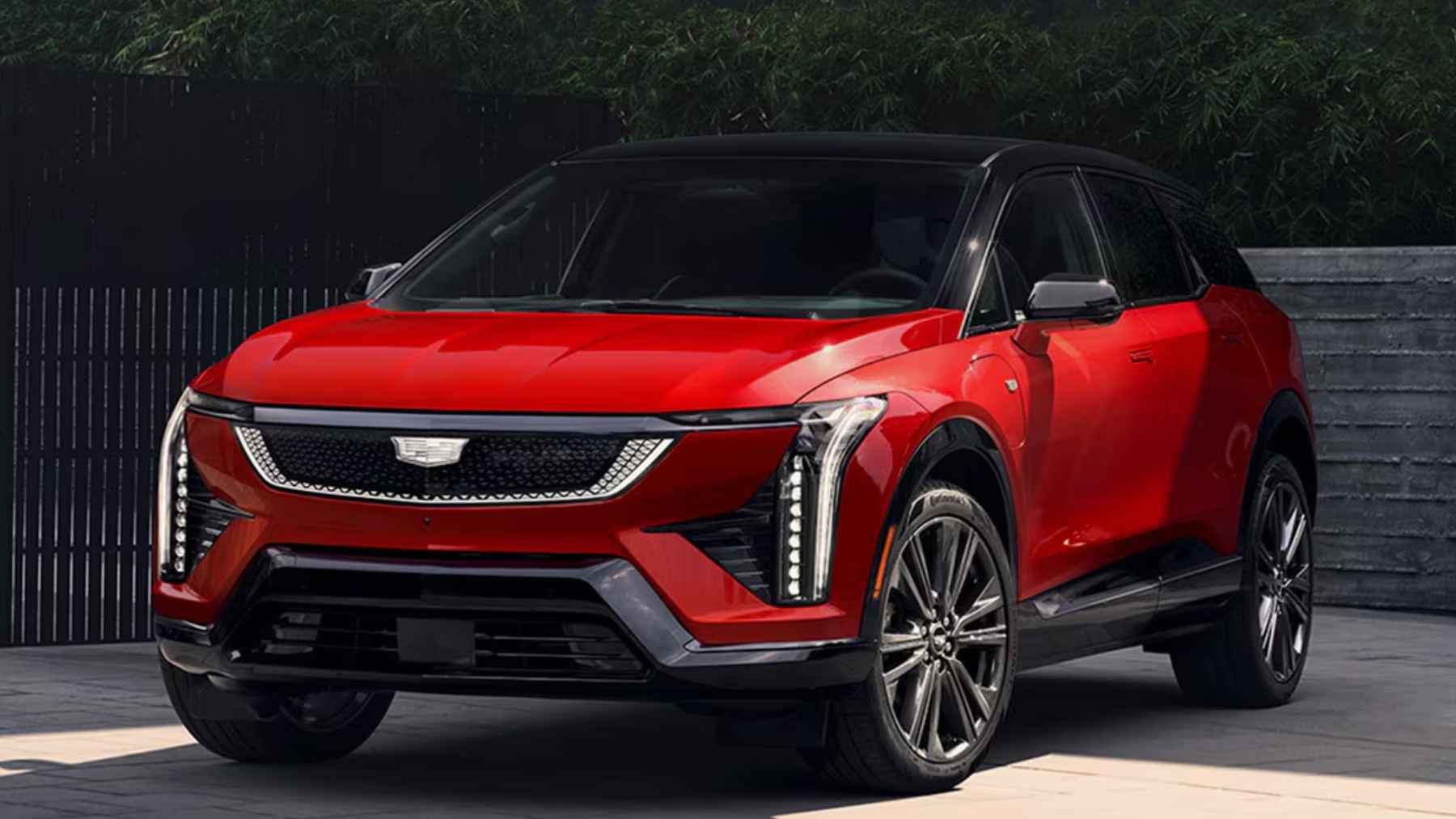
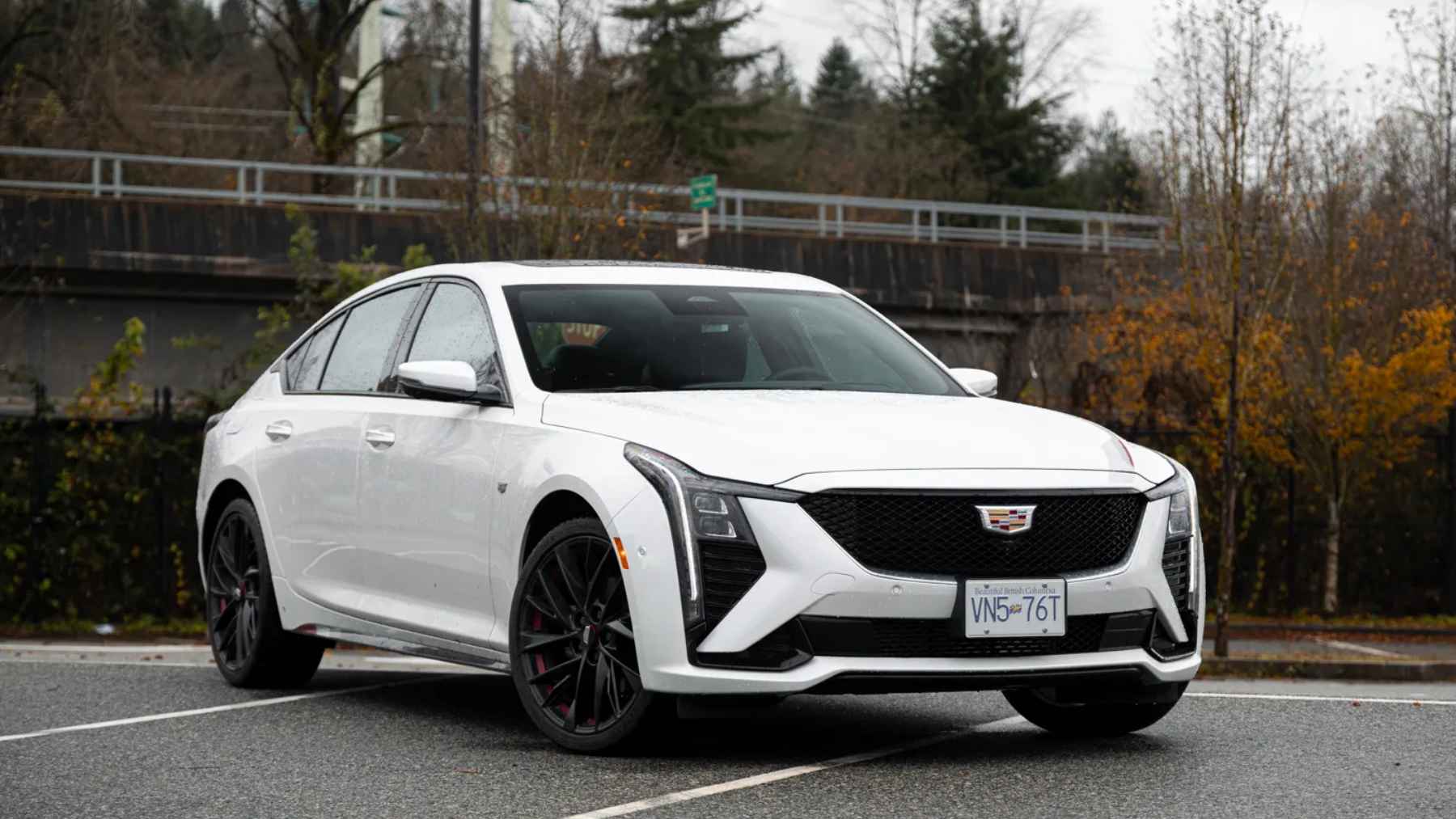
General Motors is giving gasoline a much longer runway at Cadillac. CEO Mary Barra confirmed that next-generation versions of the CT5 sedan, XT5 midsize SUV and three-row XT6 will begin arriving in spring 2027, with launches continuing into 2028. The vehicles will be sold alongside Cadillac’s expanding electric lineup rather than replacing it.
The decision marks a major shift from Cadillac’s earlier plan to become an EV-only brand by the end of the decade. It also follows $10.9 billion in EV-related charges at GM since the second half of 2025, as customer adoption and U.S. policy moved differently from the company’s earlier assumptions.
For drivers, it means more choice, but for the climate, it means tailpipe emissions will remain part of Cadillac’s story for longer.
Three familiar names get another generation
The CT5 is Cadillac’s luxury sedan, while the XT5 fills the midsize crossover slot and the XT6 offers three rows of seating. The XT6 return is the biggest surprise because the model had already been discontinued. GM has not yet announced engines, fuel economy, prices or detailed production plans for the new versions.
“Starting next spring and continuing into 2028, we will begin launching the next generation of Cadillac ICE vehicles,” Barra said during GM’s July 21, 2026 second-quarter earnings call.
ICE means internal combustion engine, the gasoline technology at the center of this reversal. Her wording also matters because the new vehicles are intended to complement the Optiq, Lyriq, Vistiq and Escalade IQ electric SUVs, not push them out of showrooms.
The numbers behind the retreat
So why revive gasoline now? GM says it has recorded $10.9 billion in EV-related charges since the second half of 2025. Of that amount, $7.2 billion is expected to have a cash impact, $4.5 billion had been paid by the end of the second quarter, and GM says the actions have substantially completed its expected major cash charges.
The operating mix shifted almost as sharply. In North America, GM wholesaled 31,000 fewer electric vehicles and 30,000 more gasoline-powered vehicles than a year earlier during the quarter. That near one-for-one change helps explain why product plans are now following buyers rather than an old calendar.
Even with the EV reset, GM reported second-quarter revenue of about $48.0 billion and adjusted earnings before interest and taxes of $3.9 billion. It raised its full-year outlook for that measure to between $14 billion and $16 billion. Strong pricing, lower warranty costs, popular pickups and SUVs, and reduced EV losses are giving the company room to keep funding both technologies.
A climate cost that cannot be ignored
Transportation produced 28% of direct U.S. greenhouse gas emissions in 2022, according to the Environmental Protection Agency. Light-duty trucks, a category that includes SUVs, pickups and minivans, accounted for 37% of transportation emissions, while passenger cars represented another 20%. Cadillac’s returning models sit directly inside those high-impact segments.
Electric vehicles have no tailpipe emissions, although power generation and battery manufacturing still create pollution. The EPA says a typical EV is responsible for fewer greenhouse gas emissions over its life than an average new gasoline car, even after electricity production is considered.
Over years of commutes, school runs and highway miles, that lifecycle gap can add up, although it varies with the local power grid and vehicle size.
That makes GM’s dual-track strategy understandable from a business perspective but harder to square with rapid emissions cuts. A Cadillac launched in 2028 can influence fuel use long after its showroom debut. Still, the exact impact cannot be calculated until GM reveals efficiency figures, sales volumes and whether any of the new vehicles will use hybrid assistance.
U.S. factories are being reworked too
The product shift is already visible on factory maps. GM announced about $4 billion in investment across U.S. plants, including plans for Orion Assembly in Michigan to produce gasoline-powered full-size SUVs and light-duty pickups beginning in early 2027. Factory ZERO in Detroit will remain dedicated to electric trucks and SUVs.
Spring Hill Manufacturing in Tennessee will also add the gasoline-powered Chevrolet Blazer while continuing to build the Cadillac Lyriq and Vistiq EVs, along with the XT5.
In practical terms, one manufacturing network must now support batteries, electric drive units, engines and transmissions at the same time. That is more flexible, but it is also more complicated.
GM’s Arlington Assembly plant in Texas currently builds the Cadillac Escalade, Chevrolet Tahoe and Suburban, plus the GMC Yukon and Yukon XL. Adding full-size SUV capacity in Michigan reduces dependence on one location and supports GM’s onshoring plans. On the other hand, it also directs fresh investment toward some of the company’s largest gasoline vehicles.
Cadillac is betting on a slower transition
Cadillac is not abandoning electric vehicles. Its current battery-powered range covers several luxury SUV sizes, from the Optiq and Lyriq to the three-row Vistiq and the large Escalade IQ. What has changed is the idea that one powertrain had to replace the other on a fixed deadline.
GM also continues to list carbon neutrality across its global products and operations by 2040 as a corporate goal. New gasoline Cadillacs do not automatically erase that ambition, but they increase the pressure on later EV sales, cleaner factories and more efficient vehicles. The math becomes less forgiving.
The key question is no longer whether Cadillac will be electric or gasoline-powered. It is how quickly EVs can become profitable, convenient and attractive enough to win in a less supportive policy environment. Until then, GM is keeping both roads open.
The official earnings call and supporting materials were published on General Motors Investor Relations.