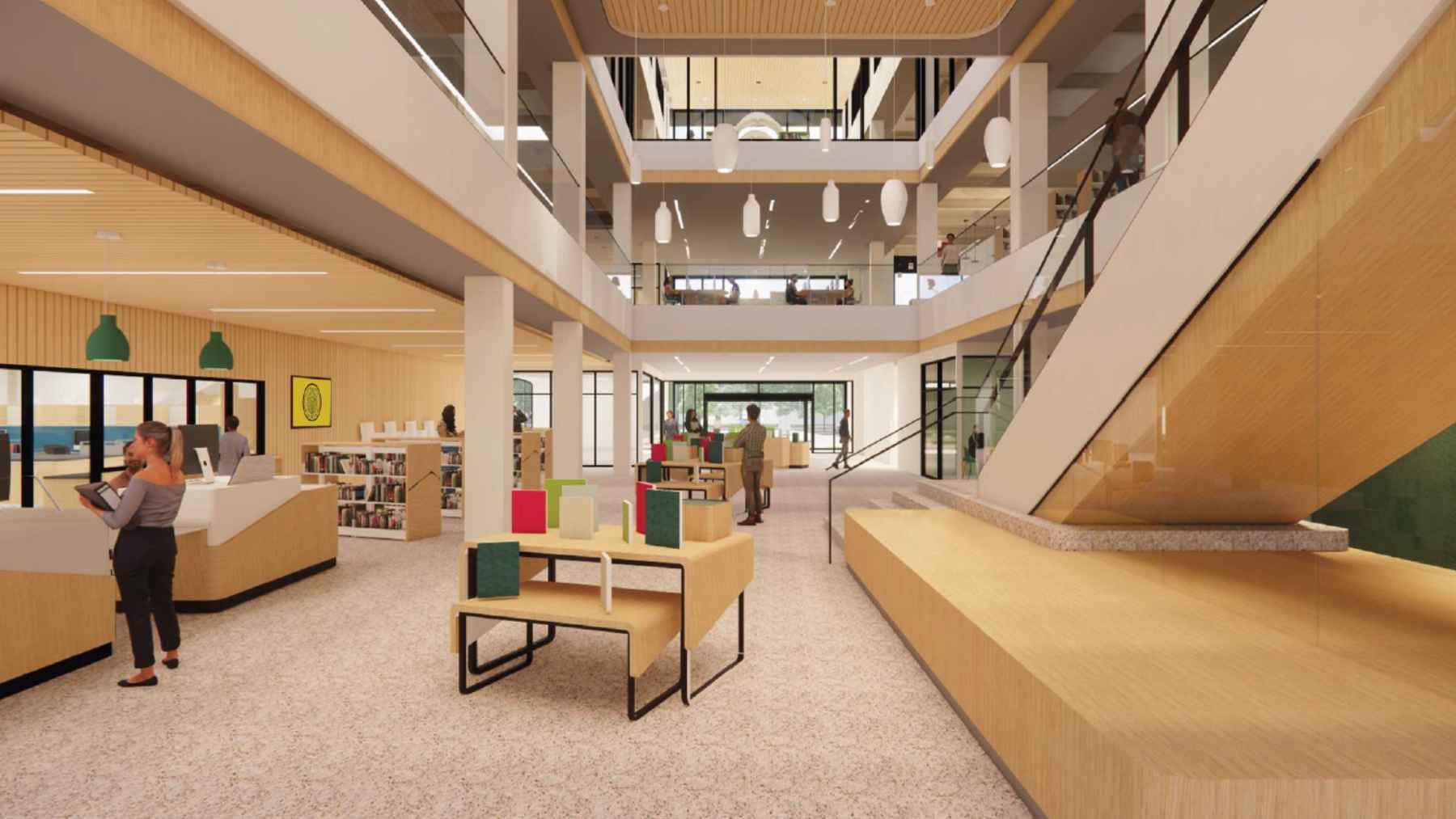
Manchester, Connecticut, is preparing to open a public library that does more than lend books. The roughly 75,000-ft.² Manchester Public Library will be the state’s first all-electric, net-zero energy public library, with a soft opening expected in mid to late August 2026 and a larger celebration after Labor Day.
The project is reported at $49.5 million against a $50 million budget, combining rooftop solar, battery storage, geothermal heating and cooling, electric vehicle charging, and modern community spaces.
The bigger story is not a single green building, it is how an everyday public facility can serve residents, lower long-term energy demand, and interact more intelligently with the electric grid.
A library that manages power
Eaton says the building will use 370 kilowatts of solar capacity, paired with a battery system and microgrid controls. Those controls can prioritize onsite solar, store electricity for later, and export excess power when doing so helps the wider grid.
However, net zero does not mean the library will never draw electricity from the grid. It means the efficient building is designed to produce enough renewable energy over a year to balance its annual energy use, which is the federal definition of a zero-energy building. Actual performance will become clearer after the building has operated through full seasons.
That distinction matters. Solar panels get the attention, but software, storage, and careful control of peak demand are what can turn a municipal building from a passive customer into a flexible grid participant.
Community needs came first
Town facilities manager Christopher Till said sustainability was not the project’s original starting point. The first priority was replacing a main library approaching a century of age with a building that could meet current needs. “I think Manchester has a lot to be proud of,” he said.
The Mary Cheney Library opened in 1937, when public libraries were designed mainly around shelves, reading rooms, and circulation desks. Today, residents also expect quiet study areas, public meeting rooms, digital production tools, accessible restrooms, reliable parking, and spaces where small groups can work without whispering over one another.
The new building will add private study rooms, a makerspace, an audiovisual studio, children’s and teen areas, and flexible community rooms. Library official Jessica Sweetland summed up the gap plainly, saying “a library in 1937 is very different from what a library is in 2026.”
The technology is part of the service
A geothermal system will handle heating and cooling without a conventional fossil-fuel setup, while the solar array and battery will support the all-electric building. EV chargers are also being integrated into the power-management system, so vehicle charging can be coordinated with the library’s broader electrical needs.
That may sound like back-room engineering, but patrons can feel the results in ordinary ways. The systems are meant to support stable indoor temperatures, controlled peak demand, and greater resilience during grid stress, all of which influence whether a public building remains comfortable and affordable to operate.
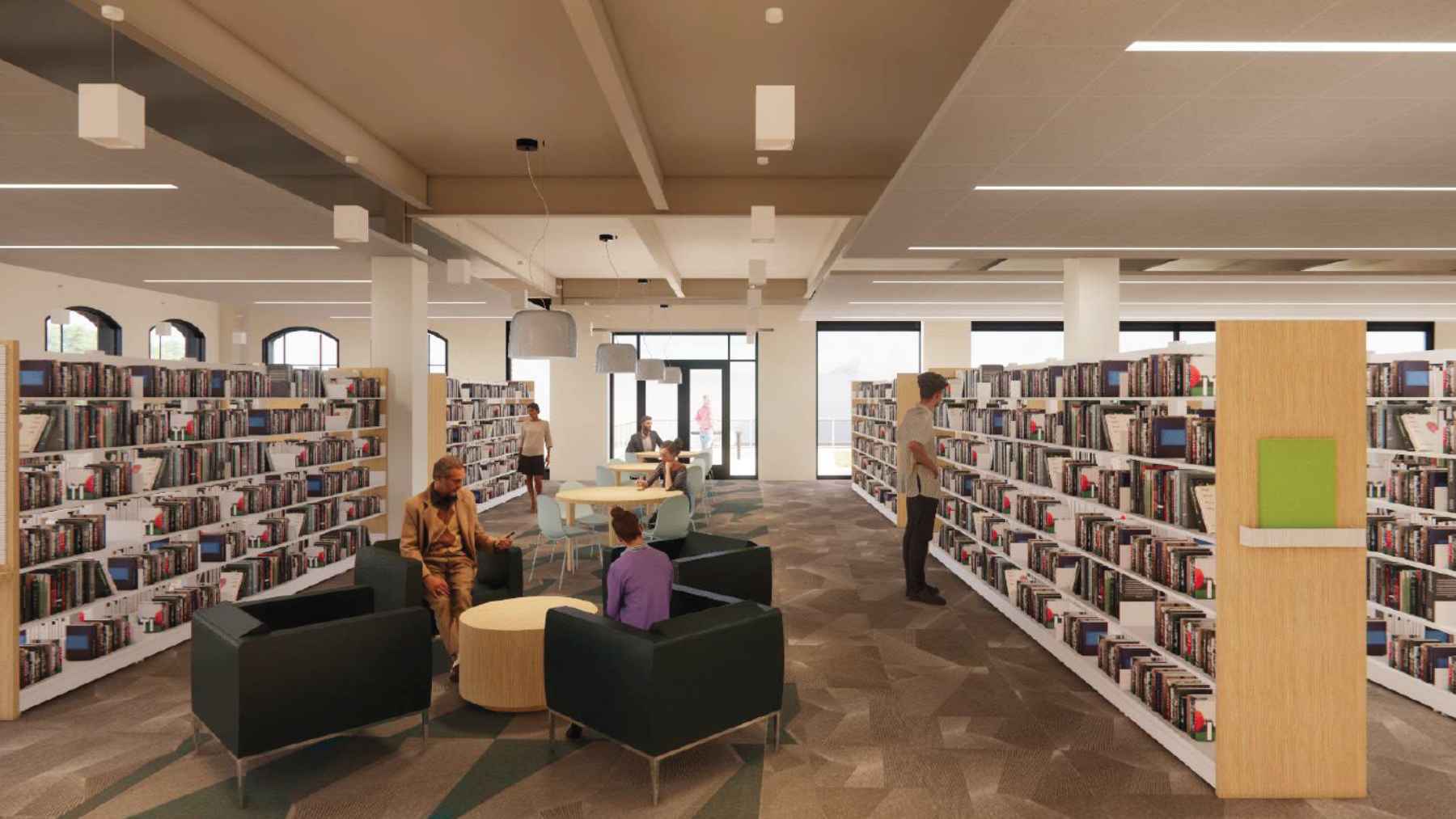
There is also an educational value. A library built around clean-energy systems can make ideas such as storage, geothermal heating, and demand management less abstract, especially for students who encounter the technology in a place they already use.
That benefit will depend, to a large extent, on how clearly the town explains the systems to visitors.
A complicated funding puzzle
Manchester voters approved a $39 million bond referendum for the new main library in November 2022. The town’s official history records 13,185 votes in favor and 6,670 against, showing that the project had broad support even before its final energy package was assembled.
The remaining financing came from a mix of municipal borrowing, state and federal grants, Eversource support, and Connecticut’s Energy Storage Solutions program. By combining those sources, Manchester treated batteries and clean power as infrastructure rather than decorative extras.
That is the part other local governments will watch closely. Upfront costs often decide whether a public project keeps or loses its efficiency features, so grants, tax credits, utility incentives, and storage payments can help determine whether a net-zero design survives the budget process.
Manchester already has a track record
The library is not the town’s first attempt at net-zero public construction. Manchester has already completed net-zero renovations at three elementary schools, and Till said officials regularly receive questions about how the town finances and delivers such projects.
That experience matters because high-performance buildings depend on more than equipment. Architects, contractors, facility managers, utilities, and funding partners have to make hundreds of connected decisions, from the size of the solar array to how the building behaves on the hottest afternoon of the year.
At the end of the day, the library is becoming a test case for repeatable municipal technology. Can a town build a better civic space and a smarter energy asset at the same time? Manchester is betting that it can.
What happens to Mary Cheney
The move also closes a long chapter for the Mary Cheney Library, which has served Manchester for nearly 90 years. The historic building will remain standing, and town officials have kept the Mary Cheney name attached to it.
Its next use has not been decided. That unresolved question matters because reusing an older civic building carries its own environmental and financial consequences, and Manchester will still need a plan that respects the site without allowing it to sit idle.
Opening the doors
The new Manchester Public Library is expected to begin with a quieter opening in mid to late August, followed by a grand opening after Labor Day. When residents walk in, the most obvious changes may be the study rooms, brighter shared areas, and technology spaces rather than the battery controls working out of sight.
That is probably the point. The strongest sustainable buildings are useful places first, with the energy system quietly helping make the public service cleaner, more efficient, and more resilient over time.
The press release detailing the library’s grid-interactive energy system was published on Eaton.