Canada opened the clearest path yet for a new oil pipeline from Alberta to the Pacific Coast on July 2, 2026. The proposed West Coast Oil Pipeline would move more than one million barrels per day toward Asian markets while largely following the existing Trans Mountain corridor.
All monetary figures below are converted to U.S. dollars using the Bank of Canada’s July 17 exchange rate.
Did British Columbia suddenly become pro-pipeline? Not really. The province agreed to engage on a southern route and avoid a court battle, but it also secured a package that keeps the northern oil tanker ban intact, promises compensation for environmental risk, and directs billions toward electricity, mining, ports, and coastal protection.
British Columbia did not endorse it
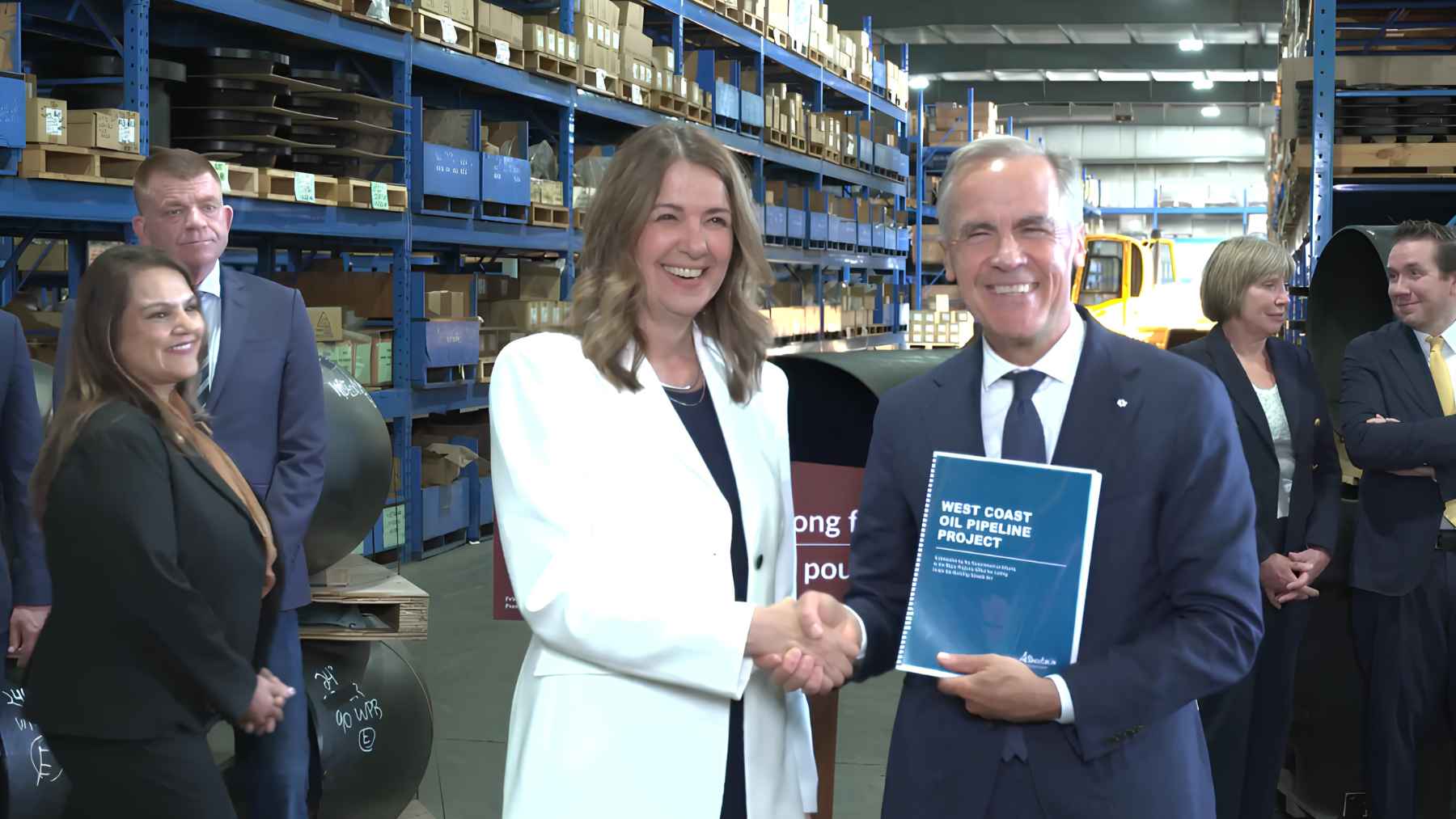
Premier David Eby made the distinction clear, saying, “This agreement does not require us to support any pipeline project from Alberta,” he said, while acknowledging that British Columbia cannot constitutionally block an interprovincial pipeline and would not sue simply to stop one.
The written agreement requires British Columbia to participate in routing and permitting discussions in good faith, provided Ottawa meets several conditions.
Those include keeping the North Coast tanker ban unchanged, consulting First Nations, and negotiating an annual payment plus an environmental liability and emergency response fund accessible to British Columbia and Indigenous communities.
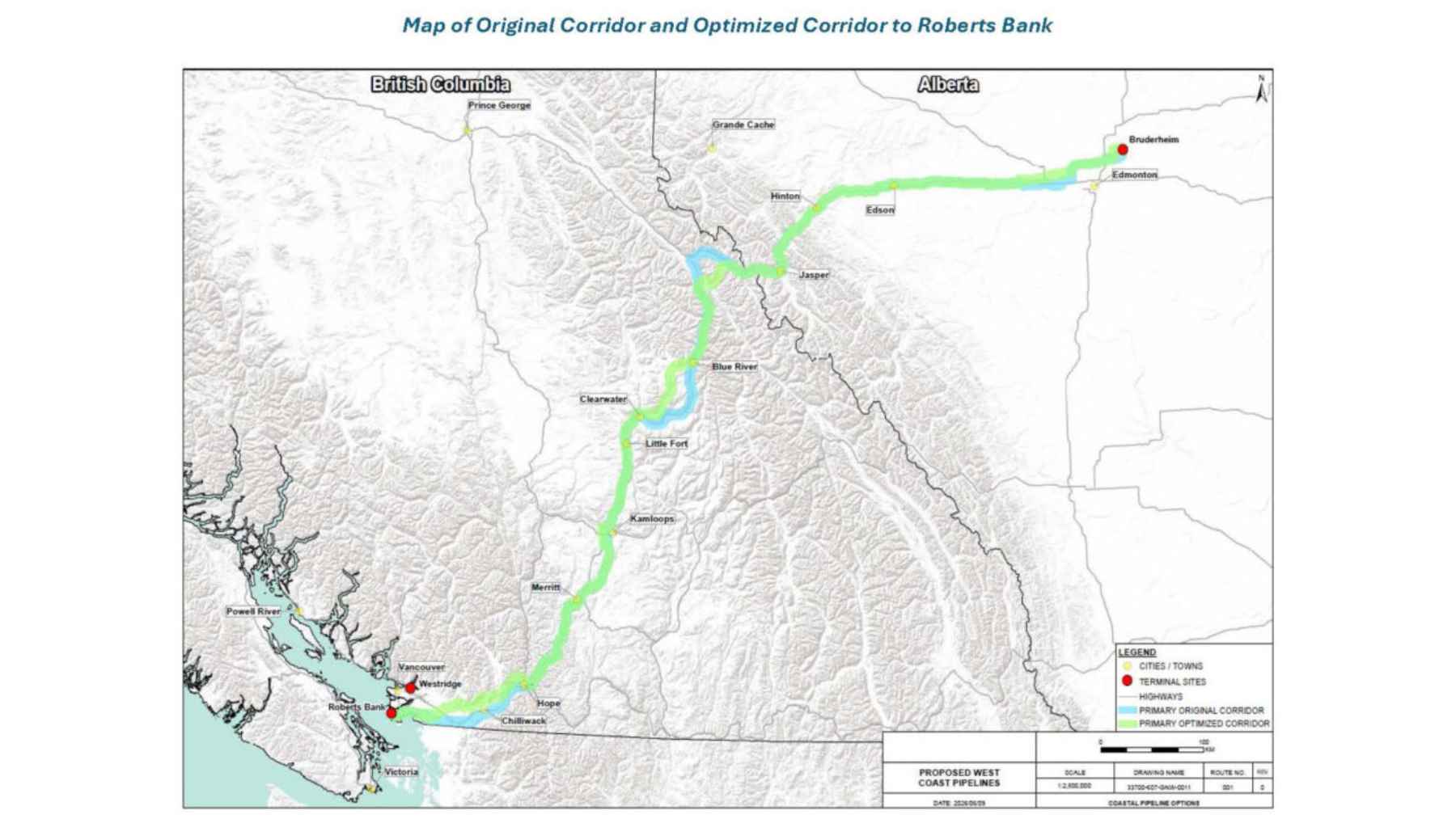
The route shifts south
Alberta selected a corridor from Bruderheim, northeast of Edmonton, to British Columbia’s southwest coast. The line would mostly follow existing Trans Mountain infrastructure toward a deep-water terminal, a choice Alberta says would reduce new land disturbance and shorten the regulatory path.
That choice keeps the northern coast’s ban on large oil tankers in place, but the environmental pressure does not vanish. It moves south, where the agreement highlights Southern Resident killer whale habitat and pairs development with renewed spill-response investment and about $178.4 million for a federal whale initiative.
The export math is enormous
The new line would carry more than one million barrels per day. Separately, Ottawa and British Columbia want to increase the existing Trans Mountain system from 890,000 barrels per day to 1.19 million, meaning the two projects could provide more than 2.1 million barrels per day of combined west coast pipeline capacity if both are completed.
That would be close to two-and-a-half times the existing system’s current capacity. Alberta also wants to lift oil production to eight million barrels per day within 10 to 15 years, up from a record 4.8 million in December 2025. In other words, the new line is meant to enable growth, not simply reroute today’s barrels.
Preliminary estimates reported from Alberta’s filing put construction at roughly $25.1 billion to $31.2 billion, including contingencies. Canada and Alberta are expected to hold the majority interest, while Pembina Pipeline would begin with a 10% stake that could rise to 20% once the line is operating.
Clean investment sweetens the deal
Ottawa’s package includes about $2.78 billion for the first two phases of the North Coast Transmission Line. The federal government says the project could cut annual emissions by as much as 3.3 million tons while unlocking roughly $7.14 billion in new economic activity.
Another $356.8 million is planned for the Red Chris copper mine expansion, which Ottawa says could raise Canada’s annual copper output by more than 15% and lower the mine’s greenhouse gas emissions by over 70%. The agreement also supports four liquefied natural gas projects, port upgrades, and a new highway tunnel near Vancouver.
In practical terms, the same clean grid that can lower industrial pollution may also enable more mining and LNG production. This is not simply a green package or an oil package, it is an industrial strategy built around exports.
Carbon capture carries the climate argument
The pipeline is tied politically and economically to the Pathways carbon capture project. Ottawa says Pathways and other commitments could reduce emissions by about 17.6 million tons per year, while a July 13 Alberta update said the core network is expected to capture and permanently store about 6.6 million tons of carbon dioxide annually.
That distinction matters. Carbon capture at oil sands facilities can reduce emissions created during production, but it does not capture the carbon released when the exported fuel is eventually burned.
So the project could lower the emissions intensity of each barrel without making the additional oil climate neutral. Pathways also remains subject to regulatory approvals and final commercial agreements, which means the climate case is still partly a promise on paper.
Approval is still ahead
The federal Major Projects Office must now consider whether to list the pipeline as a project of national interest and begin consultations with Indigenous groups. Alberta is targeting October 1, 2026, for that listing and says construction could begin as early as September 1, 2027, but only if consultation duties and federal conditions are met.
The deal has moved the pipeline from a political wish list into a defined process. Cost, indigenous consultation and ownership terms, spill protection, and measurable carbon performance will decide whether it becomes steel in the ground.
The most recent official press release was published on Alberta.ca.