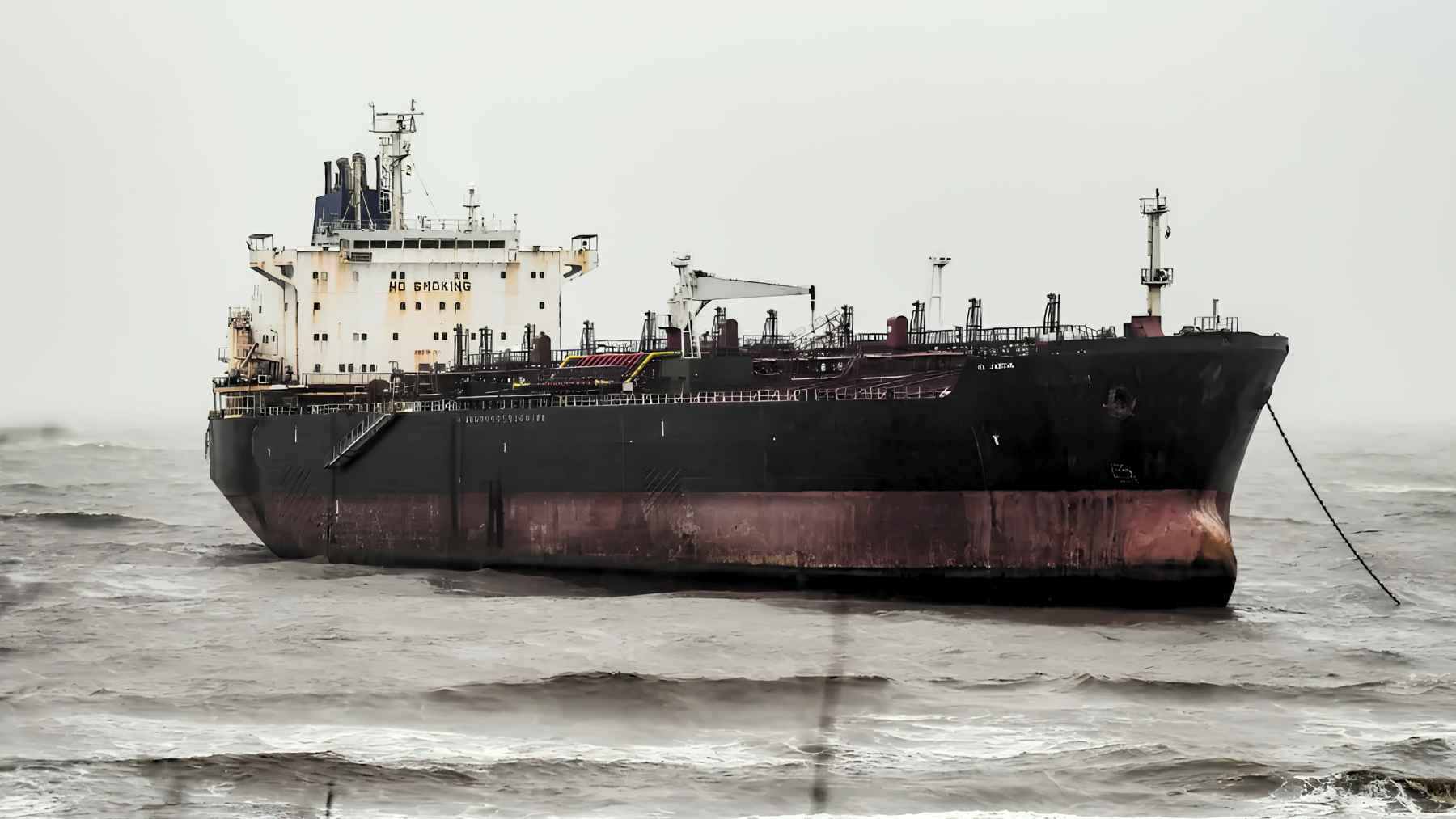
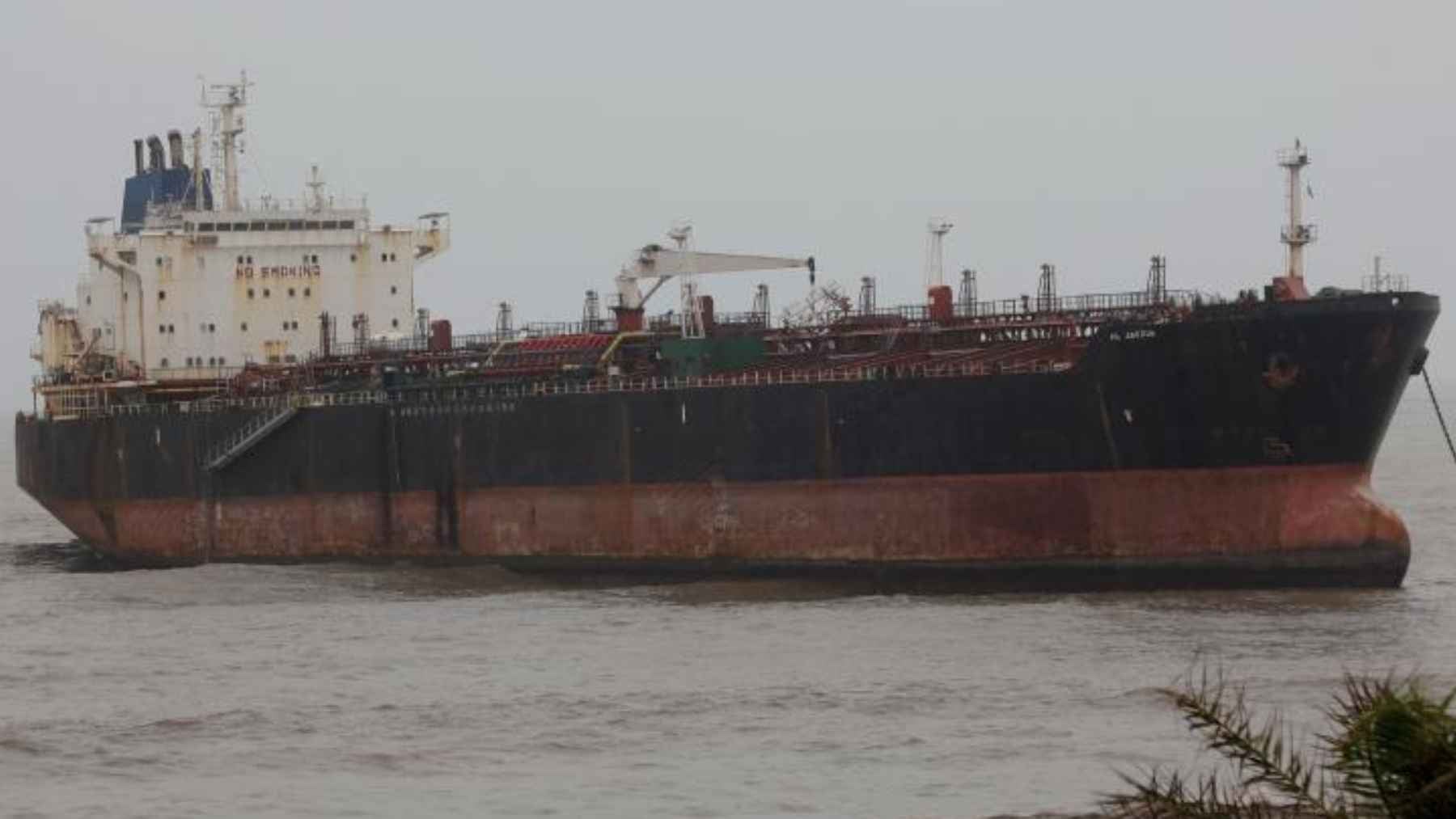
A roughly 600-ft. tanker detained in an alleged fuel-smuggling case ran aground off Mumbai after severe monsoon weather pulled it from its anchorage on July 5. MT Al Jafzia was unmanned when it became stranded about a half-mile from Manori, a beach area on the city’s northern edge.
Police initially reported “no untoward incident,” but the Indian Coast Guard sent a pollution-control ship and an emergency towing vessel to the area. That precaution is the real headline. A sanctions investigation has become an environmental readiness test, with local fishing boats, a rocky shoreline, and rough monsoon waters all close to the grounded vessel.
A tanker in the rocks
The Coast Guard diverted ICGS Samrat after the Directorate General of Shipping warned that three detained vessels were dragging their anchors. ICGS Samudra Prahari and the emergency towing vessel Water Lily were also positioned nearby, while MT Asphalt Star and MT Stellar Ruby were secured with their crews reported safe.
Built in 1999, MT Al Jafzia is approximately 600 ft. long and 106 feet wide. Before any safe refloating attempt, specialists would normally need to establish whether the grounding damaged its hull, tanks, fuel systems, or machinery spaces, particularly when poor visibility and rough water make close inspections difficult.
The February interception
The story began on February 5, when the Coast Guard intercepted MT Asphalt Star on suspicion of illicit oil transfers and manipulation of its identity and Automatic Identification System data. Investigators then brought MT Al Jafzia and MT Stellar Ruby to Mumbai, where all three ships were anchored under Coast Guard supervision on February 9.
Ship-to-ship transfers are not automatically illegal, since tankers sometimes exchange cargo for ordinary logistical reasons.
In this case, however, investigators allege that the vessels concealed their movements and used forged documents while transferring Iranian-origin products. The suspected cargo included about 66,000 lbs. of heavy fuel oil transferred to Al Jafzia and approximately 6,030 tons of bitumen transferred to Stellar Ruby.
Sanctions followed the hull
Ship names and flags can change, but an International Maritime Organization number is intended to stay with a vessel throughout its working life. Al Jafzia’s number, IMO 9171498, is the same one the U.S. Treasury placed on its sanctions list in April 2025 under the earlier name CHIL 1.
The Treasury said the wider network relied on high-risk transfers, altered paperwork, blended petroleum products, and disabled or manipulated tracking signals. At sea, AIS acts like a ship’s digital name tag by broadcasting its identity, position, and direction. Switching it off or falsifying its signal makes enforcement harder and can also increase the risk of collisions.
Why pollution crews matter
Why send a pollution-control ship when no spill has been publicly reported? A tanker does not need to be carrying a full commercial cargo to create an environmental problem. Fuel used by the vessel itself, lubricants, residues, and contaminated water may remain aboard, while damaged systems can turn a salvage operation into a coastal cleanup.
That is why the presence of Samudra Prahari matters. The International Maritime Organization has warned that older tankers with unclear ownership, poor maintenance, weak insurance, and opaque operations increase the danger of spills and collisions. They can also leave coastal governments struggling to identify who should pay for cleanup and compensation.
A court problem became a sea problem
The Bombay High Court had already confronted the human cost of the case. In May, it ordered the release and repatriation of 50 Indian seafarers after they alleged that shipowners had abandoned them with limited food, water, electricity, and unpaid wages.
The Coast Guard warned the court that leaving the vessels unmanned would create navigational, national security, environmental, and maritime safety risks. The court later permitted the detained ships to be moved to the Alang ship-breaking yard while keeping them in legal custody, but Al Jafzia did not complete that journey before the monsoon arrived.
The humane decision to bring the sailors home was necessary, yet the tanker still required maintenance, secure anchoring, supervision, and a weather-ready towing plan.
The shadow fleet bill
This is not a small corner of global shipping. S&P Global estimated in September 2025 that the so-called shadow fleet had reached 978 tankers, representing approximately 18.5% of worldwide oil-tanker capacity.
Those vessels help sanctioned petroleum continue moving, but the costs can land elsewhere when something goes wrong. Coast guards provide ships and personnel, ports offer emergency refuge, courts untangle ownership disputes, and coastal communities live with the environmental uncertainty. At the end of the day, a detained tanker does not stop being a tanker.
India’s immediate task is to assess Al Jafzia, prevent pollution, and move it without causing further damage. The broader lesson is that sanctions enforcement cannot end with a detention order because insurance, salvage, environmental responsibility, and safe custody must follow the hull to its final destination.
The official Coast Guard statement was published by PTI on Rediff.