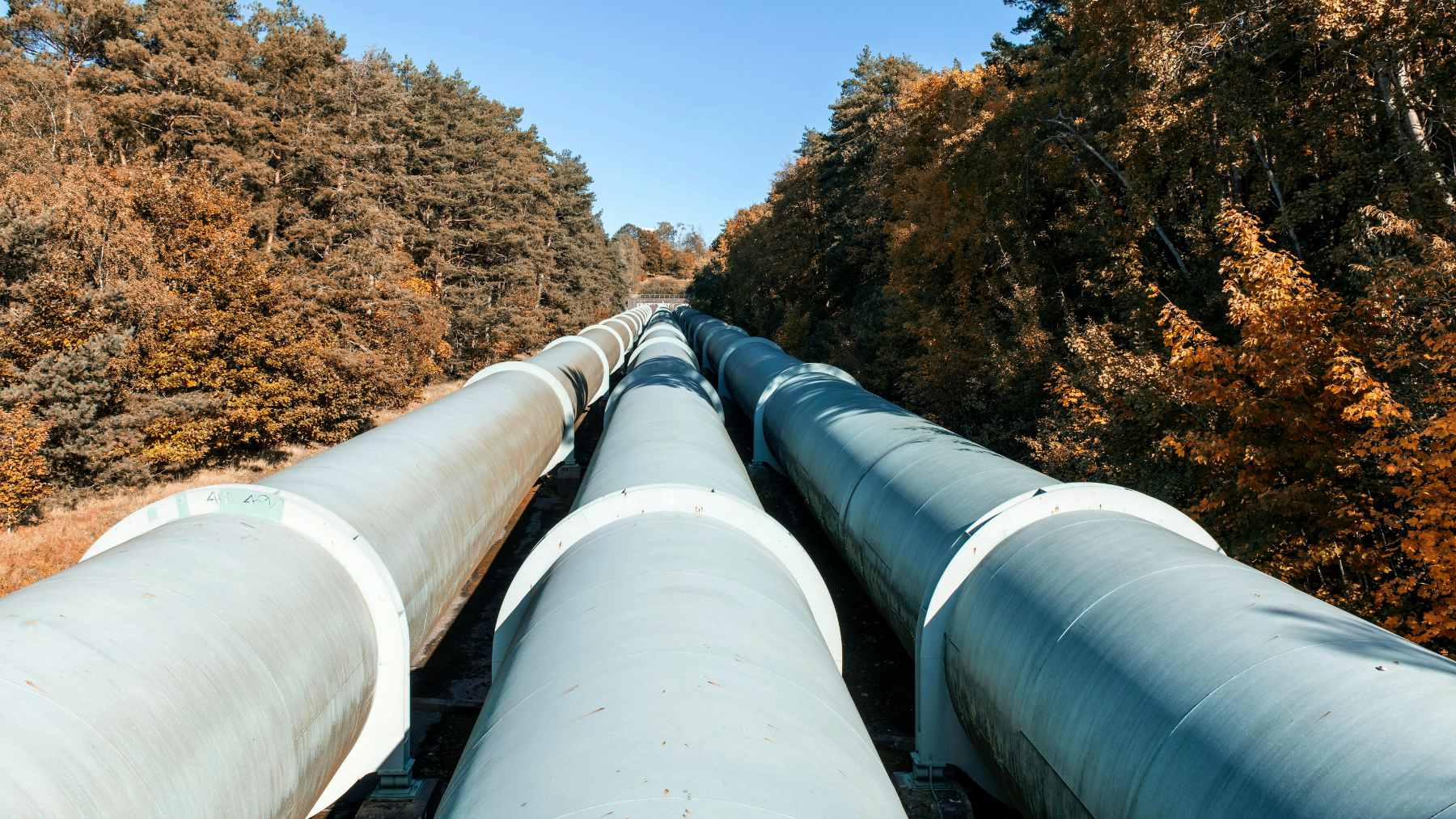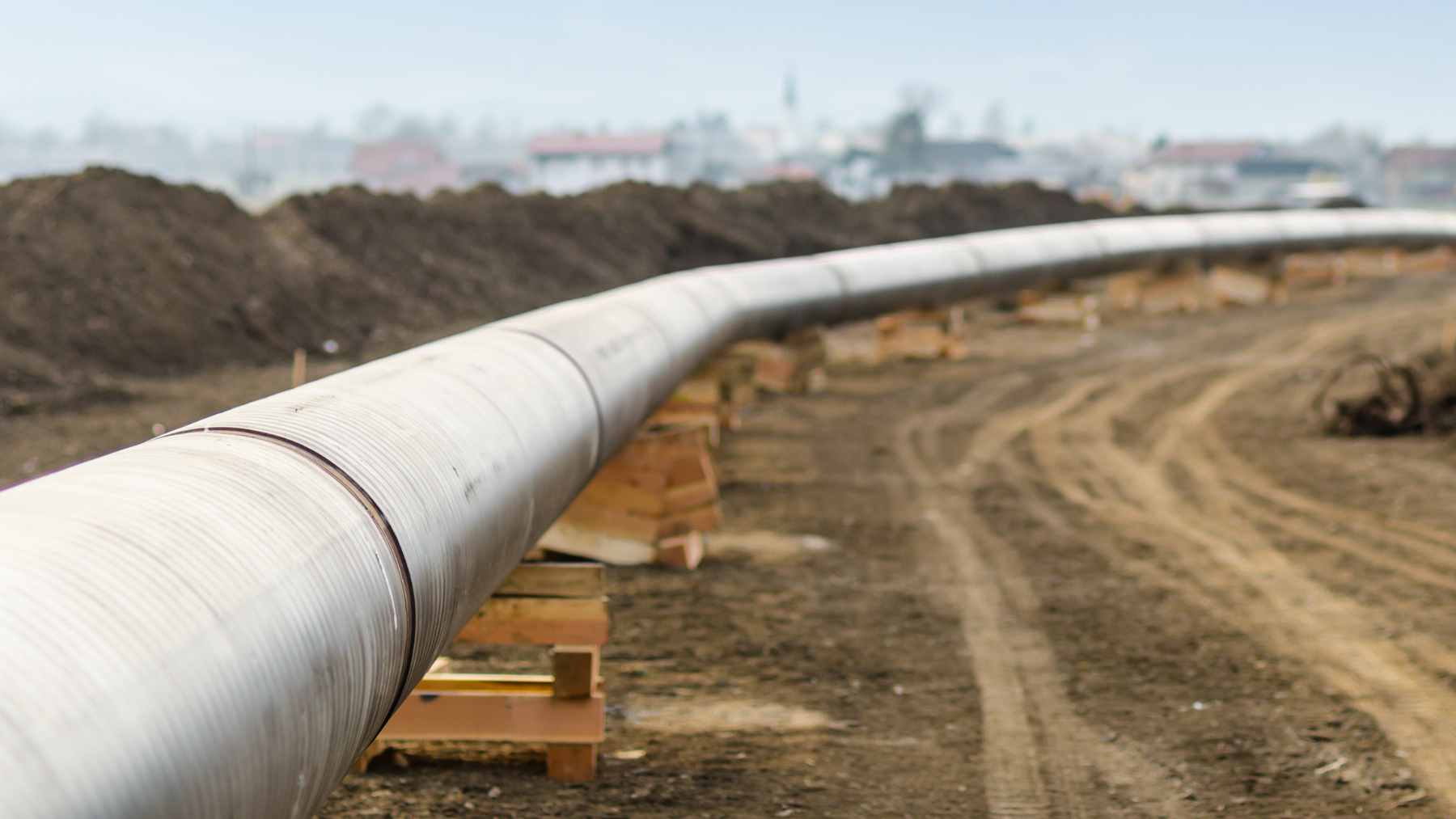
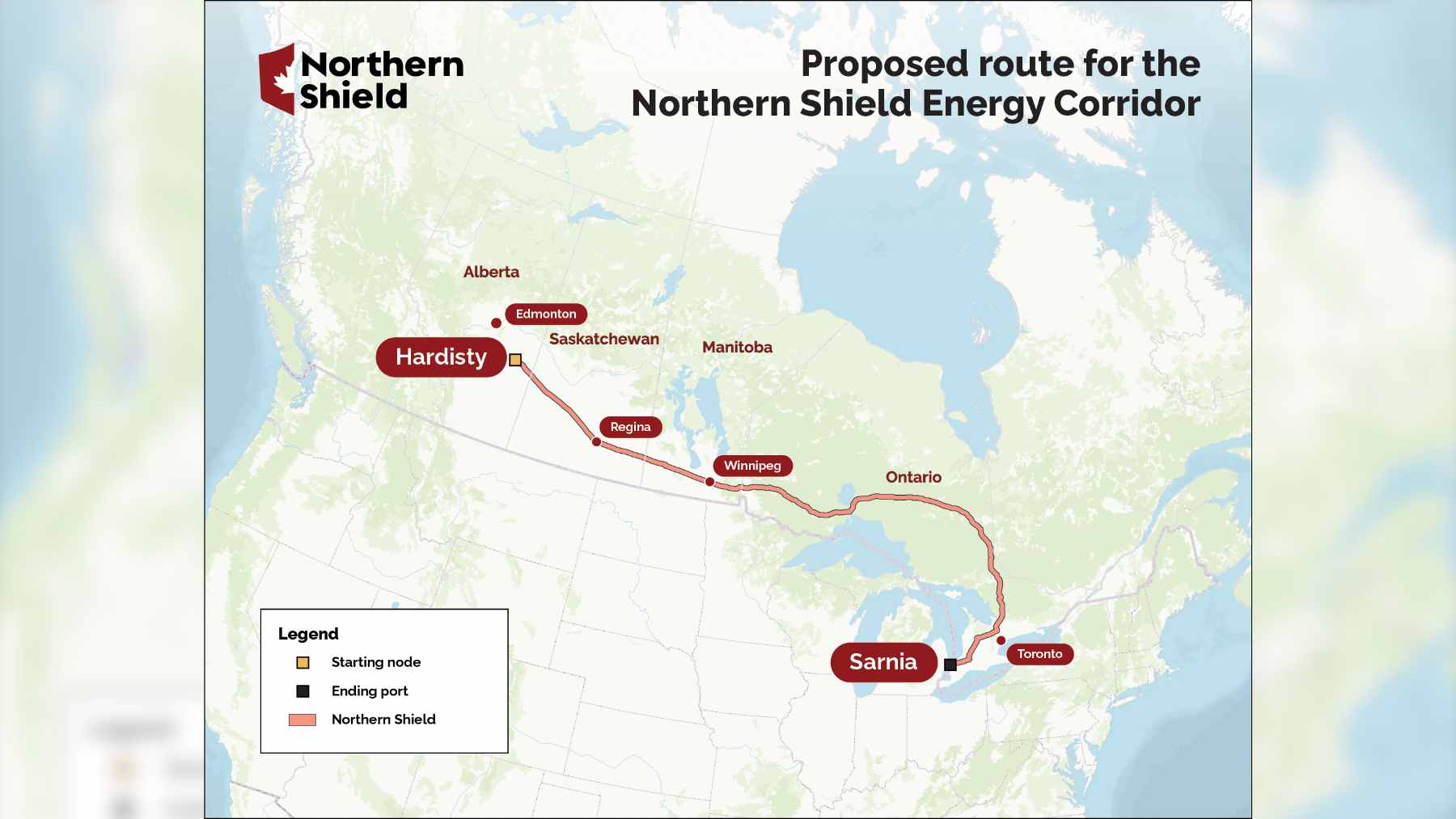
Canada has placed a bold new line across its map. Ontario Premier Doug Ford and Alberta Premier Danielle Smith have unveiled Northern Shield, a proposed crude oil corridor stretching roughly 2,050 miles from Hardisty, Alberta, to Sarnia, Ontario, with an initial capacity of 500,000 barrels per day and room to grow to 800,000.
The political pitch is easy to understand. A fully Canadian route could reduce exposure to U.S. infrastructure, protect refinery supply, and open another path to overseas markets, but Northern Shield is still only a proposal with no confirmed price, private developer, committed customers, or construction approval.
The real story is not simply whether Canada wants the pipeline, but whether the economics, environmental safeguards, and indigenous partnerships can make it buildable.
A pipeline built for sovereignty
Northern Shield would run east through Saskatchewan and Manitoba before reaching Ontario’s refining hub in Sarnia. Ontario is leading a feasibility study that will examine estimated costs, commercial models, and related development opportunities, with completion expected by the end of 2026.
Ford says the project is meant to protect Canadian workers, while Smith sees it as a way to connect Alberta crude directly with Canadian consumers and new markets.
Longer-term ideas include extensions toward eastern ports and the Port of Churchill, plus a possible strategic petroleum reserve using Ontario’s storage and refining network. In other words, that means Northern Shield is being sold as more than a pipe.
The capacity puzzle
Here is the number that changes the conversation: Ontario refineries processed an average of 386,000 barrels per day in 2025 and operated at 92% of capacity, according to the Canada Energy Regulator. Northern Shield’s starting volume would be 114,000 barrels per day higher than that entire provincial throughput.
Ontario imported 87,000 barrels per day of crude in 2025, almost all of it from the United States. Across Canada, imports totaled 506,000 barrels per day, close to Northern Shield’s proposed starting capacity, but most of those barrels went to provinces east of Ontario and the proposed main line currently stops at Sarnia.
So where would the extra oil go? The answer, for the most part, would have to involve expanded Ontario refineries, storage, exports, or later pipeline extensions. Until companies sign long-term shipping contracts and a developer presents a financeable plan, the commercial case remains an open question.
Jobs and industrial growth
Supporters argue the corridor could create construction work, strengthen Sarnia’s petrochemical cluster, and generate orders for Canadian steel and equipment. Enbridge has welcomed government support for added oil production and said it is prepared to invest in infrastructure that connects Canadian energy with new and existing markets.
Smith also links the project to her ambition to double Alberta oil production over the next 10 to 15 years. That makes Northern Shield a much larger industrial bet than a simple import-replacement line, since its future would depend on sustained production growth and reliable buyers at home or abroad.
You might ask, who carries the financial risk if private capital stays cautious? Critics argue that a project without a disclosed cost, proponent, or shipper commitments could eventually leave taxpayers covering early development or construction exposure. That concern cannot be settled by a map and a press conference.
The environmental bill
The broad corridor could cross lake-rich sections of the Canadian Shield, wetlands, rivers, farmland, and areas near the Niagara Escarpment before reaching Sarnia.
Environmental Defence warns that clearing, trenching, and blasting could fragment habitat and create spill risks, although the precise effects cannot be measured until a detailed alignment and project design are submitted for assessment.
The climate question is even larger. Canada’s oil and gas sector released about 229 million short tons of CO2 equivalent in 2024, accounting for 30% of national greenhouse gas emissions. A pipeline designed partly to support higher production will therefore need a credible explanation of how that growth fits with Canada’s emissions commitments.
A project can improve supply resilience and still create long-term environmental pressure–both can be true. The hard work is proving that one benefit does not quietly erase the other.
Indigenous participation cannot wait
Ontario says it has started its duty to consult and is considering indigenous equity partnerships, job training, and community investment along the corridor. Those offers could create meaningful ownership opportunities, but only when affected Nations help shape the route, terms, and environmental protections from the beginning.
The Anishinabek Nation has already raised concerns about environmental and social impacts and called for genuine dialogue. Its statement repeated Manitoba Premier Wab Kinew’s warning that “You can’t do nation-building without the First Nations of this land.”
That is not a side issue. A corridor crossing several provinces and indigenous territories cannot be treated as settled while consultation is only beginning, especially when later branches toward Churchill or eastern ports could add more communities and ecosystems to the discussion.
What happens next
The feasibility study due by the end of 2026 is the first real test. It must produce a credible cost range, identify a private or public financing structure, secure interest from shippers and refiners, and show how the route would move through environmental and Indigenous review.
Northern Shield addresses a real Canadian vulnerability, but its proposed capacity is already larger than Ontario’s current refinery use. That means its success depends on export access, refinery expansion, careful environmental planning, and partnerships that go well beyond Alberta and Ontario. For now, it is a national strategy drawn in ink, not steel in the ground.
The next official milestones will determine whether the corridor moves beyond the drawing board.
The official statement was published on Ontario Newsroom.