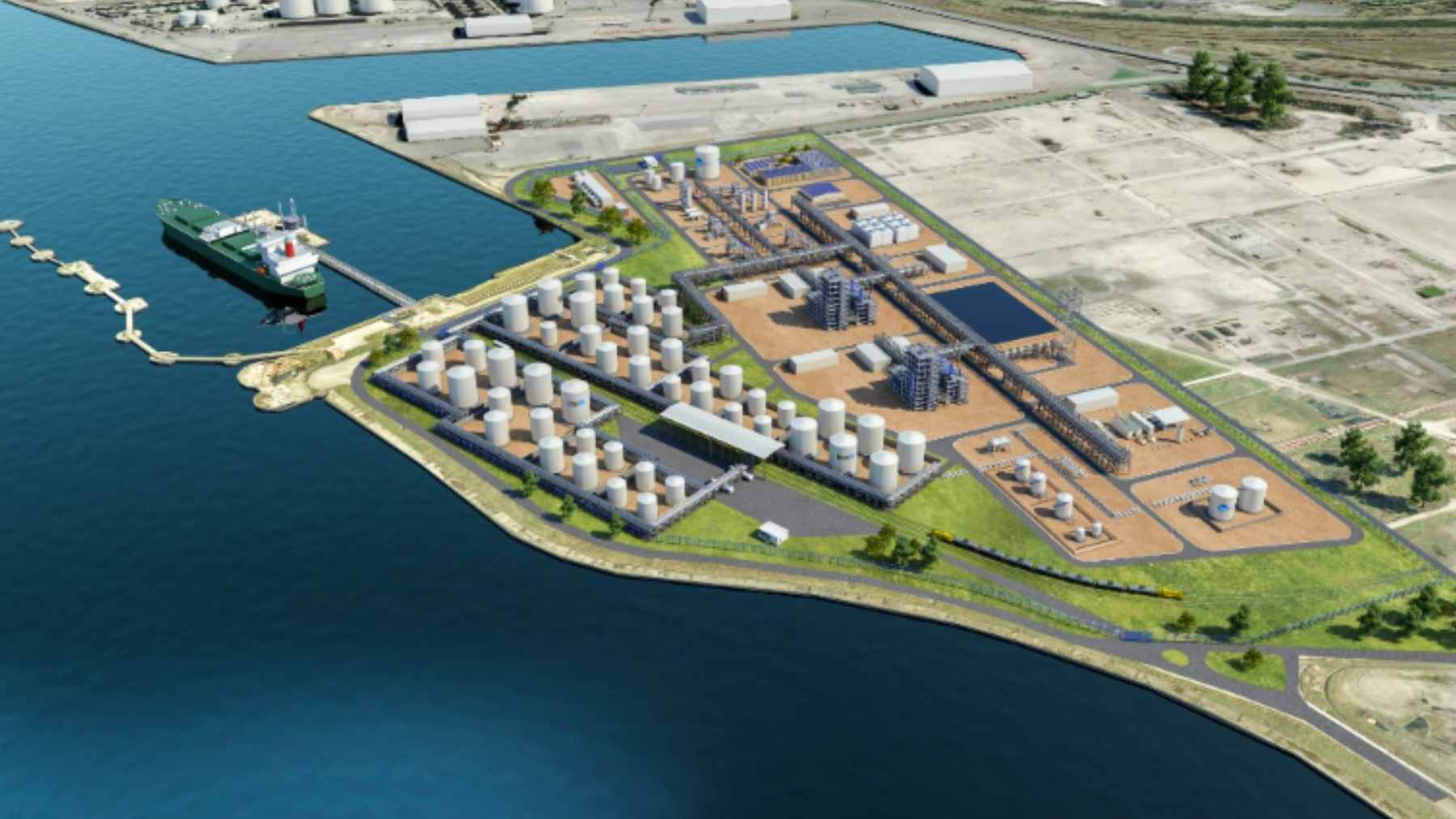
Four French industrial giants are betting that part of aviation’s future may begin in fields and forests, not oil wells. Technip Energies, Airbus, Safran, and Tereos have agreed to create Rebound, a joint venture aimed at developing a major sustainable aviation fuel (SAF) plant at the Port of Dunkirk in northern France.
The planned output is about 176,000 tons of Alcohol-to-Jet SAF each year, which would make it one of the largest facilities of its kind in Europe.
The timing is not accidental. Europe is tightening its aviation fuel rules, while airlines are still struggling to find enough lower-carbon fuel at a workable price. In practical terms, this project is a test of whether Europe can turn climate policy into factories, supply chains, and fuel that actually reaches aircraft tanks.
A fuel made from waste
Rebound will use a technology known as Alcohol-to-Jet, or AtJ, to convert advanced ethanol into aviation fuel. The ethanol is expected to come from agricultural and forestry residues, which means the project is built around waste and byproducts rather than conventional food-based fuel crops.
Why does that matter to anyone boarding a plane for a vacation or a work trip? Because the fuel is designed as a “drop-in” option that can be blended with conventional jet fuel and used in existing aircraft engines and airport infrastructure. That is a big deal in an industry where airplanes stay in service for decades.
Hydrogen aircraft and electric flight still get plenty of attention, and they may matter later. For the most part, however, airlines need solutions that can fit into today’s fleets. That is where SAF has its strongest near-term appeal.
Why Dunkirk matters
The Port of Dunkirk has already awarded Technip Energies an industrial site for the project. According to the companies, that location should offer logistical advantages for moving feedstock in and shipping fuel out, while also helping with the permitting path.
That sounds technical, but it is central to the story. A SAF plant is not just a chemistry project in a lab. It needs trucks, ships, storage tanks, long-term contracts, and a steady flow of usable raw material.
Dunkirk also gives the project a broader strategic flavor. France is trying to connect agriculture, energy, and aerospace in one chain, and Europe is trying to reduce dependence on imported fossil fuels where it can. This is climate policy with an industrial hard hat on.
Four companies, one chain
Each partner brings a different piece of the puzzle. Technip Energies is acting as lead developer and engineering service provider, while Airbus and Safran join as industrial partners, offtake facilitators, and potential buyers of the fuel. Tereos, a French agricultural cooperative, is expected to supply and source the advanced ethanol.
That mix is important. Producing SAF at scale is not only about inventing a cleaner fuel, it is also about proving that farmers, processors, engineers, engine makers, aircraft manufacturers, and airlines can all make the economics work.
Technip Energies described the Alcohol-to-Jet pathway as a “credible, scalable route.” Airbus called Rebound a “vote of confidence in SAF.” Those are short statements, but they point to a much larger bet that cleaner aviation will depend on industrial coordination, not just good intentions.
The rulebook is tightening
Under the European Union’s ReFuelEU Aviation regulation, fuel suppliers at EU airports must gradually increase the share of SAF in aviation fuel. The mandate reaches 6% in 2030 and 70% in 2050, after starting at 2% in 2025.
That is where the pressure comes in. The International Air Transport Association (IATA) estimates global SAF production will reach about 2.6 million tons in 2026, equal to just 0.8% of aviation fuel use.
By comparison, Rebound’s planned annual capacity would equal roughly 7% of that 2026 global production estimate, although the French plant is still in development and would arrive later.
So, is this enough to solve aviation’s climate problem? Not by itself, but it shows the kind of scale the sector needs if SAF is going to move from press releases to regular airport supply.
The environmental promise and the catch
SAF is often described as one of aviation’s most practical tools for cutting emissions because it can reduce lifecycle carbon emissions compared with conventional jet fuel. IATA says SAF can typically cut lifecycle emissions by around 80%, depending on feedstock and production pathway.
Still, there is a catch. SAF is not magic, and it does not make flying emissions-free at the engine. The environmental benefit depends on the whole lifecycle, including how the feedstock is sourced, processed, transported, and certified.
That is why waste-based feedstocks matter so much. If the industry leans on materials that compete with food production or encourage land-use problems, the climate story gets weaker fast. The cleaner fuel chain has to stay clean all the way through.
What happens next
The Rebound joint venture is still subject to customary closing conditions and approvals, with finalization expected in the second half of 2026. The companies still need to choose the technology licensor, move through permitting, start pre-FEED and FEED engineering work, finalize feedstock and offtake agreements, and secure construction financing.
That may sound slow, but large energy projects usually move through gates for a reason. Each step reduces risk before partners commit to the next round of spending. No one wants a green megaproject that looks impressive on paper but cannot operate reliably.
At the end of the day, Rebound is less about one factory than about a new industrial model. If it works, farm and forestry residues from Europe could become part of the fuel supply for the next generation of aviation. That would be a real shift.
The official press release was published on Technip Energies.