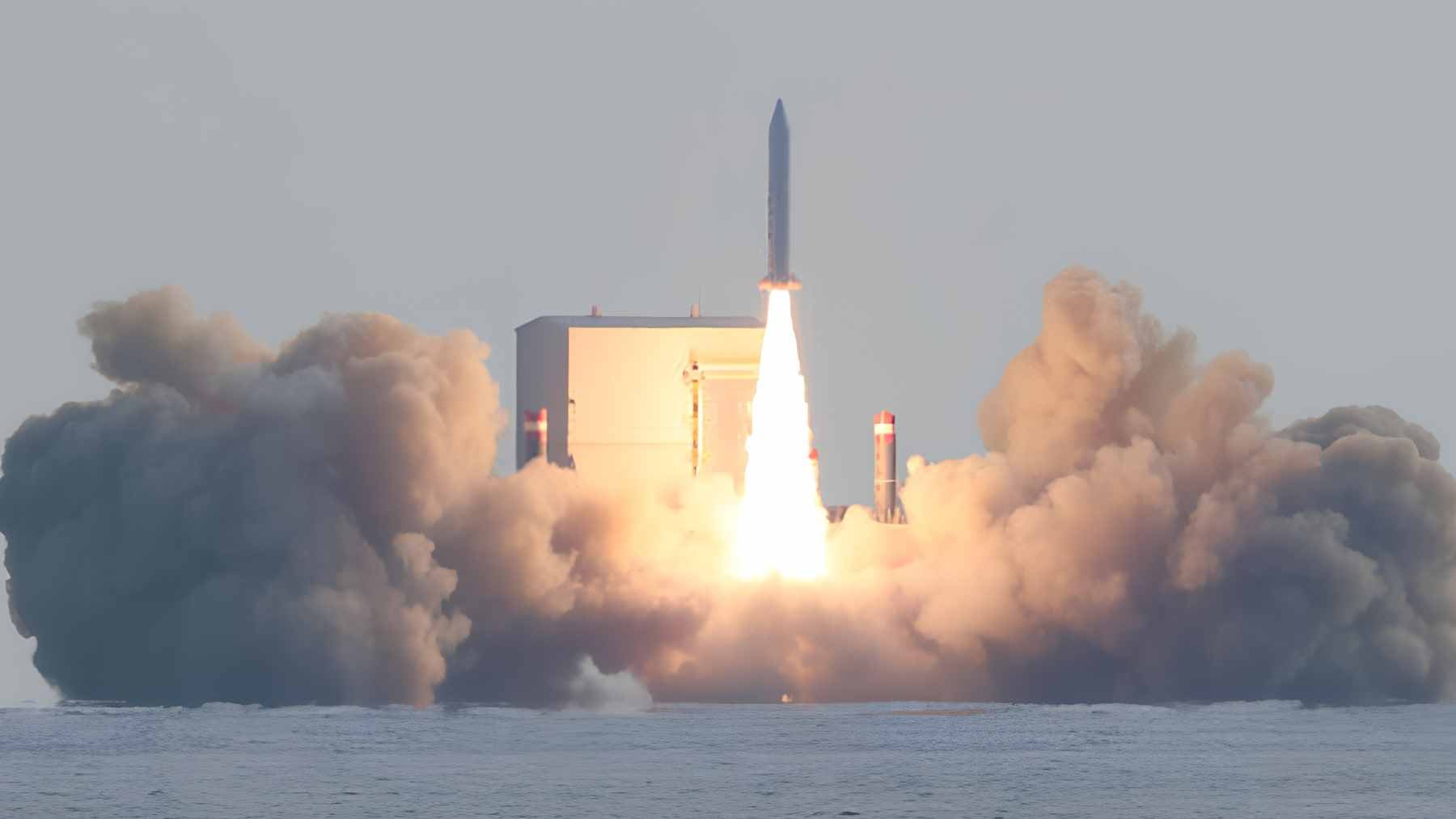
South Korea came very close to testing a rocket it was not allowed to build for decades. The country’s Defense Ministry postponed the first launch of its fully assembled, four-stage solid-fuel space rocket on June 30, 2026, after safety issues appeared during final preparations off Jeju Island.
The delay does not change the bigger story. Seoul is building a faster way to put small reconnaissance satellites into low Earth orbit, with radar sensors that can watch through darkness and bad weather.
That same technology can also support environmental monitoring and disaster response, which gives this military program a wider Earth-observation angle than it might seem at first glance.
A launch stopped at the edge
The rocket, referred to in public reporting as Mir, was scheduled to lift off at 2 p.m. from a sea barge off the southern coast of Jeju Island. Instead, the ministry said the launch was halted because “a set of issues was detected during final launch preparations,” and a new date would be announced later.
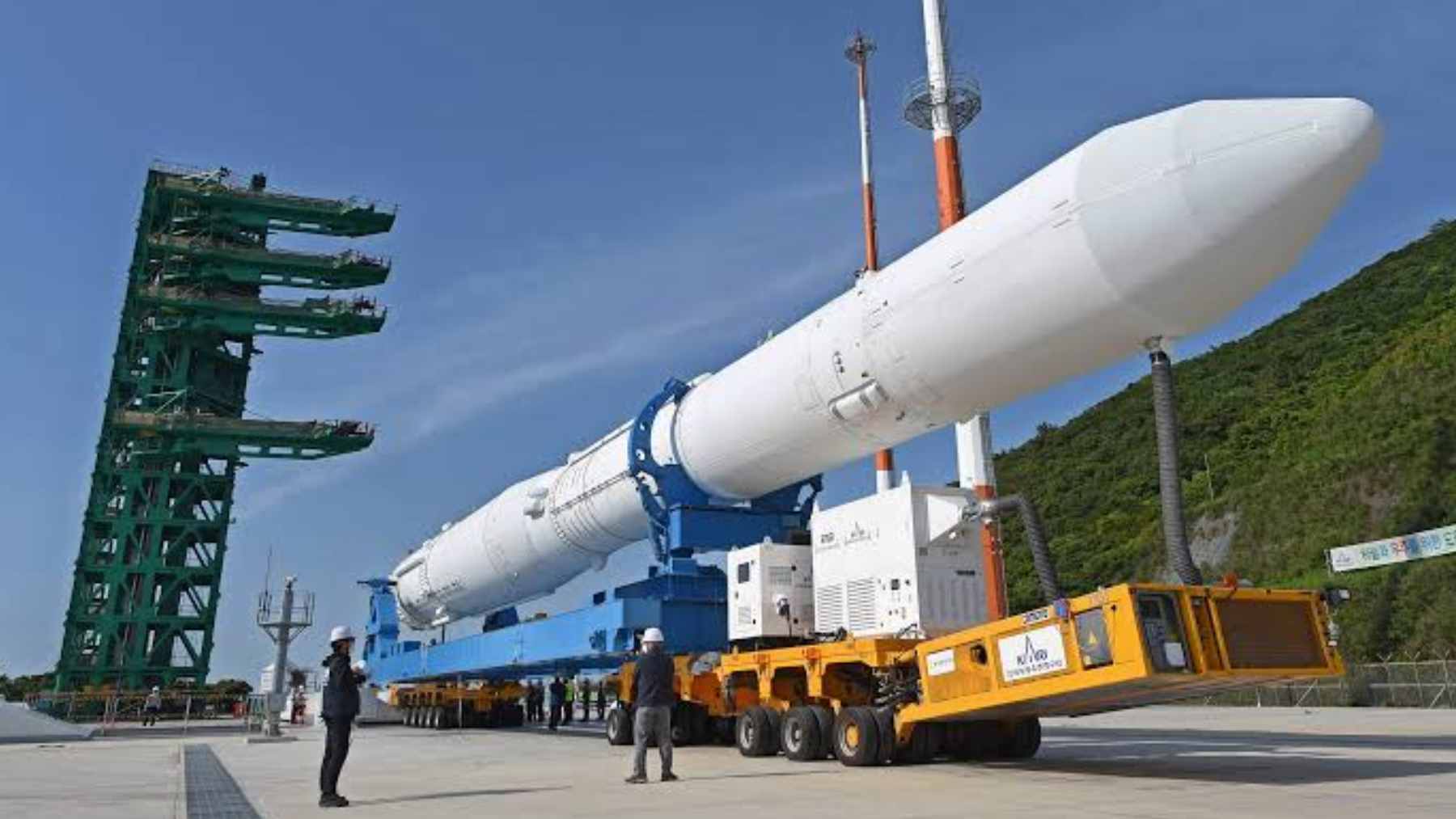
That matters because this was supposed to be the first test of the full four-stage vehicle. Earlier flights in 2022 and 2023 tested partial configurations, with the December 2023 mission marking the program’s most important success so far.
During that 2023 flight, South Korea launched from a barge about 2.4 miles south of Jeju and placed a 220-pound synthetic aperture radar satellite, built by Hanwha Systems, into orbit about 404 miles above Earth. Small number, big milestone.
Why solid fuel matters
Solid-fuel rockets are attractive because they can be stored for long periods and readied more quickly than many liquid-fuel systems. For a military, that can mean fewer moving parts, less support equipment, and a better chance of launching when a crisis actually demands it.
Think of it as the difference between keeping a car ready in the garage and having to service it carefully every time before leaving. The comparison is not perfect, but it gets at the basic idea. Speed matters when the target is not standing still.
South Korea’s path to this point was shaped by decades of limits agreed with the United States. The missile guidelines first signed in 1979 capped South Korean ballistic missiles at about 112 miles of range and a 1,100-pound payload, while later changes allowed longer ranges and finally opened the door to unrestricted solid-propellant space launch vehicles in 2020. The guidelines were terminated in 2021.
A sharper eye above North Korea
The military reason is easy to understand. South Korea wants to reduce the time between satellite passes over North Korea, where missile sites, launch vehicles, and military movements can change quickly.
According to Seoul Economic Daily, South Korean military authorities plan to launch 19 small and ultra-small reconnaissance satellites across seven solid-fuel rocket launches, with satellites weighing from under 220 pounds to under 1,100 pounds.
The same report said a larger network could cut surveillance intervals over North Korea and the wider peninsula from about two hours to 30 minutes.
That schedule now needs some caution, because the first full launch has slipped. Still, the goal is clear enough. More satellites mean fewer blind spots, and fewer blind spots mean less time for an adversary to move equipment without being seen.
Radar that sees more than weapons
Synthetic aperture radar, or SAR, is not a regular camera. It sends out energy and measures what bounces back, allowing high-resolution images to be made at night or in cloudy weather. NASA notes that SAR has been used for tasks such as studying Antarctic icebergs, tracking oil spills, and mapping wetlands.
That is where the environmental piece comes in. A radar satellite built for defense can also support flood mapping, storm damage checks, coastline monitoring, and disaster response. In 2023, Hanwha Systems said its satellite could be used for civilian purposes including environmental monitoring.
Of course, dual-use technology cuts both ways. The same all-weather eye that helps spot flooded roads or damaged forests can also track military infrastructure. That is why these satellites sit at the intersection of defense, tech, business, and environmental monitoring.
Business behind the rocket
This program is also a signal to South Korea’s aerospace industry. The Agency for Defense Development leads the rocket work, while companies such as Hanwha Systems and Korea Aerospace Industries are tied to the satellite side of the country’s broader reconnaissance plans.
Seoul Economic Daily also reported that about 40 percent of some small-satellite missions could involve civilian uses such as disaster response, while the military would keep authority over integrated mission planning.
There is a strategic business angle, too. South Korea’s five larger reconnaissance satellites have been launched on SpaceX Falcon 9 rockets, but a domestic solid-fuel launcher would give Seoul more control over timing, payloads, and future launch cadence.
In practical terms, that means less dependence on a foreign launch pad when the mission is sensitive. For a country living next to a nuclear-armed rival, that is not just a space industry talking point.
The orbital cleanup problem
More satellites bring more capability, but they also add traffic to low Earth orbit. ESA’s 2025 Space Environment Report warns that Earth’s orbital environment is a finite resource, and satellites left in orbit after their missions can fragment into long-lasting debris clouds.
That does not mean South Korea should stop building satellites. It does mean every new constellation needs clear plans for disposal, tracking, and collision avoidance. Space may feel empty from the ground, but it is getting crowded where these satellites operate.
For now, South Korea’s next step is simple to describe and hard to execute. Fix the issue found before launch, reschedule the flight, and prove the full four-stage rocket can place its payload where the military needs it.
The Defense Ministry statement was published on Yonhap News Agency.