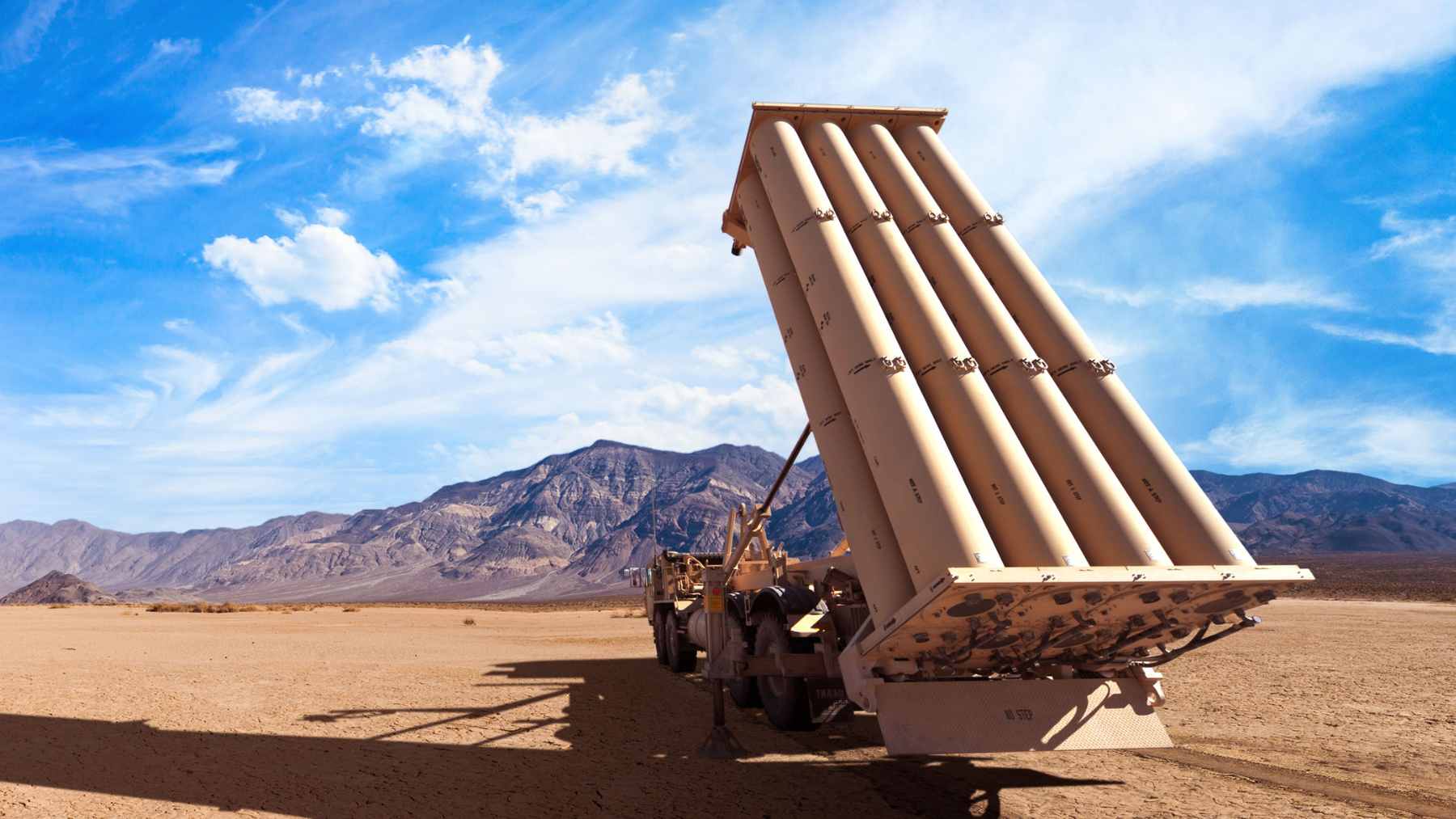
The United States has handed Lockheed Martin one of the biggest missile defense contracts in its history, a seven-year deal worth over $35 billion to quadruple production of THAAD interceptors. The contract includes moving from 96 interceptors a year to 400, turning a highly specialized defense line into something much closer to wartime-scale manufacturing.
This is clearly a military story, but it is also an industrial and environmental one. More missiles mean more factories, more suppliers, more energy use, more hazardous materials controls, and more pressure on communities that live near the places where America’s new missile shield is being built.
What Washington bought
The official contract notice lists the total value at $35,327,237,604 and says work will be carried out in Dallas, Texas; Sunnyvale, California; Troy, Alabama; and Camden, Arkansas. The performance period runs from March 2026 through June 2032, with $842.9 million in fiscal 2026 procurement funds obligated at the time of award.
One wrinkle matters. The administration now uses “Department of War” as a secondary title for the Defense Department, but the White House order says statutory “Department of Defense” references remain controlling until changed by law.
THAAD (Terminal High-Altitude Area Defense) is built to knock down short, medium, and intermediate-range ballistic missiles in the final stage of flight. The Pentagon has described it as a defensive system that uses “hit-to-kill” technology, meaning kinetic energy from the impact destroys the incoming threat.
Why production is jumping
Lockheed Martin had already signed a framework agreement in January to raise THAAD output from 96 to 400 interceptors a year. The June contract turns that plan into a major procurement commitment, giving the company the longer demand signal it says it needs to invest in people, tooling, and factory capacity.
That timing is not random. U.S. Central Command says Operation Epic Fury against Iran began on February 28, 2026, and its own fact sheet lists THAAD anti-ballistic missile systems among the assets employed.
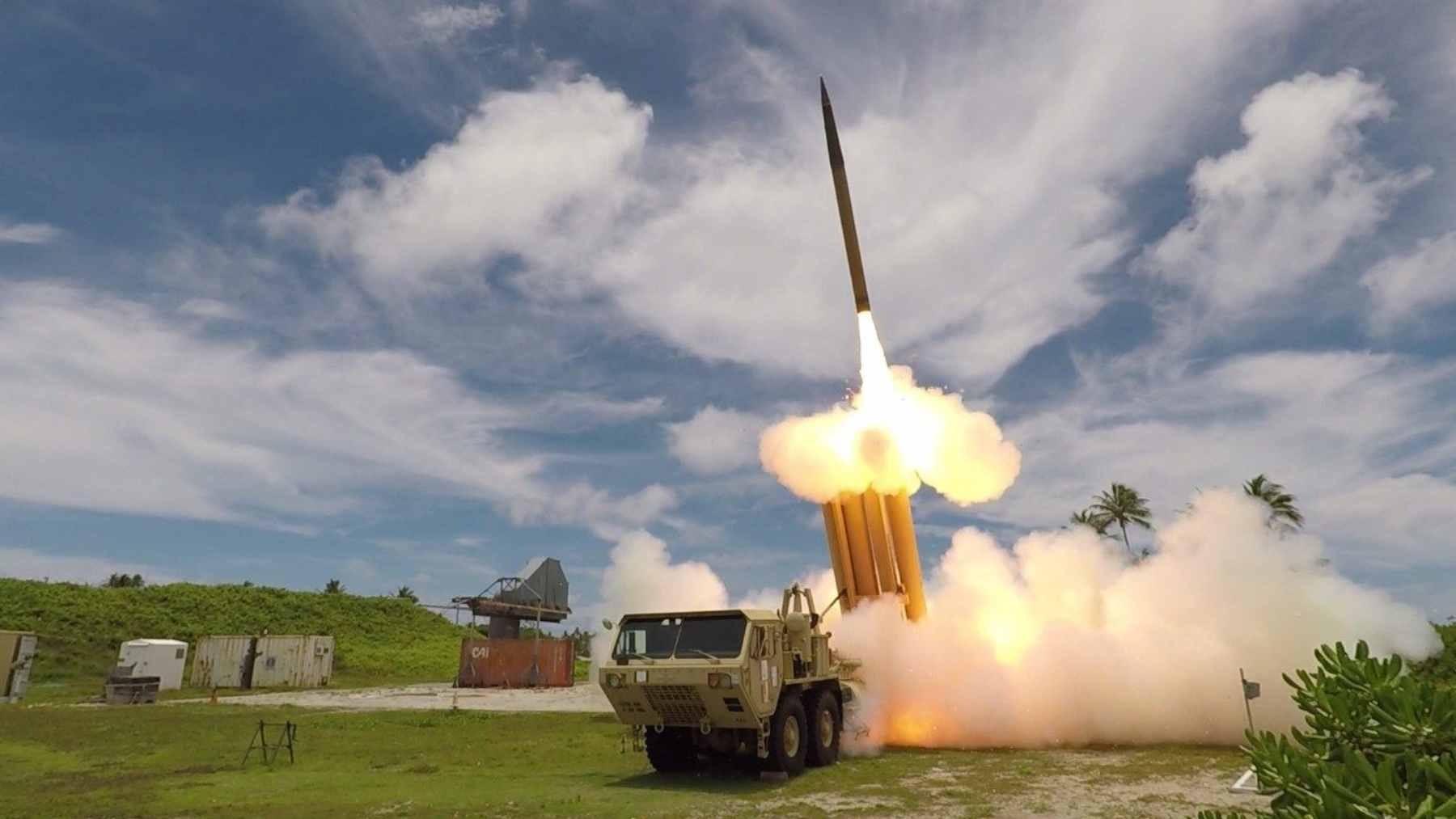
The Center for Strategic and International Studies (CSIS) warned in May that the 39-day bombing and air defense campaign depleted key U.S. munition inventories, with THAAD, Patriot, and Tomahawk expected to take three or more years to return to prewar levels under current projections. That’s the simple reason the production line suddenly matters so much.
Factories are the hidden battlefield
Lockheed says the THAAD award comes as part of more than $9 billion in company investments through 2030, covering more than 20 new or modernized facilities across the United States. The company pointed to a new Munitions Production Center in Troy, a Next Generation Interceptor facility in Courtland, Alabama, and a Munitions Acceleration Center in Camden, Arkansas.
That sounds abstract until you picture what it means on the ground: more shifts, more trucks at the gate, more electricians, welders, engineers, robotics technicians, and inspectors working around the clock to make sure a tiny part does not hold up a giant contract.
The supply chain push is just as important as the prime contract. In March, the Department of War announced a separate framework agreement with BAE Systems and Lockheed Martin to quadruple production of THAAD seekers, the sensitive components that help the interceptor find its target.
The environmental test
Here is the part that often gets buried under the defense headlines. If the United States is going to scale missile production this quickly, the environmental systems around that production have to scale, too.
Lockheed Martin says its 2030 sustainability plan aims to reduce Scope 1 and Scope 2 absolute carbon emissions by 36% from a 2020 baseline. It also says it plans to match 40% of electricity used across global operations with renewable electricity by 2030.
Those goals now face a real-world stress test. A new factory line is not just a patriotic ribbon-cutting. It uses power, water, chemicals, metals, packaging, transportation, and waste systems that have to be tracked carefully, especially when production is rising this fast.
Lockheed’s own performance index says hazardous waste must be disposed of at approved facilities and notes that water withdrawal is reported for 91% of eligible building square footage. It also identifies several highest operational water-risk sites, including Fort Worth and Grand Prairie in Texas, plus Sunnyvale and other California locations.
Speed comes with trade-offs
The contract is also an undefinitized contract action, which means work can begin before every final term is fully settled. That can move production faster, but it also puts more weight on oversight from Congress, the Missile Defense Agency, regulators, and local communities.
Lockheed itself warns that actual results may differ because of funding timing, budget priorities, supply chain constraints, inflation, labor availability, and facility expansion delays. That is not a small footnote, it is the fine print behind the whole missile surge.
At the end of the day, THAAD is meant to stop destruction before it reaches troops, cities, or critical infrastructure. The boom behind it, however, will be judged not only by how many interceptors come off the line, but by how cleanly, safely, and transparently those lines are run.
The press release was published on Lockheed Martin Newsroom.