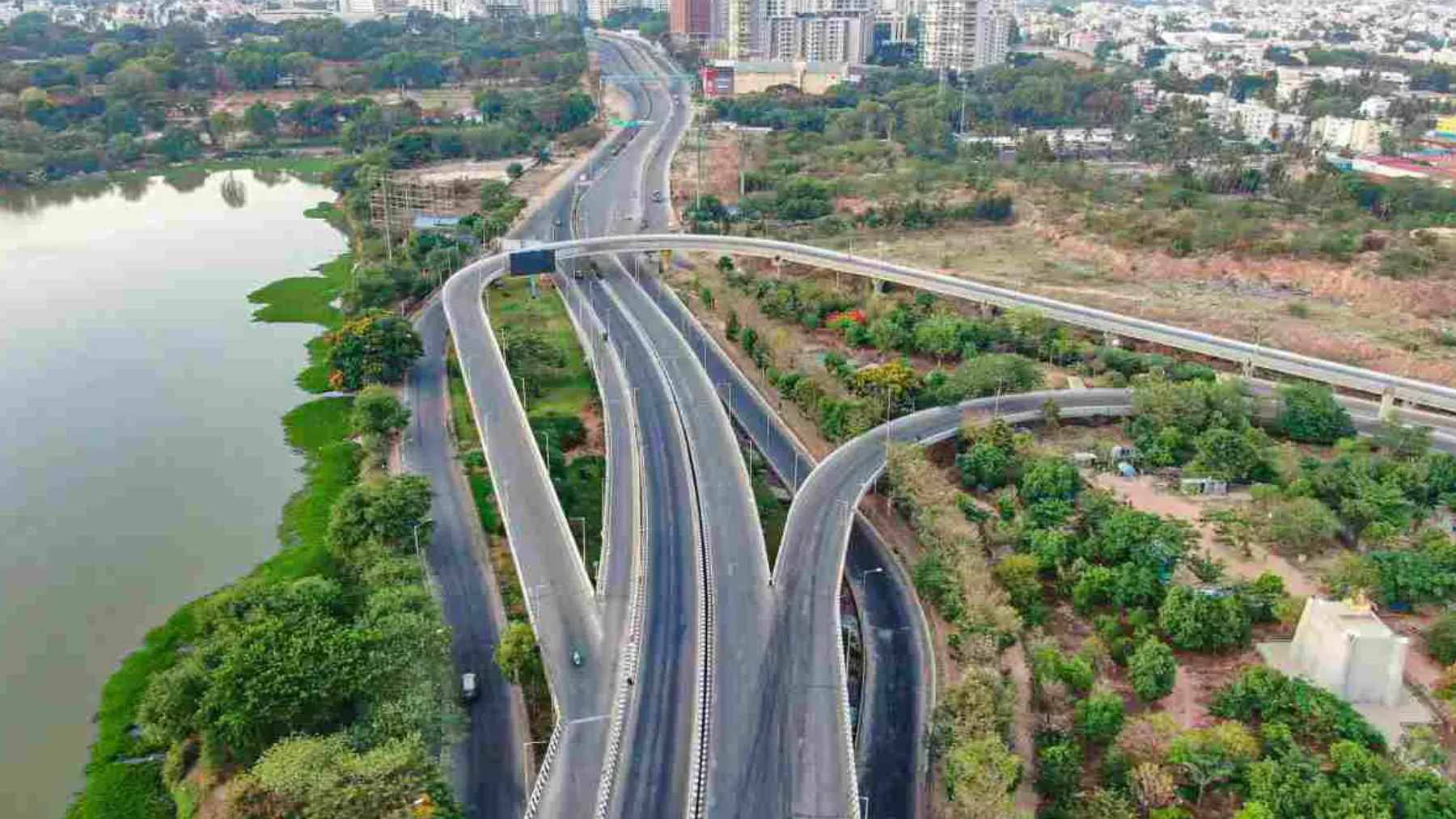
Can a city dig its way out of traffic? Bengaluru is about to test that idea with its first major tunnel road package, a six-lane underground corridor meant to pull vehicles away from one of the city’s most punishing bottlenecks near Hebbal and Mekhri Circle.
The project is being sold as relief for commuters who lose chunks of their day just trying to cross town, especially on the airport side of the city. The real test is bigger than speed, however. If the new road simply invites more cars, does Bengaluru gain cleaner movement, or just hide the same traffic 60 feet below ground?
A tunnel for a stuck city
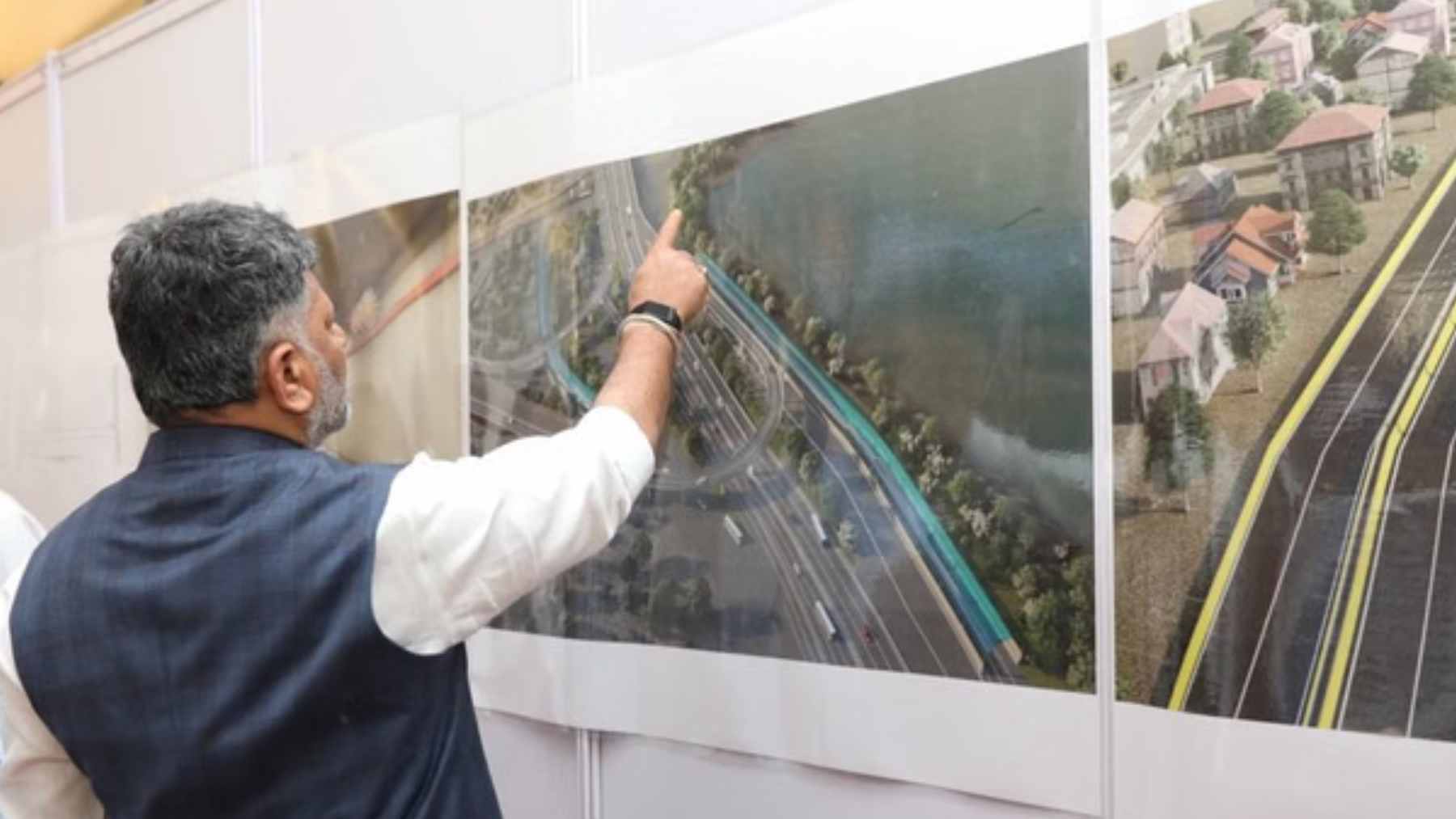
Karnataka Chief Minister D.K. Shivakumar laid the foundation for the short tunnel from Mekhri Circle to Hebbal Junction, calling Hebbal a “grand gateway” to Bengaluru. Official remarks describe it as a roughly 1.6-mile cut-and-cover tunnel, and Shivakumar said it will be toll-free.
Rithwik Projects Private Limited won the bid for about $119 million, using current exchange rates. The first package is expected to be completed in 18 months, according to reports on the project.
The first package is not the whole dream. The source brief describes a broader 11.3-mile Hebbal-to-Silk Board corridor, planned around 60 ft. underground with six lanes at about 11.5 ft. wide each.
Why traffic made this attractive
TomTom’s latest Traffic Index ranked Bengaluru second worldwide by congestion level in 2025, behind Mexico City, with a congestion score of 74.4. TomTom said city-center trips averaged about 5 minutes and 49 seconds per mile in regular traffic, compared with about 3 minutes and 20 seconds per mile in free-flow conditions.
In ordinary commuter language, a 6.2-mile trip can swallow around 36 minutes. That is not an abstract figure; it is the missed dinner, the late school pickup, the driver checking the same signal again and again.
For tech firms, airport travelers, delivery fleets, and emergency services, a signal-free bypass at Hebbal has obvious appeal. Bengaluru is a business engine, but even engines stall when the roads around them stop moving.
The environmental catch
A tunnel may reduce surface jams at one junction, but it does not make tailpipes disappear. Vehicles still burn fuel or draw power, ventilation still matters, and traffic that exits near another chokepoint can shift pollution rather than remove it.
Transport researchers have a name for a familiar problem. When new road capacity makes driving faster, some people drive more, drive farther, or switch from other modes, a pattern known as induced demand.
One study of U.S. urban areas found that added highway capacity can produce proportional increases in vehicle travel, and that speed gains can fade within about five years.
That does not mean every road project is doomed. It does mean Bengaluru’s tunnel should be judged by measured results, not just by ribbon-cutting photos.
Green groups are not convinced
The bigger Hebbal-Silk Board tunnel proposal has already drawn scrutiny because of possible effects on Lalbagh Botanical Garden, groundwater, stormwater drains, and tree cover. A government-linked expert review reportedly flagged major gaps in the detailed project report, including limited geotechnical data and a lack of complete groundwater mapping.
Those concerns do not automatically prove the short Hebbal tunnel will fail, but they do show why “underground” should not be treated as “impact-free.” In a flood-prone and fast-growing city, drains, soil, aquifers, and exit ramps matter as much as lanes.
At the end of the day, a tunnel is still part of the city’s ecology. It touches land, water, air, and daily behavior.
What drivers will notice
For the first phase, officials say the tunnel will use a cut-and-cover method. In practical terms, crews dig from the surface, build the concrete passage, and restore the top afterward. Think of it less like a hidden subway and more like a long, covered trench.
The six-lane design is meant to move vehicles at up to about 37 mph, a tempting number in a city where rush-hour movement often feels like walking speed. Once complete, airport-bound drivers and those entering from North Bengaluru could see a smoother handoff around Hebbal. That is the promise, anyway.
Construction itself will be a big part of the story. Detours, dust, noise, and local access changes can shape public opinion long before the first car enters the tunnel.
The business case is clear
Bengaluru is India’s technology capital, and traffic is no longer just a personal annoyance. It has become a productivity problem for companies, gig workers, suppliers, and international visitors who measure a city partly by how predictably it moves.
There is also a construction-tech story here. Underground roads need monitoring systems, lighting, fire safety, drainage, ventilation, and traffic management. Done well, those systems can make the tunnel safer and smarter than a typical surface road.
Done badly, they become a very expensive bottleneck.
What should happen next
The strongest version of this project would not treat cars as the only answer. It would connect tunnel planning with buses, Metro expansion, parking policy, ride sharing, freight timing, and better pedestrian access around stations and offices.
Otherwise, Bengaluru may build an impressive shortcut that fills up too quickly. Public traffic data before and after opening, air-quality monitoring near exits, flood-risk checks, and clear construction updates would help residents see whether the tunnel is solving a problem or moving it around.
A tunnel can be a tool. It should not become a hiding place for bad planning.
The official statement was published on the Bangalore Development Authority’s X account.