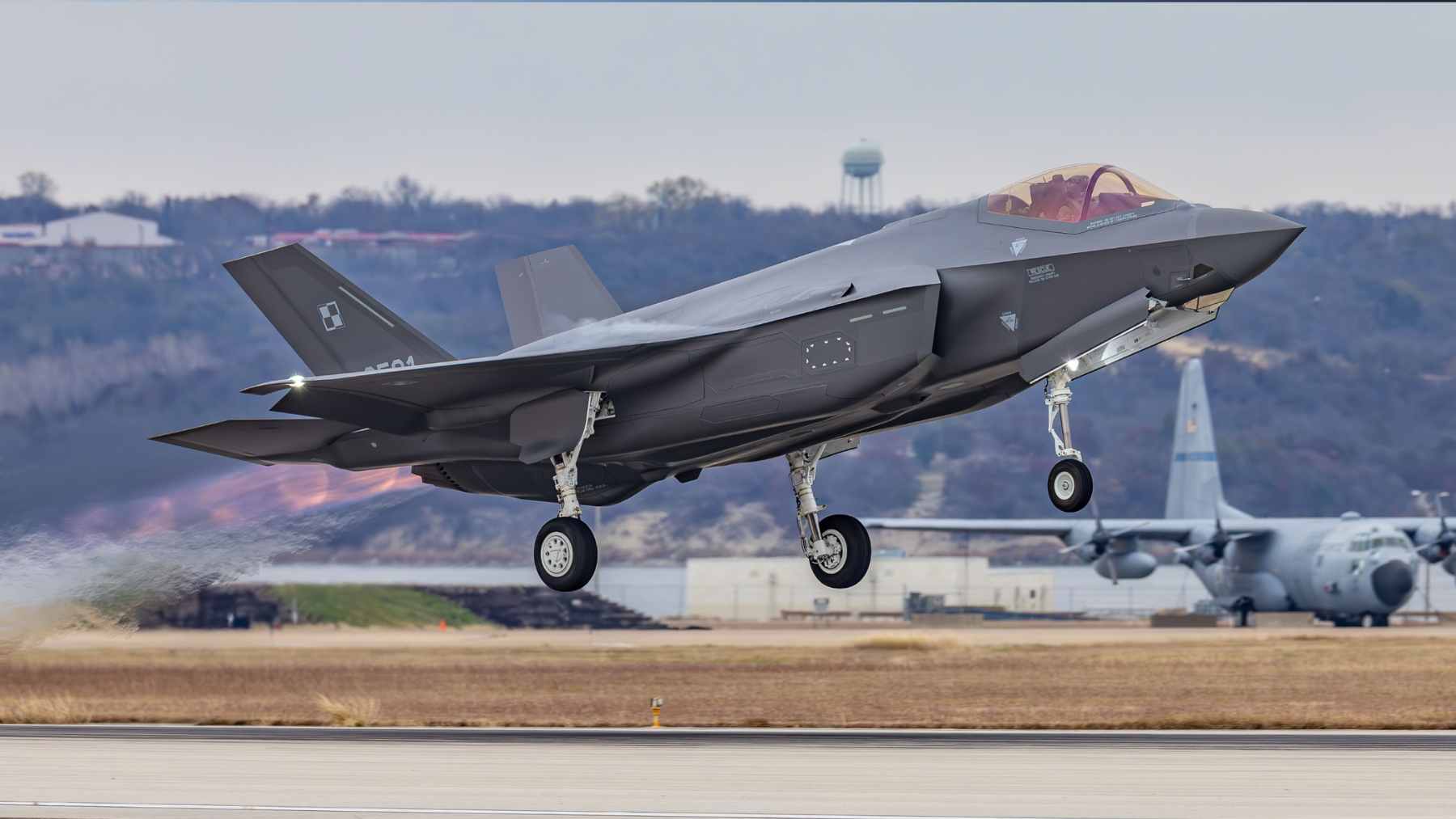
A fighter pilot’s helmet is supposed to protect the person inside the cockpit. In the F-35 program, it also reveals something much bigger about the price of high-tech warfare, industrial supply chains, and the hidden environmental burden of keeping advanced machines alive.
Poland’s Deputy Defense Minister Cezary Tomczyk recently said the helmet used by F-35 pilots costs about $500,000, while training one pilot costs about $12 million. That would be eye-catching on its own, but a new U.S. Government Accountability Office (GAO) report makes the story harder to ignore, because only 25% of the F-35 fleet was fully mission capable in fiscal year 2025.
A helmet like no other
So, how can a helmet cost as much as a luxury home in some U.S. cities? The answer is that the F-35 Gen III Helmet Mounted Display System is not really just a helmet. It is closer to a wearable cockpit computer placed directly on the pilot’s head.
Collins Aerospace says the system serves as the pilot’s primary display and gives access to flight, tactical, and sensor information. It also integrates night vision and can help pilots target weapons simply by looking at and designating targets.
There is a reason pilots talk about “seeing through” the aircraft. The U.S. Air Force says real-time imagery from six exterior cameras is streamed onto the helmet display, giving pilots views that would otherwise be blocked by the jet itself. That sounds almost futuristic, and it means every small part has to work perfectly.
Custom fit, constant checks
Every F-35 helmet is custom-fitted to its pilot during a two-day process. The pilot’s head is measured and scanned, and the optics are aligned with a pupilometer so the pilot sees a single clear image on the display.
That level of precision does not end after delivery. According to the Air Force, each helmet is inspected every 105 days and has a 120-day fit check to make sure it still works safely. Even a haircut or a few pounds of weight change can affect the fit.
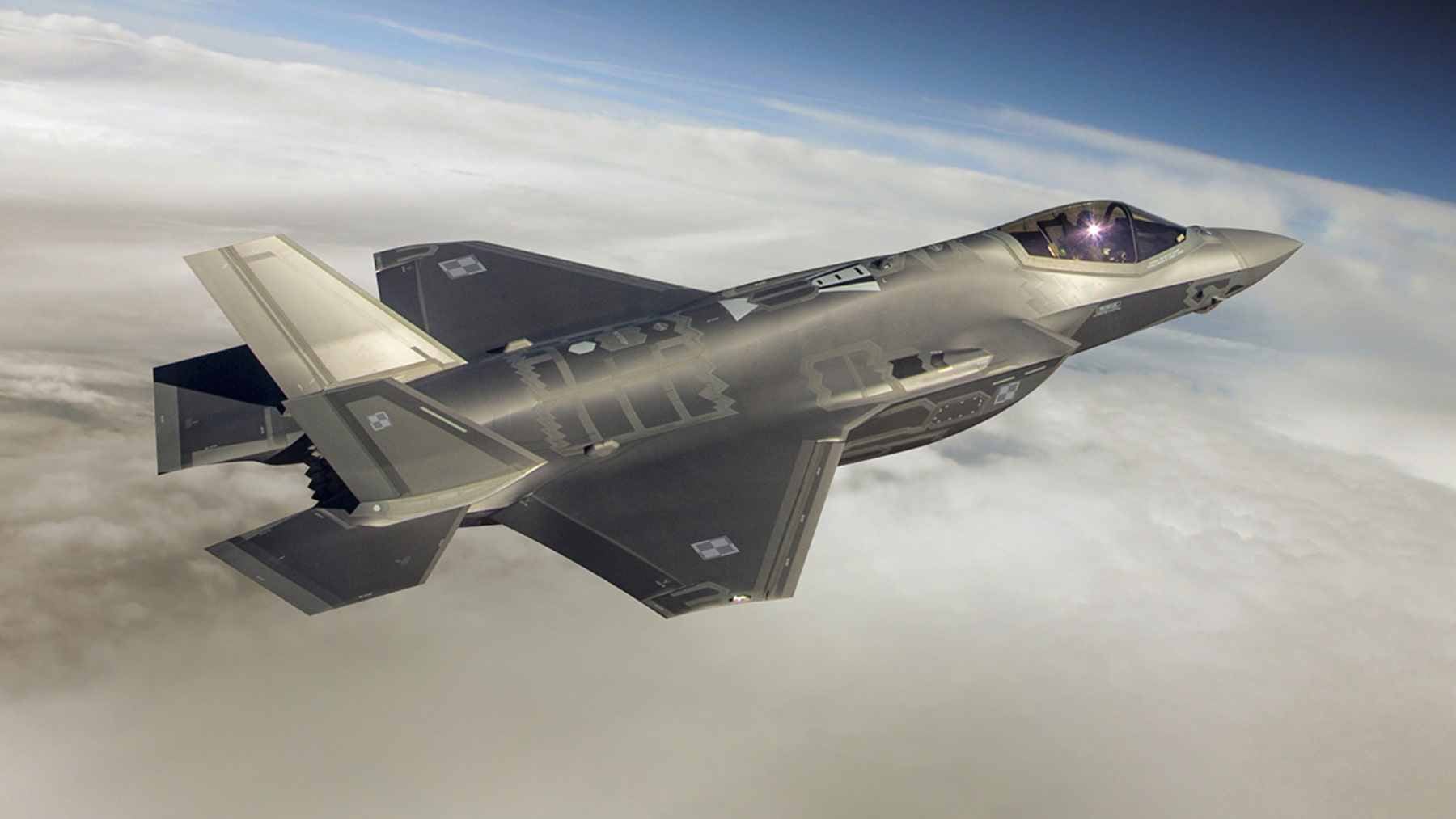
In practical terms, the helmet is part of the aircraft’s maintenance ecosystem. It is another reminder that advanced defense tech does not stop costing money after it is purchased.
Readiness is falling
The helmet price would be easier to defend if the broader program were meeting its performance goals. That is where the GAO report lands with real weight.
GAO said, “Since 2021, F-35 sustainment costs have continued to increase,” while performance has trended down. Across the fleet, the mission capable rate fell from 67% in fiscal year 2021 to 44% in fiscal year 2025. The full mission capable rate dropped from 38% to 25% over the same period.
What does that mean in everyday language? A jet may be able to perform one assigned mission some of the time, but far fewer aircraft are ready to perform all of their missions. For a platform sold as the future of allied air power, that is a serious warning light.
The supply chain problem
The F-35 is not a simple aircraft. GAO describes its sustainment system as a global network of spare parts, depots, warehouses, contractors, and military services. That is great when everything moves smoothly, but painful when parts are scarce or repair capacity is stretched.
The Joint Program Office has launched a new sustainment plan called the Global Support Solution Reset. GAO says it will require an estimated $13.7 billion more than previously planned through fiscal year 2031, with about $7.3 billion going toward extra spare parts and material stocks.
At the end of the day, this is not just a budget issue. Every extra part has to be manufactured, shipped, stored, tracked, repaired, and sometimes replaced again. The GAO report does not calculate an environmental footprint, but the sustainability question is obvious enough.
The environmental angle
Military aircraft are usually discussed in terms of speed, stealth, and firepower, but there is another side to the story. When a fleet needs more parts, more repairs, more depot work, and more contractor support, the environmental cost of sustainment grows, too.
That does not mean countries will stop buying advanced fighters. The security argument is real, especially for NATO members and partners watching tensions rise in Europe. It does mean, however, that procurement debates should include the full life cycle, not only the price of the jet on signing day.
A grounded aircraft is not green just because it is not flying. It still represents mined materials, electronics, specialized manufacturing, storage, maintenance labor, and a supply chain that stretches across borders. That is where defense and environmental accountability quietly meet.
Europe is taking notice
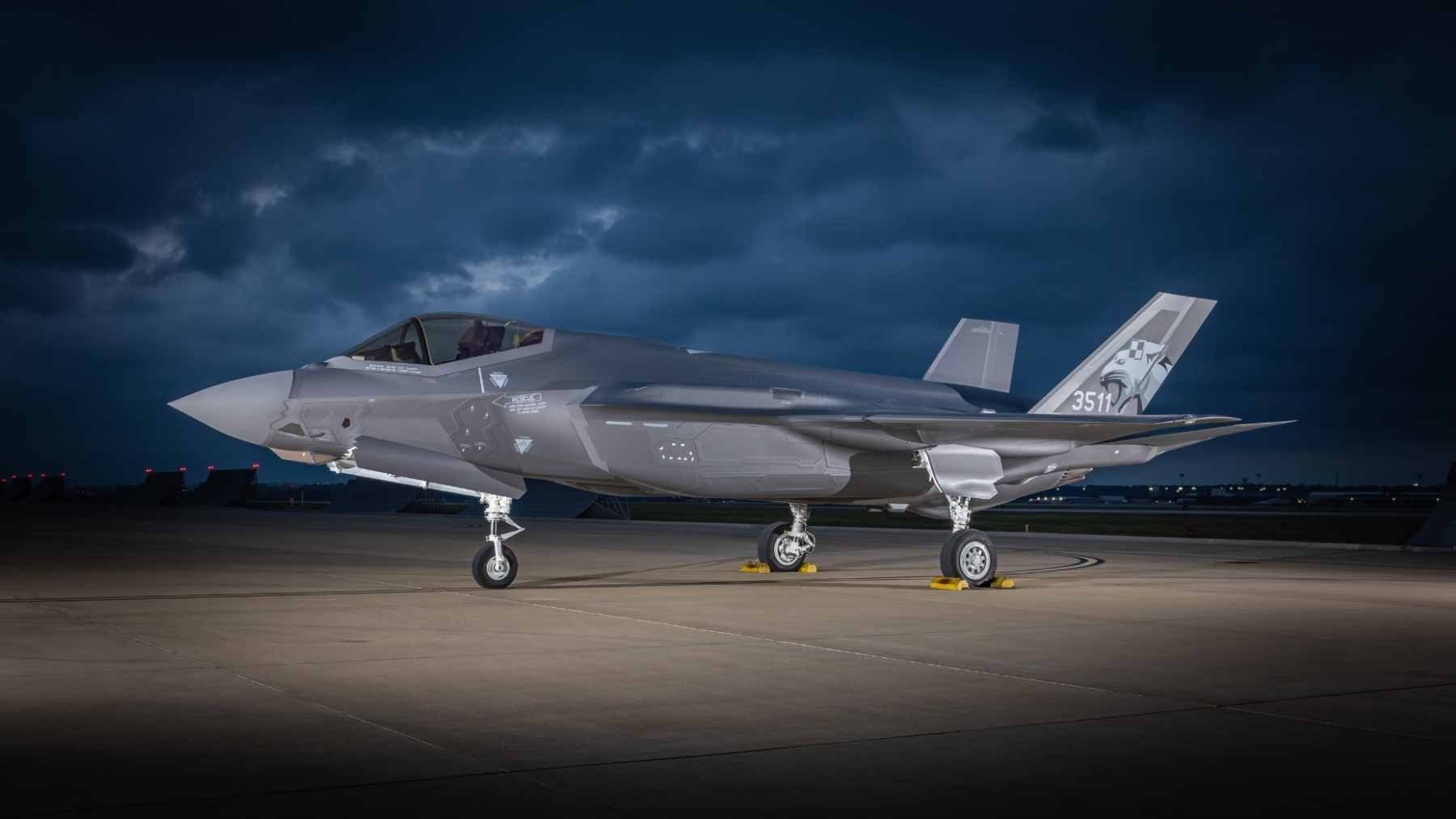
Poland is moving deeper into the F-35 program. Defence24 reported that Warsaw is implementing a 2020 contract for 32 aircraft and has plans for another 32 by 2039, which would bring the country to 64 fighters if carried out.
Switzerland, on the other hand, shows what happens when costs collide with politics. Reuters reported that the country now expects to buy around 30 F-35A jets, six fewer than initially planned, because of cost increases. Swiss officials are also seeking an additional credit worth about $505 million from parliament.
That contrast matters. One country is expanding its ambitions, another is trimming expectations. Both are dealing with the same reality, which is that fifth-generation air power is expensive long after the first aircraft rolls onto the runway.
More than sticker shock
It is easy to focus on the $500,000 helmet because the number feels almost unreal. Most people will never sit in an F-35 cockpit, but everyone can understand the shock of a half-million-dollar piece of gear worn on someone’s head.
Still, the helmet is really a symbol. The deeper issue is whether governments can manage defense technology that is becoming more complex, more contractor-dependent, and more expensive to sustain.
The F-35 remains one of the most advanced fighter jets ever built, but the latest figures show a hard truth. Cutting-edge technology is only useful if it can be kept ready, affordable, and accountable.
The official report was published on GAO.