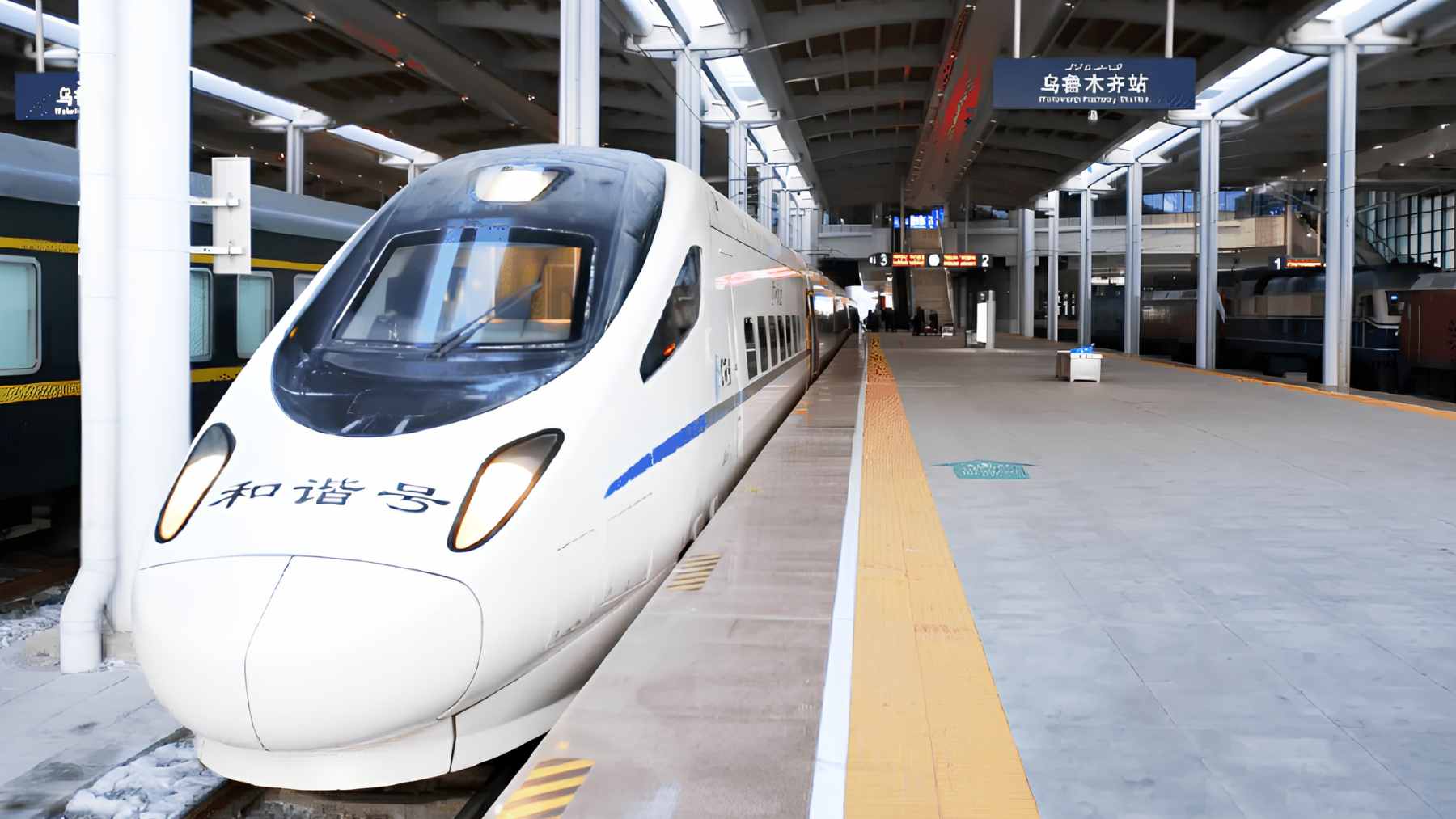
China is getting ready for a major rail shake-up on July 1, and one route stands out immediately. For the first time, Beijing and Urumqi, the capital of China’s Xinjiang region, will be connected by a D-series electric multiple-unit train, part of a wider timetable overhaul across the national railway system.
Simply put, this is a transport update. The bigger picture is that it is also a climate, business, and resilience story. A cleaner trip only matters if people can actually use it, and China is betting that more frequent, better-connected trains can pull travelers and freight toward rail instead of roads and skies.
A long route gets faster
China Railway says the new timetable will include 12,174 scheduled passenger trains, an increase of 106 from the current plan. Freight will expand, too, with 23,975 scheduled freight trains, up 111. That is not a small adjustment–it is a national reshuffling of capacity.
The Beijing to Urumqi service is especially important because it links the political center of the country with one of its most strategically located western regions. China Railway described it as the first D-series service between Beijing and Urumqi, while also upgrading several conventional trains on major routes into higher-grade services.
Some improvements are more modest but still meaningful. The Urumqi to Chongqing West route will see T-series trains upgraded to Z-series direct express trains, cutting travel time by 2 hours and 26 minutes. For passengers, that is not just a number on a timetable, it can mean arriving before dinner instead of after midnight.
Why the climate angle matters
Rail is not automatically clean in every case. The electricity mix, the number of passengers on board, construction impacts, and the route itself all matter. Compared with aviation and road traffic, however, rail usually starts with a big environmental advantage.
The International Energy Agency says rail carries about 7% of global passenger activity and 6% of freight activity, yet it accounts for only around 1% of transport emissions. It also estimates that rail emissions per passenger mile are, on average, roughly one-fifth of air travel on a well-to-wheels basis.
That is why this route matters beyond China. A trip from Beijing to Urumqi is the kind of long-distance journey where travelers often look first at flights. If rail becomes easier to book, more comfortable, and better timed, the cleaner option has a better shot at becoming the normal one.
Business rides on the rails
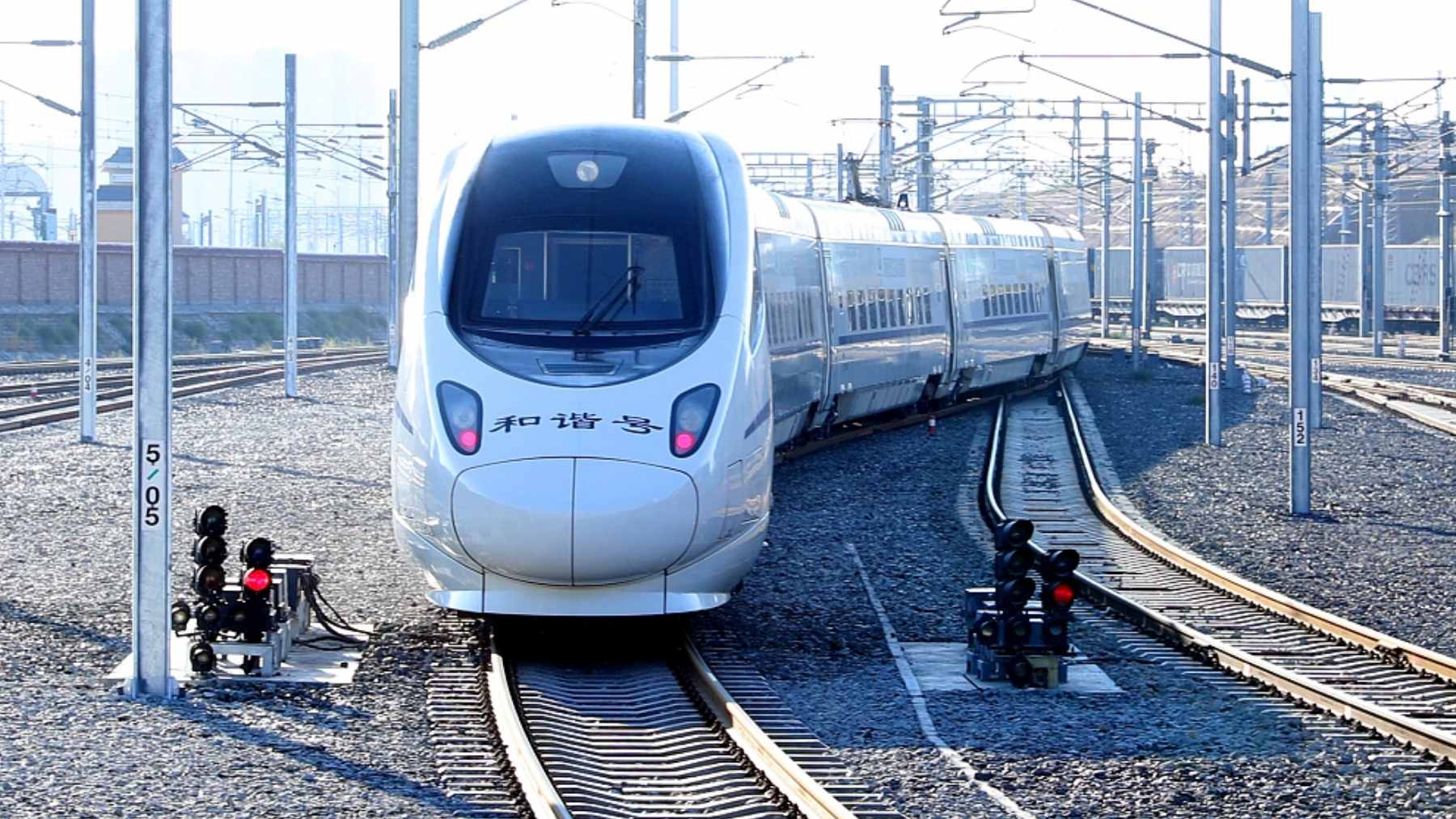
The timetable is not just about passengers with suitcases. China Railway said the overhaul will also expand logistics products, including 527 cross-regional freight trains, an increase of 22. It will also arrange 96 China-Europe train routes and 65 China-Central Asia routes, each up by 3.
For businesses, that kind of scheduling matters. A factory does not only need a train, it needs a train that arrives predictably, connects to ports and warehouses, and does not leave cargo sitting around while costs pile up.
Xinjiang’s role makes the change even more interesting. The region includes major westward rail gateways such as Horgos and Alashankou, which connect China with Central Asia and Europe. Xinhua reported in 2025 that those two Xinjiang railway ports had handled more than 100,000 China-Europe and China-Central Asia freight trains, with routes reaching 21 countries.
The tech is in the timetable
A rail timetable can sound boring. However, it is anything but. Behind every new route are signaling systems, rolling stock allocation, station capacity, maintenance windows, and software that has to make thousands of moving parts behave like one network.
China Railway said the adjustment will use the soon-to-open Xi’an East to Shiyan East section of the Wuhan to Xi’an high-speed railway. That change allows 58 electric multiple-unit trains from Xi’an East or Xi’an North toward cities including Nanyang East, Hankou, and Chongqing North.
This is transport technology hiding in plain sight. A faster line here, a better station assignment there, and suddenly a region feels closer. For a traveler, the result is simple–the train is there when needed.
More trains for daily life
The plan also adds services during morning and evening peak periods on some high-speed lines in the Beijing-Tianjin-Hebei region, the Yangtze River Delta, and the Guangdong-Hong Kong-Macao Greater Bay Area. That may not sound as dramatic as a new long-distance route, but commuters know the truth. A few extra trains can change the whole day.
Think about the choice many people make in real life. Train, car, ride-hailing app, or flight? If the rail option is complicated, people skip it. If it is frequent and reliable, it suddenly becomes the obvious pick.
That is where environmental policy meets the ordinary workweek. Climate targets are set in government offices, but they are tested at ticket counters, phone screens, and crowded stations.
Strategic, but still civilian
There is also a resilience angle here. Rail networks are dual-use infrastructure in the broad sense because they can move people, food, equipment, and industrial goods when roads, airports, or supply chains are under pressure.
Still, it would be a mistake to turn this into a military announcement. China Railway framed the timetable around passenger convenience, regional development, logistics efficiency, and supply chain stability. The official wording emphasized better travel, a stronger domestic market, and smoother movement of goods.
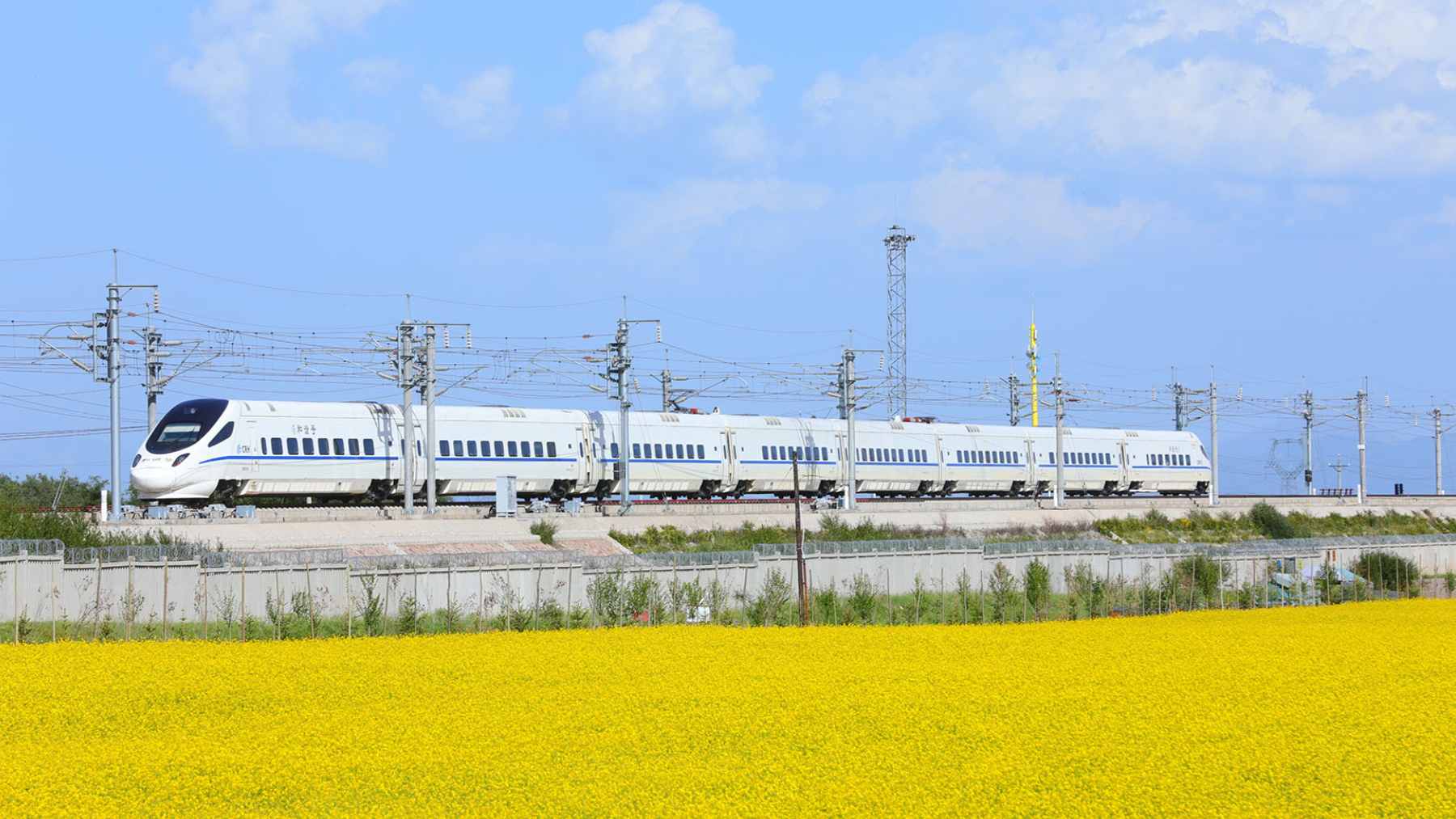
That distinction matters. Stronger rail can support disaster response, economic security, and national resilience without being a weapons story. Sometimes the most important infrastructure is simply the one that keeps moving.
What to watch after July 1
The next question is simple: will people and companies use the added capacity? Tickets for the new timetable began going on sale on June 17, and China Railway said travelers and freight customers can check updated services through text messages, apps, WeChat, and station notices.
The environmental payoff will depend on what happens next. If new rail services replace flights, long car trips, or truck-heavy freight routes, the emissions benefit could be meaningful. If they mostly create extra trips, the climate story becomes more complicated.
China has pledged to peak carbon dioxide emissions before 2030 and reach carbon neutrality before 2060, by its own official climate documents. Rail alone will not get the country there, but it is one of the practical tools that can shift daily behavior at scale.
At the end of the day, the new Beijing to Urumqi train is not just about one very long ride. It is about whether cleaner transport can be made convenient enough to compete.
The official statement was published on China Railway.