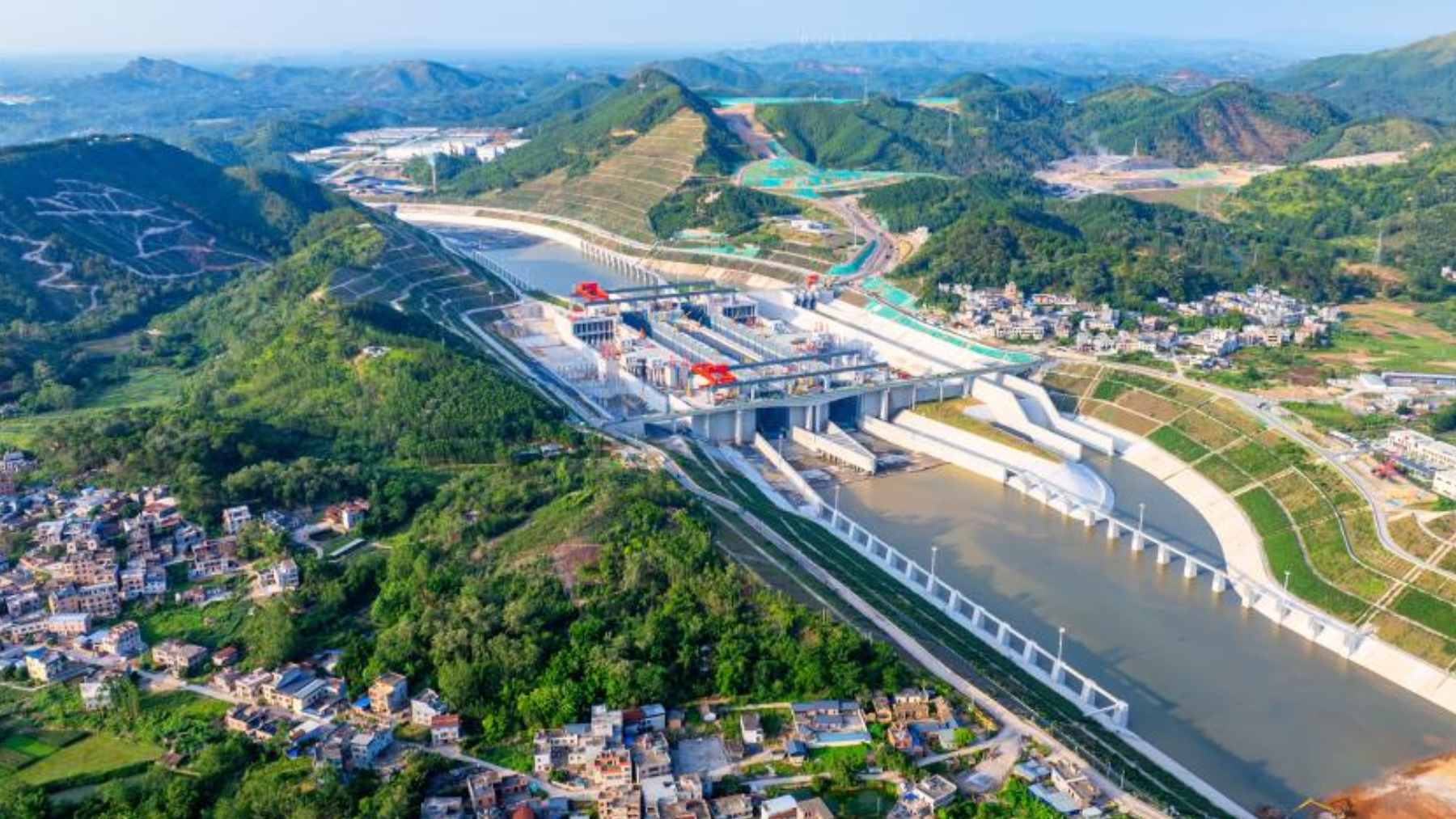
China’s Pinglu Canal has moved from construction spectacle to countdown. On June 3, water began flowing through the final sections of the project, giving the 83.4-mile waterway full-channel connectivity and pushing it into the final preparation phase before an expected September opening.
The canal is meant to give southwest China a direct river-to-sea route from Guangxi’s inland waterways to the Beibu Gulf. In practical terms, that is shorter freight trips, lower fuel use, and a new reason for factories and warehouses to look beyond the usual coastal hubs.
But there is another question sitting under all that concrete and water: can a giant trade shortcut also behave like a “green project”?
A shortcut to the sea
The Pinglu Canal is part of China’s New International Land-Sea Trade Corridor, a logistics network designed to connect western inland regions with ports and overseas markets. Xinhua describes the canal as a backbone of that corridor, linking Hengzhou in Guangxi to the Beibu Gulf in the South China Sea.
That sounds like a map detail, but for shipping companies it changes the math. Earlier project information put the planned investment at about $10.1 billion and said the route would allow cargo from Guangxi, Yunnan, and Guizhou to reach Beibu Gulf ports instead of taking the longer path through neighboring Guangdong.
The bridge was a sign
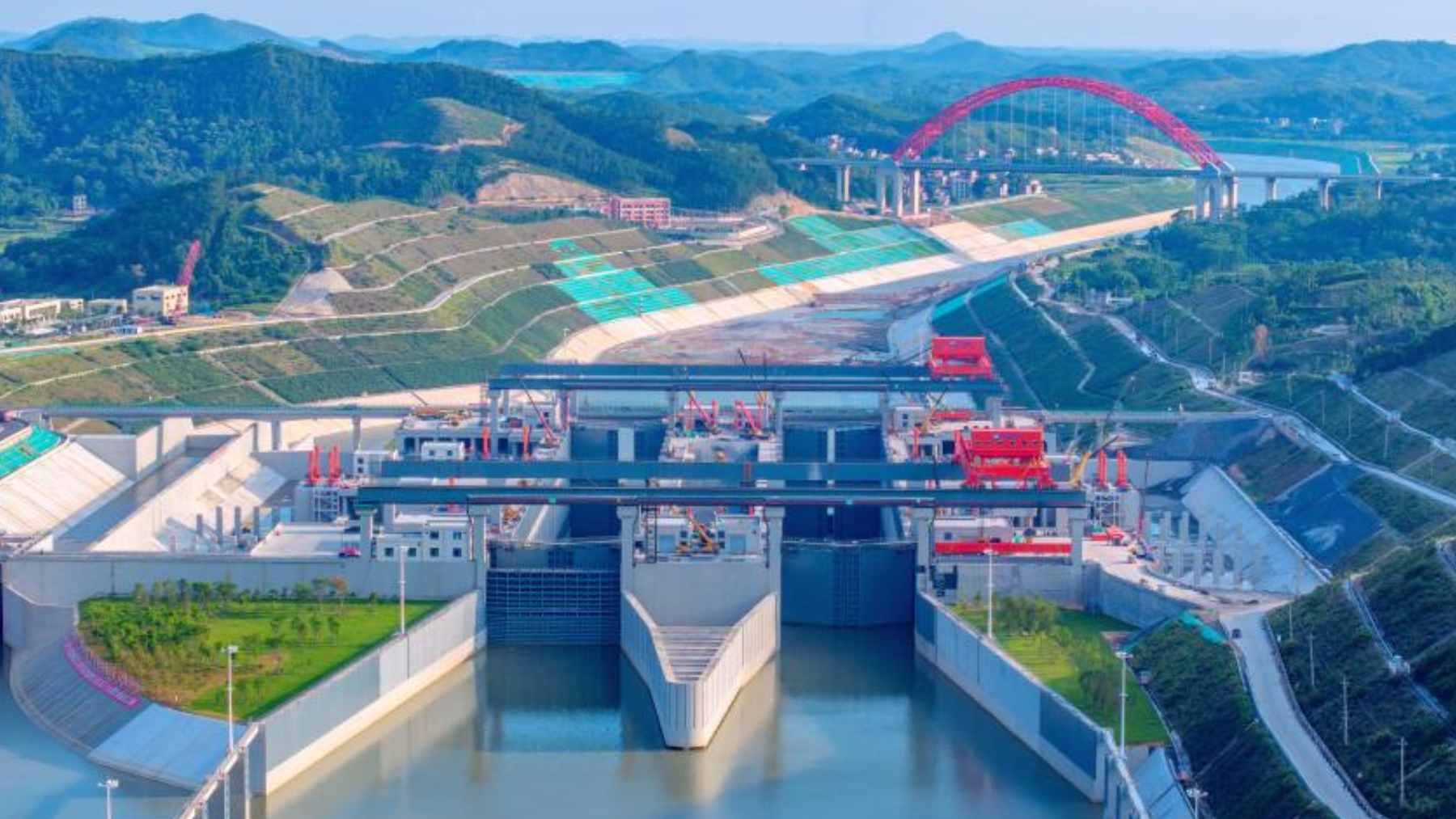
One of the clearest recent signals came before the water did. On April 28, the Zicai Bridge in Qinzhou opened to traffic, becoming the newest of the 27 planned bridges spanning the Pinglu Canal.
A bridge opening can seem ordinary if you are just driving across it on the way to work. Here, though, it showed that the canal is shifting from heavy construction to the systems that make navigation possible, including bridges high enough for vessels and lock hubs strong enough to move them safely.
A water elevator for ships
A canal is not just a ditch filled with water. Pinglu has to handle a major height difference along its route, so ships need locks that work like water elevators.
A vessel enters a chamber, gates close, and the water level rises or falls until the ship can move into the next section. It is slow, deliberate engineering, but it matters because the canal is built for large freight vessels rather than sightseeing boats.
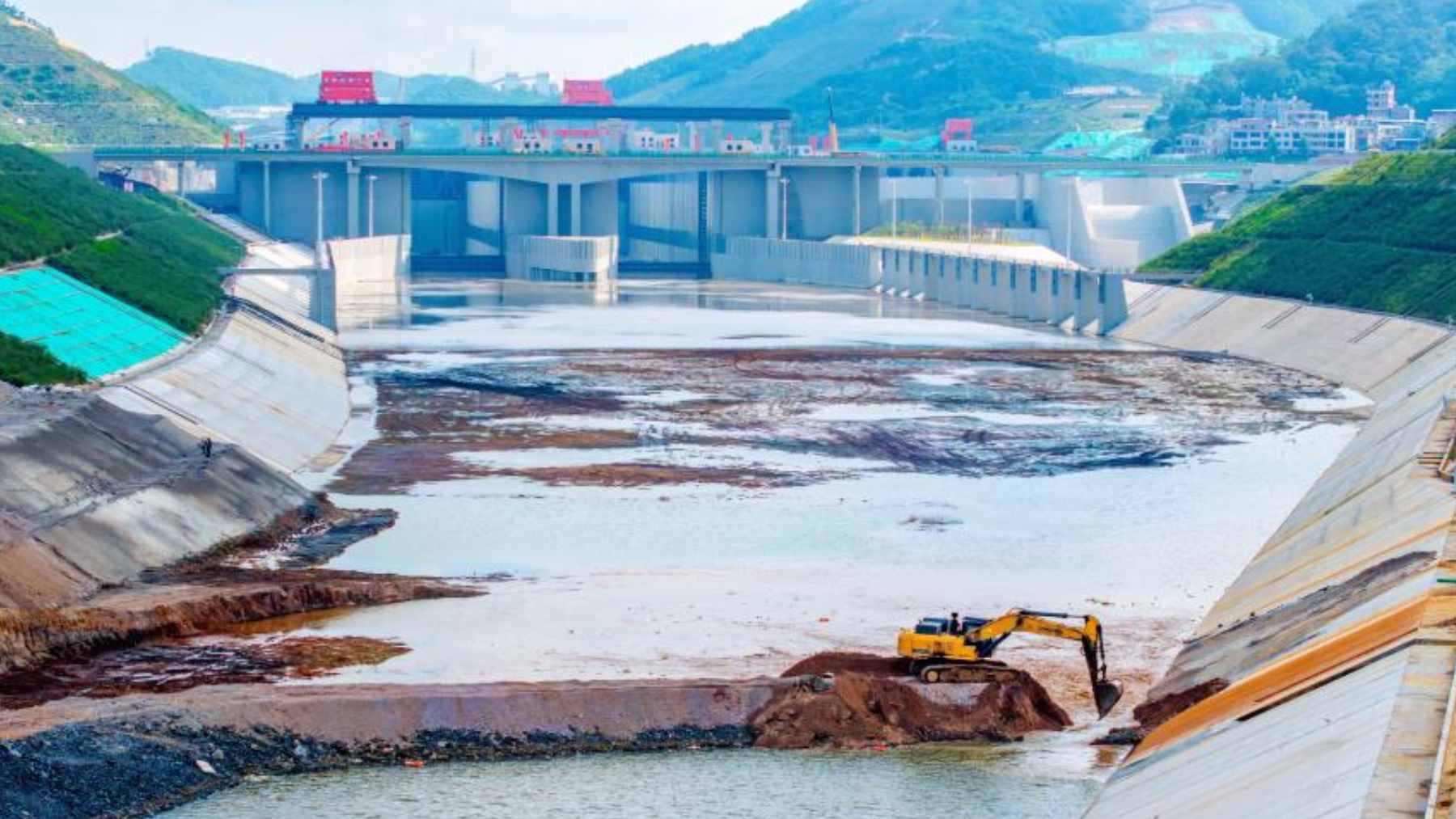
Earlier project details said the canal would cut the shipping distance by roughly 350 miles compared with the older route through Guangdong. That is why Beijing sees Pinglu as more than a local infrastructure project. It is a way to make inland factories feel closer to the ocean.
Why Southeast Asia matters
The timing is not accidental. China’s exports to ASEAN countries rose 13.4% in 2025, while exports to the United States fell 20% in dollar terms, according to Reuters.
That does not mean Southeast Asia simply replaces the American market. It does mean Beijing has a strong reason to invest in routes pointing south, especially if those routes can move bulk goods, manufactured products, and industrial materials more cheaply.
At the coastal end of the canal, Beibu Gulf Port is already gaining scale. Xinhua reported that the port’s annual container throughput reached 10 million TEUs in 2025, a milestone that helps explain why the canal is being watched by logistics planners, manufacturers, and local officials.
The environmental question
Here is where the story gets more complicated. Cutting an 83.4-mile canal through a living river system raises some basic concerns: what happens to fish, wetlands, and water quality once the machinery leaves and the ships arrive?
Builders have tried to answer part of that question with technology. Xinhua reported that a smart monitoring system for a key fishway along the Pinglu Canal began operating in 2025, using underwater attraction lights, AI recognition, and sonar imaging to track fish numbers, species, and movement in real time.
That is not a small thing. Fish passages matter because canals, locks, and altered currents can interrupt migration routes that animals have used for generations. For the most part, the real test will not be whether the sensors work on day one, but whether they help managers respond when traffic increases.
Wildlife gets a crossing
The project also includes a dedicated wildlife corridor bridge in Jiuzhou Town. Xinhua described it as a 787-ft. ecological corridor designed to help animals including masked palm civets, leopard cats, and red-bellied squirrels move between both sides of the canal.
That image is striking. On one side, China is carving a route for big cargo flows. On the other, engineers are trying to make sure smaller creatures can still cross the landscape as if the barrier were not there.
Still, corridors are only one part of the answer. A 2024 review in the journal Water warned that ship canals can bring long-term ecological impacts to wetlands, including altered hydrology, degraded water quality, habitat loss, disturbance to animals, salt intrusion, and biodiversity decline.
What comes next
At the end of the day, Pinglu is a test of two ambitions at once. China wants faster trade routes and stronger links with Southeast Asia, but it also wants the canal to be seen as modern, intelligent, and environmentally managed.
The next stage will be more revealing than any ribbon-cutting. Will the promised savings show up in freight costs? Will the fishway, monitoring systems, and wildlife corridor keep working once ships are moving through regularly?
For Guangxi and neighboring provinces, the canal could become a new economic artery. For everyone else, it is a reminder that infrastructure decisions made today can quietly shape supply chains, fuel use, and local ecosystems for decades.
The official update was published on Xinhua.