When the temperature climbs above 104°F in northern Mexico, air conditioning stops feeling like a luxury. In Nuevo Laredo, Tamaulipas, a high school student has found a way to make that same cooling equipment do something unexpected for the water supply.
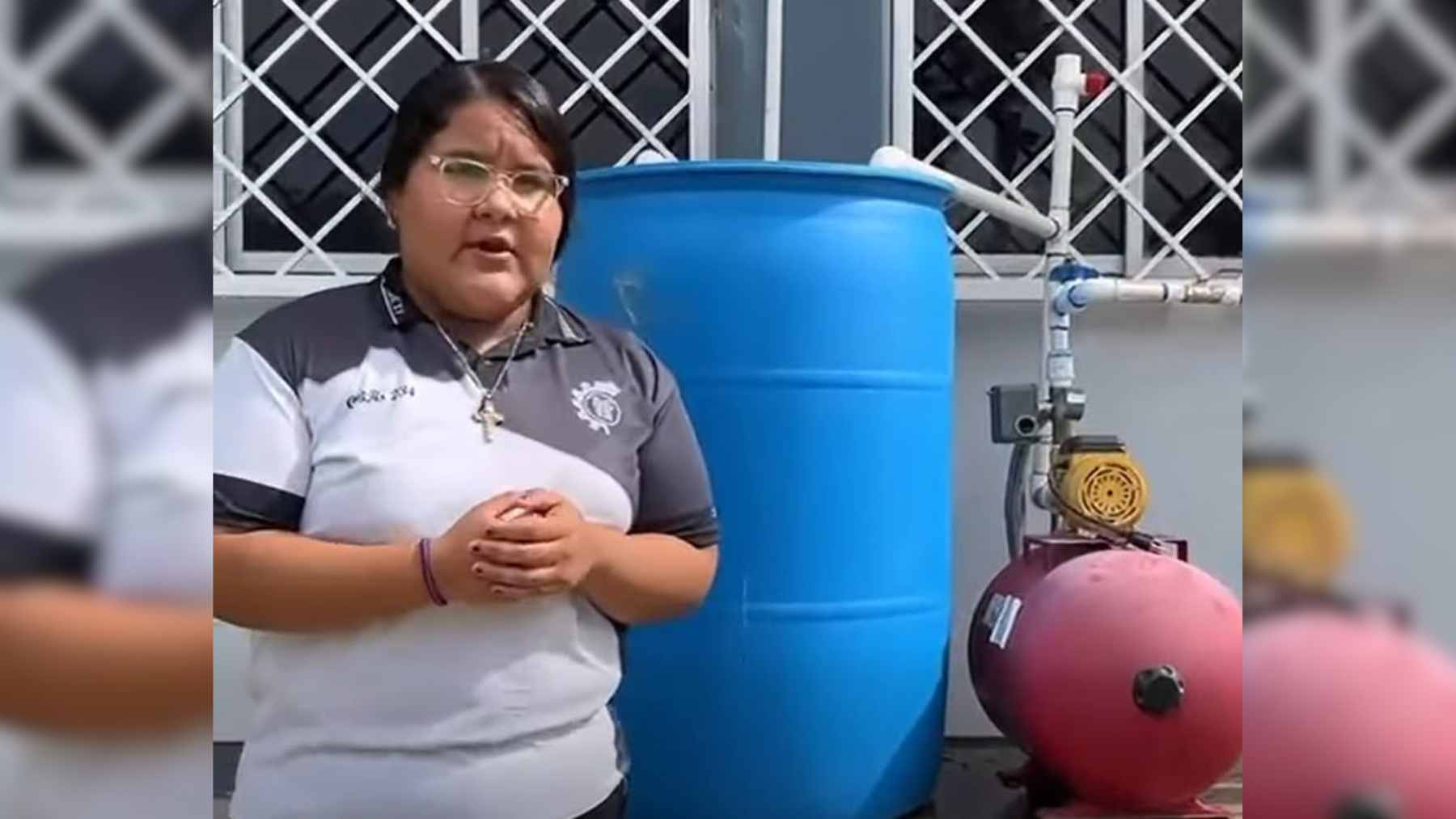
The official contest page identifies the student as Dania Yasaret Saldaña Martínez of Tamaulipas, a regional winner in Mexico’s 2026 National Youth Water Prize for HidroAC+, a hybrid system that uses condensation water from air conditioners to help grow food.
The project takes a familiar summer nuisance, the steady drip from an AC unit, and turns it into a small but practical tool for urban agriculture.
A drip with a second life
Most air conditioners remove moisture from indoor air as they cool it, creating condensate that usually drains away. HidroAC+ collects that runoff, treats it, enriches it with nutrients, then uses it in hydroponic crops and raised beds.
This matters because the project is not asking families or schools to invent an entirely new water source. It starts with something they may already have on a wall, roof, or window. For a city used to heat and supply cuts, that is the charm of the idea.
The system uses NFT, short for Nutrient Film Technique, where a thin stream of nutrient-rich water flows across plant roots. This allows the water to keep moving through a controlled setup instead of soaking randomly into the ground.
Why this small idea feels bigger
Northern Mexico has a water problem that is not just about dry weather. National infrastructure data tied to Mexico’s water planning says the center and north face structurally low water availability even though those regions hold much of the population and economic activity.
Agriculture is also the giant in the room. Official infrastructure data says 76% of Mexico’s concessional water volume goes to the agricultural sector, which is why even tiny efficiency gains in food production can matter. It is not glamorous, but water math rarely is.
For schools and households, the point is not that HidroAC+ can replace municipal water or irrigation networks. But it could help people grow some food with less pressure on treated water, especially in places where summer heat and water restrictions arrive at the same time.
A student project with a practical edge
The official contest page lists Dania’s entry under the Northeast region as “HidroAC+” and describes it as a hybrid cultivation system using condensation water from air conditioners. The same page says regional winners advance toward the national final, where projects are evaluated by a jury.
That detail matters because many student inventions sound interesting on paper but disappear once the classroom exhibition ends. HidroAC+ stands out because it is built around accessible materials and a problem people can actually see outside their homes.
And there is an economic layer, too. If a school can turn AC condensate into water for a small hydroponic garden, the benefit is not just lettuce or herbs. It becomes a hands-on lesson in science, engineering, climate adaptation, and resource management.
Not all reclaimed water is ready to use
Here is the less flashy but very important part. Air conditioner condensation is not the same as bottled water, and it should not be treated that way. Systems that collect it can pick up contaminants from pipes, trays, filters, or coils, so treatment and basic maintenance are essential.
The U.S. Environmental Protection Agency notes that Texas defines air conditioner condensate as an “alternative onsite water” source for non-potable reuse, including gardening, irrigation, and certain agricultural or institutional uses.
The same summary points to performance standards for microbial indicators in some reuse systems, which is a reminder that reuse works best when safety is designed into the process.
That is why HidroAC+ includes treatment and nutrient enrichment before the water reaches crops. The project’s value is not just catching drops in a bucket. The clever part is building a controlled path from waste stream to plant roots.
Water security starts close to home
The Premio Nacional Juvenil del Agua is aimed at students ages 15 to 20 who present research projects on sustainable water management. Its organizers say proposals should be innovative, viable, and replicable at local, regional, national, or global levels.
HidroAC+ fits that mission because it looks modest at first: no massive dam, no expensive desalination plant. Just a local fix that asks a simple question: what useful thing are we throwing away every day?
That question is becoming more urgent. Mexico’s own water planning materials describe the water sector as strategic for economic development, social stability, and national security. In other words, saving water is no longer just an environmental slogan, it is part of how communities keep working.
What comes next
For now, HidroAC+ should be seen as a promising student innovation, not a finished commercial product. It would still need testing, clear maintenance guidelines, and crop-safety checks before anyone scaled it broadly.
Still, the idea lands at the right moment. As cities get hotter, more air conditioners will run for longer hours, and every one of them may produce water that is usually wasted. In a dry border city, that drip starts to look different.
A student noticed. That may be just the beginning.
The official statement was published on Premio Nacional Juvenil del Agua 2026.