Something unusual just happened on Namibia’s Atlantic coast. A Spanish wind technology company, Nabrawind, has completed the installation of a 6 MW Goldwind GW165/6000 wind turbine at the InnoVent Diaz wind farm using its Skylift system, avoiding the kind of high crane that usually dominates projects of this size.
That may sound like a construction detail, but it could matter far beyond one wind farm. Some of the best wind sites on the planet are also some of the hardest places to build, especially when gusts make tall cranes unsafe or impractical–that’s where this new approach gets interesting.
A turbine that climbed itself
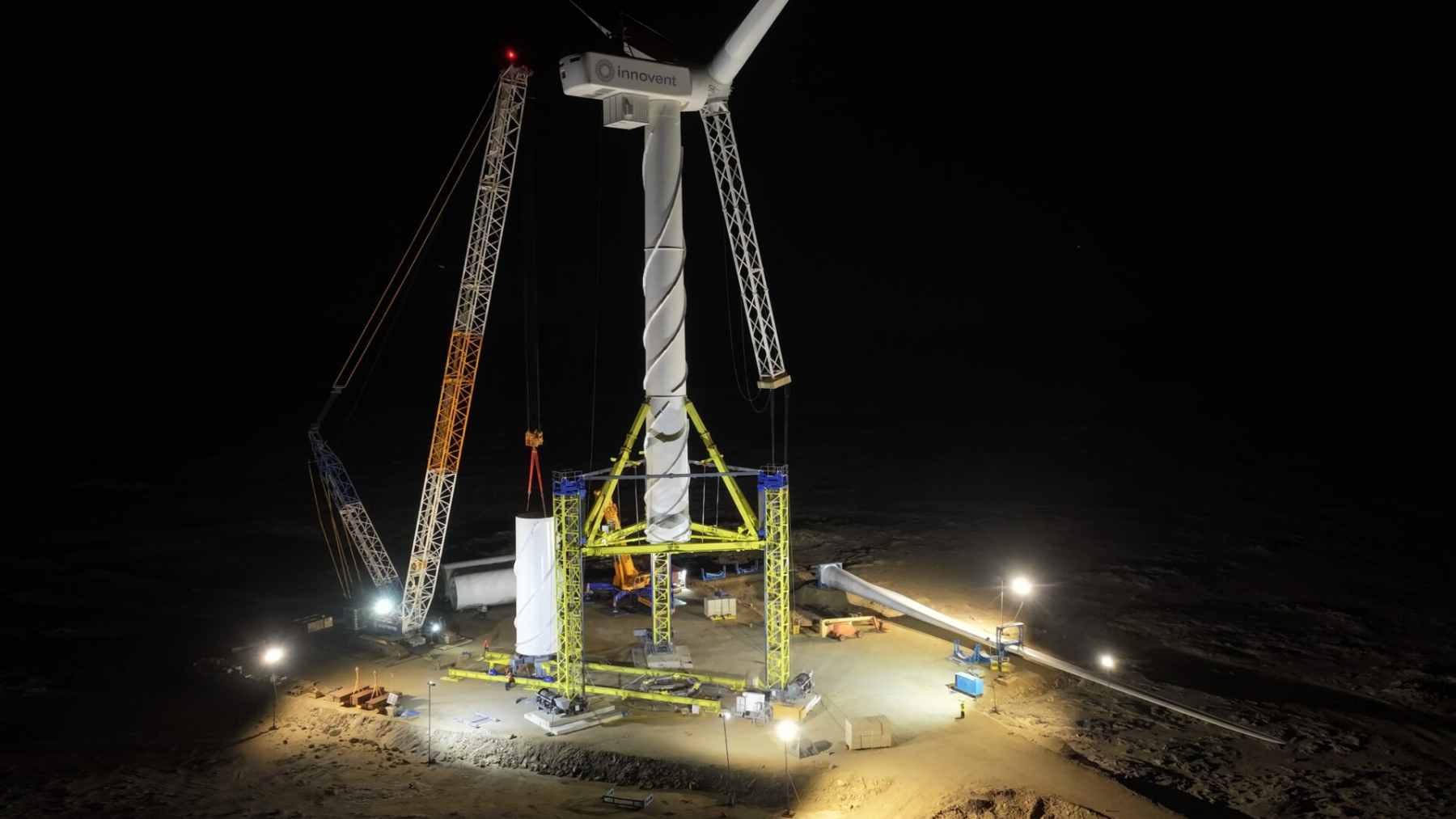
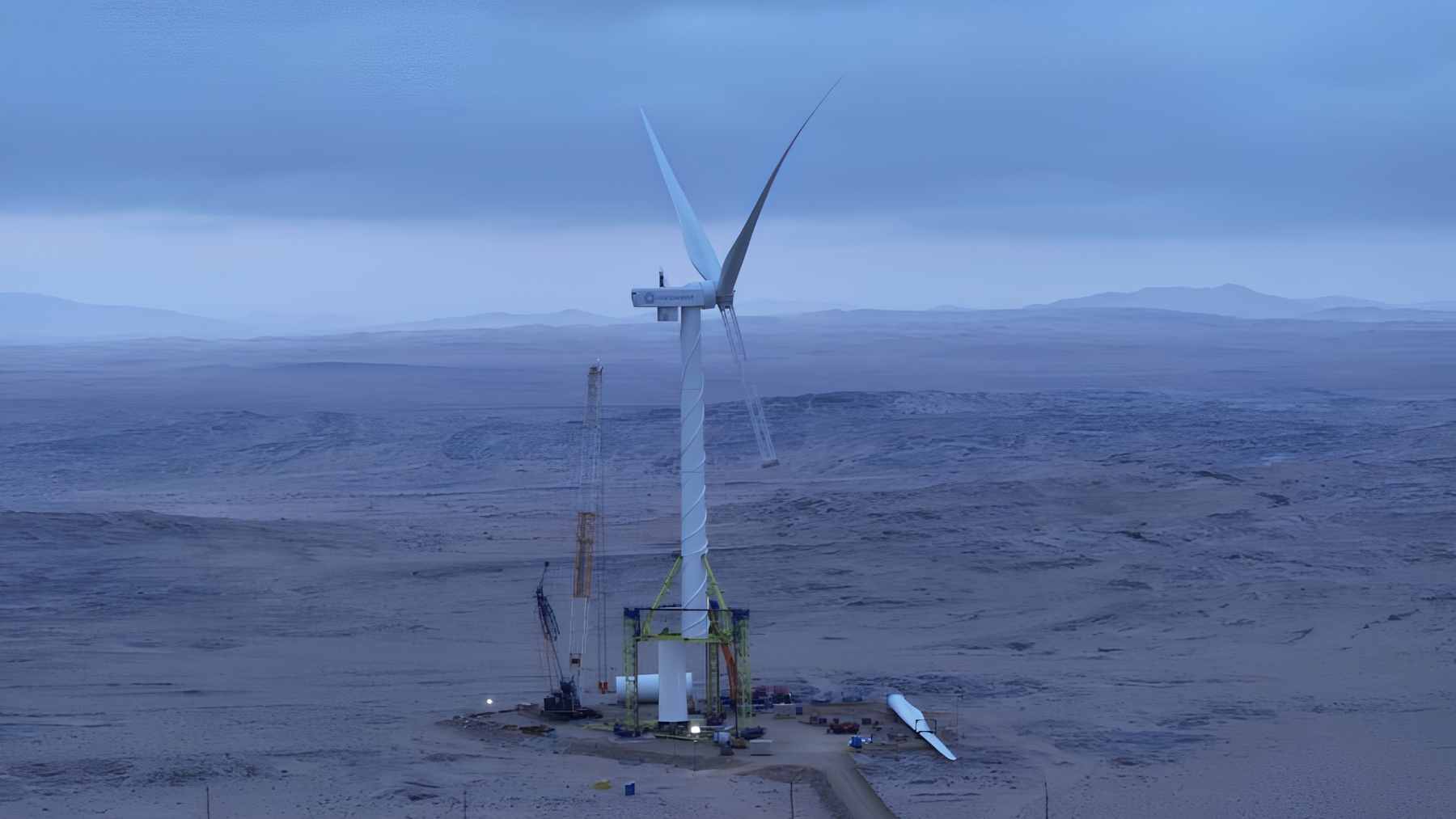
The turbine was installed with a hub height of about 328 ft., but the key step happened much closer to the ground. Nabrawind says the rotor could be installed at about 98 to 131 ft. before the upper structure was lifted section by section.
In practical terms, the system works a bit like giving the tower its own elevator. A three-column support structure raises the upper part of the turbine, including the nacelle and rotor section, enough for the next tower segment to be installed underneath.
The machine didn’t rise by magic. Smaller cranes were still part of the job, but the system avoided the large-tonnage cranes that can become a deal-breaker in remote or windy locations. For anyone who has watched outdoor work stop because of strong wind, the problem is easy to picture.
Why the wind was the problem
The site near Lüderitz is rich in wind, which is exactly why it is attractive for renewable power. But that same wind can turn construction into a headache, especially when long crane booms are exposed to sudden gusts.
According to Nabrawind, its Skylift operation can work in unstable winds of about 34 mph, with gusts near 45 mph. Conventional cranes, by comparison, may be limited to about 13 to 18 mph for certain jobs such as blade installation.
That changes the equation. A place that looks perfect on an energy map can quickly become expensive if equipment cannot safely operate there. With a self-lifting system, the construction method starts to match the weather instead of fighting it.
The third blade challenge
One of the most delicate parts of the project involved the rotor. Nabrawind says two blades were installed at a 30-degree angle using a proprietary handling system and a counterweight, which helped stabilize the rotor before the turbine reached its final hub height.
Then came the final swap. The counterweight was replaced by the third blade using BladeRunner, another Nabrawind system designed to handle blades without relying on the same heavy crane setup.
It is a small detail with big benefits. If large turbines can be assembled this way more often, developers may be able to build taller and more powerful onshore machines in places where standard construction methods are too risky, too costly, or simply unavailable.
Clean power for Namibia
The larger InnoVent Diaz project is expected to become an important addition to Namibia’s power system. InnoVent described the project as a 44 MW wind farm with 11 turbines, producing about 230 GWh of renewable electricity each year.
By the developer’s own estimate, that output would represent around 6% of Namibia’s electricity demand and 13% of the country’s production. The company also says the project could avoid about 220,000 tons of CO₂ emissions per year.
There is another everyday point here. Namibia still depends heavily on imported electricity, and InnoVent says the wind farm could reduce that dependence while saving nearly 198 million lbs. of coal per year.
Less concrete, less steel
The project is not only about how the turbine is lifted. Four smaller XEMC turbines at the Diaz site use Nabrawind’s Nabrabase foundation technology, which anchors into bedrock and is designed to reduce the amount of concrete needed.
InnoVent says that system can save about 55 tons of steel and nearly 14,800 ft.³ of concrete per turbine. That matters because clean energy projects still carry a physical footprint, from roads and foundations to transport and assembly.
Nabrawind also says its Nabralift approach can reduce greenhouse gas emissions by 40% compared with traditional concepts, while cutting the assembly platform footprint by the same share. Those are company figures, but they point to a real trend in wind power, where the installation method is becoming part of the environmental story.
A business signal for wind
There is a business angle, too. Fortescue, the Australian metals and energy group, said in September 2025 that it had acquired 100% of Nabrawind, folding the Spanish company’s self-lifting tower technology into its wider decarbonization plans.
That gives this Namibia installation a bigger meaning. It is not only a successful field test in difficult conditions, but also a demonstration of technology that a major industrial player wants to scale.
The pressure is clear. Wind developers need access to better sites, lower installation costs, and fewer logistical bottlenecks. If this system proves repeatable, the best wind may no longer be stranded by the lack of a tall crane.
What comes next
Nabrawind says the Diaz wind farm will feature seven Goldwind GW165/6000 turbines, and the company wants the seventh installation to reach a net cycle time of one week. That is the real test now. One dramatic lift is impressive, but repeatability is what turns engineering into industry.
For now, the message is simple. The wind that once made construction harder may also be the reason this technology matters.
The official statement was published on Nabrawind.