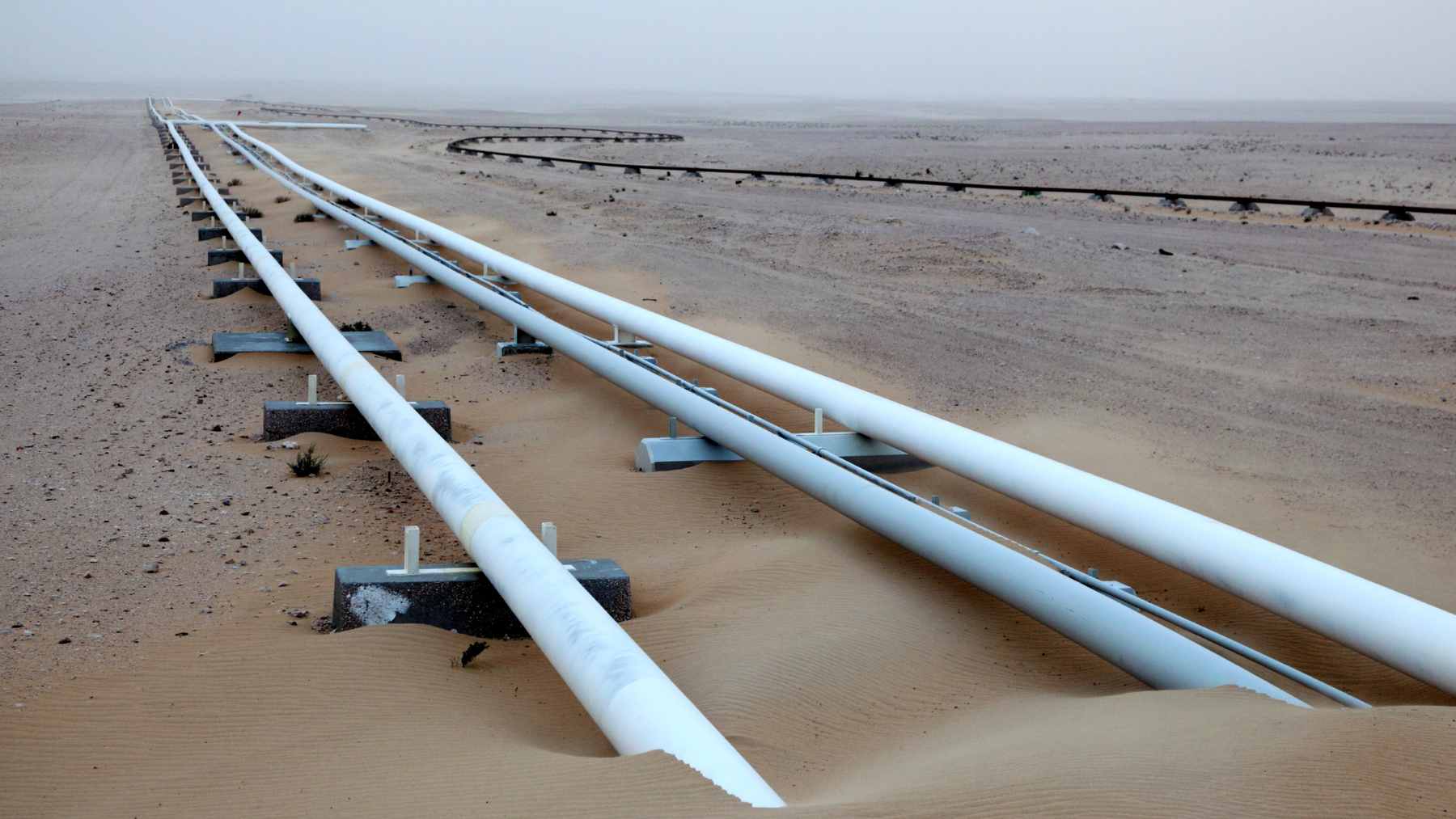
In a remote stretch of northwestern China, satellite images reviewed by Reuters show a military network spreading across desert ground that was once much easier to ignore from afar. The construction includes more than 80 possible launch pads, bunkers, rail links, airfields, and communications nodes near silos that hold China’s longest-range nuclear missiles.
The crucial point is not that China suddenly gained the ability to reach the United States–that was already true. What appears to be changing is the survivability and flexibility of its land-based nuclear force, with analysts saying the new infrastructure could help Beijing preserve a retaliatory option after a first strike.
A desert network built for survival
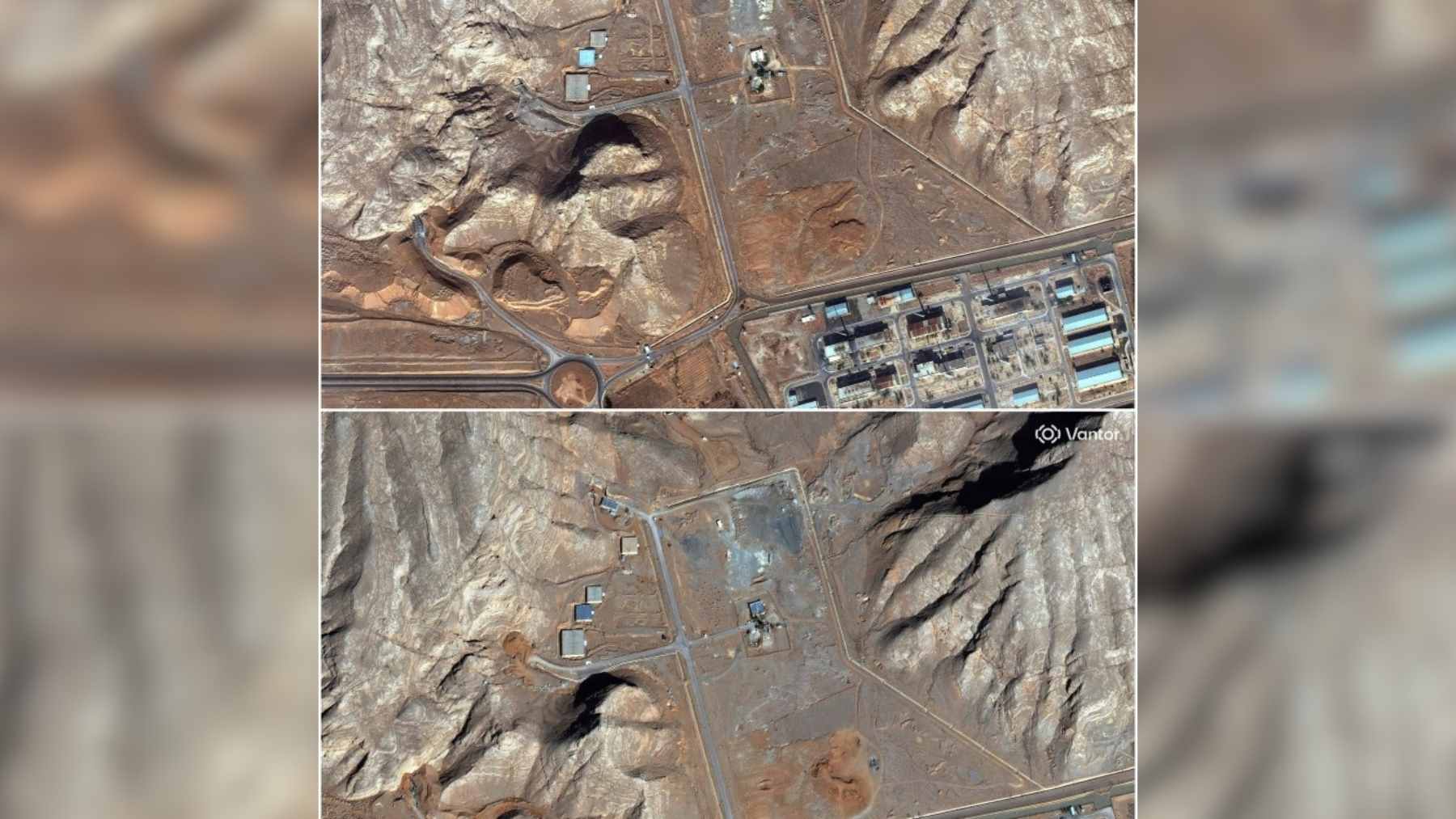
The construction is centered near the Hami silo field in Xinjiang and linked to three octagon-shaped installations, two of them more developed than the third. Reuters reported that the two main octagons were built over the past six years in eastern Xinjiang, roughly 87 miles and 143 miles southwest of the Hami silos.
From above, the pattern is striking. Roads and conduits stretch from the octagons into rocky desert areas, connecting concrete pads placed among dry creek beds and outcrops. Some pads may support mobile air-defense missiles, electronic-warfare nodes, or larger road-mobile intercontinental ballistic missile launchers, according to security analysts cited by Reuters.
That matters because nuclear deterrence is not only about how many warheads a country has, it is also about whether those weapons can survive long enough to matter in a crisis.
In practical terms, this desert grid could make it harder for any rival to know which sites are real, which systems are moving, and where command links are hidden.
The octagons are the mystery
The octagons are not just odd shapes in the sand. Satellite images show facilities for personnel and large military vehicles, plus armored bunkers, possible weapons storage, airfields, and rail terminals. Recent imagery also shows large tents, vehicle trails, camouflaged military vehicles, and possible camouflaged launch sites around the northern octagon.
Could all of this be for something other than nuclear operations? Yes, at least partly. Five security scholars told Reuters the infrastructure could support China’s nuclear program as well as other military uses, while warning that key details remain unknown.
Still, the network’s placement near the Hami silo field makes it difficult to treat as ordinary desert construction. Hans Kristensen of the Federation of American Scientists told Reuters, “I’ve never seen anything quite like it.” He also called it “an extraordinary effort.”
Technology is the quiet driver
This is not just concrete and dirt roads. The images also point to possible communications and electronic warfare infrastructure, including towers and satellite dishes near the northernmost octagon.
Tong Zhao, a senior fellow in nuclear policy at the Carnegie Endowment for International Peace, said there is “a real possibility” the structures and towers are linked to command, control, and communications connected to Hami nuclear operations.
That is where the technology story comes in. Modern nuclear forces depend on sensors, satellite links, hardened cables, secure orders, and warning systems. A missile that cannot receive reliable commands is not much of a deterrent, no matter how powerful it looks in a parade.
The Pentagon’s latest annual China report says Beijing probably expanded its space-based early-warning architecture in 2024 and early 2025 by launching additional Huoyan-1 satellites with likely infrared sensor payloads.
The report says those satellites can reportedly detect an incoming intercontinental ballistic missile within 90 seconds and send an alert to a command center within three to four minutes.
Why Washington is watching
The U.S. concern is clear. The Pentagon report says China’s nuclear warhead stockpile remained in the low 600s through 2024, but the People’s Liberation Army remains on track to have more than 1,000 warheads by 2030.
It also says China has likely loaded more than 100 solid-propellant intercontinental ballistic missile silos across its three silo fields with DF-31 class missiles.
China says its nuclear policy is defensive and built around “no first use,” meaning it pledges not to start a nuclear exchange. Beijing reaffirmed that position in a 2025 arms-control white paper, saying it keeps its nuclear strength at the minimum level required for national security.
But trust is thin. Western diplomats and analysts worry that a larger and more survivable force could give Beijing more room to use nuclear pressure during a conventional crisis, especially over Taiwan. China claims Taiwan as its own, while Taiwan’s government rejects that claim.
The environmental angle is uncomfortable
This story is mostly about military power, but the environmental question should not be ignored. A remote desert can look empty from space, yet it is still land being cut by roads, concrete pads, rail access, storage zones, and fuel facilities. The available reporting does not measure local ecological damage, so it would be wrong to pretend we know the full impact.
The bigger environmental risk is different. Nuclear weapons are not ordinary weapons. The International Committee of the Red Cross has warned that nuclear weapon use or testing can cause long-term harm to human health, the environment, infrastructure, food systems, and social order.
At the end of the day, the desert construction is a reminder that climate, ecology, and security are no longer separate stories. Military expansion consumes land, energy, materials, and attention, and when the systems involved are nuclear, the stakes move far beyond one country’s borders.
What happens next
For now, many details remain unclear. China’s defense ministry did not respond to Reuters questions about the nuclear program or the satellite imagery, while the Pentagon declined to comment on intelligence-related matters. That leaves analysts studying shadows, roads, concrete, and vehicle tracks for clues.
The safest reading is also the most serious one. China appears to be building a stronger, more survivable nuclear posture in the desert, while the United States is watching a competitor move from minimum deterrence toward something larger and more technically complex.
That does not mean war is closer tomorrow. It does mean the arms-control problem is getting harder, especially when official dialogue is limited and both sides are designing systems for the worst day imaginable–the quiet desert is getting louder.
The official report was published on U.S. Department of Defense.