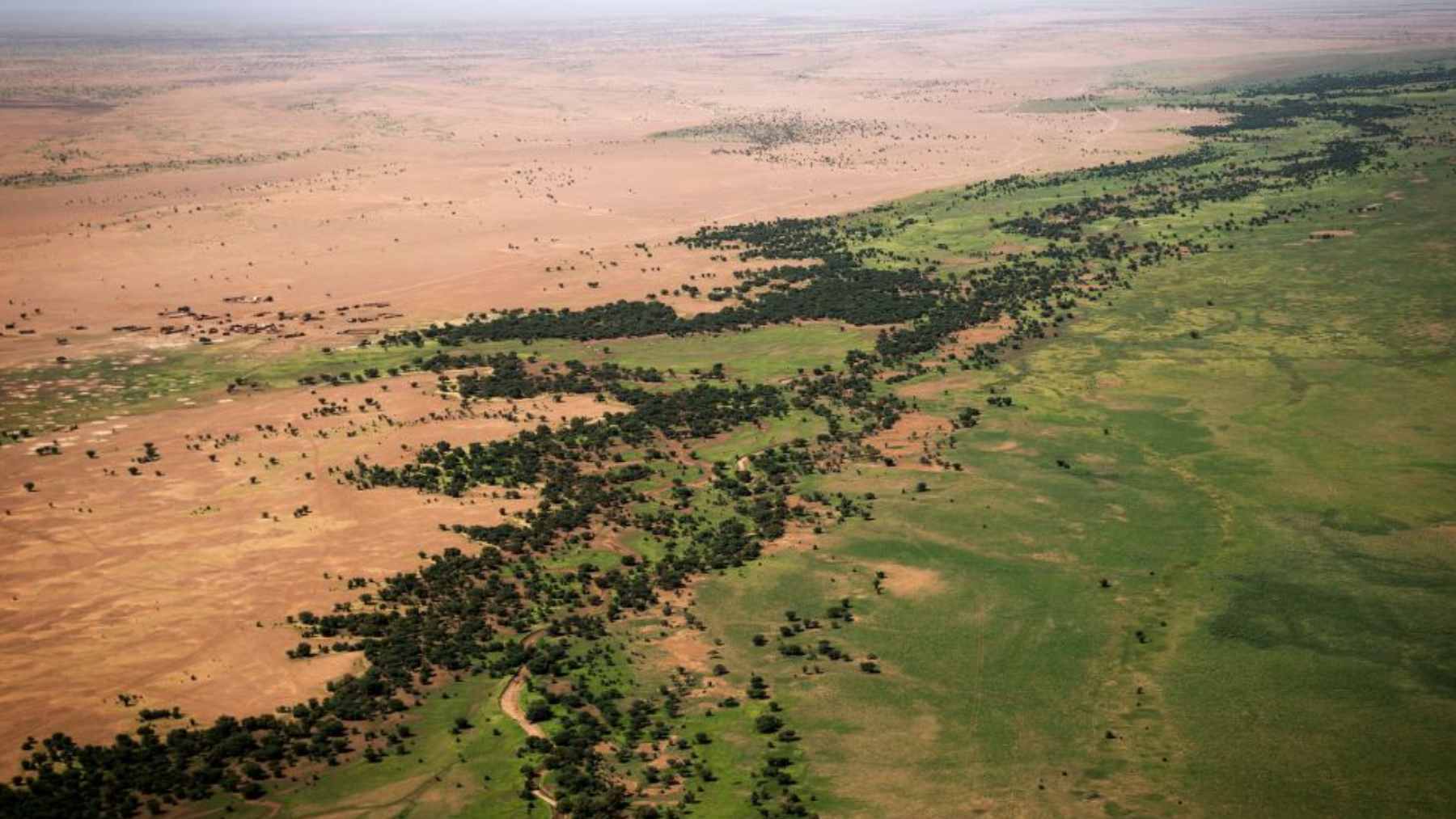
What if a wall could be built without concrete, steel, or border fences? Across Africa, 11 countries are trying to do exactly that with the Great Green Wall, a living barrier of trees, shrubs, grasses, farms, and restored soil meant to slow desertification along the southern edge of the Sahara.
The project stretches across the Sahel and the Horn of Africa, from Senegal toward Djibouti, and aims to restore 250 million acres of degraded land by 2030. However, the clock is moving fast, and for the most part, the challenge is no longer just planting trees. It is keeping them alive, tracking the money, and making restoration work in places hit by drought, poverty, and insecurity.
A living wall, not a fence
The Great Green Wall began in 2007 under the African Union as a bold response to desertification and land degradation in the Sahel and Sahara regions.
At first, it was imagined as a belt of trees to halt the desert’s spread, but it has since evolved into a wider restoration effort focused on agriculture, pastoral land, forests, and local livelihoods.
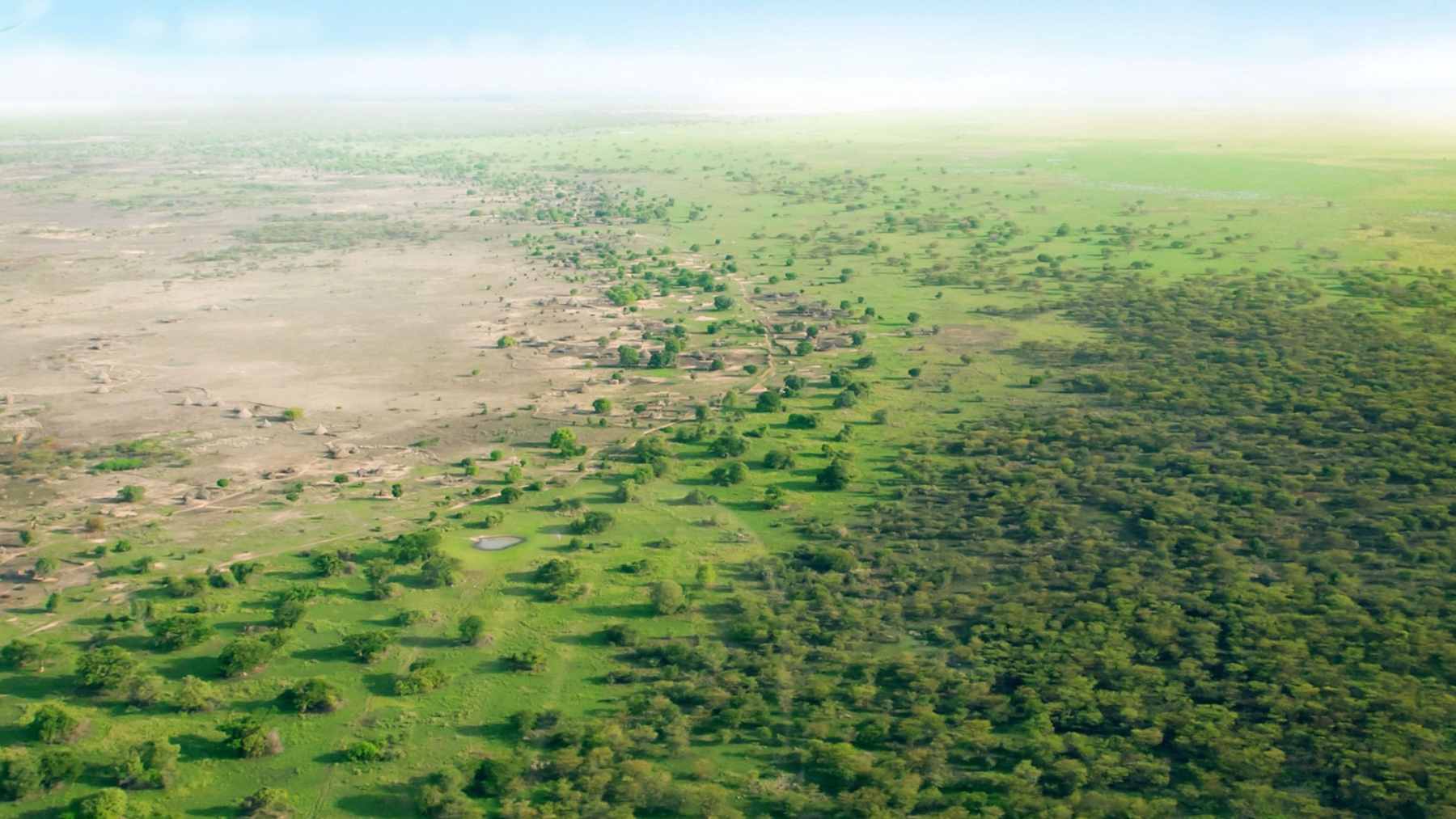
In practical terms, the “wall” is more like a patchwork of green and productive landscapes. Some areas need trees, others need protected grazing land, water harvesting, better soil management, or farmers helping native shoots grow back naturally.
That last point matters. A planted seedling can die quickly in dry heat, but a native root system already sitting underground often has a better shot at survival.
Why the Sahel matters
For families living near the desert’s edge, this is not an abstract climate project. It is about whether crops grow, whether livestock can graze, whether wells last through the dry season, and whether young people see a future at home instead of leaving.
The European Commission says the Great Green Wall is designed to improve livelihoods, foster environmental sustainability, and support communities facing drought, food shortages, conflict over shrinking resources, and migration pressure. That is why this project sits at the crossroads of ecology, business, security, and technology.
Then there is the bigger picture. The official targets include restoring 250 million acres of degraded land, creating 10 million jobs, sequestering 250 million tons of carbon, improving food security for 20 million people, and giving 10 million smallholder farmers access to climate-resilient agricultural technologies.
The hard part is keeping it alive
Early efforts were not always successful. In some areas, millions of young trees died because they did not get enough water or follow-up care, with mortality rates reportedly rising above 80%.
That is why the strategy has shifted toward species and methods that fit the land. Local trees such as acacia and baobab are better suited to dry conditions, while farmer-managed natural regeneration can protect shoots that are already adapted to the soil around them.
It sounds simple–almost too simple. But in a place where one dry season can undo years of work, the smartest technology may be knowing when not to force the land into something it cannot sustain.
Money, data, and security
The Great Green Wall has attracted major international support. In 2021, partners announced at least $14.326 billion in new funding to speed up restoration, protect biodiversity, create green jobs, and build resilience across the Sahel.
Still, UNCCD says at least $33 billion would be needed over the decade to meet the initiative’s 2030 ambitions. Its own Great Green Wall Accelerator page also points to almost 45 million acres restored and 350,000 jobs created, while warning about weak coordination, limited national priority setting, and funding gaps.
That is where data enters the story. A Great Green Wall Observatory was launched in 2024 to help track funding and progress after a meeting of the 11 participating countries in Ouagadougou, Burkina Faso. For a project this large, transparency is not a side issue, it is the difference between money promised on stage and trees protected in the ground.
Politics could slow the green belt
The biggest obstacle may not be the desert itself. It may be instability.
Several countries in the Sahel have faced coups, armed groups, and humanitarian crises in recent years, making it harder for workers, aid groups, and local agencies to keep projects moving.
Reuters reported in 2024 that the Great Green Wall was likely to miss its 2030 target, citing financing and implementation problems, along with the difficulty of coordinating work across 11 countries.
The African Union’s updated strategy for 2024 to 2034 also makes clear that the initiative is being reframed for a longer, more coordinated push. It calls for stronger governance, better monitoring, broader partnerships, and more inclusive community participation.
What success would change
If the Great Green Wall works, it will not just slow sand. It could help stabilize local economies, protect farms, support herders, reduce pressure to migrate, and create green jobs in places where work is often scarce.
For everyday life, that could mean more food in local markets, less pressure on already strained towns, and more income from restored land. Not glamorous, perhaps, but powerful.
At the end of the day, this is the real promise of the Great Green Wall. It is not simply trying to stop the Sahara. It is trying to give millions of people a better chance to live with a changing climate, one field, one tree, and one village at a time.
The official strategy was published on African Union.